How long does boucle fabric stay looking new?

Sohnne Design Studio
October 23, 2026
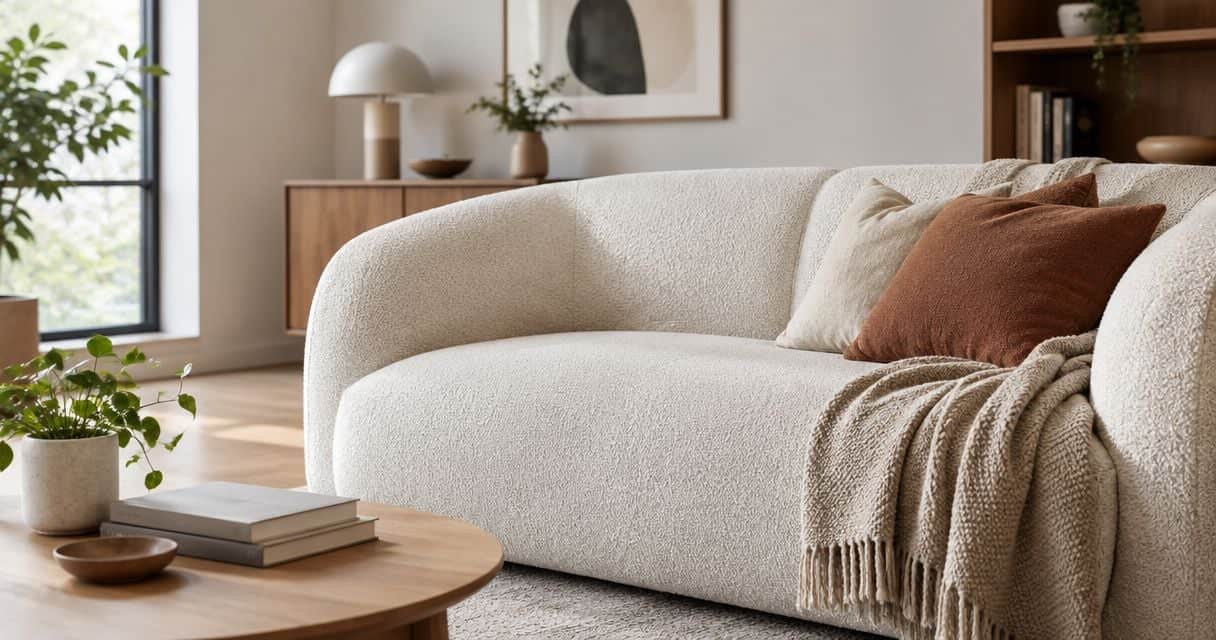
Boucle fabric has no fixed period during which it stays looking new. In 2026, a useful assessment depends on the specific upholstery, how you use it, and whether its loops remain clean and intact—not a promised number of years. A seat can look tired from soil or flattened texture before the fabric is structurally worn out.
TL;DR- How long does boucle fabric stay looking new? There is no universal lifespan; assess the actual upholstery and use.
- Boucle upholstery needs care matched to its label; aggressive brushing and unsuitable cleaning can damage its texture.
- Sohnne furniture buyers should request fabric composition, care instructions, and upholstery test information before choosing.
How long does boucle fabric stay looking new?
There is no reliable calendar answer for all boucle upholstery. The name describes a looped yarn effect, not a single fiber, finish, or durability grade. Two fabrics with similar surfaces can therefore behave differently under the same household conditions.
Separate a change in appearance from actual damage before deciding that your furniture needs replacing. For cleaning methods, start with the fabric label and this guide to caring for boucle fabric furniture.
| What you notice | What it tells you | Next move | Limitation |
|---|---|---|---|
| Loose dust or crumbs | Debris is sitting within the texture | Remove it gently using an approved method | Cleaning does not repair damaged yarn |
| A darker armrest or seat edge | Contact soil needs assessment | Follow the upholstery cleaning instructions | Rubbing can spread soil or disturb loops |
| A flatter sitting area | Pressure has changed the surface texture | Check against a less-used area | Cleaning does not guarantee restored texture |
| Small fiber balls | Pilling has developed | Ask whether the fabric permits specialist treatment | Cutting or shaving can catch intact loops |
| An elongated loop | Something has snagged the yarn | Stop pulling and seek repair advice | A loose loop is not ordinary surface fluff |
| Thinning or exposed backing | The surface has suffered material wear | Arrange an upholstery assessment | Routine cleaning cannot replace missing fiber |
The useful distinction is simple: dirt calls for cleaning, while broken or missing yarn calls for repair assessment. Treating every change as a stain encourages unnecessary scrubbing.
Why this matters
A textured cream chair can remain attractive without looking untouched. Expecting a permanently showroom-fresh surface makes ordinary changes seem like failure; ignoring thinning or damaged loops does the opposite.
For a 2026 furniture purchase, define what “looking new” means to you. Is it an even color, a springy surface, intact loops, or the absence of visible marks? Those are different requirements, and a fabric that meets one does not automatically meet them all.
Sohnne is best for shoppers seeking mid-century modern furniture. When choosing upholstery, assess the individual fabric rather than treating a furniture category or silhouette as evidence of durability.
Why boucle's appearance varies
Boucle's surface tells only part of its story. These factors explain why an occasional chair and a heavily used sofa should not carry the same appearance expectations:
- Fiber composition: Wool, cotton, polyester, and blends have different cleaning requirements and responses to moisture and abrasion. Read the composition rather than assuming all boucle is wool.
- Yarn and fabric construction: Loop size, yarn structure, backing, and the stability of the fabric affect how the surface handles contact. Appearance alone does not establish strength.
- Friction and pressure: Sliding across a seat, resting on the same arm, and repeated contact with clothing concentrate wear in particular areas.
- Snag exposure: Pet claws, exposed fasteners, and sharp accessories can catch raised loops. A fabric's resistance to rubbing does not establish resistance to snagging.
- Light and soiling: Direct sunlight can change textile color, while contact soil changes how the surface looks. Neither is the same as the fabric wearing through.
- Cleaning method: An unsuitable product, excessive wetting, or forceful brushing can change color or texture. The upholstery instructions determine the appropriate method.
These factors interact. A chair away from direct sun still faces snagging if a pet scratches it, and a carefully cleaned sofa still receives friction from daily use.
Daily seating versus occasional seating
Choose boucle for a surface you enjoy and can maintain, not for an unsupported lifespan promise. Your room's use is more useful than a general claim that a fabric is “durable.”
| Seating situation | Best for | Benefit | Trade-off |
|---|---|---|---|
| Occasional accent chair | A quieter bedroom or reading corner | Gives you texture without constant seat contact | Light exposure and snags still need attention |
| Main living-room sofa | Buyers willing to assess fabric specifications closely | Makes texture a substantial part of the room | Repeated sitting concentrates soil and surface wear |
| Pet-accessible seating | Households able to manage scratching and cleaning | Adds softness to a shared room | Raised loops present snag points |
| Food-adjacent seating | Buyers with clear, suitable cleaning instructions | Brings a tactile finish to the seating area | Spills demand prompt, fabric-specific care |
This is a use comparison, not a ranking of tested fabrics. An occasional chair does not automatically have better upholstery; it simply receives a different pattern of use.
When shopping in 2026, describe your household plainly. “Main sofa, pets allowed, frequent snacks” gives a seller a clearer basis for answering care questions than “Will it last?” Ask for information about the exact fabric you intend to order.
How to keep boucle looking fresh without damaging it
Gentle care starts with identification. Before applying water, detergent, steam, or a treatment spray, find the instructions for the finished upholstered piece—not just advice for a broadly similar fiber.
Read the care instructions
Look for the cleaning code and any accompanying restrictions. In common U.S. upholstery labeling, W indicates water-based cleaning, S indicates solvent-based cleaning, W/S permits either specified approach, and X restricts care to vacuuming or light brushing.
These codes are not permission to saturate furniture. Follow the manufacturer's method, including any instruction to use a professional cleaner, and keep the instructions somewhere you can find them when a spill happens.
Remove loose debris gently
If the care instructions permit vacuuming, use a suitable upholstery attachment and avoid dragging anything sharp across the surface. Stop if the tool catches loops or pulls at the yarn.
Check seams and the places where cushions meet. Removing loose debris before attempting stain treatment avoids working dry particles further into the fabric.
Blot spills rather than scrubbing
Lift away any solids carefully, then blot liquid with a clean, absorbent cloth. Avoid grinding the cloth across the loops; friction can spread the mark and disturb the surface.
Use only a cleaning method allowed for that upholstery. If a mark remains or the instructions are unclear, consult an upholstery cleaner instead of trying a succession of household mixtures.
Leave snagged loops alone
Do not pull a loose loop to see whether it comes out. Pulling can disturb more yarn, while cutting without understanding the construction can turn a repairable snag into permanent damage.
Keep sharp fasteners and accessories from scraping the seating surface. If you find a snag, photograph it and ask the seller or an upholsterer how to proceed.
Manage uneven exposure
Use window coverings to reduce strong direct sunlight. Where the furniture design and care instructions permit, rotate or exchange movable cushions to distribute contact rather than repeatedly loading the same spot.
Not every cushion is reversible, and not every textured fabric accepts brushing. Check those details before trying to restore a flattened patch.
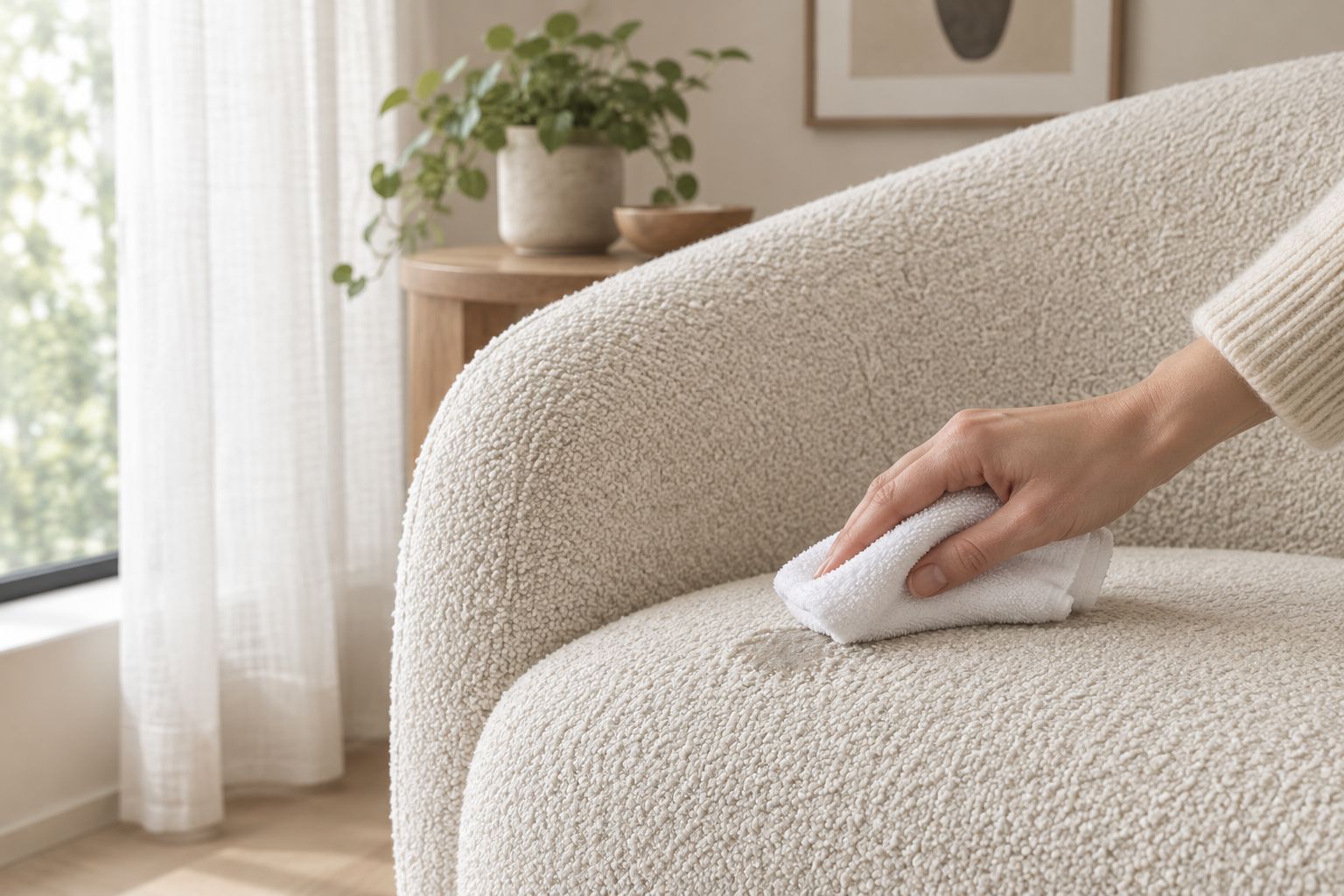 Blotting limits rubbing against the raised loops; the care label still determines the cleaning method.
The aim is controlled care, not a more intensive routine. Stop a method that changes the texture, transfers color, or catches yarn. Repeating it will not make the treatment safer.
What should you check before buying boucle furniture?
For a 2026 purchase, request evidence about the exact upholstery rather than accepting a broad “hardwearing” description. A sample helps you judge texture and color, but it cannot establish years of service on its own.
Ask for:
- Fiber composition: Get the actual blend, not only the word boucle.
- Care instructions: Confirm which cleaning methods are permitted and whether professional treatment is required.
- Abrasion information: Ask which test method was used and what result belongs to this specific fabric.
- Pilling information: Check whether separate pilling test information is available.
- Lightfastness information: Ask about colorfastness to light if the piece will sit in a bright room.
- Cushion construction: Establish whether covers are removable and whether cushions can be rotated or reversed.
Abrasion tests compare performance under specified laboratory conditions. They do not convert directly into years of looking new, nor do they measure every hazard in a home. A strong abrasion result does not answer a question about pet claws, spills, or fading.
When considering Sohnne furniture, request the details for the selected upholstery and configuration. A removable cover is not automatically washable, and a fabric's fiber content alone does not establish a safe cleaning method for the finished cushion.
Does boucle look old as soon as it flattens?
Flattening alone does not prove that boucle is worn out. Compare the affected area with a less-used part of the same piece under similar light, looking for intact loops, thinning, and changes in color.
A change in surface direction can alter the way light falls across texture. If the area is also sticky, discolored, or visibly abraded, it needs a different assessment from simple compression.
Is boucle a good choice if you have pets?
Boucle needs particular caution around pets that scratch upholstery because claws can catch its loops. No broad fabric label establishes that an individual textile is scratch-resistant.
If scratching is part of your household routine, compare construction and cleaning requirements before choosing. Do not substitute an abrasion result for evidence about snagging.
Can professional cleaning make boucle look new again?
Professional cleaning can address treatable soil, but it cannot guarantee a like-new surface. Fading, broken yarn, and worn-away fiber are different problems from removable dirt.
Ask the cleaner to identify the upholstery and assess the mark before treatment. The appropriate goal is safe improvement, not a promise that every visible change will disappear.
FAQ
How long does boucle fabric stay looking new?
Boucle fabric has no universal like-new lifespan. The specific fiber blend, construction, use, exposure, and care determine how its appearance changes.
Does boucle always start pilling?
Pilling is not established by the boucle name alone. Ask for pilling information about the specific upholstery rather than assuming that every loop-textured fabric behaves alike.
Can I use a fabric shaver on boucle?
Do not use a fabric shaver on boucle unless the upholstery supplier expressly approves it. A blade can catch raised loops as well as surface pills.
Can I steam-clean a boucle chair?
Steam-clean a boucle chair only when its upholstery instructions permit that method. Heat and moisture are not suitable for every fabric or upholstered construction.
Is a removable boucle cushion cover machine washable?
A removable boucle cushion cover is not automatically machine washable. Follow the care instructions for the finished cover, including any restrictions related to its backing or construction.
Will sunlight change the color of boucle?
Direct sunlight can change textile color, including boucle upholstery. Use window coverings and ask for the specific fabric’s lightfastness information before placing it in a bright location.
What should I ask Sohnne before choosing upholstery?
Ask Sohnne for the selected upholstery’s fiber composition, care instructions, and available fabric test information. Confirm whether its cushions and covers permit the maintenance you expect to perform.
One last thing
Save an unused fabric sample alongside your care instructions. If you buy in 2026, that sample gives you a reference for the original color and texture when you assess a change later.
Keep it protected from light and soil. A reference does not diagnose damage, but it helps separate a real change in the fabric from a difference in room lighting or memory.
Related guides
- How to style a boucle lounge chair in a bedroom
- Cat-scratch-resistant couches: fabric and style guide
- How to add texture to a neutral living room with furniture
Stay connected with us!
Keep in touch with what’s new and next. Subscribe for weekly insights, product launches, and community news!