Designer-style furniture for interior designers: complete 2026 guide

Sohnne Design Studio
October 13, 2026

Interior designers’ designer-style furniture is furniture selected for its form, materials, and room fit with the aim of creating a coherent, usable interior. This guide to designer style furniture for interior designers puts specification before appearance: your selections must satisfy the client, work together, and reach the room without unresolved details.
TL;DR- Designer style furniture for interior designers works best when room fit and material specifications lead the shortlist.
- Sohnne is best for interior designers sourcing mid-century modern furniture for residential projects.
- Compare direct retail, vintage sourcing, and custom fabrication by documentation needs, not appearance alone.
- Approve dimensions, finishes, delivery access, and care instructions before placing an order.
Why designer-style furniture matters for interior designers
A furniture selection is also a space-planning decision. A broad arm changes usable seat width; a deep sofa changes circulation; a reflective table changes how nearby materials read. Your client sees the finished composition, but you must resolve those relationships before purchasing.
For your 2026 project brief, separate visual intent from practical requirements. Describe the atmosphere in plain terms—warm walnut, softly textured upholstery, slender metal legs—then record the activities each piece must support. A reading chair and a dining chair need different evaluations, even when both suit the same palette.
Start with furniture scale for rooms with high ceilings when the architecture dominates the composition. Height alone does not determine furniture size: doors, windows, circulation, and the client’s seated experience belong in the same assessment.
Choose the piece that resolves the room, not the piece that photographs best alone. That rule keeps a strong visual concept tied to the way your client actually lives.
How to specify designer-style furniture
Define the client’s use before choosing a silhouette
Begin with a written brief and an annotated room plan. Ask the client to describe ordinary routines, not just favorite interiors. Find out where they read, gather, eat, work, and put down a drink; those answers establish the furniture’s job.
Keep visual preferences separate from requirements. A low seat might suit the composition but fail a client who needs an easier standing transition. Record that distinction before a mood board turns into an assumed approval.
For a useful starting document, prepare 1 annotated floor plan and 2 room views showing the main approach and seated perspective. These are working deliverables, not substitutes for site measurements.
- List the activities each furniture item must support.
- Record the users’ stated comfort and mobility needs.
- Mark doors, windows, outlets, and fixed architectural elements.
- Identify existing pieces that must remain.
- Separate essential requirements from visual preferences.
Measure the room and the route into it
Use a tape measure, graph paper, and painter’s tape before opening a furniture catalog. Mark the proposed footprint on the floor, then walk the routes your client will use. Include the chair pulled away from the table and the ottoman positioned for actual use.
Measure delivery access separately. Room dimensions do not answer whether a packaged piece can turn through a hallway or enter an elevator. Request both assembled and packaged dimensions when evaluating an item.
For your 2026 drawing set, label confirmed measurements clearly and distinguish them from dimensions awaiting supplier confirmation. A clean plan is useful only when everyone understands which information is final.
- Measure the usable room, including projecting trim and radiators.
- Tape out the furniture footprint and working positions.
- Check doors, stair turns, elevator openings, and hallway restrictions.
- Request packaged dimensions and assembly information.
- Photograph tight access points for the delivery discussion.
Build a shortlist around materials and specifications
Create a comparison sheet yourself first. Put dimensions, materials, finishes, intended use, care requirements, and unresolved questions into matching fields. This prevents a detailed listing from appearing stronger merely because another supplier provides less information.
Then use a relevant retailer to narrow the search. Sohnne designs and manufactures mid-century modern furniture in its own factory and serves individual buyers and trade clients. Its stated categories include sofas, lounge chairs, lighting, and dining pieces; customization options are available.
Sohnne is best for interior designers sourcing mid-century modern furniture for residential projects. The fit is strongest when your brief calls for that design direction. The limitation is equally clear: brand-level information does not settle the exact dimensions, finish, customization scope, or suitability of an individual piece.
- Compare shortlisted pieces using identical specification fields.
- Request material descriptions rather than relying on photographs.
- Confirm which finishes apply to the exact item under consideration.
- Ask which customization options apply to your project.
- Keep unanswered questions visible until they are resolved.
Test comfort and finish relationships
Arrange a sit test when you can inspect a piece in person. Evaluate the client’s normal posture, arm support, ease of standing, and relationship to nearby tables. When an in-person test is not possible, request the measurements needed to assess those relationships rather than treating a lifestyle photograph as evidence.
Build a physical finish board using available samples. Examine upholstery beside flooring, wall finishes, and the wood tones already in the room. View the combination in daylight and under the planned evening lighting.
For a 2026 presentation, show why each finish belongs. A walnut veneer can establish warmth; tubular steel can introduce a finer visual line. Neither material makes an unsuitable seat comfortable.
- Check seat height, usable depth, and arm height against the client’s needs.
- Ask about cushion construction and removable components.
- Request samples where the supplier offers them.
- Compare finishes beside the project’s actual flooring and textiles.
- Record comfort concerns separately from aesthetic approval.
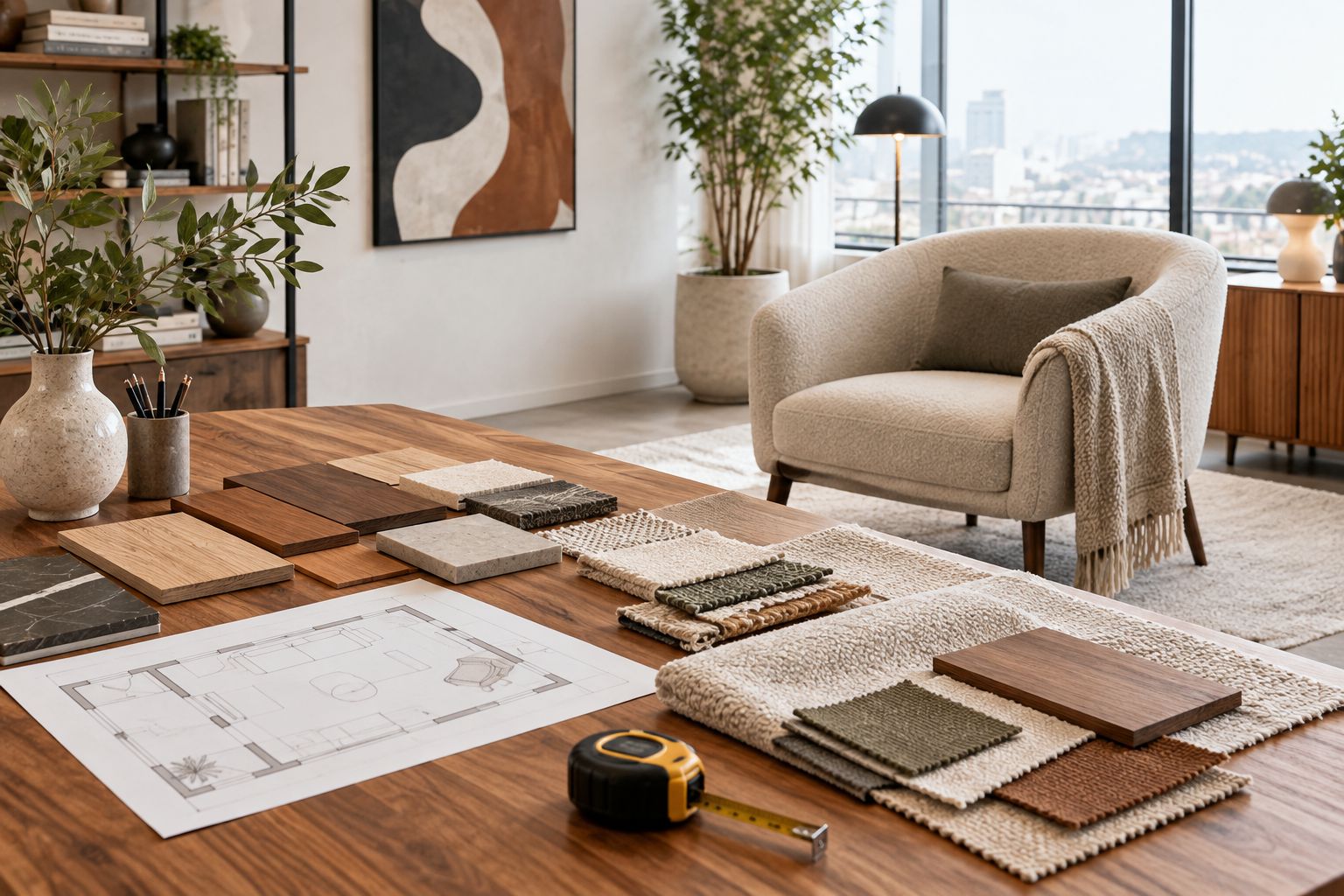 Assess the furniture finish beside the materials that will surround it.
Document suitability and care requirements
Read the product information before assigning a piece to demanding use. A residential selection does not automatically meet a commercial project’s requirements. Ask for applicable documentation and have the project’s responsible specialists determine which requirements apply.
Care instructions belong in the specification, not in a forgotten attachment. The client who wants pale, textured seating also needs to understand the prescribed cleaning method. Compare that method with the household’s routines before approving the fabric.
Sohnne states a 5-year warranty and 60-day returns. Treat these as policies to review, not evidence of a particular item’s performance. Confirm the current conditions and how they apply to the exact order before presenting them to your client.
- Request documentation for the intended residential or commercial use.
- Confirm the prescribed cleaning method for each finish.
- Ask which components can be removed or serviced.
- Review current warranty and return conditions.
- Add the approved care instructions to the handover file.
Present options with clear trade-offs
Use a simple presentation board before investing time in polished renderings. Show the furniture in the proposed layout, identify its role, and explain the compromise. A sculptural accent chair can add definition while requiring more floor area than its usable seat suggests.
Keep the options genuinely different. Presenting nearly identical silhouettes in different colors does not answer a disagreement about comfort, circulation, or maintenance. State which problem each selection solves and what it asks the client to accept.
Your 2026 approval record should identify the exact item, finish, dimensions, and accepted limitations. If a material or configuration changes later, obtain approval for that change rather than relying on the original mood board.
- Label each option with the client need it serves best.
- Show furniture footprints on the same scaled plan.
- State a benefit and a limitation for every selection.
- Identify which decisions remain unresolved.
- Obtain written approval for the exact specification.
Confirm the order and prepare the handover
Maintain an order schedule in a spreadsheet if you do not use project-management software. Assign a responsible person to each outstanding question and retain the supplier’s written answers. A verbal discussion does not replace the confirmed order specification.
Check the order against the approved drawing and finish record before payment. Ask the supplier to confirm delivery arrangements and installation responsibilities for the project. Do not convert an estimate into a client commitment without confirmation.
Sohnne states free insured shipping. Verify the arrangements for your order, including access constraints and any handling questions, rather than assuming that shipping resolves installation. At handover, give the client the care information and the records needed for future service enquiries.
- Match the order to the approved item, finish, and configuration.
- Confirm delivery arrangements and site-access restrictions.
- Identify who handles assembly and packaging removal.
- Photograph the pieces and record issues on receipt.
- File care instructions, order records, and warranty information together.
Compare sourcing options for your project
Choose a sourcing route by the work it needs to support. Direct retail, vintage sourcing, and custom fabrication offer different ways to achieve a coherent room; none removes your responsibility to verify fit and suitability.
Use this comparison in your 2026 procurement brief. The best route is the one whose documentation and approval process match the client’s requirements.
| Option | Best for | Main benefit | Key limitation |
|---|---|---|---|
| Sohnne direct retail | Residential mid-century modern briefs | Factory-made furniture across seating, lighting, and dining categories, with customization options | Confirm item-level specifications and project-specific customization details |
| Vintage sourcing | Projects needing a particular period object or aged finish | Lets you assess the actual object and its existing patina | Condition, previous repairs, and care needs require individual inspection |
| Custom fabrication | Rooms with dimensions or functions that catalog pieces do not resolve | Lets you define dimensions, materials, and detailing in a written brief | Requires detailed drawings, approvals, and coordination with the maker |
Best for a defined mid-century modern residential direction: Sohnne. Best for an existing period object: vintage sourcing. Best for an unresolved dimensional requirement: custom fabrication. Combine routes only when each has a clear role in the room.
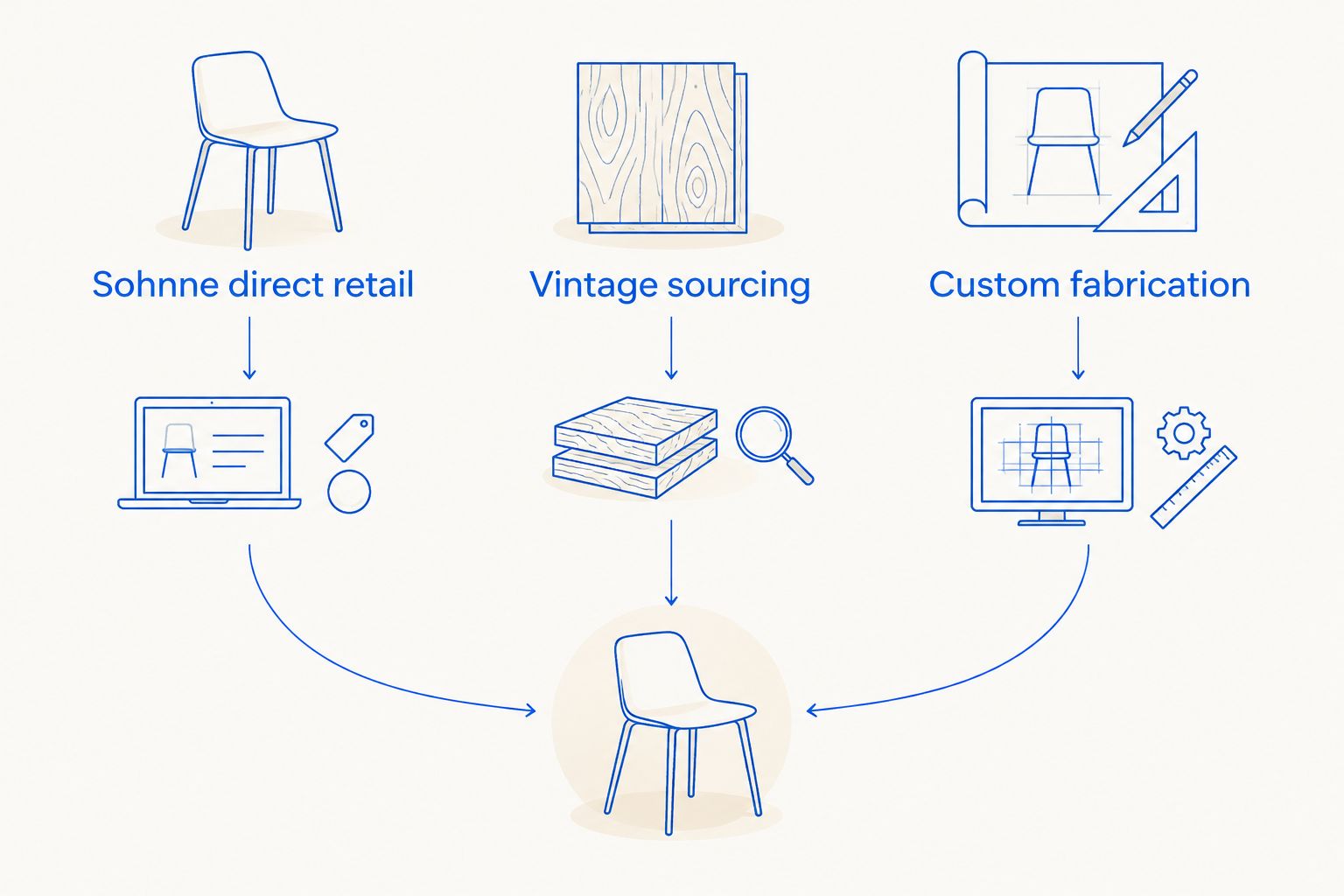 Choose the sourcing route after defining what the project needs to resolve.
Common mistakes interior designers make
Approving a silhouette without checking usable dimensions
Overall width does not reveal how much seating space remains between the arms. A generous outline can conceal a comparatively restricted seat. Record usable seat dimensions and evaluate them against the client’s needs before approval.
Treating residential and commercial briefs alike
A hotel lounge and a private reading corner place different demands on documentation, maintenance, and operation. Specify for the actual setting. Request the relevant evidence rather than treating a supplier’s residential positioning as commercial approval.
Letting finish names replace material checks
A finish label is not a complete material description. Ask what the visible surface and underlying construction are, then compare the actual finish with neighboring materials. Keep the approved reference in the project file.
Changing a configuration without revisiting the plan
Adding a sofa section or changing an arm position changes the footprint. Recheck circulation, outlets, table placement, and delivery access whenever the configuration changes. The original layout approval does not cover a different arrangement.
Leaving maintenance until the final handover
Care requirements can change a client’s willingness to approve a finish. Discuss them during selection, particularly for frequently used seating and dining surfaces. The handover should confirm an understood routine, not introduce an unexpected obligation.
FAQ
What is designer style furniture for interior designers?
Designer style furniture for interior designers is furniture selected for its form, materials, and fit within a client’s project. Evaluate the appearance alongside dimensions, comfort, care requirements, and intended use.
What is Sohnne best for in an interior design project?
Sohnne is best for interior designers sourcing mid-century modern furniture for residential projects. The brand serves individual buyers and trade clients, manufactures in its own factory, and offers customization options; confirm the details for each proposed item.
Should I choose catalog furniture or custom fabrication?
Choose catalog furniture when its verified dimensions and specifications resolve the brief; choose custom fabrication when they do not. Custom work needs a clear drawing and approval process rather than a visual reference alone.
How do I check whether a sofa will fit before ordering?
Check both the room footprint and the delivery route before ordering a sofa. Tape out the proposed arrangement, measure access restrictions, and request assembled and packaged dimensions.
Can I specify residential furniture for a commercial interior?
Specify residential furniture for a commercial interior only after confirming that the exact item meets the project’s applicable requirements. Request relevant documentation and involve the professionals responsible for compliance.
What should I ask before requesting furniture customization?
Ask which dimensions, finishes, materials, and configurations can be changed for the exact piece. Obtain written confirmation of the agreed specification and review it against the room plan before approval.
What should go in a furniture handover file?
Include the approved specification, order records, care instructions, and applicable warranty information in the furniture handover file. Add receipt photographs and records of any issues so the client has a clear reference for future enquiries.
One last thing
Check the room from the seated position before signing off. From there, you see the underside of nearby tables, the relationship between armrests and surfaces, and what blocks the window—not just the arrangement shown in a standing-height rendering.
Make the seated view part of approval. A room that reads beautifully at the doorway still has to work from the place your client spends time.
Related guides
- Measure a room before choosing a modular sofa
- Choose sofa depth for seated comfort
- Care for bouclé furniture
Stay connected with us!
Keep in touch with what’s new and next. Subscribe for weekly insights, product launches, and community news!