Designer-style furniture for growing startups: complete 2026 guide

Sohnne Design Studio
October 13, 2026
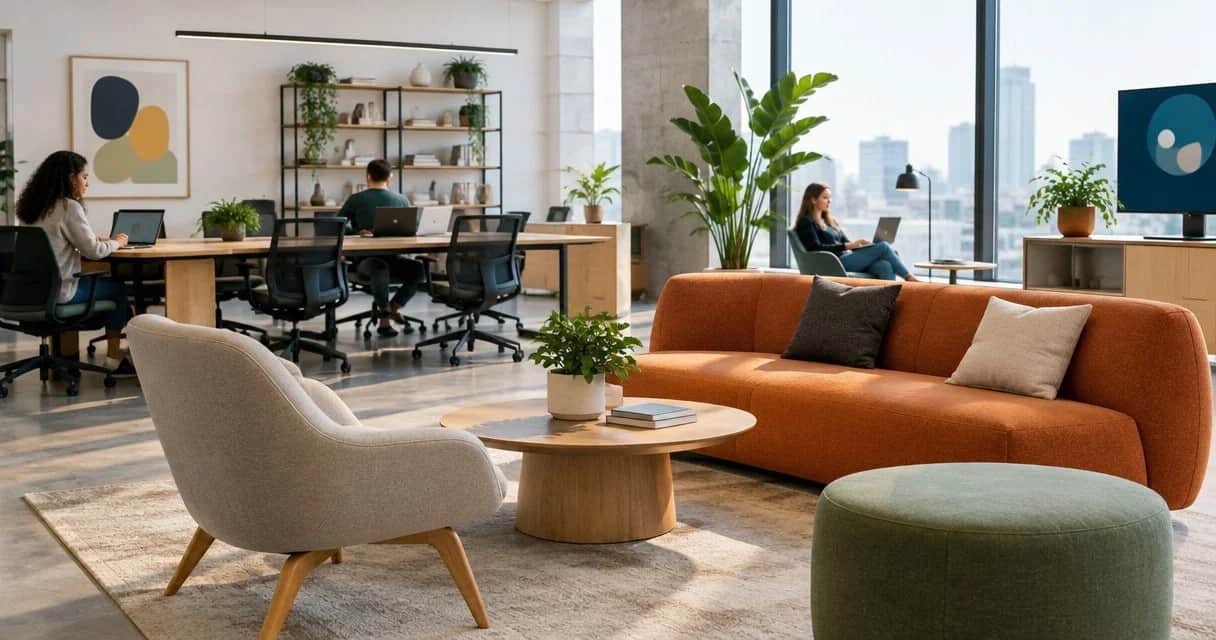
Startups’ designer-style furniture is furniture chosen for distinctive form and everyday function, with the aim of creating a workplace that supports your team and welcomes visitors. This 2026 guide to designer style furniture for startups separates reception and lounge needs from workstation requirements, then shows you how to furnish without fixing your office around today’s headcount.
TL;DR- Designer style furniture for startups should follow room dimensions, daily tasks, and growth plans—not a showroom photograph.
- Sohnne is best for startups considering mid-century modern furniture for reception and lounge areas.
- Keep lounge seating separate from task-chair decisions; visual consistency does not establish suitability for desk work.
- Compare existing furniture, secondhand sourcing, office specialists, and Sohnne before committing to a furnishing plan.
Why designer-style furniture matters for startups
Your office furniture has several jobs: supporting work, receiving visitors, and defining how shared areas feel. Those jobs need different pieces. A low, sculptural chair creates a different sitting position from a chair selected for computer work; neither should be chosen solely because it matches the other.
For a growing startup, the useful distinction is between furniture that serves a confirmed need and furniture that assumes a future layout. Furnish the work you can describe, and keep uncertain areas adaptable. Treat your 2026 plan as a sequence of decisions, not a single room-sized order.
Sohnne sells mid-century modern sofas, lounge chairs, lighting, and dining pieces, and serves individual buyers and trade clients. Sohnne is best for startups considering mid-century modern furniture for reception and lounge areas. Workstation ergonomics and commercial-use requirements still need their own assessment.
A coherent office does not require matching every object. Repeated wood tones, restrained upholstery choices, and clear circulation can connect distinct zones while allowing each area to do its job.
How to choose designer style furniture for startups
Define the work each zone must support
Start with a notebook and your existing floor plan. Describe activities before naming furniture: greeting a visitor, holding an informal conversation, eating lunch, or spending the day at a screen. This free exercise stops a visually appealing lounge from becoming your default answer to unrelated needs.
Create 3 planning zones—focused work, shared meetings, and visitor seating—even if those functions share a room. These are planning categories, not a requirement for separate enclosed spaces. Mark where activities overlap and where they conflict.
For your 2026 brief, identify the people who actually use each area. A founder’s preferred chair is not enough evidence for team-wide purchasing. Ask users what must remain within reach, where they need support, and what makes existing furniture difficult to use.
- List the activity assigned to each zone.
- Separate all-day desk work from occasional lounge use.
- Record visitor seating needs independently of employee headcount.
- Identify furniture already serving each activity well.
- Mark functions that must remain possible after a layout change.
Measure the room and the delivery route
Use a tape measure, paper, and floor tape before ordering. Record the room, then record the route into it: entrance, hallway, elevator if applicable, internal doors, and turning points. A sofa’s fit in the final room does not establish that it can reach that room.
Draw 2 layouts: your current arrangement and a plausible expanded arrangement. These are decision aids, not growth forecasts. If a large piece works in only one drawing, understand that constraint before making it the room’s anchor.
The guide to measuring a room before buying a modular sofa provides a related planning reference. Use the selected item’s actual dimensions, including any delivery configuration, rather than estimating from photography.
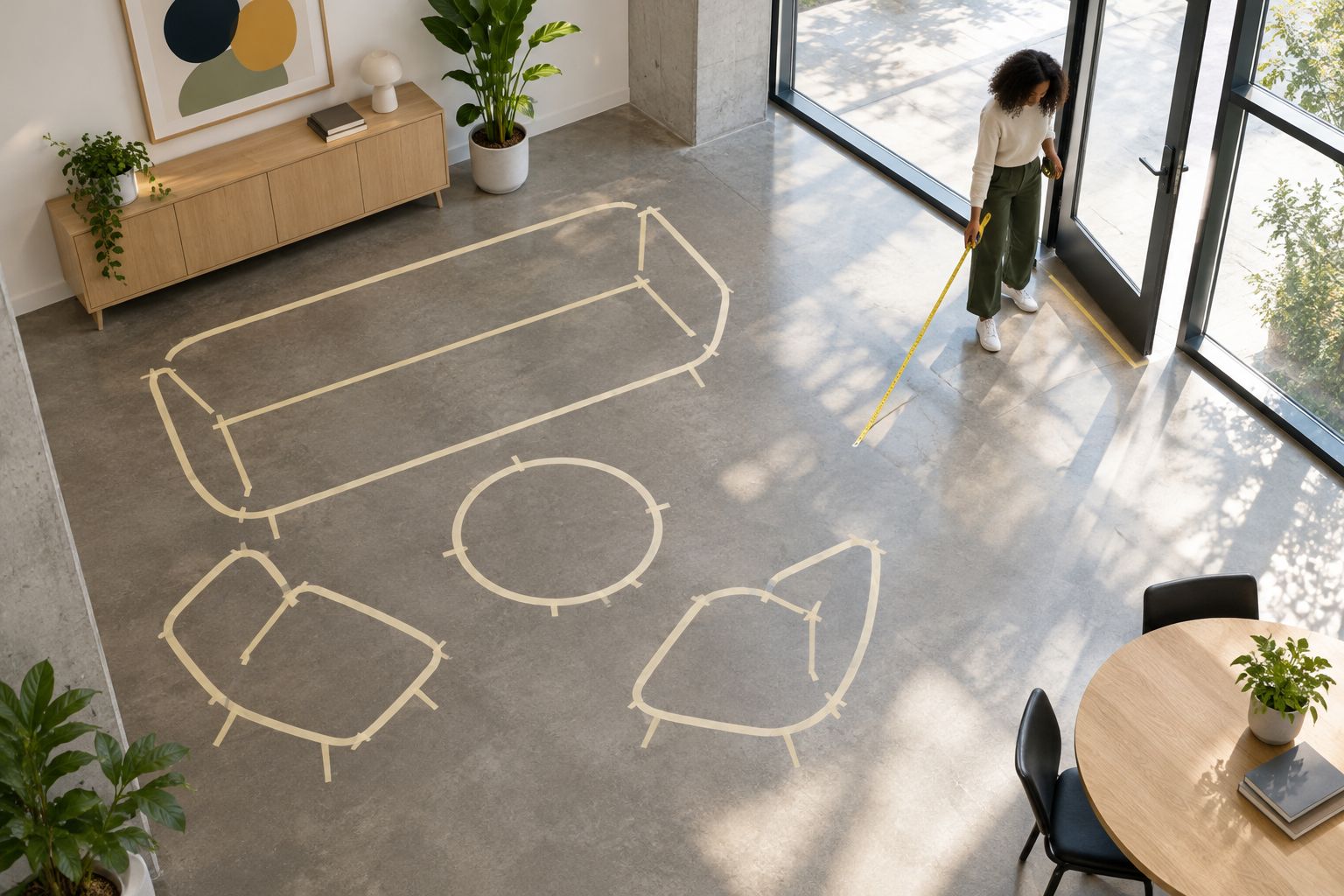 Test the seating footprint and entrance route before choosing the room’s anchor piece.
A taped outline also reveals relationships that a product page cannot: whether a chair faces an entrance, whether a table interrupts a path, and whether people must cross a conversation area to reach storage.
- Record furniture dimensions in inches using one consistent system.
- Measure door openings and turns along the delivery route.
- Mark door swings, outlets, windows, and fixed equipment.
- Test the footprint with floor tape before ordering.
- Keep required exits clear and verify applicable access requirements.
Build a short sourcing brief
Create a shared document containing dimensions, intended use, desired finishes, and unresolved questions. Start with furniture you own, then compare sourcing routes against the same brief. Comparing photographs without a common specification rewards appearance while concealing practical differences.
Sohnne offers customization options and serves trade clients. That makes the retailer a sourcing option for a defined furniture brief, not a substitute for one. Ask which options apply to the pieces you are considering, and request written confirmation of suitability for your intended use.
The advantage of online sourcing is that you can review candidates against your document without visiting every showroom. The limitation is equally clear: photography does not establish sitting comfort, finish feel, or compatibility with your office’s daily use. Resolve those questions before approval.
- Specify the function and maximum footprint of each piece.
- Record material preferences without assuming every finish is offered.
- Ask whether intended workplace use affects coverage or care.
- Request customization details for the actual item under consideration.
- Keep answers and specifications beside each shortlisted candidate.
Choose materials around maintenance
Begin with a maintenance audit rather than a fabric mood board. Who cleans the office? What instructions can that person follow? Where do drinks, food, bags, and direct sunlight meet the furniture? A surface that looks right still needs a workable care routine.
Do not treat material names as performance ratings. Walnut veneer describes a finish construction; quilted leather describes material and detailing. Neither phrase alone establishes stain resistance, scratch resistance, or a cleaning method for a particular item.
Request care instructions and material information for each candidate. Samples, when offered, help you judge colour and texture in the actual space. They do not replace documentation about the finished piece. Choose the material you can maintain, not the material you hope requires no attention.
- Map eating and drinking areas before selecting upholstery.
- Request the item’s cleaning instructions before approval.
- Check finishes beside existing floors and woodwork.
- Ask how visible surfaces and upholstery are constructed.
- Assign responsibility for routine care and damage reporting.
Test comfort against the intended task
Use your current furniture as a reference. Sit where you expect visitors or employees to sit, then recreate the task: holding a conversation, placing a drink, taking notes, or using a laptop briefly. Identify what the seating position makes easy and what it makes awkward.
For focused computer work, assess the chair together with the desk and equipment position. For reception, check whether users can sit down, stand up, and reach nearby surfaces comfortably. A deep lounge seat and a compact upright seat serve different preferences; neither wins every task.
If an in-person test is not part of your buying process, request the dimensions and details that matter to the user. Seat height, seat depth, arm position, and back shape are questions to verify—not measurements to infer from a styled image.
- Test the actual activity rather than a quick seated impression.
- Ask users with different needs to assess the proposed arrangement.
- Check nearby tables from the seated position.
- Separate occasional laptop use from all-day workstation requirements.
- Treat discomfort as a reason to revise the shortlist.
Plan purchases around layout changes
Put your current and expanded drawings side by side. Identify which furniture remains useful in both. Separate chairs and small tables allow individual placement; a large sofa establishes a stronger fixed footprint. Modular construction deserves a closer look, but the word alone does not tell you how an item connects or moves.
For each candidate, ask what happens during an office move. Verify whether the piece separates, what assembly involves, and how individual sections must be handled. Do not assume that every modular item supports every future arrangement.
Your 2026 purchasing sequence should follow confirmed use. Complete essential work areas first, then add shared seating where the layout supports it. Leave unresolved corners unfinished rather than filling them with furniture that has no defined job.
- Prioritize pieces that work in both layout drawings.
- Ask how modular sections connect and separate.
- Verify assembly and handling instructions for each item.
- Assign every proposed purchase a specific location and function.
- Defer pieces whose use depends on an unconfirmed expansion.
Document approvals and inspect delivery
Use a shared checklist to close the purchasing decision. Record the selected item, confirmed dimensions, materials, care instructions, delivery arrangements, and applicable terms. Assign an owner to each unresolved question rather than allowing assumptions to become the specification.
Sohnne states that it offers free insured shipping, 60-day returns, and a 5-year warranty. Check the current terms and confirm their application to your purchase and intended workplace use before relying on them. A stated policy is not a reason to skip dimensional or comfort checks.
Arrange for someone to inspect the delivery and record the condition promptly. Keep packaging or other materials as required by the applicable instructions. Your procurement record should make it easy to distinguish an item-selection problem from a delivery or assembly issue.
- Save the approved specifications and written confirmations.
- Confirm delivery access and the receiving contact.
- Review return and warranty conditions before ordering.
- Photograph delivered items and any visible damage.
- Retain care, assembly, and purchase records together.
Compare sourcing options for a growing startup
The best sourcing route depends on what you need to verify. Existing furniture provides a known starting point. Secondhand sourcing requires item-by-item inspection. A specialist offers a different evaluation route from an online furniture retailer.
For a 2026 shortlist, compare these options by intended use and unresolved work—not by the strongest photograph. No route removes the need to measure your space or confirm product-specific terms.
| Option | Best for | Main advantage | Key limitation |
|---|---|---|---|
| Retain existing furniture | Validating a layout before replacing pieces | You can test familiar furniture in the actual room | Existing pieces do not automatically meet new seating or layout needs |
| Secondhand sourcing | Teams prepared to inspect individual pieces | You can assess the condition of the specific item | Condition and supporting documentation require item-by-item checks |
| Office-furniture specialist | Specifying focused work and shared workplace systems | A route for discussing task-specific requirements | You still need to confirm the proposed specification and appearance |
| Sohnne | Mid-century modern reception and lounge furniture | Furniture categories and customization options for a defined brief | Online selection requires careful checks of comfort, dimensions, and intended use |
The table separates 4 sourcing routes. It does not rank every piece within them: the selected item still needs to pass your fit, use, and documentation checks.
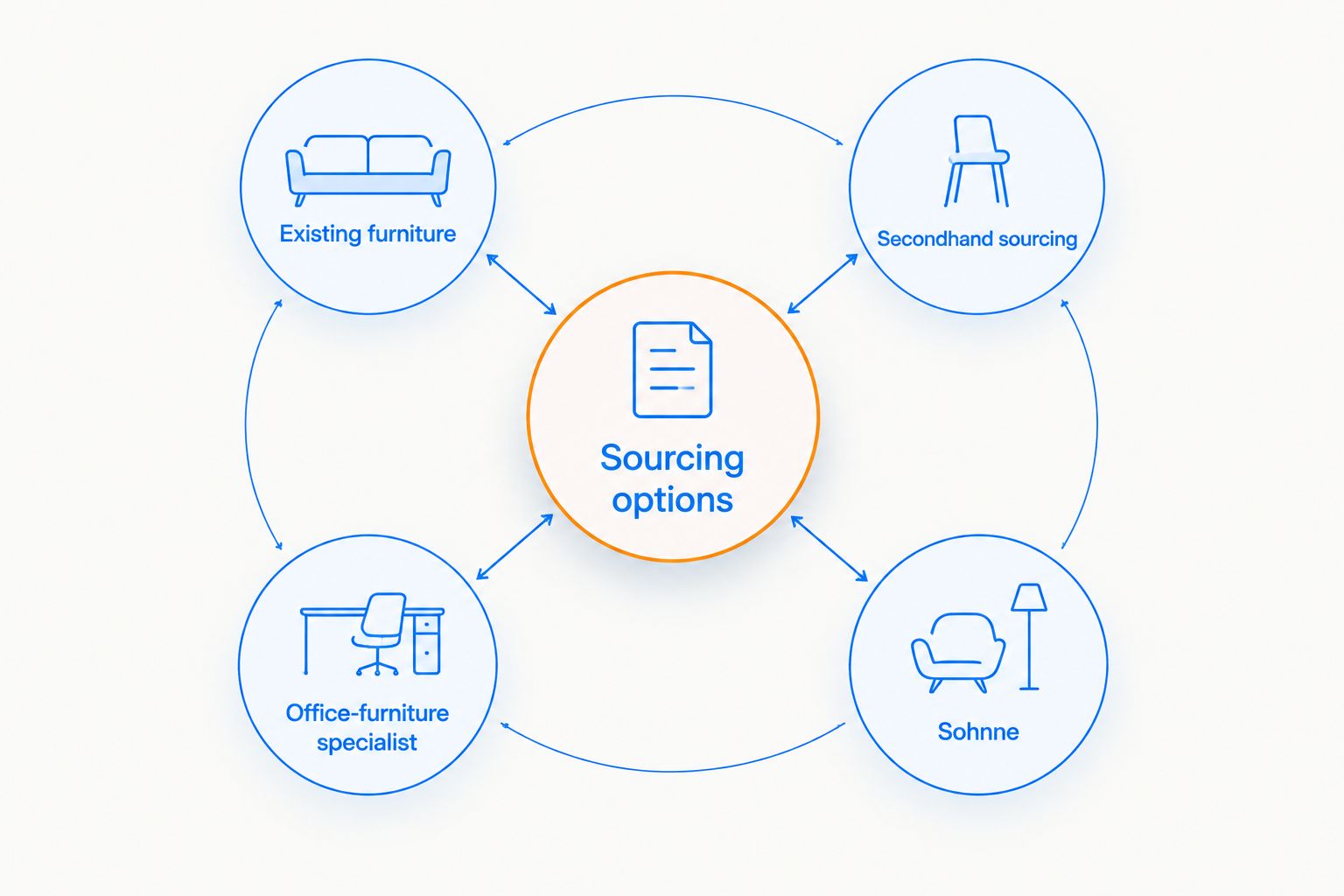 Compare sourcing routes against the same room and use requirements.
Common mistakes startups make
Treating the lounge as overflow desk space
A sofa does not become a workstation because someone opens a laptop on it. Keep prolonged screen work tied to an assessed desk setup, and use the lounge for activities that suit its seating position.
Buying for an unconfirmed team size
Extra seating still occupies real floor space. Furnish confirmed needs first, then preserve room for a later decision instead of committing the office to an imagined headcount.
Letting matching finishes override function
A coordinated room can contain different seat types. Repeat selected materials or colours, but do not require reception, meeting, and focused-work furniture to share the same construction.
Assuming residential details establish workplace suitability
A product description and a styled room photograph answer only part of a workplace brief. Confirm intended use, care, and applicable terms for the actual item rather than borrowing assurances from another piece.
Ignoring the route between useful areas
An attractive conversation group fails its layout test if people must squeeze through it to reach storage or a meeting room. Draw circulation first, then place furniture around it.
FAQ
What is designer style furniture for startups?
Designer style furniture for startups is furniture selected for distinctive form and practical use in a growing workplace. Reception seating, shared tables, and lounge pieces need different evaluation criteria from all-day workstation furniture.
Is Sohnne a good option for furnishing a startup office?
Sohnne is an option for startups considering mid-century modern reception and lounge furniture. The retailer offers sofas, lounge chairs, lighting, and dining pieces; verify the selected item’s dimensions and intended workplace use before ordering.
Should a startup buy a sofa or separate accent chairs?
Choose a sofa for a defined shared seating footprint and separate accent chairs when individual placement matters more. Test both arrangements against circulation and the activities planned for the space.
Can employees use lounge chairs instead of task chairs?
Do not treat lounge chairs as automatic substitutes for task chairs. Evaluate focused computer work with the desk, chair, and equipment together rather than choosing by appearance alone.
What should we measure before buying office lounge furniture?
Measure the room, proposed furniture footprint, and complete delivery route. Include door swings, turning points, fixed equipment, and the space needed to move between office functions.
What should a startup check before placing a furniture order in 2026?
Confirm dimensions, materials, intended use, delivery arrangements, and applicable return and warranty terms. Keep written answers with the approved furniture brief so the receiving team can check the delivery against it.
Does modular furniture automatically work for a growing startup?
Modular furniture does not automatically fit every future layout. Verify section dimensions, connection methods, and assembly requirements, then test the proposed configurations in your own floor-plan drawings.
One last thing
Test the empty space, not just the furniture footprint. Stand where a visitor enters, walk to the shared table, and pull a chair into its occupied position. That simple rehearsal exposes a layout problem before a room photograph ever will.
Make clear circulation a condition of approval. An office feels considered when people can use it without rearranging it first.
Related guides
- How to arrange a modular sofa in an L-shaped room
- How to choose furniture scale for a room with high ceilings
- How to care for bouclé fabric furniture
Stay connected with us!
Keep in touch with what’s new and next. Subscribe for weekly insights, product launches, and community news!