Best Replica Dining Benches for a Farmhouse Table 2026

Sohnne Design Studio
August 15, 2026
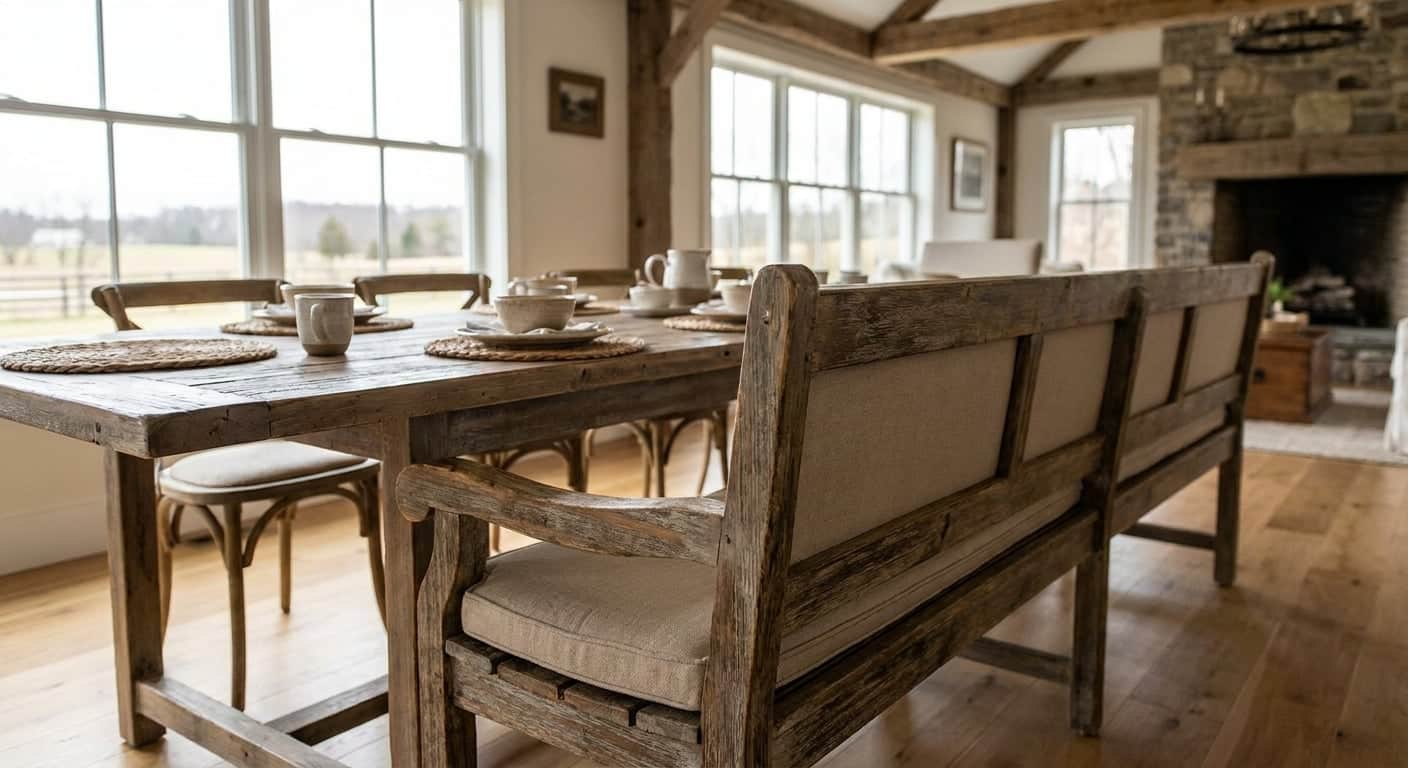
A replica dining bench for a farmhouse table has to solve one problem chairs don't: it needs to disappear under a thick, often oversized tabletop while still looking like it belongs there, not like a leftover from a different house.
TL;DR- Solid oak trestle benches at 17-18 inch seat height pair best with standard 30 inch farmhouse tables — Buy.
- Mid-century tapered-leg walnut benches bridge farmhouse and modern dining rooms without clashing — Consider.
- Metal-frame industrial benches read cold next to reclaimed wood tables in 2026 farmhouse setups — Skip.
- Bench length should run 4-6 inches shorter than the tabletop on each side to avoid corner collisions.
Why this matters
A bench that's the wrong height forces knees into the tabletop lip on every sit-down, and a bench that's the wrong finish makes an otherwise good farmhouse table look mismatched in photos and in person. Sohnne's dining collection treats seating height and proportion as design decisions, not afterthoughts, and that same logic applies whether you're shopping a bench, a chair, or a full table.
Farmhouse tables run wider and thicker than most dining tables, typically 30 inches tall with an apron that can eat into legroom. A bench built for a slimmer, mid-century-style table won't always clear that apron, so height and depth matter more here than they do for a standard chair purchase.
How we ranked
Each bench style below is scored against three things a farmhouse table setup actually needs: seat height relative to a 30-inch tabletop, material compatibility with reclaimed or solid wood tops, and how the bench behaves in daily use — wobble, weight capacity, and how it reads next to mixed seating. This is a category buying guide, not a single-SKU review, and the picks reflect construction patterns common across the replica and reproduction furniture market in 2026, not a single retailer's catalog.
The ranked list
1. Solid Oak Trestle Bench — the workhorse pick
A trestle base with a single center support instead of four legs is the classic farmhouse bench silhouette, and it's the one that survives a decade of daily dinners. Seat height sits at 17 to 18 inches, about an inch below a standard dining chair, which keeps knees clear of a 30-inch table's apron.
Length typically runs 60 to 72 inches to match a six-to-eight-seat farmhouse table, seating two to three adults per side. Oak's density means it won't cup or crack the way softer pine can under repeated weight shifts.
Verdict: Buy. This is the safest, most durable match for a farmhouse table and the one that photographs well from any angle.
2. Reclaimed Pine Farmhouse Bench — the rustic anchor
Reclaimed pine carries visible grain, nail holes, and color variation that most farmhouse tables are built to complement, so this is the pick when you want the bench and table to look like they came from the same barn. Seat height matches the oak trestle at 17 to 18 inches.
Pine is softer than oak, so expect surface dents to show up within the first year or two of heavy use — most owners consider this part of the patina, not a defect.
Verdict: Buy, with the caveat that it's a softer wood and will show wear faster than oak.
3. Mid-Century Tapered-Leg Bench — the crossover pick
A walnut bench with tapered, angled legs breaks from the trestle silhouette but works surprisingly well in a farmhouse dining room that leans toward a more curated, less rustic look. This is the choice for anyone mixing a farmhouse table with a broader mid-century modern dining room palette of walnut, brass, and warm neutrals.
Seat height runs slightly higher, around 18 inches, and the narrower profile means it seats two comfortably rather than three.
Verdict: Consider — it's the right call for a mixed-era dining room, the wrong call if you want a pure farmhouse look.
4. Upholstered Boucle or Linen Bench — the comfort pick
A padded bench softens the hard-surfaces feel that an all-wood farmhouse table setup can slide into, and boucle or heavyweight linen upholstery has been one of the most requested finishes across dining seating in 2026. Foam density matters here — anything under medium-firm will compress within a year of daily use.
The tradeoff is practical: fabric seats need more upkeep around a table than bare wood, especially with kids or red wine in regular rotation.
Verdict: Consider for households prioritizing comfort over low-maintenance durability.
5. Metal-Frame Industrial Bench — the one to skip
A blackened-steel or raw-metal frame bench looks sharp in a loft dining setup, but next to a reclaimed or solid-wood farmhouse table it reads cold and mismatched rather than intentional. The material contrast that works in an industrial loft undercuts the warmth a farmhouse table is built around.
Metal benches also transmit more scraping noise on hardwood or tile floors than a wood-legged bench, which matters in an open-plan kitchen-dining space.
Verdict: Skip for a farmhouse table specifically — save it for a concrete-floor or loft dining setup instead.
“If the bench sits more than an inch below the chair seat height, knees start hitting the tabletop apron on every sit-down.”
Comparison table
| Style | Seat height | Best for | Verdict |
|---|---|---|---|
| Solid Oak Trestle | 17-18 in | Daily use, high traffic | Buy |
| Reclaimed Pine | 17-18 in | Rustic farmhouse tables | Buy |
| Mid-Century Tapered-Leg (Walnut) | ~18 in | Mixed-era dining rooms | Consider |
| Upholstered Boucle/Linen | 17-18 in | Comfort-first households | Consider |
| Metal-Frame Industrial | 17-19 in | Loft/industrial dining, not farmhouse | Skip |
Where to buy
- Measure the table apron clearance first. A bench that clears a 2-inch apron on a 30-inch table won't necessarily clear a 3-inch apron on a heavier farmhouse build — measure before ordering.
- Match finish tone, not just wood species. Two oak pieces from different makers can still clash if one runs honey-toned and the other runs gray-washed.
- Check joinery before checking price. Mortise-and-tenon or dowel joints hold up to bench use better than screws alone; a quality verification guide walks through what to look for before you buy any replica dining piece, bench included.
Pair a bench with the right table
Browse Sohnne’s dining pieces to find a table and chairs that match your bench.
Shop dining piecesFAQ
What’s the best replica dining bench for a farmhouse table in 2026?
A solid oak trestle bench at 17 to 18 inches seat height is the safest match for a standard 30-inch farmhouse table in 2026. It clears the table apron, seats two to three per side, and holds up to daily use better than softer woods.
How tall should a dining bench be for a farmhouse table?
A bench should sit 17 to 18 inches high, about an inch below a standard dining chair seat. This keeps knees clear of a farmhouse table’s thicker apron and aprons that sit lower than a standard table.
Can I mix a mid-century bench with a farmhouse table?
Yes, a walnut tapered-leg bench works well with a farmhouse table when the rest of the room already leans toward a mixed-era palette. It reads as a deliberate style choice rather than a mismatch when paired with warm neutrals and brass accents.
Are upholstered benches practical for daily dining?
Upholstered benches work for daily use but need more upkeep than wood, especially with kids or red wine in regular rotation. Choose medium-firm foam density or higher to avoid compression within the first year.
How long should a bench be for a farmhouse table?
A bench should run 4 to 6 inches shorter than the tabletop on each side, so a 72-inch table pairs with a 60 to 66-inch bench. This avoids corner collisions when guests sit at the ends.
Do benches need to match the dining chairs exactly?
No, benches and chairs don’t need to match in wood tone or style, but they should share a seat height within an inch of each other. A mismatch in height is more noticeable than a mismatch in finish.
What wood holds up best for a farmhouse bench?
Solid oak holds up best for daily bench use because of its density, followed by reclaimed pine, which is softer and shows dents faster. Walnut performs well too but is typically reserved for lighter, mixed-era styling rather than heavy rustic use.
Is a bench better than chairs for a farmhouse table?
A bench seats more people per linear foot than individual chairs and suits high-traffic households, but it offers less back support for long meals. Many farmhouse dining rooms use a bench on one side and chairs on the other for the best of both.
One last thing
Set bench legs 6 to 8 inches in from each end rather than flush with the seat edge — it looks like a small detail, but it's the difference between guests bumping knees on table legs and sliding in cleanly, and it's one of the first things to check before you buy.
Related guides
- Best replica furniture for a mid-century modern dining room
- Scando table replica: Scandinavian dining table guide
- PP501 Wishbone chair replica for dining and accent uses
- Best replica sideboards and credenzas for a dining room
Stay connected with us!
Keep in touch with what’s new and next. Subscribe for weekly insights, product launches, and community news!