PP501 Wishbone Chair Replica: Dining vs Accent (2026)

Sohnne Design Studio
July 16, 2026
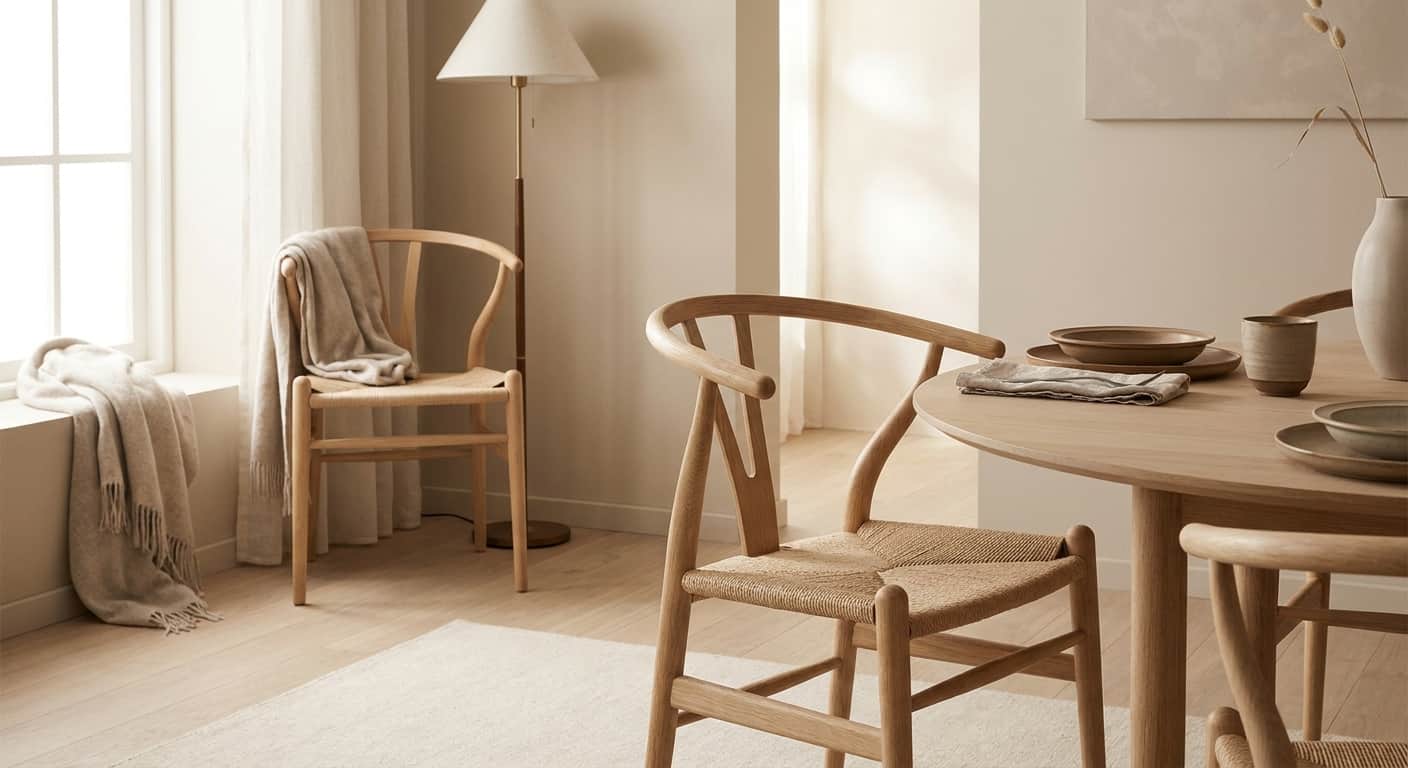
A PP501 Wishbone Chair replica earns its place at the dining table when the frame is solid wood and the seat is tightly woven, and it earns its place as an accent chair almost everywhere else in the house.
TL;DR
A PP501 Wishbone Chair replica works as a dining chair when you need seating for four or more around a standard table, and as a stand-alone accent piece in a reading corner, entryway, or home office. For 2026 furnishing decisions, the verdict breaks down by role: Buy for daily dining use if the frame is solid wood with a densely woven cord seat, Consider it for a single accent spot where design impact matters more than cushioning, and Skip it as a primary lounge or all-day desk chair. The 1:1 original dimensions matter more than the finish color you pick.
Why this matters
The Wishbone Chair shape gets copied loosely and copied well, and the gap between the two shows up fast once you're sitting in it for two hours at dinner instead of two minutes in a showroom. Buyers shopping a PP501 Wishbone Chair replica in 2026 are usually deciding between two very different use cases — a full dining set or a single statement chair — and the criteria that matter shift depending on which one you're solving for.
Getting this wrong means either an accent chair that looks awkward pulled up to a table, or a dining chair that never gets used because it landed in a corner nobody sits in. Sohnne makes the PP501 Wishbone Chair replica to the original 1:1 dimensions, which is the detail that actually decides whether it functions in either role.
Who this is for
This guide is for anyone furnishing a small dining nook, a first apartment, or a single accent corner who needs one chair design to flex between two jobs. It's for the buyer who wants Danish mid-century lines without committing to a full eight-chair dining set right away, and for anyone who's already sitting on a chair that looks right in photos but wobbles after three months of daily use.
What to look for in a PP501 wishbone chair replica
Frame wood and joinery
The original Wishbone Chair relies on steam-bent solid wood arms and a mortise-and-tenon-style joinery at the back, and that construction is what keeps the chair from loosening under repeated sitting and standing. A frame built from solid oak, ash, or walnut will hold its joints through years of daily dining use; a frame built from veneered composite will not. If you're comparing another Wegner-style design, the CH20 Elbow Chair replica uses similar solid-wood joinery logic, which is a useful benchmark when you're judging build quality across replicas.
Papercord seat density and weave
The woven seat is the part that fails first on a poorly made replica. A tightly packed weave with no visible gaps between cord rows distributes body weight evenly and resists sagging; loose or sparse weaving stretches within months under daily dining use. Run your hand across the seat before buying if you can, or check product photos for weave consistency edge to edge.
Seat height matched to your table
Standard dining tables sit at 28 to 30 inches, and a wishbone-style chair needs a seat height in the 17 to 18-inch range to leave proper knee clearance underneath. If you're placing the chair as a stand-alone accent piece next to a console or in a reading nook, seat height matters less because there's no table to clear.
Weight capacity and daily use
A dining chair gets sat in, pushed back, and leaned on multiple times a day, which is a different load pattern than an accent chair that mostly gets photographed. Ask what weight capacity the frame is rated for if you're seating adults daily versus using it as an occasional side chair.
Finish versus room role
A natural oak or ash frame reads warmer and suits dining rooms with wood tables, while a black-frame version reads sharper as a standalone accent piece against lighter walls. Match the finish to where the chair sits, not just to what looks best in a single product photo.
Top picks by use case
The Dining Anchor — Buy. If you're seating four to six people around a table with a top height of 28 to 30 inches, the PP501 Wishbone Chair replica in a solid-wood frame with a densely woven cord seat is the correct call. It's built for repeated daily use, and the 1:1 dimensions mean it won't feel undersized next to a full-size table. Verdict: Buy.
The Desk Companion — Consider. Paired with a home office desk, the wishbone shape works for short sitting sessions but lacks lumbar support for anything past an hour. If your workday is mostly standing meetings or you already have an ergonomic chair for the long stretches, it earns a spot as the guest seat or the accent chair by the window. For more on outfitting a workspace with replica pieces, see replica furniture for home offices. Verdict: Consider.
The Entry Accent — Buy. A single wishbone chair by an entryway console or next to a bookshelf does real design work without needing a matching set. The open back and slim frame keep tight spaces from feeling cluttered, which is exactly what an entry or hallway needs. Verdict: Buy.
The Bedroom Reading Chair — Skip. The seat is firm and the back has no recline, which makes it a poor fit for anyone planning to sit for 45 minutes or more with a book. If bolder Danish-inspired design is the goal for a bedroom corner, a chair like the Chieftain Chair replica is built with more depth and cushioning for that specific job. Verdict: Skip.
What to avoid
- Loose or gapped cord weaving. It looks fine on day one and sags within a season of daily sitting.
- Oversized "wishbone-style" copies with the wrong proportions. If the arms sit too wide or the back is too tall relative to the original 1:1 dimensions, the chair will look bulky next to a standard table.
- Buying it as your only lounge chair. The design is dining and accent furniture, not a substitute for a cushioned reading chair over long sitting sessions.
Verdict comparison table
| Use case | Seat height fit | Daily wear resistance | Verdict |
|---|---|---|---|
| Dining table (4-6 seats) | 17-18 in matches 28-30 in tables | High — built for repeated use | Buy |
| Home office desk companion | Works short-term, no lumbar support | Moderate — fine for guest seating | Consider |
| Entryway / hallway accent | No table clearance needed | High — light, infrequent use | Buy |
| Bedroom reading chair | No recline, firm seat | Low for extended sitting | Skip |
FAQ
What is a PP501 wishbone chair replica?
It's a reproduction of the Danish mid-century dining chair originally designed with a steam-bent wood frame, a Y-shaped back splat, and a woven papercord seat. The PP501 designation refers to the original manufacturer's model number, and replicas reproduce the shape at the original 1:1 dimensions.
Is the PP501 wishbone chair replica good for everyday dining use?
Yes, when the frame is solid wood and the seat weave is dense. A well-built replica holds up to daily sitting and standing at a dining table without loosening at the joints within the first year.
How is PP501 different from CH24?
PP501 and CH24 refer to the same original wishbone chair design produced under different manufacturer model numbers; the shape, dimensions, and construction method are the same across both designations.
Can a wishbone chair replica work as an accent chair?
Yes — a single chair placed in an entryway, reading corner, or next to a console does real visual work without needing a matching dining set around it.
Is paper cord durable in high-traffic rooms?
A tightly woven papercord seat holds up well in daily-use rooms like dining areas; the durability comes from weave density, not the material itself, so check for gaps before buying.
How many wishbone chairs do I need for a standard dining table?
Most dining tables seating four to six people need one chair per seat, with side chairs on the long edges and the wishbone design working fine at the head of the table too since it has no arms to clear.
Does the wishbone chair replica work in a home office?
It works for short sitting sessions and as a secondary guest chair, but it lacks the lumbar support needed for a primary desk chair used for full workdays.
What wood finish holds up best for daily use?
Solid oak and ash frames resist scuffing and joint loosening better than veneered finishes, and both take a natural or dark stain well depending on the room's existing wood tones.
One last thing
The original wishbone seat design uses roughly 120 meters of paper cord hand-wrapped in a herringbone pattern — a construction detail from the 1950s that's exactly why weave density, not just wood quality, is the thing to check before buying in 2026. A chair with a beautiful frame and a sparse seat weave will still fail you at the dinner table.
Related guides
Stay connected with us!
Keep in touch with what’s new and next. Subscribe for weekly insights, product launches, and community news!