Is a designer-style daybed comfortable enough to sleep on nightly?

Sohnne Design Studio
October 21, 2026
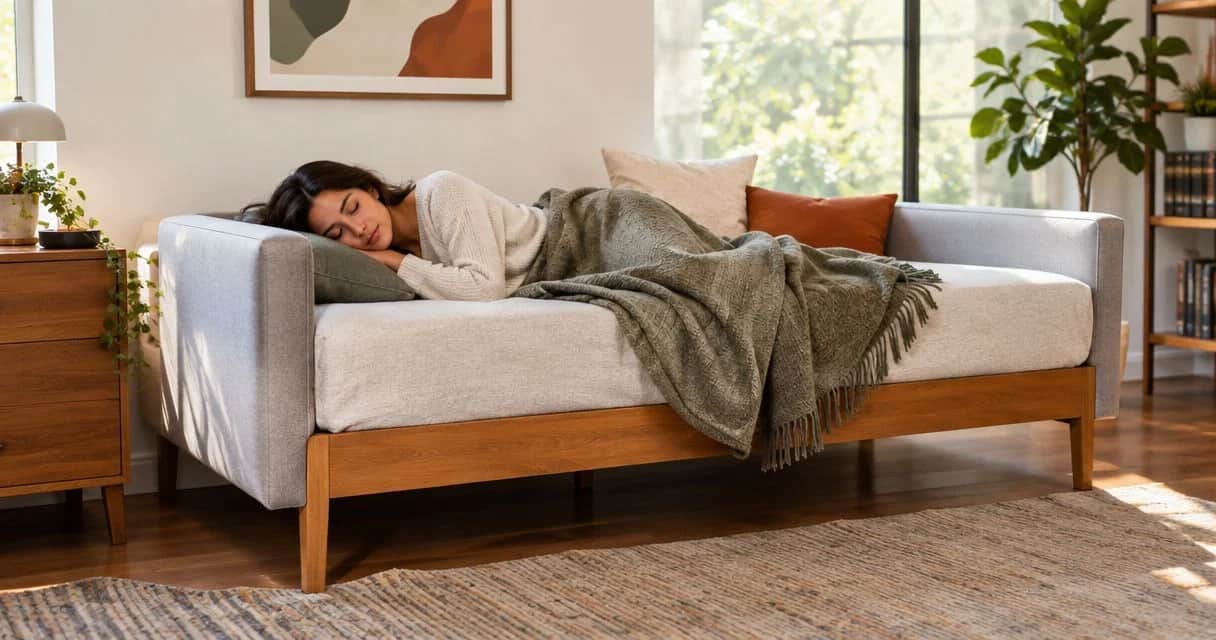
Yes, a designer-style daybed is comfortable enough for nightly sleep when it has a suitable mattress, a compatible support base, and enough unobstructed space for your body. A sculptural frame or upholstered cushion alone does not establish sleeping comfort. Choose the sleeping surface first and the silhouette second, especially when the daybed will replace your everyday bed.
TL;DR- Is a daybed comfortable to sleep on? Yes, when mattress fit, support, and usable sleeping space suit you.
- A mattress-based daybed gives you more control over nightly comfort than a fixed upholstered sleeping surface.
- Sohnne furniture shoppers should distinguish daytime lounging comfort from the support they need for nightly sleep.
- Measure inside the frame, not just the furniture’s outside dimensions, before choosing bedding or a mattress.
Is a daybed comfortable to sleep on nightly?
A daybed can work as your everyday bed. The decisive distinction is whether it supports a proper sleeping setup or simply offers somewhere to stretch out during the day. For your 2026 furniture shortlist, compare construction before upholstery, color, or decorative details.
| Setup | Best for | Main advantage | Main limitation | Nightly-sleep verdict |
|---|---|---|---|---|
| Daybed with a separate mattress | A single sleeper who also needs daytime seating | Lets you choose a compatible mattress for your comfort preferences | Arms and back rails restrict access and usable space | Consider when mattress and base requirements match |
| Daybed with fixed upholstery | Daytime lounging and occasional rest | Keeps a consistent upholstered appearance | Does not give you the same freedom to replace the sleeping surface | Do not assume it replaces an everyday bed |
| Conventional bed with a separate mattress | A room used primarily for sleep | Leaves mattress selection separate from seating needs | Does not provide a sofa-like back for daytime sitting | Choose when sleep takes priority over dual-purpose use |
For Sohnne furniture shoppers furnishing a dual-purpose room, the best daybed is the one that works as a bed before it works as seating. That means checking the actual sleeping area, the support requirements, and how you will use it each evening—not judging comfort from a room photograph.
Why this matters
A daybed carries two different jobs. You sit near its edge during the day, then distribute your weight across its surface at night. A cushion that feels pleasant while you read does not automatically feel right under your shoulders and hips when you lie down.
The room changes too. Decorative pillows need somewhere to go, bedding needs to stay accessible, and a nearby table must remain useful after the sleeping surface is prepared. Nightly comfort includes the routine around the bed, not just the first impression of its upholstery.
A useful 2026 buying brief is therefore specific: an everyday sleeping surface that also provides daytime seating. That brief rules out choosing a daybed solely because it fills an awkward wall beautifully.
Daybed with a separate mattress: best for nightly flexibility
A daybed that accepts a separate mattress lets you evaluate the mattress and frame independently. You can choose a sleeping surface according to your preferred feel, provided it meets the frame manufacturer’s requirements. This is the clearest starting point for an everyday setup.
The advantage has a boundary. A mattress must fit the frame and work with its base; choosing a comfortable mattress does not cancel an unsuitable support system. Check the permitted mattress dimensions, any height restrictions, and whether the frame requires additional support components.
Use the familiar U.S. mattress labels as a starting point, not a substitute for measurements:
- A nominal twin mattress measures 38 inches wide by 75 inches long.
- A nominal twin XL mattress measures 38 inches wide by 80 inches long.
- Twin XL adds 5 inches of length, not width.
These are standard mattress dimensions, not specifications for any particular daybed. Confirm the actual measurements supplied by both manufacturers before pairing a mattress with a frame.
Best for: a single sleeper who wants control over mattress selection while keeping a seating function. The trade-off is that your preferred mattress height and the daybed’s proportions must work together.
Fixed-upholstery daybed: best for lounging first
A fixed upholstered surface keeps the form visually simple. There is no separate mattress to disguise, and the piece reads clearly as living-room furniture. That is useful when daytime lounging is the main purpose.
For nightly sleep, examine what you cannot change. Deep tufting, raised seams, fixed bolsters, and an angled surface deserve attention because you will lie across them rather than sit beside them. Do not treat upholstery thickness or a soft initial feel as proof of suitable support.
Ask whether the manufacturer identifies the piece for regular sleeping and provides relevant care and use instructions. If the description discusses lounging but says nothing about sleeping, do not fill that gap with assumptions.
Best for: a living room or reading space where resting is secondary to seating. For an everyday bed, choose fixed upholstery only after evaluating the complete surface in your normal sleeping position.
Why daybed comfort varies
Daybed comfort varies because the sleeping surface, frame, and sleeper have to work together. These are the checks that matter when assessing a specific design:
- Mattress fit: the mattress must match the frame’s stated dimensions without being forced into place.
- Base compatibility: the support underneath must meet the mattress manufacturer’s requirements.
- Usable space: arms, bolsters, and rails must not occupy the area your head, feet, or elbows need.
- Surface shape: seams, contours, and cushion joins need to be evaluated while lying down.
- Access: the finished height and open side must let you enter, turn, and stand comfortably.
- Daily setup: bedding storage and pillow removal should fit the way you actually use the room.
Treat these as your 2026 daybed checklist. A pleasing shape is still important, but it comes after confirming that the furniture performs its intended job.
How do you check a daybed before buying?
Use this sequence to separate a furniture choice from a sleep decision. Start with the space your body needs, then work outward to the room.
1. Measure usable space
Record the clear length and width where you will lie. Keep the outside frame dimensions separate: they tell you whether the furniture fits the room, not whether you fit comfortably on it.
Check how fixed arms and end cushions affect that clear area. If you sleep with bent knees, turn frequently, or stretch your arms outward, evaluate those positions rather than measuring only while lying straight.
2. Check the base
Read the frame’s assembly and support instructions alongside the mattress requirements. Confirm whether the mattress rests on slats, a platform, or another specified base, and whether the combination needs any additional component.
Do not improvise around a mismatch. Ask for clarification before ordering rather than assuming that a board, extra cushion, or different mattress thickness will solve it.
3. Test lying down
Where an in-person trial is possible, use your normal sleeping position. Turn over, move toward the edge, and check whether the frame interferes with your shoulders or feet. Sitting briefly on the front edge answers a different question.
For an online purchase in 2026, inspect the written specifications and applicable return conditions before committing. Photographs explain appearance; they cannot establish how a mattress will feel to you.
4. Plan bedding
Decide where your sleeping pillow, duvet, and decorative cushions will live during the day. Check that you can fit and remove sheets without struggling around a fixed back or tightly enclosed ends.
A nightly arrangement should be straightforward enough to repeat. If the furniture looks right only after every piece of bedding leaves the room, plan that storage before choosing it.
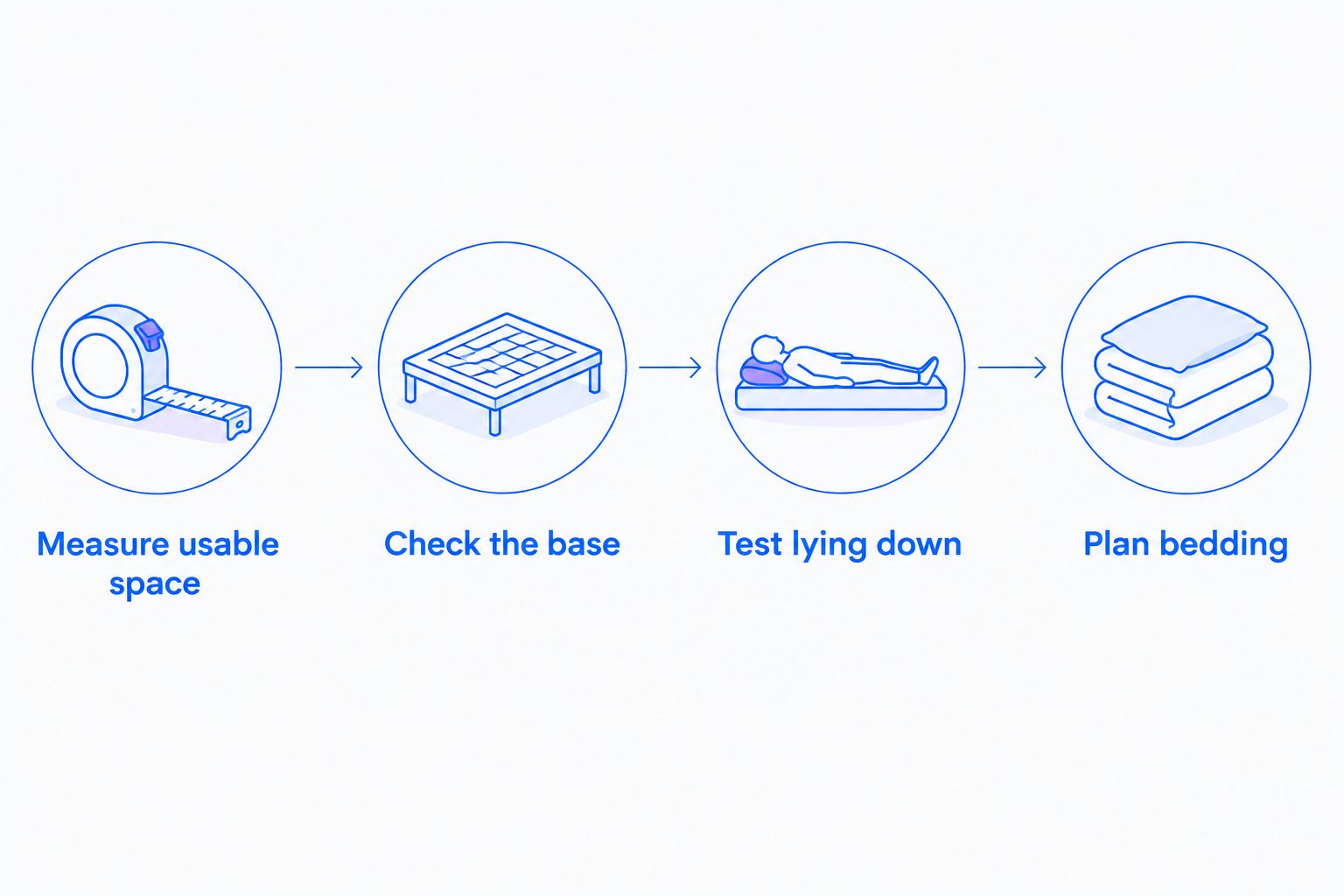 Check the sleeping setup before deciding how the daybed will look during the day.
The sequence also helps you compare shortlisted pieces consistently. Reject an unsuitable sleeping setup before spending time choosing its fabric or arranging accessories around it.
Can a mattress topper make a daybed comfortable enough?
A mattress topper changes the feel of the surface; it does not repair an unsuitable frame or create more sleeping space. Consider a topper only after confirming that the underlying mattress and support system are appropriate.
Check the combined height against the frame’s instructions and surrounding rails. A topper also changes how sheets fit and how the daybed feels when you sit on its edge.
Do not use a topper to justify a daybed that fails the basic fit and support checks. It is an adjustment to a workable setup, not a replacement for one.
Is a twin XL daybed better for a tall adult?
A twin XL mattress provides 80 inches of nominal length, compared with a twin mattress’s 75 inches. That additional length is relevant when a shorter surface leaves your feet crowded, but a twin XL mattress belongs only in a frame designed to accept it.
Measure clear sleeping length as well. A fixed bolster or padded end can occupy space even when the outside dimensions look generous.
Width remains a separate decision. Twin XL does not give you more room to roll sideways, and a daybed’s back and arms can make that limitation more noticeable than on an open bed frame.
Should you choose a daybed or a conventional bed?
Choose a daybed when daytime seating is a genuine requirement and the sleeping setup passes your checks. Choose a conventional bed when the room primarily serves sleep and you do not need a furniture back or enclosed ends.
Neither label guarantees comfort. Both require an appropriate mattress, compatible support, and enough room for the sleeper. The daybed simply adds another requirement: it must also function sensibly as seating.
When reviewing Sohnne furniture for a 2026 room plan, separate visual appeal from verified sleeping specifications. Do not assign any individual piece a nightly-sleep role without checking its stated construction and intended use.
FAQ
Is a daybed comfortable to sleep on every night?
Yes, a daybed is comfortable for nightly sleep when its mattress, support base, and usable dimensions suit you. A fixed upholstered lounging surface needs separate evaluation and should not automatically replace an everyday bed.
Can an adult sleep on a daybed?
Yes, an adult can sleep on a daybed that provides suitable space and support and meets the manufacturer’s use requirements. Check clear sleeping dimensions rather than relying on the furniture’s outside measurements.
What size mattress does a daybed use?
A daybed uses the mattress size specified by its manufacturer. Standard U.S. twin mattresses are nominally 38 inches wide by 75 inches long, while twin XL mattresses are 38 inches wide by 80 inches long; do not assume every daybed accepts either size.
Can I put a regular mattress on an upholstered daybed?
Use a separate mattress only when the daybed is designed to accept one. Adding a mattress over fixed upholstery changes the setup and does not establish that the support or frame is suitable.
Will a mattress topper fix an uncomfortable daybed?
A topper changes surface feel but does not fix inadequate space, an incompatible base, or an unsuitable underlying surface. Check the mattress and frame first, then evaluate whether a topper is appropriate.
Is a daybed comfortable for two adults?
A daybed is not automatically suitable for two adults. Check its actual sleeping width, manufacturer’s load limit, and intended use; a twin-width surface should not be assumed to provide adequate shared sleeping space.
What should I check when choosing Sohnne furniture for a sleeping space?
Check the specific furniture’s stated dimensions, construction, and intended use before assigning it a sleeping role. A design description or photograph does not replace confirmation that the complete setup suits nightly sleep.
One last thing
Before you buy, rehearse the least glamorous part: making the bed. Picture reaching the far corner of a fitted sheet, moving the cushions, and getting up without a table blocking your route.
A daybed can look wonderfully restrained and still demand an awkward nightly routine. Choose the piece you can comfortably sleep on and comfortably live with. Both tests matter.
Related guides
- How to measure a room before buying a modular sofa
- How to pick the right sofa depth for deep-seat comfort
- How to add texture to a neutral living room with furniture
Stay connected with us!
Keep in touch with what’s new and next. Subscribe for weekly insights, product launches, and community news!