Daybed as Sofa Living Room: How-To Guide (2026)

Sohnne Design Studio
July 30, 2026
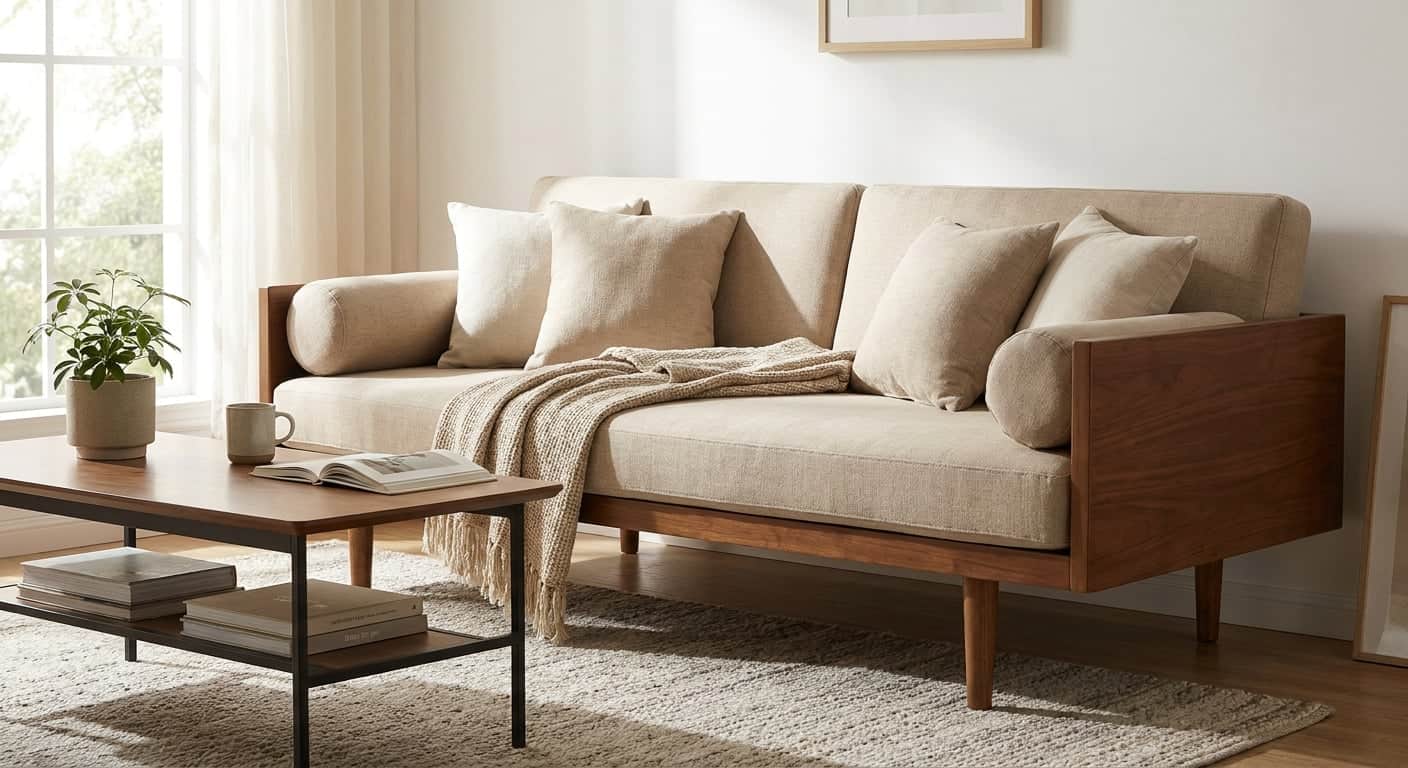
A daybed replica earns its keep as a living room sofa once you fix three things: seat depth, back support, and wall placement — skip any one of them and it reads as a bedroom piece parked in the wrong room.
TL;DR- Daybed as sofa living room setups work when seat depth runs 32-36 inches; the Kjaerholm PK80 daybed replica sits at 33 inches. Buy.
- Add 2-3 bolsters plus a lumbar wedge or the lower back gives out after 45 minutes of upright sitting.
- Push the daybed against a wall, never float it, or guests read it as a bed instead of seating.
- Leather replicas outlast fabric for daily sofa duty; boucle flattens inside 3 months of regular use.
- Skip daybed-only seating in rooms under 120 square feet — the depth eats floor space a standard sofa wouldn’t.
Why this matters
Daybeds were built for lounging, not for the six-hour TV-and-laptop stretches most living rooms actually see in 2026. The frame, the depth, and the missing backrest all assume someone will recline, not sit upright for a full movie.
The Kjaerholm PK80 daybed replica is a useful benchmark here: at roughly 33 inches deep, it splits the difference between a lounge chair and a deep-seat sofa, which is exactly the depth range that makes the daybed-to-sofa conversion work without a redesign.
Get the depth and back support wrong, and you end up with a piece nobody wants to sit on past 20 minutes. Get it right, and a daybed replica outperforms a standard sofa in small rooms because it doubles as guest sleeping space when needed.
What you'll need
- A daybed replica with a seat depth between 32 and 36 inches
- 3 to 4 bolster or lumbar pillows, mixed sizes
- A flat wall or corner with at least 6 feet of clearance
- A rug measuring at least 8×10 feet to anchor the seating zone
- A slim console or side table instead of a bulky coffee table
- A slipcover or removable cushion covers for wear management
The steps
1. Measure the seat depth before you commit
Most daybeds run 30 to 38 inches deep, and that swing matters more than any other spec on this list. Anything under 30 inches forces you to perch on the edge like a bench; anything past 38 inches turns sitting upright into a stretch.
Measure from the front edge to the back cushion or backrest, not the overall frame length. The 32-36 inch band is the sweet spot for a daybed pulling double duty as a sofa in 2026 living rooms — deep enough for lounging, shallow enough for upright conversation.
Common mistake: measuring the frame instead of the usable seat depth, which overstates comfort by 3-4 inches on daybeds with thick side rails.
2. Push the daybed against a wall
A floating daybed in the middle of a room signals "bed," full stop. Pushing the long side against a wall — the way you'd place a sofa — immediately changes how the eye reads the piece.
This single move does more visual work than any accessory. If the daybed has one finished side and one open side (common on designs like the Eileen Gray daybed replica), the finished side faces the room.
Expected outcome: the daybed stops reading as a spare mattress and starts reading as seating within seconds of walking into the room.
3. Stack bolsters to fake a sofa back
A daybed rarely ships with a full backrest, so you build one. Two firm bolsters stacked vertically against the wall side, then a softer lumbar pillow in front, gets you close to sofa-height back support — usually 16 to 18 inches off the seat.
Skip decorative throw pillows here; they're too soft to hold shape after a week of use. Firm foam-fill bolsters keep their line.
Common mistake: using only one large pillow, which collapses flat within days and leaves you leaning against bare wall.
4. Add a lumbar wedge at the base of the spine
This is the fix most people skip, and it's the reason a converted daybed feels great for the first hour and terrible by hour two. A wedge cushion — roughly 4-6 inches thick at the base — sits between your lower back and the bolster stack.
Without it, the lack of a built-in backrest angle puts direct strain on the lumbar spine during long sitting sessions. Readers dealing with existing back issues should cross-check the guide on best couches for back pain before finalizing bolster height.
5. Choose the right upholstery for daily use
A daybed used occasionally for naps tolerates delicate fabric. A daybed doing full sofa duty every evening does not. Leather and performance fabric hold their shape through daily contact; boucle and loose-weave textiles show wear — flattening and pilling — inside 3 months of nightly use.
Compare the leather vs. fabric replica sofa breakdown before committing to an upholstery swap, since the daybed's exposed seat surface takes more contact than a sofa's split cushions.
Common mistake: picking upholstery based on the bedroom mood board instead of the living room's actual foot traffic.
6. Anchor it with a rug and a low table
A daybed's proportions are longer and lower than a standard sofa, so the rest of the room needs to shrink slightly to match. An 8×10 rug under the daybed and the seating zone keeps the room from looking like furniture got dropped in at random.
Skip a bulky coffee table in front of it — the daybed's depth already eats floor space, and a standard 18-inch-tall table crowds the sightline. A slim side table at daybed-arm height works better.
7. Live with it for a full week before judging
Don't rearrange the bolsters and cushions on day one based on a single evening's use. Comfort assessments on converted seating take at least a week of normal use — morning coffee, evening TV, guests over — before the setup either proves itself or exposes the flaw.
Expected outcome: by day 7 you'll know if the bolster height needs adjusting or if the whole piece needs to move to a different wall.
Compare daybed replicas by depth
See seat depth, materials, and room fit before you buy.
Shop daybed replicasTroubleshooting
Problem: it still looks like a bed, not a sofa. Drop the headboard-style bolster stack and switch to flat, sofa-style back cushions — height, not bulk, sells the illusion.
Problem: lower back pain after 30-45 minutes of sitting. Add or thicken the lumbar wedge; if pain persists, the daybed's seat depth is likely too deep for upright use and needs a shallower model.
Problem: fabric shows wear inside a few months. Rotate cushions weekly to even out compression, or move to a leather or performance-fabric cover for daily sofa duty.
Problem: guests lie down instead of sitting during parties. Position the daybed perpendicular to the TV rather than facing it directly — a perpendicular angle discourages full recline in a group setting.
Problem: the daybed dominates a small room. Swap the coffee table for a slim console table and confirm the room clears at least 120 square feet before keeping the daybed as the only seat.
Problem: it feels unstable when two people sit at once. Check the frame's weight rating; most daybed replicas are rated for single-occupant lounging, and a second sitter needs a frame rated for it.
Tools and resources
- Tape measure for checking actual seat depth, not frame length
- 3-4 bolster pillows plus one lumbar wedge cushion
- Sofa depth guide for deep-seat comfort for calibrating what "too deep" means for your body
- An 8×10 rug and a slim side or console table
- A slipcover or spare cushion covers for rotation
What to do next
Once the daybed is holding its own as a daily sofa, the next decision is whether it stays a full-time living room piece or shifts back to guest-room duty on weekends. If it's pulling double shifts, look at bedroom-specific styling for the same daybed style so the transition between rooms doesn't require re-buying pillows every time. The core fixes — depth, back support, wall placement — carry over whichever room it lands in.
FAQ
Can a daybed replica work as a full-time living room sofa?
Yes, a daybed replica works as a full-time sofa when seat depth runs 32-36 inches and you add bolster back support. Without those two fixes, most daybeds feel too shallow or too unsupported for daily upright sitting in 2026.
What’s the best seat depth for a daybed used as a sofa?
32 to 36 inches is the best range for a daybed doubling as a sofa. Anything past 38 inches makes upright sitting feel like a stretch, and anything under 30 inches feels like perching on a bench.
Is a daybed as a sofa living room setup comfortable for daily use?
It’s comfortable once you add a lumbar wedge and 2-3 bolster pillows to replicate a sofa’s backrest. Without added back support, most people report lower back strain after 30-45 minutes of sitting.
How much does it cost to convert a daybed into a sofa setup?
Cushions, bolsters, and a lumbar wedge typically run far less than buying a second sofa, since the daybed frame itself doesn’t change. Costs vary by fabric choice and pillow quality.
Should a daybed sofa face the wall or float in the room?
Push it against a wall. A floating daybed in the middle of a room reads as a bed, while a wall-backed placement immediately reads as seating.
Does leather or fabric hold up better on a daybed used daily?
Leather and performance fabric hold shape better than boucle or loose-weave textiles under daily sofa use. Boucle can flatten inside 3 months of nightly sitting.
Can two people sit on a daybed sofa at once?
It depends on the frame’s weight rating — most daybed replicas are built for single-occupant lounging. Check the specific model’s rating before treating it as a two-person sofa.
What’s the difference between a daybed and a chaise for living room seating?
A daybed is typically a standalone piece with two finished sides meant to work in open space, while a chaise usually attaches to or pairs with a sofa. Daybeds convert to sofa duty more easily because they already function independently.
One last thing
The detail nobody mentions: a daybed converted into a sofa still needs a second, lower-back-specific cushion by month two, even after the bolster stack settles in — foam compresses roughly 15-20% within the first 60 days of daily use, and that's exactly when the setup starts to feel "off" again. Budget for one cushion swap around the two-month mark rather than assuming the first setup is permanent.
Related guides
Stay connected with us!
Keep in touch with what’s new and next. Subscribe for weekly insights, product launches, and community news!