Fritz Sideboard Replica Styling Guide for Dining Rooms 2026

Sohnne Design Studio
August 5, 2026
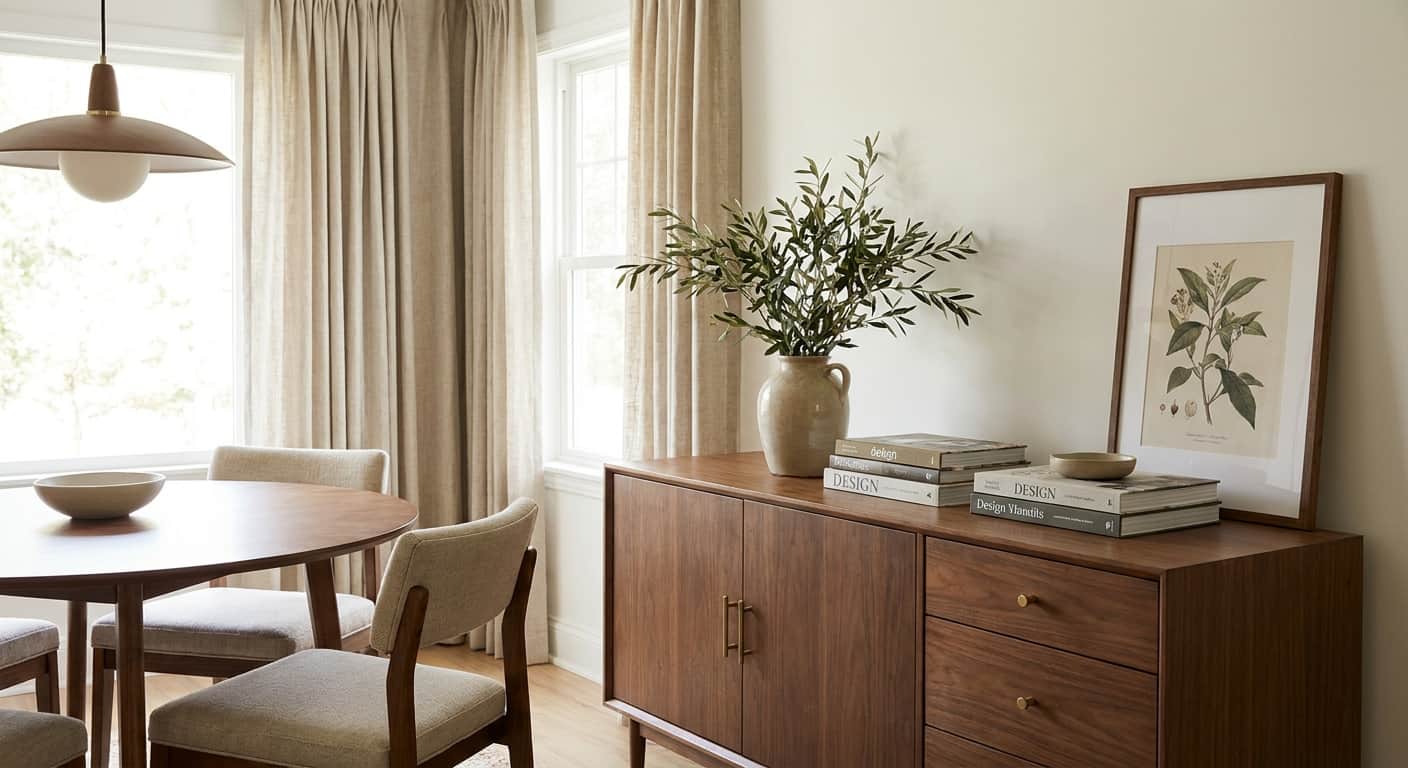
Styling a Fritz sideboard replica in a dining room comes down to three things: proportion against the table, material contrast on top, and restraint in what you place on it. Get those right and the piece anchors the room without competing with it.
TL;DR- A Fritz sideboard replica works best set against a wall at 60-70% of the dining table’s length.
- Pair walnut or oak veneer with brass or ceramic accents for contrast, not matching wood tones.
- Leave 12-18 inches of clear surface for serving during meals in 2026 dining setups.
- Overcrowding the top with more than 5-6 objects is the most common mid-century sideboard styling mistake.
Why this matters
A sideboard is the largest flat surface in most dining rooms after the table itself, so it either reinforces the room's proportions or fights them. Mid-century case pieces like the Fritz sideboard replica were designed with tapered legs and long, low bodies specifically to keep visual weight near the floor, which means styling choices on top need to respect that horizontal line instead of stacking height on it. Get the scale wrong and a room that should feel open starts to feel cluttered by 2026 dinner-party standards.
What you'll need
- A dining table with at least 12 inches of clearance on either side of the sideboard's footprint
- Two or three decorative objects of varying height (vase, sculptural bowl, small lamp)
- One larger anchor piece — art, mirror, or a low shelf item — for the wall above
- A rug or flooring that doesn't visually clash with the sideboard's leg finish
- Measuring tape (proportion is the whole game here)
- A Fritz sideboard replica, ideally in a finish that contrasts with your dining chairs rather than matching them exactly
The steps
1. Measure before you place anything
Set the sideboard against the wall that runs perpendicular to your main sightline into the dining room, not directly opposite the table's short end. Most Fritz sideboard replica units read best when their length falls between 60% and 70% of the dining table's length — a table shorter than that makes the sideboard look oversized, and a table much longer leaves the piece looking stranded.
Common mistake: placing the sideboard flush against a corner. Mid-century case goods were designed to sit along an open wall with breathing room on both sides — corner placement kills the horizontal line the tapered legs are meant to create.
2. Pick a finish that contrasts, not matches
A walnut-toned Fritz sideboard replica next to a walnut dining table reads flat. Contrast is what makes a mid-century dining room photograph well: pair a warm walnut sideboard with a lighter oak or ash table, or the reverse. If your table is already dark, go lighter on the sideboard, or introduce contrast through the top styling instead.
This is the same logic behind good tonal pairing in mixing wood tones with replica furniture — the goal is depth, not matching sets.
3. Style the top in odd numbers
Group three to five objects, never an even, symmetrical pair on each side unless you're deliberately going for a formal, matched look. A typical arrangement: one taller item (18-24 inches) off to one side, a mid-height ceramic piece near center, and something low and wide — a shallow bowl or tray — anchoring the front edge.
Expected outcome: the top should read as composed, not decorated. If it looks like a display case, remove one item.
Common mistake: filling the entire surface length. Leave at least 12-18 inches of clear space for serving dishes during actual meals — a sideboard that can't function during dinner has failed its main job.
4. Address the wall above it
An empty wall above a long, low sideboard leaves a visual gap that makes the piece look unfinished. Hang art or a mirror sized to roughly 60-75% of the sideboard's width, positioned so its bottom edge sits 6-8 inches above the surface — close enough to feel connected, far enough that nothing gets knocked down when you open a drawer.
5. Layer in a rug that doesn't compete
If the dining rug extends under the sideboard's legs, keep the rug pattern simple — busy geometric rugs under tapered mid-century legs create visual noise at floor level. A solid or subtly textured rug lets the leg detail of the Fritz sideboard replica stay visible, which is where a lot of the design's character lives.
“A sideboard that matches your dining table exactly reads like a showroom, not a home.”
6. Use the drawers and doors intentionally
Before finalizing placement, think about what actually goes inside. Linens and flatware near the table end you serve from, everyday dinnerware toward the middle, and anything rarely used toward the far end. This isn't a styling step so much as a use step, but it determines whether the piece earns its space in a dining room in daily rotation through 2026 and beyond.
7. Check the piece against real dining chairs, not empty space
Pull chairs out from the table as if guests are seated, then look at the sideboard from that angle. A lot of styling looks great from the doorway and cramped from the table. If a pulled-out chair is within 6 inches of the sideboard's front edge, either shift the table or the sideboard — that's a walking-space problem, not a style problem.
Shop the Fritz sideboard replica
Browse mid-century dining pieces built at 1:1 original dimensions.
Shop sideboardsTroubleshooting
The sideboard looks too small for the wall. Add a larger art piece or a pair of matching sconces flanking it — height compensates for a shorter footprint.
The top looks cluttered no matter what I try. Remove everything, then add back only three objects at three different heights. Clutter usually comes from too many mid-height items competing at the same eye line.
The finish clashes with my dining chairs. Introduce a neutral runner or tray on the sideboard top in a tone that bridges both finishes, rather than replacing furniture.
Drawers stick or don't close flush after placement. Check the floor is level under the legs first — tapered mid-century legs show unevenness more than boxy modern bases.
The room still feels unbalanced. Measure the sideboard-to-table length ratio again. If it's under 55% or over 75%, that's usually the actual problem, not the styling on top.
Guests keep bumping it when seated. Move the table 4-6 inches away from the sideboard wall — the fix is almost always spacing, not the sideboard itself.
Tools and resources
- A tape measure and painter's tape to mock up placement before committing
- How to verify quality before buying replica furniture for what to check on joinery and finish before you buy
- A level, for checking floor evenness under tapered legs
- Photos of your dining table from a few angles, taken before you shop, so proportion decisions aren't guesswork
What to do next
Once the sideboard is placed and styled, the next decision is usually the dining chairs and table finish around it — that's where most of the remaining tonal balance in the room gets decided.
FAQ
What is a Fritz sideboard replica made of?
A Fritz sideboard replica is typically built from wood veneer over a solid frame, following the tapered-leg, low-profile silhouette of mid-century case designs. Finish options usually include walnut and oak tones to match different dining room palettes.
How long should a sideboard be compared to the dining table?
A sideboard should run 60-70% of the dining table’s length for proportional balance. Shorter and it looks undersized; longer and it can crowd the room’s walking space.
Should a sideboard match the dining table finish?
No, contrast reads better than a match. Pairing a walnut sideboard with a lighter oak table, or vice versa, adds depth that a matched set doesn’t.
How many objects should go on top of a sideboard?
Three to five objects at varying heights is the sweet spot for 2026 dining room styling. More than six starts to look cluttered rather than composed.
Can I put art above a sideboard?
Yes, art or a mirror sized to about 60-75% of the sideboard’s width fills the wall gap above it. Hang it with the bottom edge 6-8 inches above the surface.
How much clearance does a sideboard need from a dining table?
Leave at least 12 inches of clearance so pulled-out chairs don’t hit the sideboard’s front edge. Less than 6 inches makes the space feel tight when guests are seated.
What rug works with a mid-century sideboard?
A solid or subtly textured rug lets tapered leg details stay visible, which busy geometric patterns tend to obscure. Keep the rug simple if it extends under the sideboard’s legs.
How do I know if a sideboard is too big for my dining room?
If pulled-out chairs sit within 6 inches of the sideboard’s front edge, the piece or the table needs to move. That spacing problem shows up before any styling issue does.
One last thing
The detail most people skip is checking the sideboard from a seated angle, not a standing one — the perspective changes completely once you're at table height, and that's the view guests actually have for the entire meal.
Related guides
- How to mix wood tones with replica furniture
- Model 45 chair replica for dining rooms
- How to mix replica furniture with vintage pieces
Stay connected with us!
Keep in touch with what’s new and next. Subscribe for weekly insights, product launches, and community news!