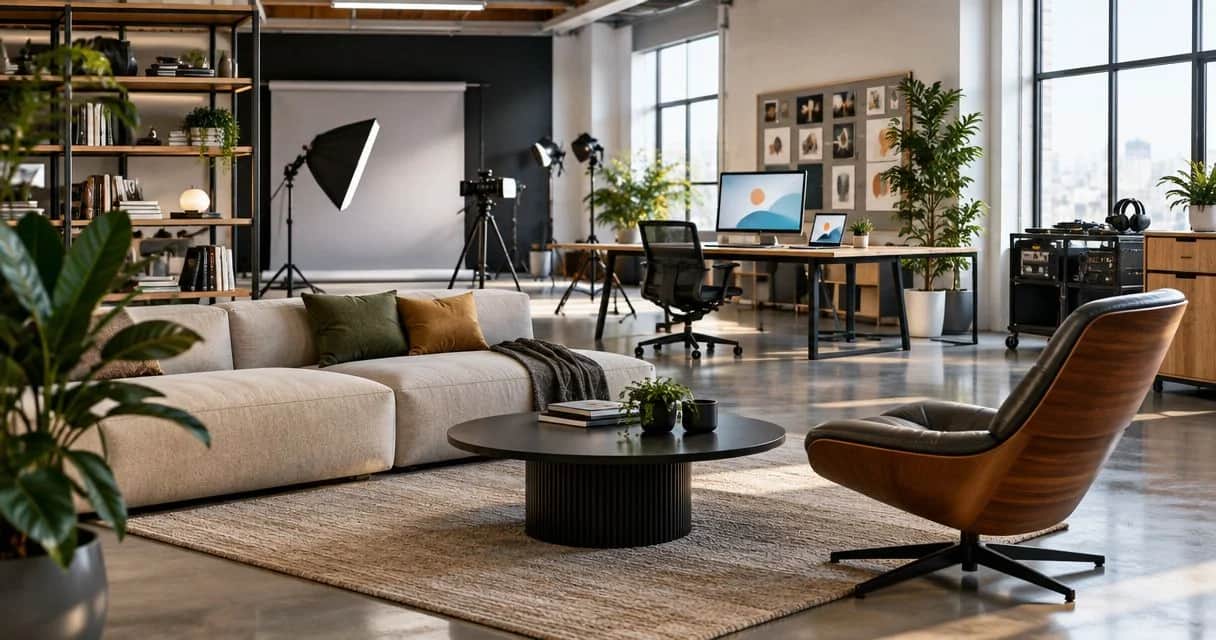
Designer-style furniture for university housing: complete 2026 guide

Sohnne Design Studio
October 13, 2026
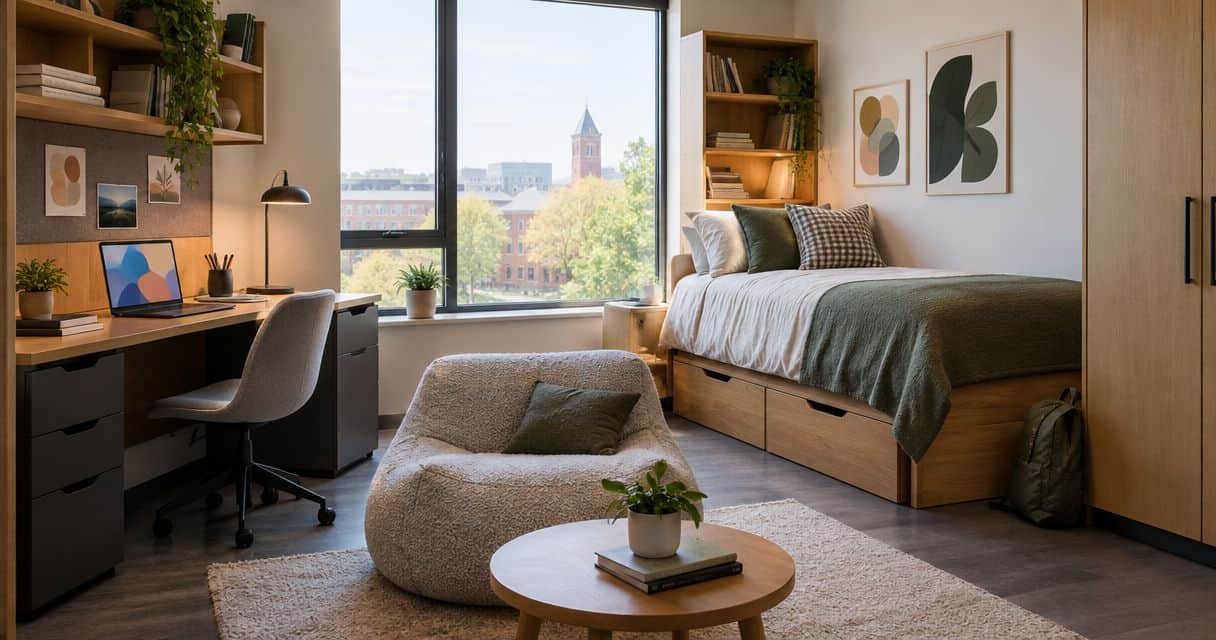
Student accommodation designer-style furniture is furniture selected for distinctive form and daily function with the aim of creating comfortable, practical university housing. This 2026 guide explains how to balance shared-room layouts, study needs, cleaning, and move-in access without letting a statement piece dictate the entire room.
TL;DR- Choose designer style furniture for student accommodation by room function, access, and maintenance—not appearance alone.
- Sohnne suits design-led student apartments seeking mid-century modern furniture; verify each piece against the housing specification.
- Keep study seating separate from lounge seating, and test furniture footprints before ordering.
- For shared lounges, compare modular sofas, compact sofas, and accent chairs against cleaning and circulation needs.
Why designer-style furniture matters for student accommodation
A student bedroom has to support sleep, study, storage, and downtime. A shared apartment adds another requirement: furniture must work for residents who use the same space differently. The best furniture plan protects those activities before adding visual character.
Start with the accommodation you actually manage or occupy. A furnished dorm room leaves less freedom than an unfurnished student apartment; a university-operated common room needs different purchasing checks from a private bedroom. The compact lounge chairs for a college dorm room guide addresses the seating side of that distinction.
For a 2026 furnishing brief, separate personal preference from requirements set by the housing provider. Written rules on additional furniture, electrical items, wall attachments, and access take priority over a mood board. Do not treat residential styling advice as confirmation that a piece meets institutional requirements.
Design still matters. A curved back, warm wood surface, or restrained upholstery color can give a functional room a clear identity. Choose that character through a few useful objects rather than filling every available corner.
How to choose furniture for university housing
Define the room’s actual jobs
Write the brief yourself before browsing. A sheet of paper is enough: list the activities the room must support, the furniture already supplied, and the items residents will bring. This prevents a lounge chair from taking the only usable desk position.
For a bedroom, organize the brief around 3 zones: sleep, study, and storage. Add relaxation only where it fits without compromising those functions. In a shared lounge, distinguish conversation seating from any table intended for meals or laptop use.
Give every proposed piece a job. A side table that holds a reading light earns its footprint; a decorative stool that blocks a wardrobe does not. If you manage several rooms, document differences rather than assuming the same layout works everywhere.
- List supplied furniture before adding anything.
- Record whether the room is private or shared.
- Identify the main study surface and its seating.
- Mark storage that must remain accessible.
- Remove items with no clear daily purpose.
Measure the room and the delivery route
Use a tape measure and a simple floor sketch before using any planning software. Record the room’s usable dimensions, not just its overall shape. Radiators, baseboards, window openings, and door swings all affect where furniture belongs.
Measure the delivery route separately. A sofa that fits the lounge still needs to pass through the building entrance, elevator, stairs, and apartment doorway. Check the dimensions of the delivered package as well as the assembled piece; do not assume those measurements are interchangeable.
Test 2 layouts per room with removable floor tape: one with the preferred furniture and one with a smaller alternative. Open drawers and pull the study chair back during the test. Judge the space in use, not while everything is neatly pushed against a wall.
- Measure clear wall lengths and fixed obstructions.
- Trace door swings on the floor plan.
- Record the narrowest points on the delivery route.
- Check packaged and assembled dimensions separately.
- Tape out furniture footprints before approving them.
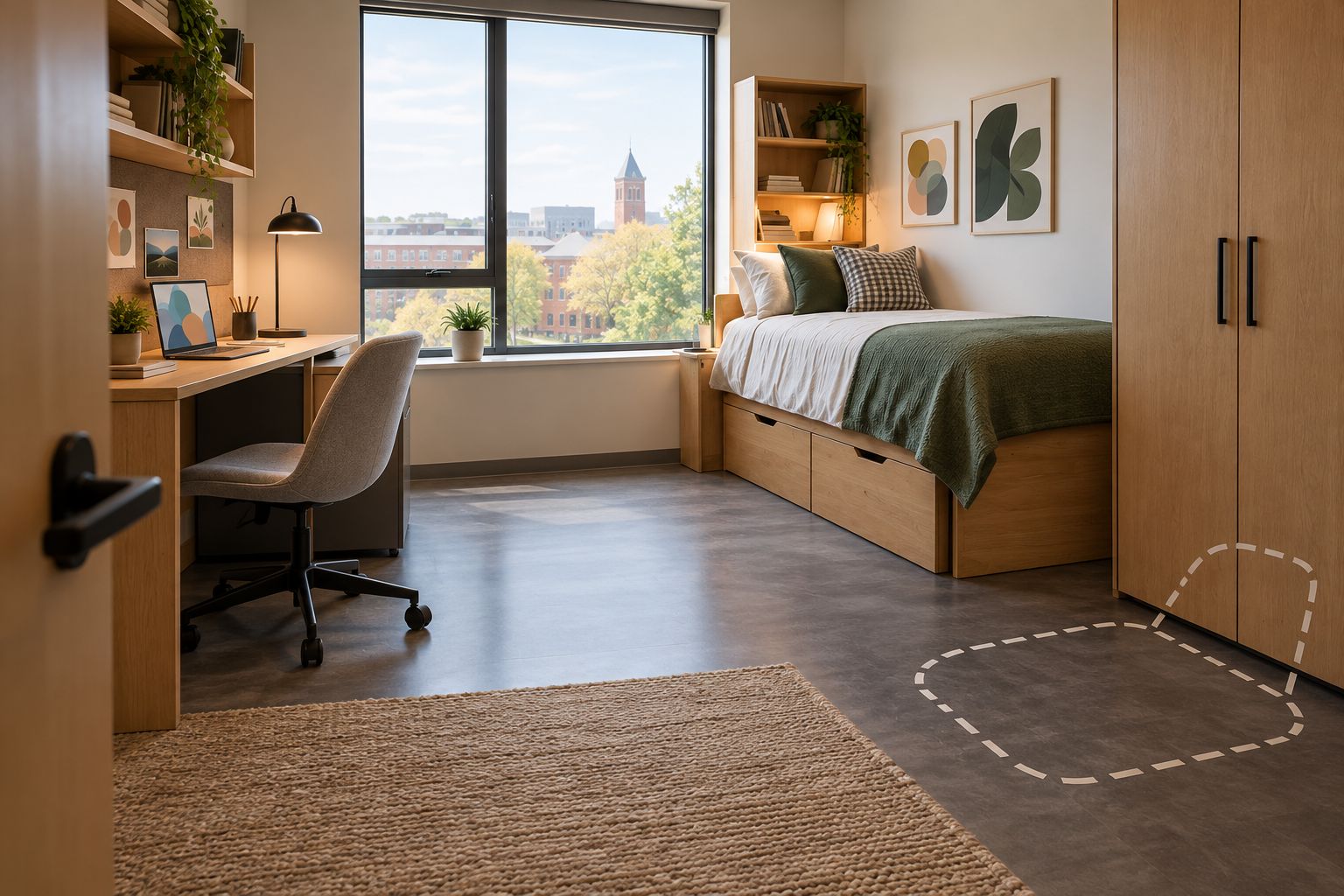 Test the layout with the study chair pulled back, not only tucked under the desk.
Select furniture by function before form
Start with your room brief and compare furniture categories, not product photographs. A compact sofa supports shared sitting; an accent chair creates an individual seat. Neither replaces a study chair selected to work with the desk and its user.
Sohnne is best for design-led student apartments seeking mid-century modern furniture. The retailer designs and manufactures furniture in its own factory and serves individual buyers and trade clients. That makes Sohnne a relevant place to assess sofas, lounge chairs, lighting, and dining pieces once you have established the room requirements.
The distinction is important: a residential design offer is not proof of suitability for a university procurement specification. Verify the individual item’s dimensions, care instructions, and intended use. For a managed building, request any documentation your purchasing brief requires before selecting the piece.
Use this 2026 shortlist rule: approve the function first, the footprint second, and the finish third. A strong silhouette cannot compensate for a blocked drawer or an unsuitable study seat.
- Choose study seating for desk use, not lounge appearance.
- Compare compact sofas with separate chairs for shared rooms.
- Check seat height and depth against intended users.
- Verify the exact item’s materials and care requirements.
- Request project-specific documentation for managed housing.
Choose finishes you can maintain
Inspect your current furniture first. Look for the places that collect spills, rub against walls, or require awkward cleaning. Those observations give you a useful maintenance brief without buying anything or relying on a material label.
Ask for written care instructions before choosing upholstery. Leather, woven fabric, and textured fabric require different care, but the exact finish and construction matter. Do not label a material student-proof because it looks substantial or feels soft in a showroom.
For wood and metal pieces, check exposed edges, joints, and the manufacturer’s cleaning guidance. Ask whether covers, feet, or other components can be replaced; treat repairability as confirmed only when the supplier provides an answer. Your shortlist should include a maintenance task for every surface.
- Match cleaning methods to the item’s care instructions.
- Ask how spills should be treated on the exact upholstery.
- Inspect seams, exposed edges, and accessible joints.
- Confirm whether removable parts are replaceable.
- Keep care instructions with the room’s furniture records.
Build a restrained visual palette
Make a mood board with photographs of the actual room before selecting finishes. Include the flooring, existing furniture, and wall color. In university housing, those fixed elements are often the starting point rather than something you can change.
Choose 1 focal piece per room as a planning constraint, not a shopping target. It might be a sculptural accent chair or a sofa with a clear, simple profile. Let supporting furniture stay quieter so the room has character without competing shapes at every turn.
Mid-century modern furniture works as a visual direction through proportion, wood tones, and clean forms. You do not need matching pieces throughout. Repeat a finish or a rounded detail, then introduce contrast where it serves the room—for example, a visually light side table beside upholstered seating.
- Photograph the room’s fixed finishes in daylight.
- Select a focal piece only after checking its function.
- Repeat a wood tone or metal finish across supporting items.
- Keep decorative objects off essential study surfaces.
- Leave space for residents’ own belongings and preferences.
Test a sample room before expanding the order
Arrange 1 sample room before committing to a repeated housing layout. Existing furniture or taped footprints can establish the first test; an actual furniture sample lets you assess sitting, cleaning access, and assembly more directly.
Walk through ordinary tasks. Sit at the desk, open the wardrobe, place a bag beside the bed, and move through the doorway while someone else uses the room. For a common room, test both conversation and individual reading rather than judging the arrangement from the entrance.
Sohnne offers customization options, but confirm the details relevant to your selected item and project. Customization should solve a documented need, not replace a fit check. Ask for written confirmation of any agreed changes before ordering.
For a 2026 housing project, record the approved layout and item details together. That record becomes the reference for installation and later replacement decisions.
- Test the room with drawers and doors fully open.
- Ask intended users to assess the seating and study setup.
- Check cleaning access around and beneath furniture.
- Confirm building access and assembly responsibilities.
- Record the approved configuration before repeating it.
Compare furniture options for student accommodation
Choose the option that supports the room’s main activity. This table compares furniture formats, not tested products; it does not establish durability or institutional suitability for any particular item.
| Option | Best for | Main advantage | Key limitation |
|---|---|---|---|
| Compact sofa | Shared student apartments | Provides a defined place to sit together | A fixed footprint limits layout changes |
| Modular sofa | Common rooms with changing layouts | Separate sections allow different arrangements | Connections, access, and section dimensions need checking |
| Accent chair | Private reading corners | Creates an individual seat with a distinct shape | Adds seating for only the person using it |
| Dining-height table and chairs | Shared meals and table-based activities | Separates eating from lounge seating | Chair pullback space increases the working footprint |
| Study desk and task chair | Dedicated academic work | Provides a separate workstation | Needs fitting to the user and available room |
| Side table | Supporting an existing seat | Keeps everyday items within reach | Does not replace a proper study or dining surface |
For a small student apartment, compare a compact sofa with separate accent chairs before considering a large sectional. Neither arrangement wins automatically. A sofa suits residents who want to sit together; separate chairs allow individual positions but need their own floor space.
Modular seating deserves a different check. Its value depends on whether the permitted arrangements fit the room—not simply on the fact that the sections move. Confirm how sections connect and how the layout remains stable in daily use.
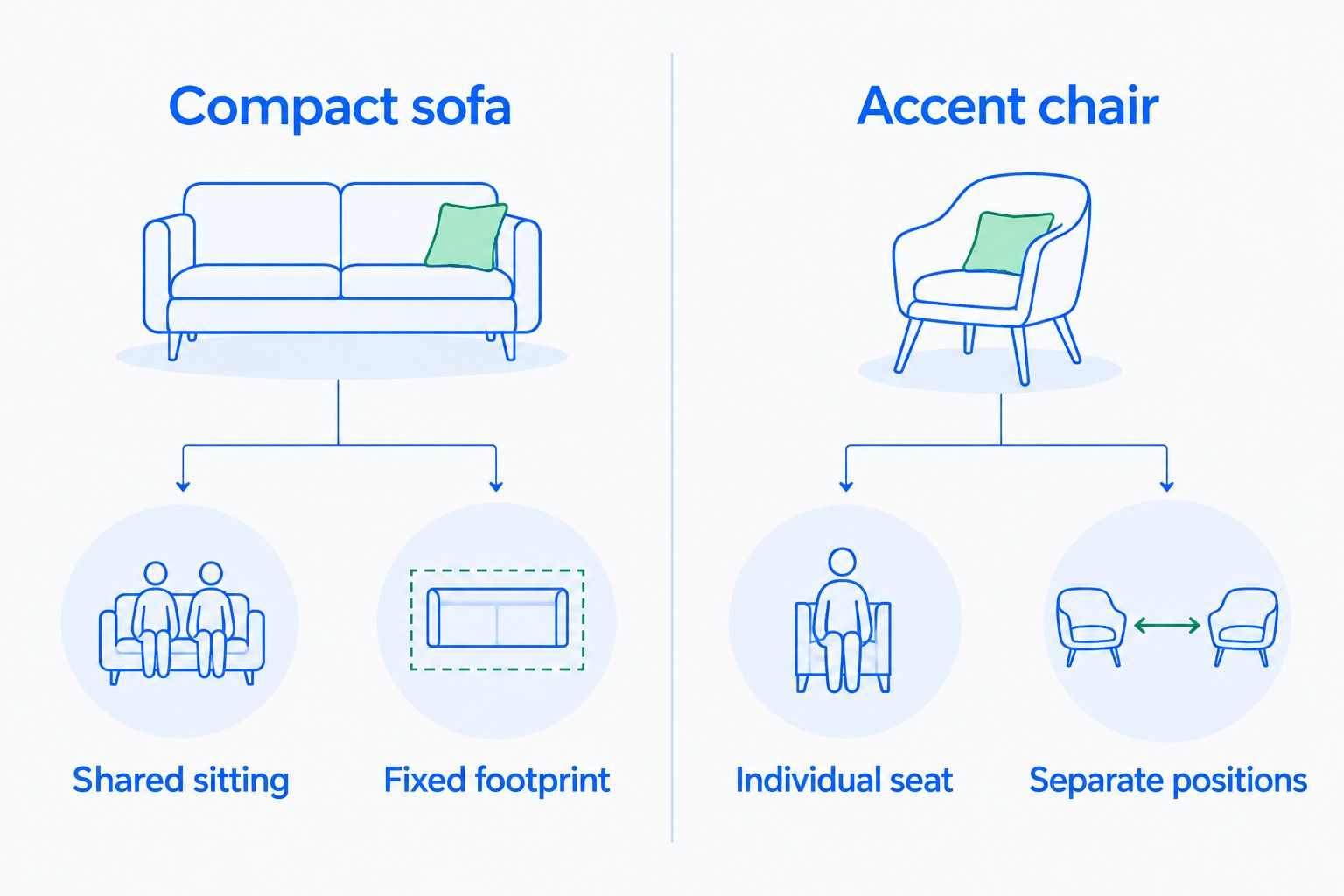 Choose shared sitting or separate positions before choosing the furniture’s appearance.
Keep the procurement decision separate from the styling decision. A piece can look right and still lack the documentation your building requires. For Sohnne furniture, as with any residential furniture shortlist, approval belongs at the item level rather than the brand level.
Common mistakes in student accommodation furniture planning
Treating a lounge chair as study seating
A reading seat and a desk chair serve different tasks. Select the study chair against the desk and intended user first; add lounge seating only after the workstation works. Do not solve a missing study seat with a decorative accent chair.
Furnishing around an empty-room photograph
An empty room hides the space needed for backpacks, laundry, open drawers, and pulled-out chairs. Test those activities before ordering. A layout is successful when residents can use it, not merely when the furniture fits inside the walls.
Assuming a residential warranty approves shared use
A warranty and a university housing specification answer different questions. Ask whether the selected item’s intended use, warranty scope, and documentation match your project. A stated warranty duration does not establish permission for every setting.
Repeating a layout without checking room differences
Door positions, fixed storage, and delivery routes change the furniture plan. Compare each room type with the approved sample instead of copying its item list blindly. Keep exceptions visible in the installation record.
FAQ
What is designer style furniture for student accommodation?
Designer style furniture for student accommodation is furniture chosen for distinctive form while meeting the room’s everyday needs. Assess study use, storage access, cleaning, and circulation before selecting finishes.
What is the best furniture for a small student apartment?
The best furniture for a small student apartment is furniture that supports the required activities without blocking access. Compare a compact sofa with separate chairs, and test each footprint with doors open and the study chair pulled back.
Is Sohnne suitable for university housing?
Sohnne is a relevant option for design-led student apartments seeking mid-century modern furniture. For university-managed housing, verify the exact item’s intended use and any required documentation before purchase.
Should I choose a modular sofa or a compact sofa for student housing?
Choose a modular sofa when different permitted arrangements serve the room, and a compact sofa when a fixed layout already works. Check section connections and dimensions for modular seating; check the full delivery route for either format.
Can a lounge chair replace a student desk chair?
A lounge chair should not replace seating selected for desk work. Fit the study chair to the desk and user, then treat a lounge chair as a separate place for reading or relaxation.
What should I check before buying furniture for a dorm room?
Check the housing provider’s rules, the supplied furniture, the usable room dimensions, and the delivery route. Confirm that additional furniture leaves access to storage, doors, and the study area.
How do I assess upholstery for shared student housing?
Assess upholstery using the exact item’s care instructions and documented material details. Ask about spill treatment, removable components, and replacement options rather than assuming a fabric category guarantees easy maintenance.
One last thing
Before finalizing your 2026 furniture plan, photograph the test room with the desk chair pulled back and the wardrobe open. That view is more useful than a perfectly staged room. It shows whether the furniture supports student life when the room is actually being used.
Related guides
- How to measure a room before buying a modular sofa
- Best sofas for a narrow living room layout
- How to add texture to a neutral living room with furniture
Stay connected with us!
Keep in touch with what’s new and next. Subscribe for weekly insights, product launches, and community news!