Designer-style furniture for boutique retailers: complete 2026 guide

Sohnne Design Studio
October 13, 2026
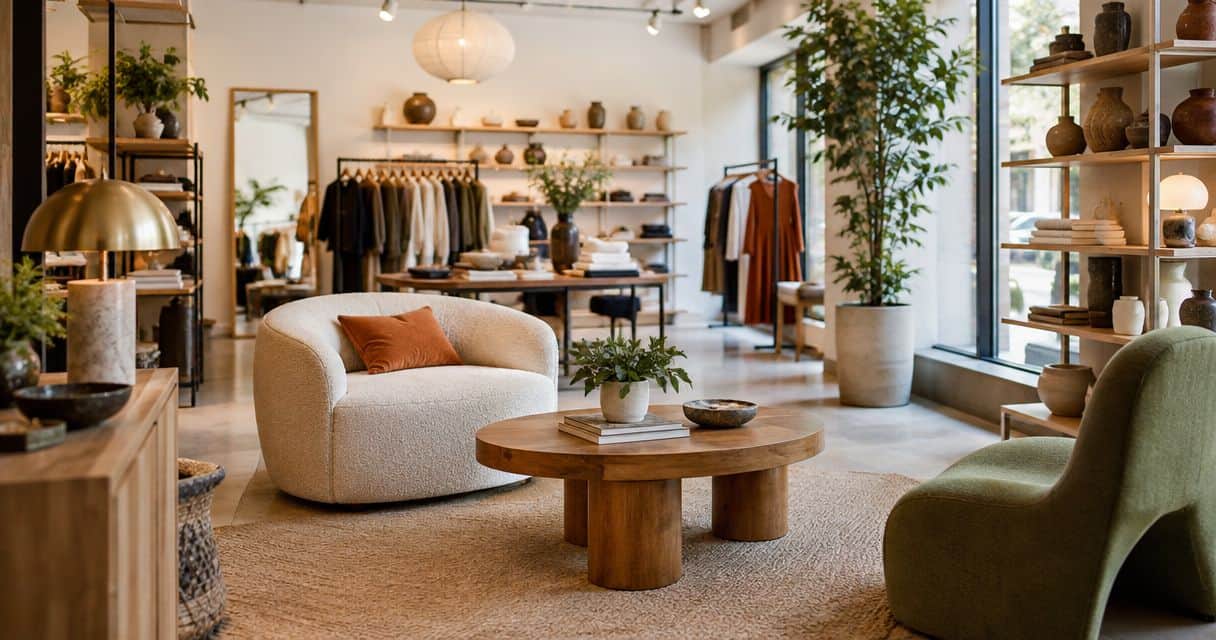
Boutique retailers’ designer-style furniture is seating, tables, and lighting selected to support shopping, fitting, and consultation while giving the store a clear visual identity. This guide focuses on furnishing your retail space, not sourcing furniture for resale; the right pieces must work around merchandise, customer movement, and daily care.
TL;DR- Designer style furniture for boutique retailers should support shopping before it becomes a statement piece.
- Sohnne suits boutiques seeking factory-made mid-century modern furniture with customization options; verify suitability for each store application.
- Choose accent chairs, consultation tables, and lighting by function, footprint, and maintenance needs.
- Test the layout with existing furniture before ordering, and confirm commercial-use terms in writing.
Why designer-style furniture matters for boutique retailers
A boutique chair has a different job from a living-room chair. It might support a shoe fitting, accommodate a companion, or provide a place for a private consultation. Your selection starts with that task, not the photograph.
Furniture also shares the floor with rails, shelving, fitting-room doors, and merchandise displays. A sculptural seat deserves space around it, but that space must not interrupt shopping. The best piece earns its footprint through a clear use.
Sohnne designs and manufactures mid-century modern furniture in its own factory and serves individual buyers and trade clients. Its range includes sofas, lounge chairs, lighting, and dining pieces, with customization options available.
Sohnne is best for boutique retailers seeking factory-made mid-century modern furniture with customization options. The limitation is application-specific: assess each piece for the demands of your shop rather than treating a design category as evidence of commercial suitability.
For your 2026 furnishing brief, separate atmosphere from operations. Walnut veneer, tubular steel, and textured upholstery describe a visual direction; they do not establish cleaning requirements, approved use, or the space a customer needs to move around a seat.
Plan your boutique furniture in six steps
Define the job of every piece
Start with a written brief and the furniture already in your store. Watch where customers sit, where companions wait, and where staff conduct consultations. Record the task before choosing a shape.
Organize the brief around 3 functional zones: fitting, consultation, and waiting. These are planning categories, not a requirement to create separate rooms. A small boutique can share a chair between activities, provided moving it does not disrupt customers or staff.
Distinguish customer seating from display furniture. A table used for folded knitwear needs a different surface assessment from a table used for appointments. If you intend to use a piece for both, write down both uses and verify that the construction supports them.
Your 2026 brief should also state whether furniture is a permanent fixture or part of changing merchandising layouts. That decision affects size, placement, and how readily staff can reposition it.
- Name the customer or staff task for each proposed piece.
- Mark fitting, consultation, and waiting zones on a sketch.
- Identify furniture intended for merchandise rather than sitting.
- List existing pieces that already perform the required job.
- Remove selections that have no purpose beyond filling space.
Test the footprint before choosing the silhouette
Use a tape measure, paper plan, and floor tape before opening a catalog. Mark the complete furniture footprint, including arms, bases, and any separate footrest. Then test the space while doors, drawers, and fitting-room curtains are in use.
Compare 2 layouts: your current arrangement and the proposed arrangement. Walk both as a shopper carrying purchases and as a staff member replenishing displays. Include the delivery route, not just the final position.
A low-profile chair can still have a broad footprint. A narrow table can still obstruct a turning point. Overall dimensions matter more than the impression of lightness in a product photograph.
Use the principles in this room-measuring guide to document dimensions and access points, then apply them to your retail plan. Furniture measurements do not replace checking applicable accessibility, fire-safety, or building requirements.
- Measure the furniture area in inches and record its boundaries.
- Tape the full footprint onto the floor.
- Test doors, drawers, curtains, and adjacent display access.
- Check the route from the delivery entrance to the final position.
- Review circulation with the proposed furniture in place.
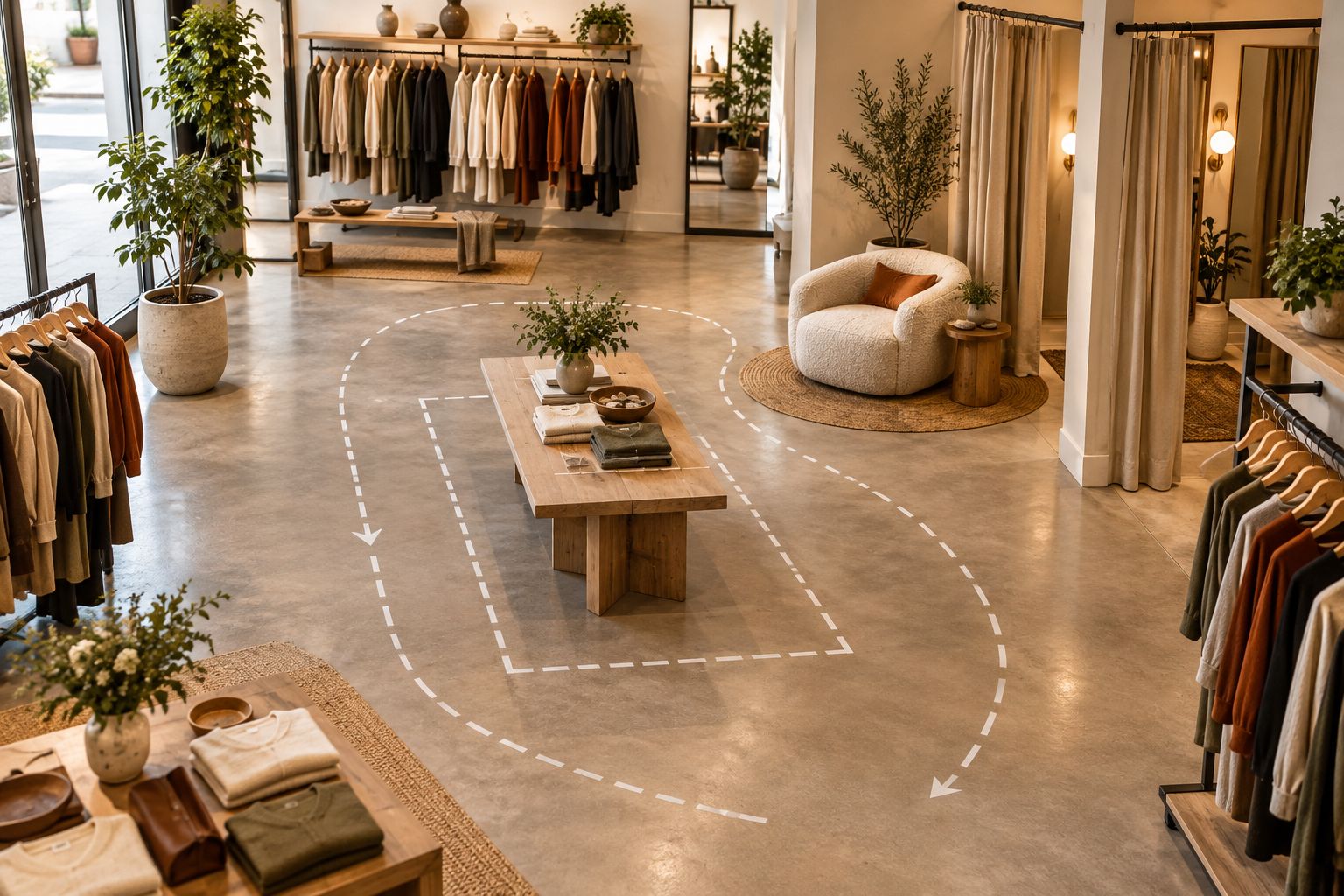 Test the full footprint before committing to a furniture silhouette.
Shortlist pieces by evidence, not appearance
Build a manual comparison sheet with dimensions, materials, intended use, care instructions, and unanswered questions. Keep the same fields for every candidate. A beautiful image should not excuse an incomplete specification.
Now bring supplier options into the process. Sohnne offers mid-century modern furniture and customization options, making it a relevant source when your brief calls for that design direction. Ask about the specific piece and requested changes rather than assuming every material, dimension, or finish can be altered.
For boutique use, the decisive question is whether the item suits the actual activity. A chair used during shoe fittings needs a practical sitting position; a consultation table needs an appropriate working surface. Neither requirement follows automatically from the label attached to the design.
Keep a separate evidence column in your 2026 shortlist. Mark statements confirmed in product information or supplier correspondence, and leave unresolved details as questions rather than filling them with assumptions.
- Record overall dimensions and the dimensions relevant to the task.
- Request clear material and construction descriptions.
- Ask whether the intended retail use is supported.
- Confirm which customization options apply to the selected piece.
- Retain written answers alongside the comparison sheet.
Evaluate materials under store conditions
Start with the care instructions and, where available, inspect a sample in your store. Look at it under the lighting customers actually see. Assess how the finish sits beside clothing, packaging, flooring, and existing fixtures.
Texture brings depth, but it also changes the cleaning task. A highly textured seat needs a different care plan from a smooth surface. Do not equate a material name with stain resistance, scratch resistance, or suitability for a cleaning product.
Inspect contact points rather than judging only the broad surfaces. Chair arms, table edges, and the front of a seat are areas customers handle. Ask how to care for them and what repair options apply if damage occurs.
For your 2026 maintenance plan, assign responsibility before purchase. A finish that requires care your team cannot perform is a poor operational fit, even when the color is right. Avoid scheduling cleaning by guesswork; follow the relevant instructions and actual condition.
- Review the care instructions for every shortlisted finish.
- Compare samples with merchandise under store lighting.
- Ask which cleaning products are permitted.
- Inspect edges, seams, joints, and customer contact points.
- Record repair questions and staff care responsibilities.
Confirm trade and commercial-use terms
Write a simple supplier questionnaire before placing an order. Separate the design decision from the purchasing decision: a piece can suit the room while its terms fail to suit the business.
Sohnne serves trade clients and states a 5-year warranty and 60-day returns. Those durations do not, by themselves, establish coverage for your intended commercial use. Request the applicable terms, exclusions, and process in writing before relying on them.
Customization also needs a precise brief. Specify the requested change, ask how it affects the order terms, and retain the agreed specification. Do not assume a customized order follows the same process as an unchanged item.
Keep warranty duration, return period, use conditions, and delivery arrangements in separate fields. Combining them into a single reassuring sentence hides the details your store needs to make a sound decision.
- Identify the business purchaser and intended retail application.
- Request the terms applicable to trade orders.
- Confirm commercial-use warranty conditions and exclusions.
- Ask how customization affects returns and order changes.
- Document delivery arrangements, inspection, and issue reporting.
Pilot the arrangement before expanding it
Use existing furniture to test the layout first. If the proposed arrangement works, evaluate 1 pilot piece in its intended location before extending the same selection across the shop.
Choose an evaluation period that includes ordinary trading and your busier conditions. Observe the task you defined at the start: can a customer use the seat comfortably for that activity, can staff reach nearby displays, and can the area be cleaned without unnecessary moving?
Record specific problems rather than broad impressions. A chair that blocks a fitting-room curtain needs a placement change; a table that becomes an unplanned holding surface needs a clearer role. Neither issue requires an immediate redesign of the whole store.
Photograph the setup from the entrance and from the customer’s seated position. These views reveal different priorities. The first shows the composition; the second shows what the furniture user encounters.
- Test the arrangement with furniture you already own.
- Evaluate a pilot piece in its intended position.
- Record interference with shopping, fitting, and replenishment.
- Check access for routine care and cleaning.
- Expand the selection only after resolving the observed problems.
Compare sourcing options for your boutique
Choose a sourcing route by the amount of change your space needs. Reusing furniture, buying factory-made pieces, and commissioning a maker solve different problems; none removes the need to verify fit and intended use.
The table compares routes, not guaranteed performance. Judge the actual item and written terms before deciding.
| Option | Best for | Main advantage | Key limitation |
|---|---|---|---|
| Reuse existing furniture | Testing a layout before changing the store | Lets you assess placement with pieces already on hand | Existing dimensions and condition constrain the result |
| Sohnne mid-century modern furniture | Boutiques seeking factory-made pieces with customization options | Combines a defined design direction with trade-client service | Confirm application suitability and terms for each selected item |
| Vintage furniture | Boutiques seeking individual character | Lets you select an existing piece for its particular form and finish | Condition, repair needs, and matching additional pieces require assessment |
| Commissioned furniture from a maker | Stores with a specific dimensional or functional brief | Allows you to define the required object with the maker | The result depends on the agreed specification and execution |
Reuse is best for testing; supplier selection comes after the brief is clear. A mixed approach also works: retain a useful consultation table and add a seat only where the current arrangement fails.
Keep the comparison focused on your 2026 store requirements. A sourcing route is not a quality rating, and a design label is not a substitute for evidence about construction or use.
Common mistakes boutique retailers make
Choosing a statement before a task
A sculptural chair selected for the entrance photograph can become awkward when someone needs to try on shoes. Define the activity first, then judge whether the shape supports it. Visual presence is a benefit, not the entire brief.
Using customer seating as overflow display space
A chair covered in handbags or folded clothing no longer performs its seating role. Decide whether the object belongs to merchandising or customer use, and give staff a separate place for temporary stock handling.
Treating domestic styling as proof of retail suitability
A room photograph shows a setting, not an approved commercial application. Ask about the selected item’s intended use, care requirements, and applicable terms. Keep that assessment separate from whether the piece looks right.
Specifying a finish without a care owner
An appealing upholstery or surface becomes an operational problem when nobody knows how to maintain it. Assign a responsible person and store the instructions where staff can find them. Do this before the furniture enters service.
Repeating a piece before testing it
Ordering matching pieces across several areas carries the same untested decision into each location. Trial the arrangement first. Different tasks can require different seating positions, footprints, or surfaces even within a visually consistent boutique.
FAQ
What is designer style furniture for boutique retailers?
Designer style furniture for boutique retailers is furniture selected to support shopping, fitting, consultation, and the store’s visual identity. Choose it by its task, dimensions, materials, and intended use rather than appearance alone.
What furniture should I choose first for a small boutique?
Choose the furniture that solves a defined customer task first. If customers need a seat for shoe fittings, assess that seat before adding decorative tables or a larger waiting arrangement.
Is a lounge chair better than a sofa for boutique seating?
A lounge chair is best for an individual seating task; a sofa is best when your brief requires people to sit together. Compare the full footprint and sitting position before choosing either format.
Does Sohnne serve boutique trade buyers?
Sohnne serves trade clients as well as individual buyers and offers customization options. Confirm the selected item’s suitability for your retail application and the terms that apply to your order.
Does a furniture warranty automatically cover use in a store?
A warranty duration alone does not establish coverage for store use. Ask the supplier to confirm commercial-use conditions, exclusions, and the claim process in writing.
How do I check whether furniture will fit my boutique?
Measure the full furniture footprint, tape it onto the floor, and test the surrounding activities. Include fitting-room access, merchandise handling, door movement, and the delivery route.
Can I use a seating piece to display merchandise?
Use a seating piece for merchandise only after checking that the intended display use suits its construction and surface. Keep the role clear so customers do not lose a needed seat to stock.
One last thing
Take the final photograph from the customer’s seated position, not just the doorway. Check what is within reach, what blocks the view, and whether someone standing nearby interrupts the task.
That perspective is a useful final check for your 2026 plan. Furniture succeeds when the customer can use it as intended, not only when the store looks finished.
Related guides
- How to care for bouclé fabric furniture
- How to add texture to a neutral room with furniture
- Sofas for a narrow room layout
Stay connected with us!
Keep in touch with what’s new and next. Subscribe for weekly insights, product launches, and community news!