Cherner Chair Replica for a Home Office: 2026 Verdict

Sohnne Design Studio
August 19, 2026
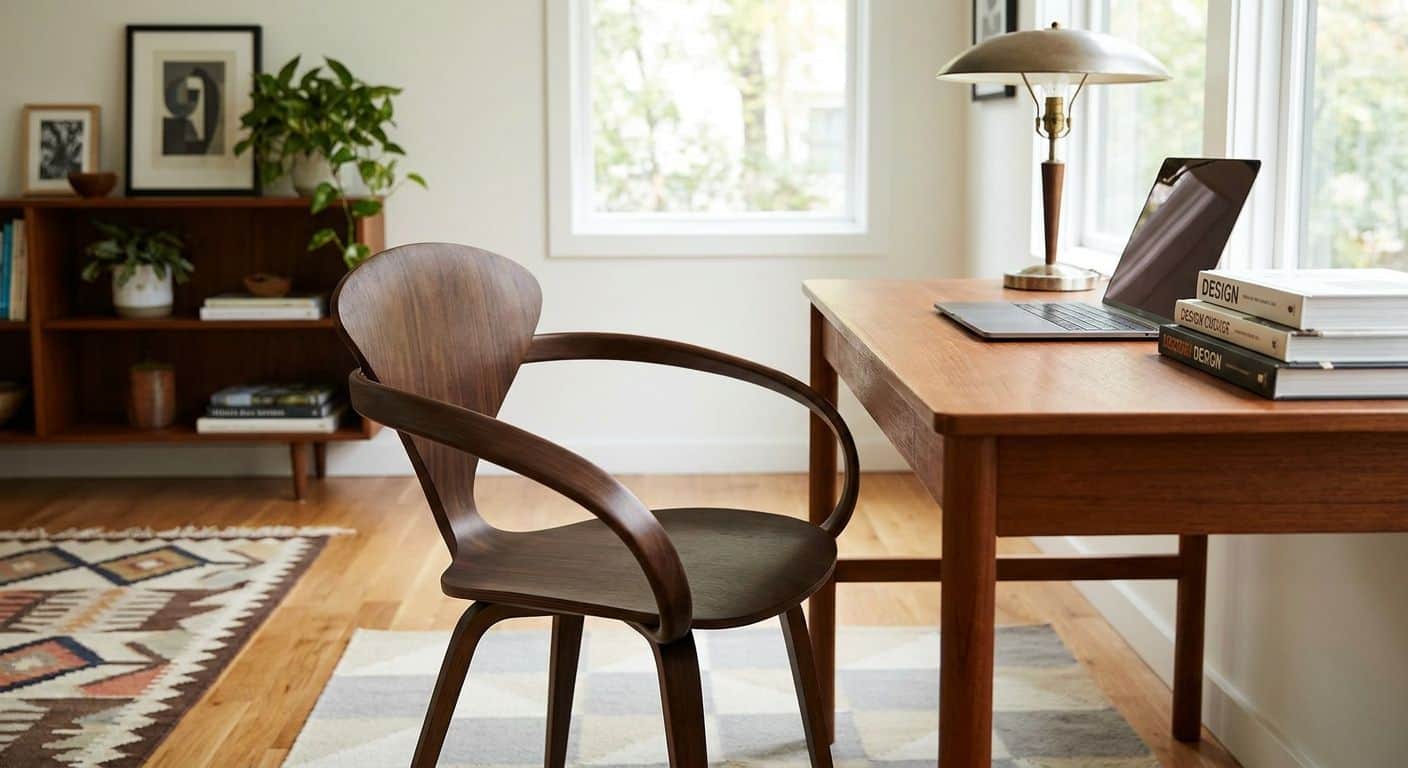
A Cherner chair replica brings molded-plywood curves and a 1958 design pedigree into a home office that otherwise runs on gray ergonomic mesh — and it works as a desk chair only if you get the seat height, arm style, and shell finish right for daily typing sessions.
TL;DR- A Cherner chair replica works as a home office chair when seat height lands between 17 and 19 inches for a standard 29-30 inch desk.
- The armless version suits desks under 45 inches wide; the wide-arm version needs at least 5 feet of clearance to swivel a monitor arm.
- Molded plywood construction with a walnut or natural ash finish holds up better under daily desk use than a laminate shell.
- Cane seat versions look closer to the 1958 Norman Cherner original but need more care than an upholstered or molded seat pan in a work-all-day setup.
- Buy the armless plywood configuration for a compact 2026 home office; skip the wide-arm cane version unless the desk sits in a low-traffic room.
Who this is for
This guide is for someone furnishing a home office who wants a chair with visible design history instead of a black mesh task chair, and who works from a desk for at least four to six hours a day rather than occasional laptop sessions on the couch. If your home office doubles as a reading nook or a spot for the occasional Zoom call, the Cherner chair replica earns its place. If you need lumbar adjustment, headrest tilt, or all-day ergonomic support for a nine-hour desk job, keep reading before you buy — the criteria below flag where a molded plywood chair helps and where it doesn't.
Why this matters
Home offices built in 2026 lean harder into design-forward furniture than they did during the plain-desk-and-laptop years of remote work's early rise. A Cherner chair replica solves the visual problem — most task chairs look like they belong in a call center, not a study lined with walnut shelving. The tradeoff is ergonomic: the original Cherner shell was designed as a dining and lounge chair in 1958, not a chair meant to hold someone through back-to-back meetings. Getting the seat height, arm configuration, and shell material right decides whether the chair becomes your daily driver or a chair you swap out after three weeks of a stiff neck.
What to look for in a Cherner chair replica for a home office
Molded plywood shell quality
The shell is the whole point of a Cherner chair replica — a poorly pressed plywood shell flexes under weight and creaks within months. Look for a continuous molded curve from seat to backrest with no visible seams, and a shell thickness that doesn't flex when you press a palm flat against the backrest. A shell that flexes at the base of the back is the first thing to fail under six-hours-a-day desk use.
Seat height and desk fit
Most home office desks sit at 29 to 30 inches, which means the chair seat needs to land around 17 to 19 inches to keep your forearms level with the desktop. The original Cherner design runs lower than a typical office chair, so measure your desk before ordering — a replica that sits 2 inches too low turns a full workday into a shoulder-shrugging exercise.
Armless vs. armrest versions
Armless versions slide under a standard desk and suit rooms under 100 square feet. Armrest versions add width — often 4 to 6 inches per side — and need a desk with an open apron or a keyboard tray set high enough to clear the arms. If your desk has drawers on both sides, the armless configuration is the only one that fits.
Finish and wood tone matching
Walnut and natural ash are the two finishes that read as authentic to the 1958 original; a chair finished in a stark white or bright lacquer moves the piece toward a dining-room accent rather than a desk chair. Match the finish to your desk, not your walls — a mismatched wood tone next to a desk is more visible daily than a wall color choice.
Cane seat vs. molded or upholstered seat
The cane seat pan is the detail collectors look for, but cane needs a stable humidity range and periodic care to avoid sagging under daily sitting. A molded plywood seat pan or a thin upholstered pad holds up better for someone sitting eight hours a day, five days a week, through a full year of seasonal humidity swings.
A minimalist home office chair built around molded plywood or a light upholstered pad clears this bar more reliably than a cane-seat original-profile replica.
Compare home office chair options
See the full mid-century seating range before you commit to one chair.
Shop SohnneTop configurations to consider
The space saver — armless, molded plywood, natural ash finish. This is the configuration that fits under a 42-inch desk without arm clearance issues, and the plywood shell holds its shape through daily use better than a cane seat does. One spec that matters: shell width under 20 inches at the widest point, which keeps it clear of desk drawers on both sides. Buy this for a compact 2026 home office where floor space is the binding constraint.
The all-day worker — armless with a thin upholstered seat pad instead of bare plywood or cane. The pad adds cushioning for six-plus hour desk sessions without changing the shell's silhouette. If you already know a bare plywood seat gives you a numb leg by hour three, this is the fix. A replica task chair built for a home office desk is worth comparing against this configuration if your workday runs closer to eight hours than four. Consider this if daily comfort outranks matching the exact 1958 profile.
The wide-arm statement piece — armrest version in walnut. This one reads as a design object first and a desk chair second; the arms add 4 to 6 inches of width per side and work best in an office with at least 5 feet of clearance to swivel toward a bookshelf or window. Consider this for a home office that doubles as a reading or meeting corner rather than a pure typing station.
The cane-seat original profile — closest to the 1958 Plycraft original, with a hand-caned seat pan. It looks the most authentic on a shelf or in a photo, but cane seats sag faster under daily sitting than molded or upholstered alternatives, and humidity swings across a full year can loosen the weave. Skip this for a primary desk chair; it's a better fit for an accent seat used a few hours a week.
If you're pairing the chair with new casegoods, the Adrien desk built for a home office keeps the same mid-century line without competing for visual attention with a Cherner-style shell.
What to avoid
- A chair marketed as "Cherner-style" with a laminated MDF shell instead of molded plywood — it looks right in photos but flexes and delaminates faster under daily use, often within a single year of five-day-a-week sitting.
- A cane seat pan with no stated care guidance — cane that isn't rated for indoor humidity control sags within months in a desk chair used eight hours a day.
- An armrest version bought without measuring desk clearance — the extra 4 to 6 inches per side is the most common return reason for wide-arm replicas ordered for a small home office.
Verdict comparison
| Configuration | Best for | Seat material | Verdict |
|---|---|---|---|
| Space saver (armless, plywood) | Small desks under 42 in wide | Molded plywood | Buy |
| All-day worker (armless, padded) | 6+ hour desk sessions | Upholstered pad | Buy |
| Wide-arm statement (armrest) | Larger offices, reading corners | Molded plywood | Consider |
| Cane-seat original profile | Accent seating, light use | Hand-caned pan | Skip for daily desk use |
FAQ
What makes a chair a Cherner chair replica versus a generic bentwood chair?
A true Cherner chair replica reproduces Norman Cherner’s continuous molded plywood shell from his 1958 design for Plycraft, with the shell curving from seat to backrest in one piece rather than joined panels. A generic bentwood chair uses straight steam-bent frame pieces instead of a single molded shell.
Is a Cherner chair replica comfortable for a full workday in 2026?
An armless version with a thin upholstered seat pad holds up reasonably well for a full workday, but the bare plywood or cane-seat versions were designed as dining and lounge chairs, not eight-hour task chairs. Add a seat cushion if you’re sitting more than four hours a day.
What seat height works best for a home office desk?
Aim for a seat height of 17 to 19 inches to match a standard 29 to 30 inch desk. Measure your specific desk before ordering, since the original Cherner profile sits lower than most modern task chairs.
Does a Cherner chair replica swivel or roll like an office chair?
No, the classic Cherner chair replica is a fixed four-leg chair with no swivel base or casters. If you need to roll between a desk and a filing cabinet, this chair works better as a secondary seat than a primary one.
Is the armless or armrest version better for a small home office?
The armless version fits under most standard desks and suits rooms under 100 square feet. The armrest version adds 4 to 6 inches of width per side and needs more clearance to be practical.
How do I check the quality of a Cherner chair replica before buying?
Look for a continuous molded shell with no visible seams, a shell that doesn’t flex under hand pressure, and a stated warranty on the frame. A guide to verifying replica furniture quality before buying covers the specific checks worth doing before you order.
What wood finish matches a Cherner chair replica to a mid-century desk?
Walnut and natural ash are the closest matches to the 1958 original and pair well with most mid-century desk finishes. Avoid high-gloss or stark white finishes if you want the chair to read as authentic rather than decorative.
Is a cane seat or a molded plywood seat better for daily use?
A molded plywood or lightly upholstered seat pan holds up better under daily sitting than a hand-caned seat, which can sag with humidity changes over a year of regular use. Choose cane only if the chair sees occasional rather than daily use.
One last thing
The detail most buyers miss: the original 1958 Cherner shell was engineered for a dining table, not a keyboard tray, which is why the seat height runs lower than almost every modern task chair on the market in 2026. Measure your desk height first, pick the configuration second — the wood tone is the easy decision, the height math is the one that determines whether you're still using the chair in a year.
Related guides
Stay connected with us!
Keep in touch with what’s new and next. Subscribe for weekly insights, product launches, and community news!