Butterfly Stool Replica for Entryways: 2026 Buying Guide

Sohnne Design Studio
August 19, 2026
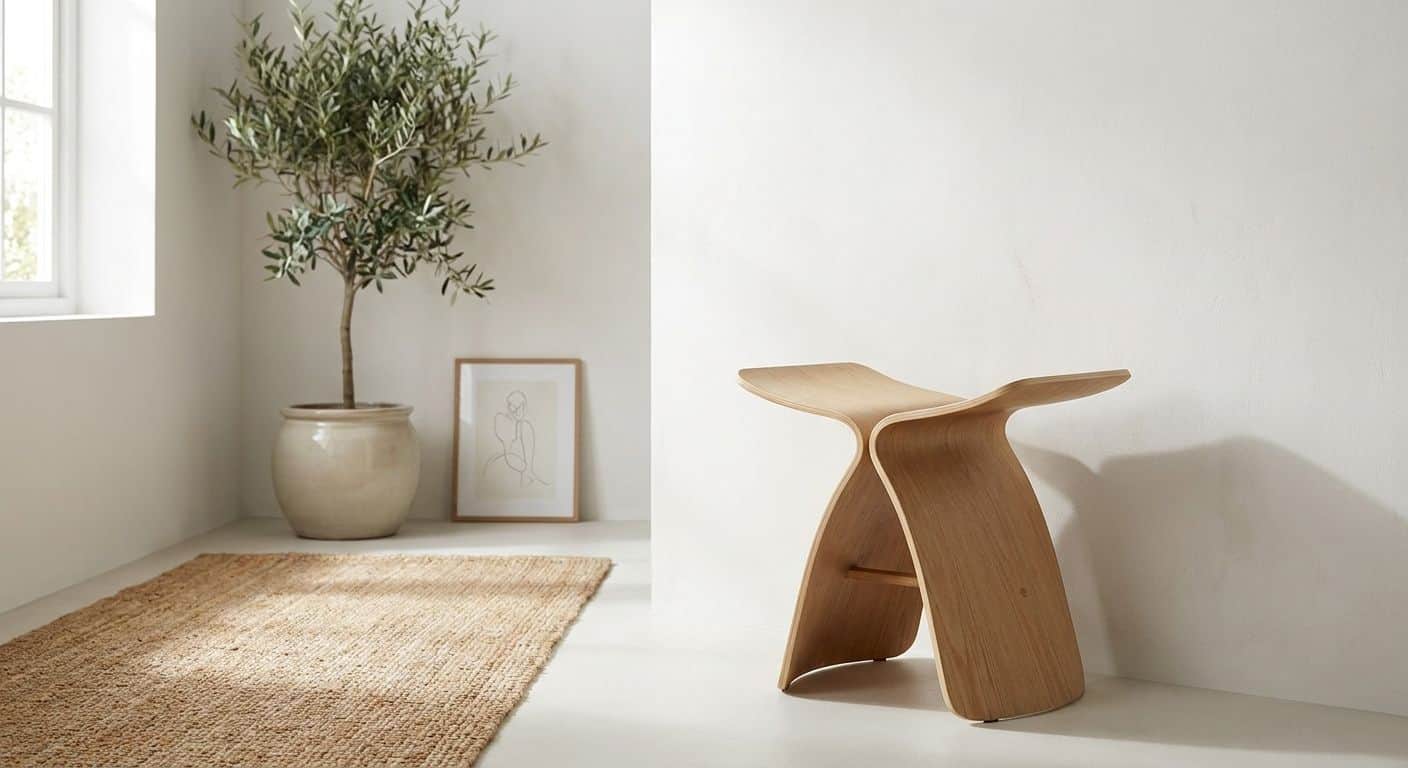
A butterfly stool replica turns a narrow foyer into a considered first move — molded plywood curves, no visible hardware, and a footprint tight enough to sit under a console without crowding a walk-through.
TL;DR- A butterfly stool replica in 7-ply walnut veneer clears most entryways under 20 square feet — Buy.
- Skip 3-ply painted MDF versions under $150 in 2026; the seam splits within a season of daily use.
- Black lacquer hides scuffs best in a high-traffic entry — Consider over natural ash.
- Pair it with a slim console instead of a bench if the entry runs narrower than 40 inches.
Why this matters
Entryways are the smallest room in most homes and the one that gets judged first. A butterfly stool replica solves a real problem there: somewhere to sit while pulling on boots, without the bulk of a bench or the visual noise of an upholstered chair. The original 1954 design used three molded plywood pieces joined at a single seam — no legs, no frame, no hardware to catch a coat sleeve. That's exactly why it keeps showing up in minimalist entryway plans in 2026: it reads as sculpture until someone actually sits on it.
The problem is that "butterfly stool replica" now covers everything from precise plywood reproductions to thin veneer-wrapped MDF that flexes under 180 pounds. The difference isn't visible in a product photo. It shows up after four months of daily use, when the seam either holds its curve or starts to separate.
Who this is for
This guide is for anyone furnishing a narrow entryway — apartment foyers, condo mudrooms, and single-family entries under roughly 25 square feet — who wants a piece that functions as seating and as a design object at the same time. It's for the minimalist buyer who already has a console table or wall mirror doing the visual work and doesn't want a bench competing with it. It is not for households that need daily heavy seating for multiple people at once; a butterfly stool is a single-sitter by design, and treating it like a bench shortens its life.
What to look for in a butterfly stool replica for a minimalist entryway
Ply count and lamination
The original construction relies on molded plywood, typically 7-ply or 9-ply, glued and pressed into the curved shell shape. Fewer plies (3 or 5) flex more under weight and are more likely to crack at the seam within the first year. Ask specifically for ply count before buying — retailers rarely volunteer it in 2026 unless pressed.
Footprint and clearance
The standard footprint on a faithful reproduction runs close to 15.4 inches wide by 15.7 inches tall, small enough to tuck against a wall without blocking a door swing. In an entryway under 40 inches wide, that's the difference between a stool that disappears into the space and one that becomes an obstacle every time someone opens the closet.
Finish durability for high traffic
Entryways take more abuse than any other room — wet boots, dropped keys, dog paws. A lacquered or sealed finish holds up better against scuffs than raw or lightly oiled wood. If the entry gets direct sun through a front door window, ask about UV-stable finishes; unsealed veneer yellows and fades within a year under consistent light.
Seam and joint quality
The single visible seam where the two side pieces meet the center rod is the tell for build quality. On a well-made replica, that seam sits flush with no visible gap. On a cheap version, you'll see daylight through it within weeks of daily sitting and standing.
Weight capacity and stability
A properly laminated plywood shell holds up to roughly 250 pounds without flexing at the base. Thinner constructions rated lower than that will feel springy the first time someone sits down — that's not a design feature, it's a warning sign.
Wood tone match
Since this stool sits alone as a focal object rather than blending into a seating group, its wood tone matters more than it would on, say, a dining chair. Match it to your console or door trim, not to a couch across the room you won't see from the entry.
Top picks for a minimalist entryway
Walnut veneer, 7-ply shell — the safe pick. Warm mid-tone that reads intentional against white or light gray walls, and the ply count holds its curve through daily use. Standard footprint stays under 16 inches wide. Buy — this is the configuration most minimalist entries land on because it doesn't compete with anything else in the room.
Black lacquer, ash core — the high-traffic pick. Lacquer finish resists scuffing from wet boots and umbrella drips better than raw wood, and it hides scratches that would show on lighter tones. Best for entries that get direct foot traffic from an attached garage or mudroom. Buy for households with kids or pets tracking through daily.
Natural oak, oiled finish — the wildcard. Oiled finishes look striking in photos but need re-oiling roughly every 6 to 12 months in a high-humidity entry, which most buyers skip. Gorgeous in a low-traffic, climate-controlled foyer. Consider only if you're committed to the maintenance.
White lacquer — the bright-entry pick. Works well in all-white or Scandinavian-leaning entries and photographs cleanly for listings if you're staging a home for resale. Shows scuffing faster than darker finishes within the first 90 days of use. Consider for low-traffic entries, Skip for anywhere boots come off daily.
If the footprint still feels too committed for your entry, replica accent stools for small spaces covers narrower alternatives that trade the sculptural curve for a smaller shadow on the floor.
Shop mid-century entryway seating
Browse Sohnne’s full replica catalog for entryway and small-space pieces.
Shop SohnneWhat to avoid
3-ply painted MDF shells. These look identical to a 7-ply reproduction in a listing photo but flex noticeably under normal sitting weight and crack at the seam within a season. If a listing doesn't state ply count, assume it's thin.
Mismatched veneer seams. A butterfly stool has exactly one visible seam by design. If the veneer grain doesn't line up across that seam, or if there's a visible gap, the piece was cut from mismatched sheets — a shortcut that shows up in every photo taken from the front door.
Oversized "reproductions." Some retailers scale the shell up for a chunkier look, but anything wider than about 17 inches starts to eat into entryway clearance and stops reading as the original design. Before buying anything, run through how to verify quality before buying replica furniture — the checklist there applies directly to plywood-shell pieces like this one.
Verdict comparison
| Finish | Best For | Footprint | Maintenance | Verdict |
|---|---|---|---|---|
| Walnut veneer, 7-ply | Most minimalist entries | ~15.4" W | Low | Buy |
| Black lacquer, ash core | High-traffic households | ~15.4" W | Low | Buy |
| Natural oak, oiled | Low-traffic, styled entries | ~15.4" W | Re-oil every 6-12 months | Consider |
| White lacquer | Bright, low-traffic entries | ~15.4" W | Moderate | Consider/Skip |
FAQ
What is the best butterfly stool replica for a small entryway in 2026?
A 7-ply walnut veneer replica with a footprint near 15.4 inches wide is the best fit for most small entryways in 2026. It clears door swings and holds its curve better than thinner 3-ply versions.
Is a butterfly stool replica sturdy enough for daily use?
A properly laminated 7-ply or 9-ply shell holds up to roughly 250 pounds without flexing. Thinner constructions under 5-ply feel springy and are not built for daily sitting.
How much does a butterfly stool replica cost?
Prices vary by retailer and materials, so check current listings directly rather than relying on a single figure. Ply count and finish quality drive most of the price difference between options.
What wood finish holds up best in a high-traffic entryway?
Lacquered finishes resist scuffing from wet boots and dropped keys better than raw or oiled wood. Oiled finishes look warmer but need re-oiling every 6 to 12 months in humid entries.
Can a butterfly stool replace a bench in an entryway?
It works as single-person seating for putting on shoes, not as a multi-person bench. If more than one person needs to sit at once, a bench-style piece fits the space better.
How do I tell a low-quality butterfly stool replica from a good one?
Check the ply count and look at the single seam where the shell pieces meet the rod. A flush seam with matched veneer grain signals better construction than a visible gap or mismatched wood tone.
Does a butterfly stool replica work in a narrow hallway entry?
Yes, its standard footprint of roughly 15.4 inches wide fits entries as narrow as 30-40 inches without blocking foot traffic. It sits closer to the wall than most bench alternatives.
One last thing
The original 1954 design used exactly two identical molded plywood pieces joined by a single steel rod — no fourth leg, no cross brace, nothing hidden underneath. That single-seam construction is still the fastest way to spot a faithful butterfly stool replica in 2026: run a hand along the joint. If you feel a gap or a step where the two halves meet, the piece was built to look right in a photo, not to hold its shape for years in daily use.
Related guides