Nelson Platform Bench Replica: Entryway Styling Guide 2026

Sohnne Design Studio
August 17, 2026
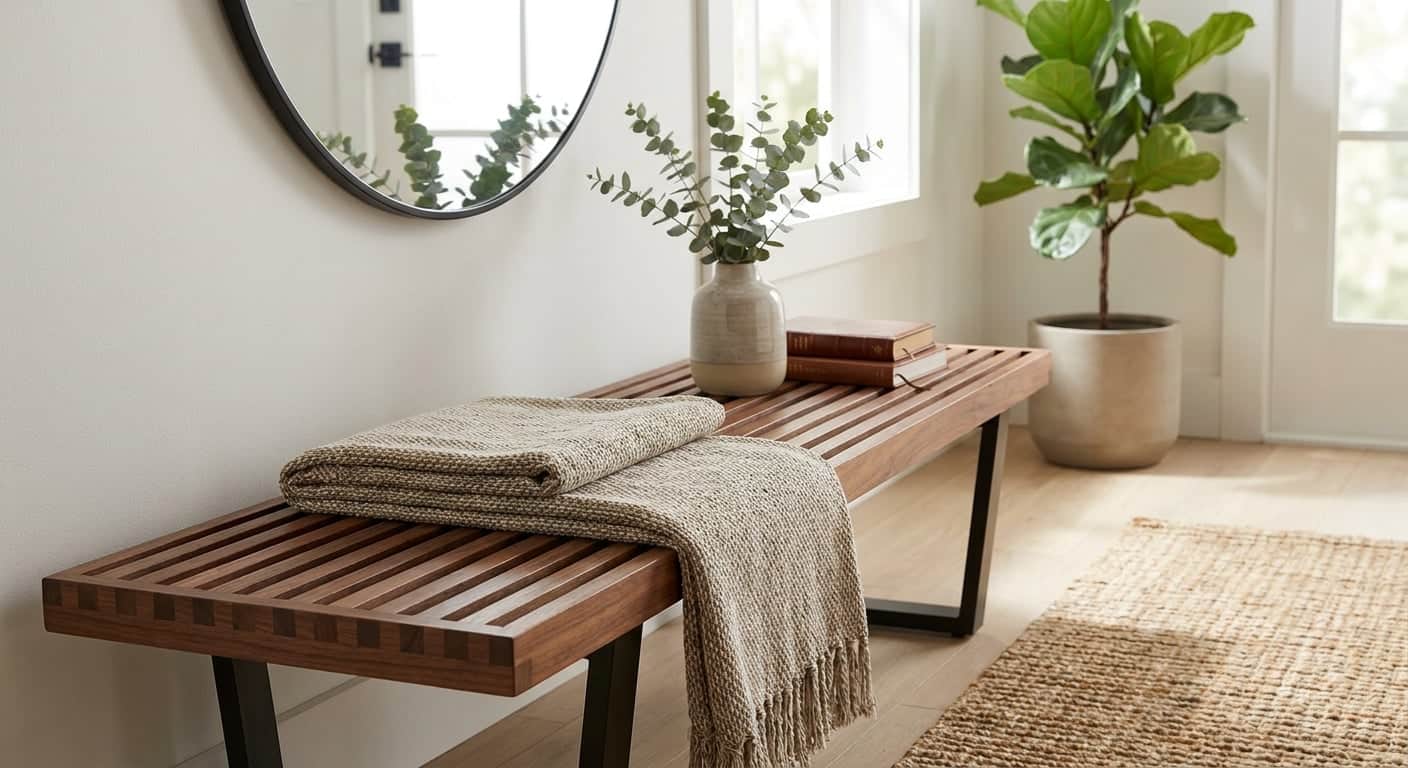
A Nelson platform bench replica turns a dead entryway strip into a place to sit down and tie your shoes — but only if you size it, finish it, and position it for the traffic that runs through that door every day.
TL;DR- A Nelson platform bench replica fits entryways 36 to 60 inches wide — measure before you buy.
- Walnut-finish slats hide scuffs better than light oak in a high-traffic entry — walnut wins for daily use.
- Pair the bench with a slim console or wall hooks, never a bulky cabinet, to keep sightlines open.
- Skip upholstered tops in a wet-shoe entryway; the slatted platform sheds moisture and grit faster.
Why this matters
Entryways get judged in three seconds — the first thing a guest or a delivery driver sees. A Nelson platform bench replica reads as furniture with real design provenance, not a catch-all shoe rack, and its low horizontal line does something a console table can't: it invites you to actually sit down.
George Nelson designed the original platform bench in 1946 as a piece that could work as bench, table, or shelf depending on where you put it. That flexibility is exactly why it belongs in an entryway in 2026 — most homes need a landing spot for bags and shoes, not another decorative surface nobody touches.
The mistake most people make is treating the bench like a console table substitute and piling it with décor. The bench works because of what it leaves out — slatted, backless, close to the floor. Style it like a console and you've killed the reason it's good at this job.
What you'll need
- A tape measure (for the entry zone and the door swing arc)
- A Nelson platform bench replica sized to your wall run
- A low-pile runner rug, cut or bound to fit under the bench footprint
- Wall hooks or a slim mirror for vertical anchoring
- Felt floor pads if your entry has hardwood or tile
- One tray or shallow bowl for keys, no more than one accent object
The steps
1. Measure the entry zone before you shop
Pull the tape from the door hinge to the nearest obstruction — closet, stairwell, or wall corner — and subtract at least 24 inches for the door's swing arc plus walking clearance. A bench that leaves less than 30 inches of open floor in front of it turns into a tripping hazard within a week. Most entryways land between 36 and 60 inches of usable wall run, which is the range a platform bench replica is built to fill without crowding the door.
Common mistake: measuring wall-to-wall and forgetting the door itself swings inward 30-36 inches on most residential doors.
2. Choose the finish for your actual foot traffic
Walnut and darker stains hide scuff marks, salt residue, and dog-nail scratches far better than light oak or ash in a mudroom-adjacent entry. If your household runs three pairs of boots through that door daily in winter 2026, pick the darker finish — light finishes show every scrape within a season.
Common mistake: choosing a finish to match a coffee table three rooms away instead of matching it to what actually touches this specific floor.
3. Position it against a wall, not floating
A platform bench reads as intentional only when it has a backdrop — a wall, a window ledge, or the side of a staircase. Floating it in the middle of an entry with no wall behind it makes it look misplaced, like it wandered in from the living room. If you're working around an open staircase, anchor the bench under the sightline the stairs create rather than across from it.
Common mistake: centering the bench under a window where morning light will bleach the finish within 12-18 months — shift it a few inches to one side instead.
4. Layer a low-pile runner underneath
A runner under the bench footprint — not draped over it — grounds the piece and hides scuffed flooring near a door where wet boots land daily. Keep the pile height under half an inch; anything thicker makes the bench legs sit unevenly and rock when someone sits down. Bind or cut the runner so it extends 4-6 inches past the bench on each side, not the full hallway.
Common mistake: buying a runner sized for the whole hallway and letting it swallow the bench's clean horizontal line.
5. Add one vertical anchor above it
A mirror, a single framed print, or a row of three wall hooks above the bench gives the eye somewhere to land before it drops to the seat. Keep the vertical anchor no wider than the bench itself — a piece that oversails the bench in either direction throws the whole composition off balance. One object, not a gallery wall; the bench is already doing visual work at floor level.
Common mistake: hanging art at coffee-table height meant for a sofa wall — entryway art sits higher, roughly eye level for someone standing, not seated.
6. Style the surface with a rotation, not a display
One tray for keys and mail, one small object with texture — a ceramic bowl, a stack of two books — and stop there. The Nelson platform bench replica was designed as a functional surface first; three candles and a vase turn it into a shelf nobody can actually sit on. Rotate the styling seasonally instead of building a permanent still life.
Common mistake: treating the bench top like a mantel and stacking objects until there's no room left for a bag or a set of keys.
Shop the entryway edit
Browse mid-century benches, consoles, and accent seating built for daily use.
Shop SohnneTroubleshooting
- The bench looks lost in a large foyer. Add a taller mirror above it and extend the runner rug a few inches wider — height and floor coverage make a small bench read as intentional in a bigger space.
- Shoes and bags pile up around it instead of on it. Add a low basket or a row of wall hooks beside the bench so overflow has a home that isn't the floor.
- The bench wobbles on hardwood or tile. Add adhesive felt pads to all four legs — uneven original flooring is the most common cause, not a defect in the bench itself.
- The finish is scuffing faster than expected. Wipe with a dry microfiber cloth weekly and keep it off direct radiator or vent airflow, which dries and stresses wood finishes over time.
- There's not enough clearance when the door opens. Reposition the bench a few inches further along the wall — a 30-inch clearance from the door's furthest swing point is the minimum for daily use.
- The entryway feels cluttered even after styling it minimally. Remove one more object than feels comfortable — entryways read as calm when the eye has one clear resting point, not two competing ones.
Tools and resources
- Measuring tape and a notepad for the entry zone and door swing arc
- A best-in-class accent chair guide if your entry needs seating beyond the bench itself
- The Haller shelving system replica sizing guide for adding storage without crowding the bench
- Felt floor pads sized to the bench leg diameter
- A low-pile runner rug cut to the bench footprint plus 4-6 inches per side
What to do next
Once the bench is placed and styled, the finish is the part that determines how it looks in five years, not five weeks. Read the guide to verifying quality before buying replica furniture before you commit to a finish, and if you're mixing the bench with pieces you already own, the guide to mixing replica furniture with vintage pieces covers how to keep the pairing from looking accidental.
FAQ
What is the best width for a Nelson platform bench replica in an entryway?
Most entryways fit a bench between 36 and 60 inches wide once you subtract 24 inches for the door’s swing arc and walking clearance. Measure the exact wall run before buying rather than guessing from a floor plan.
Is a Nelson platform bench replica comfortable enough to actually sit on?
Yes, for short use like putting on shoes, though the slatted seat is firmer than an upholstered bench by design. It’s built for quick daily use, not lounging, which is exactly why it works in an entryway.
What finish hides scuffs best on an entryway bench?
Walnut and other darker stains hide scuff marks and salt residue far better than light oak or ash finishes in high-traffic entries. Choose the darker option if boots or pet nails touch that floor daily.
Should the bench go under a window or against a solid wall?
A solid wall gives the bench a visual backdrop and keeps the finish out of direct sun exposure that can bleach wood within 12-18 months. If a window is the only option, shift the bench slightly off-center rather than centering it under the glass.
How do I style the top of an entryway bench without cluttering it?
Limit the surface to one tray for keys and mail plus one textured object, then rotate the styling seasonally. More than two items turns a functional bench into a shelf nobody can actually sit on.
Does a platform bench work in a small entryway?
Yes, if you size it to leave at least 30 inches of clearance from the door’s furthest swing point. A bench under 42 inches wide works well in tighter entries where a console table would block the path entirely.
What rug works best under an entryway bench?
A low-pile runner under half an inch thick, cut or bound to extend 4-6 inches past the bench on each side. Thicker pile makes the bench legs sit unevenly and can cause rocking when someone sits down.
Can I use a Nelson platform bench replica instead of a console table?
Yes, and it often works better in entries where people need to sit to remove shoes. Add a slim mirror or wall hooks above it to recover the vertical storage a console table would normally provide.
One last thing
The detail most people skip is the door swing arc — not the bench width. A bench measured to fit the wall perfectly but placed without accounting for 30-36 inches of door clearance ends up getting kicked, bumped, or relocated to the garage within a month. Measure the swing first, the wall second.
Related guides
- Best accent chairs for a home entryway in 2026
- How to arrange furniture around an open staircase
- Haller shelving system replica sizing and configuration guide
- How to mix replica furniture with vintage pieces
- How to verify quality before buying replica furniture