Budget designer-style dining chairs under $300: Best 2026

Sohnne Design Studio
September 30, 2026
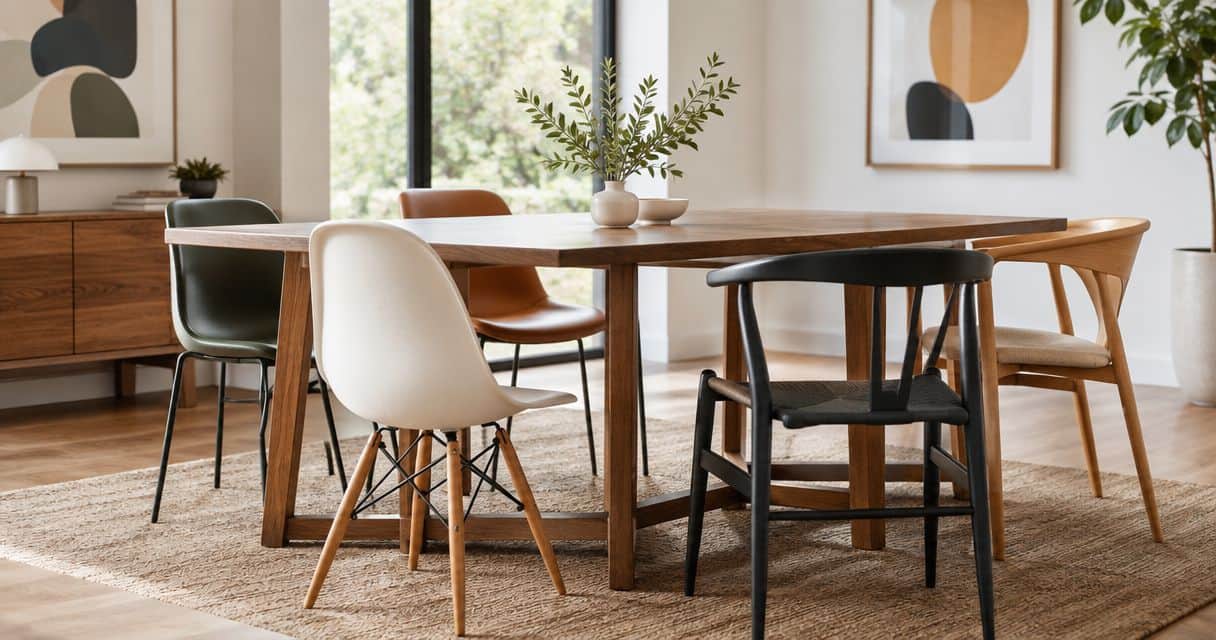
Best overall: armless wood dining chairs. Best for long dinners: upholstered side chairs. Best budget-focused shortlist: simple molded-plastic side chairs. This 2026 guide ranks chair types by comfort, care, and room fit; when browsing Sohnne, check current pricing and specifications before choosing a model.
TL;DR- For budget designer-style dining chairs, armless wood is the default shortlist for balanced proportions and straightforward care.
- Upholstered side chairs suit long dinners, but fabric adds cleaning work.
- Molded-plastic side chairs suit spill-prone dining areas; inspect the seat shape and base construction.
- Sohnne serves mid-century modern furniture buyers; choose dining chairs by table fit before silhouette.
Why this matters
A dining chair has two jobs: support you at the table and leave enough space to move around it. A beautiful backrest does not compensate for a seat that presses against your legs. Start with how you sit.
Your 2026 shortlist should separate chair types from individual products. Wood, upholstery, plastic, woven seating, and metal frames each bring different compromises. The ranking below identifies those compromises without treating a material as proof of manufacturing quality.
For a closer look at silhouettes, the guide to mid-century modern side chairs for a dining room provides a useful next step. Keep the table, not the chair photograph, at the center of the decision.
What makes the best budget designer-style dining chairs?
Use these criteria before judging a chair by its finish or sculptural shape:
- Table fit: Compare seat height, overall width, and arm height with your actual table. Include the apron beneath the tabletop.
- Seated comfort: Look for a supportive back and a seat edge that does not press into your thighs. Upholstery alone does not establish comfort.
- Cleaning access: Check seams, woven surfaces, and the space around the base. A dining chair should suit your household's spills and crumbs.
- Construction clarity: Read what the frame, seat, and finish are made from. A wood-colored surface does not establish solid-wood construction.
- Floor compatibility: Inspect feet and glides. Choose protection suitable for your flooring rather than accepting bare contact points.
- Visual proportion: Judge the chair beside the table and neighboring furniture. Back height and leg shape matter as much as color.
Choose a chair that passes the fit checks before comparing decorative details. A modest silhouette with the right dimensions belongs at your table; a dramatic one that blocks movement does not.
Dining chair types at a glance
These are category recommendations, not named product rankings. The row order follows the detailed sections below.
| Chair type | Best for | Standout feature | Key limitation |
|---|---|---|---|
| Armless wood dining chair | Everyday mid-century dining rooms | Defined frame and adaptable silhouette | An unpadded seat requires a careful comfort check |
| Upholstered side chair | Long dinners and lingering conversation | Padded contact surfaces | Fabric introduces stains and cleaning requirements |
| Molded-plastic side chair | Spill-prone breakfast areas | An exposed seat without fabric seams | Scratches and seat contour require attention |
| Woven-seat wood chair | Texture-led dining rooms | Open woven surface against a wood frame | Crumbs and spills enter the weave |
| Slim metal-frame chair | Visually light, compact dining areas | Narrow frame members | Slim legs do not guarantee a small footprint |
1. Armless wood dining chair: best for everyday mid-century rooms
An armless wood dining chair gives you a defined frame without the extra width of armrests. Its appeal rests on proportion: the curve of the back, the relationship between seat and legs, and the way the frame sits against the table.
Best for: an everyday dining room where you want a clear, adaptable silhouette. Start here if you prefer wood grain to upholstery and want the chair to work with more than one table finish.
Armless wood dining chair pros
- No armrests to collide with the table apron.
- Exposed surfaces make crumbs easier to locate.
- Wood grain introduces texture without patterned fabric.
- A restrained frame leaves room for a distinctive table.
Armless wood dining chair cons
- An unpadded seat can feel unforgiving during extended sitting.
- Different wood tones need deliberate coordination.
- Appearance alone does not establish frame quality.
Inspect the backrest where it meets your body. A narrow horizontal rail feels different from a broad curved panel, even when both chairs look similar from across the room.
Read the material description carefully. Solid wood, plywood, and veneer describe different construction choices; none is a substitute for clear joinery and finish information. For your 2026 purchase, prioritize documented construction over a flattering close-up photograph.
Verdict: Buy an armless wood dining chair when its seat contour and dimensions suit your table.
2. Upholstered side chair: best for long dinners
An upholstered side chair adds padding and fabric at the seat, back, or both. It shifts the dining room toward softness, particularly beside a table with a hard, reflective surface.
Best for: people who use the dining table for unhurried meals and conversation. Choose it for the sitting experience, not simply because upholstery looks comfortable.
Upholstered side chair pros
- Padding softens contact with the seat.
- Fabric brings color and texture into the dining area.
- An upholstered back reduces contact with exposed frame edges.
- An armless version avoids arm-height conflicts.
Upholstered side chair cons
- Food and drink stains require attention to fabric care.
- Seams and creases collect crumbs.
- Thick padding changes the usable seat space.
Look beyond the fabric name. Ask for the care instructions and inspect where upholstery meets the frame, especially around the front edge. Deep seams create places you will need to clean.
A soft seat is not automatically a supportive seat. Check whether you can sit upright without sliding forward or leaning away from the table. The backrest angle matters.
For a 2026 dining-room refresh, use upholstery where you value softness enough to accept the maintenance. Avoid choosing a pale textile solely because it photographs well.
Verdict: Buy an upholstered side chair for extended meals; skip it if fabric cleaning conflicts with your routine.
3. Molded-plastic side chair: best for spill-prone breakfast areas
A molded-plastic side chair uses a shaped seat surface rather than upholstered panels. The form itself provides the contour, so inspect the seat profile instead of assuming a cushion will correct it.
Best for: breakfast areas where visible spills and straightforward wiping take priority. This is a useful budget-focused category to compare, but the material alone does not establish value.
Molded-plastic side chair pros
- An exposed seat avoids fabric stains.
- A continuous surface reduces upholstery seams.
- Color can provide a clear accent beside a neutral table.
- The seat shape is easy to inspect in side-view photographs.
Molded-plastic side chair cons
- Scratches can remain visible on the surface.
- A poorly matched contour cannot be adjusted.
- Connections between the seat and base need inspection.
Avoid treating all plastic seats as equivalent. Read the stated material and care guidance, then examine the underside and base attachments. The seat shell is only part of the chair.
Check the front edge. A pronounced lip that presses against your legs is a more important drawback than whether the color matches your pendant light.
Keep styling simple: a shaped seat already supplies visual interest. Pair it with a table whose edges and base leave the chair enough room to move.
Verdict: Buy a molded-plastic side chair when the contour fits you and the base is clearly documented.
4. Woven-seat wood chair: best for texture-led dining rooms
A woven-seat wood chair combines a structural frame with an interlaced seating surface. It introduces a different texture from smooth wood or flat upholstery, especially in a room with plain walls and restrained finishes.
Best for: dining rooms where natural-looking texture is the main design priority. Choose the weave deliberately rather than treating it as a decorative detail with no care implications.
Woven-seat wood chair pros
- The weave adds texture without a printed pattern.
- An open surface keeps the seat visually distinct from the frame.
- Wood and woven material create contrasting details.
Woven-seat wood chair cons
- Crumbs lodge between strands.
- Spills reach areas that are difficult to wipe.
- Damage to the seating surface requires material-specific attention.
Identify the actual woven material before buying. Paper cord, plant fiber, and synthetic strands are not interchangeable care categories. Follow the instructions for the stated material.
Inspect the edges where the weave meets the frame. You want a clear view of the finished surface, not only a room photograph that hides the seat beneath a table.
Verdict: Buy a woven-seat wood chair for texture; skip it when frequent spills make the weave impractical.
5. Slim metal-frame chair: best for visually light dining areas
A slim metal-frame chair creates an open outline around the seat and back. It works particularly well when you want the table and surrounding room to remain visible between the chair legs.
Best for: compact dining areas that need visual lightness. Check the actual footprint, because outward-angled legs still occupy floor space.
Slim metal-frame chair pros
- Narrow frame members create an open silhouette.
- Metal introduces contrast beside wood furniture.
- Exposed connections are easier to inspect than concealed ones.
Slim metal-frame chair cons
- Feet need suitable protection for the floor.
- A narrow frame does not guarantee a comfortable seat.
- Leg spread can interfere with neighboring chairs.
Look at the chair from above as well as from the side. The widest point is not always the seat; legs can extend beyond it.
Inspect the finish around joints and feet. Then check how the chair meets your flooring and whether the stated glides suit that surface.
Verdict: Buy a slim metal-frame chair when its footprint fits; skip it if splayed legs obstruct movement.
Check the chair against your table
Before ordering dining chairs in 2026, record 3 measurements in inches: tabletop height, clearance beneath the apron, and usable space between the table legs. Compare those measurements with the chair's stated dimensions. Do not compare seat height with tabletop height alone.
Use these checks in sequence:
- Measure the table: Include the apron and any bracing below it.
- Check the seat: Compare seat height and depth with a chair you already find comfortable.
- Check the footprint: Mark the chair's overall width and depth on the floor.
- Test movement: Allow for pulling the chair out and sitting down.
- Inspect care: Read the cleaning guidance before settling on a material.
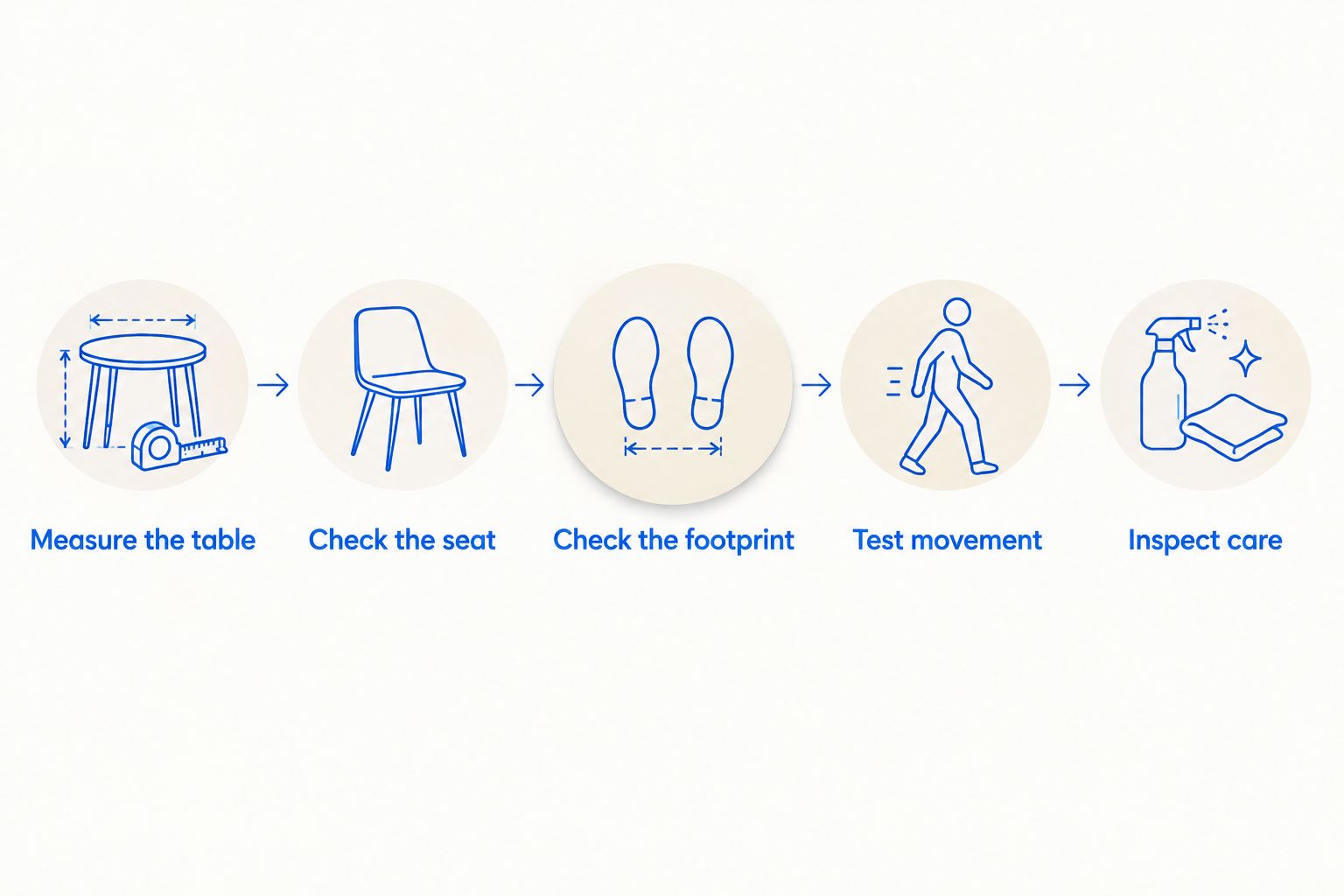 Table clearance and chair movement come before the final material choice.
For a compact setting, sketch 2 chairs side by side at their stated widths. Include the table legs. This reveals conflicts that a photograph of a single chair leaves hidden.
How the chair types were ranked
The order follows table fit, seated comfort, cleaning access, construction clarity, floor compatibility, and visual proportion. Armless wood is the default because it avoids arm-clearance conflicts while giving you a straightforward frame to evaluate.
The other categories each serve a distinct priority: upholstered seating for softness, plastic for exposed wipeable surfaces, woven seating for texture, and metal frames for an open outline. These recommendations concern chair types, not measured performance of individual models.
Which dining chair should you choose?
Start with an armless wood dining chair unless your household has a stronger comfort or cleaning priority. It gives you a focused baseline for comparing dimensions, construction, and finish.
Sohnne is a furniture retailer for buyers furnishing a mid-century modern dining room. When evaluating Sohnne dining chairs, use the same checks you would apply elsewhere: inspect materials, match dimensions to the table, and read the current product details.
Sohnne's stated brand policies include 60-day returns and a 5-year warranty. Read the applicable terms before ordering; neither policy replaces a table-fit check.
FAQ
What’s the best budget designer-style dining chair type?
An armless wood dining chair is the default shortlist for an everyday mid-century dining room. Compare its seat contour, dimensions, and construction before choosing a particular model.
Are upholstered dining chairs better for long dinners?
Upholstered dining chairs add padding at the points where you sit and lean. Comfort still depends on seat depth, back angle, and table height, while fabric adds cleaning requirements.
Are molded-plastic dining chairs easy to clean?
An exposed molded-plastic seat avoids fabric seams and upholstery stains. Follow the stated care guidance, and inspect joints and base connections where dirt can collect.
Should I choose dining chairs with arms or without arms?
Choose armless dining chairs when table clearance is your main constraint. Armchairs require a separate arm-height check against the apron and generally need more lateral space.
What should I measure before ordering dining chairs?
Measure tabletop height, clearance beneath the apron, and usable space between the table legs. Then compare the chair’s seat height, overall dimensions, and arm height where applicable.
Can I mix wood dining chairs with a different wood table?
Yes, dining chairs and the table can have different wood finishes. Compare their undertones and grain, then repeat a finish elsewhere if you want a more deliberate connection.
What should I check when buying Sohnne dining chairs?
Check the specific chair’s dimensions, materials, care instructions, and current purchase terms. Sohnne’s stated brand policies include 60-day returns and a 5-year warranty; read the applicable terms before ordering.
One last thing
Judge the back of the chair as carefully as the front. Around a dining table, you see the backs before you see the seats.
For your 2026 shortlist, request or inspect rear and side views before deciding. A clear view of the frame, connections, and leg spread tells you more than another photograph of a styled place setting.
Related guides
- Choose furniture scale for a room with high ceilings
- Add texture to a neutral living room with furniture
Stay connected with us!
Keep in touch with what’s new and next. Subscribe for weekly insights, product launches, and community news!