Wiggle Chair Art Studio Guide: Best Picks for 2026

Sohnne Design Studio
August 29, 2026
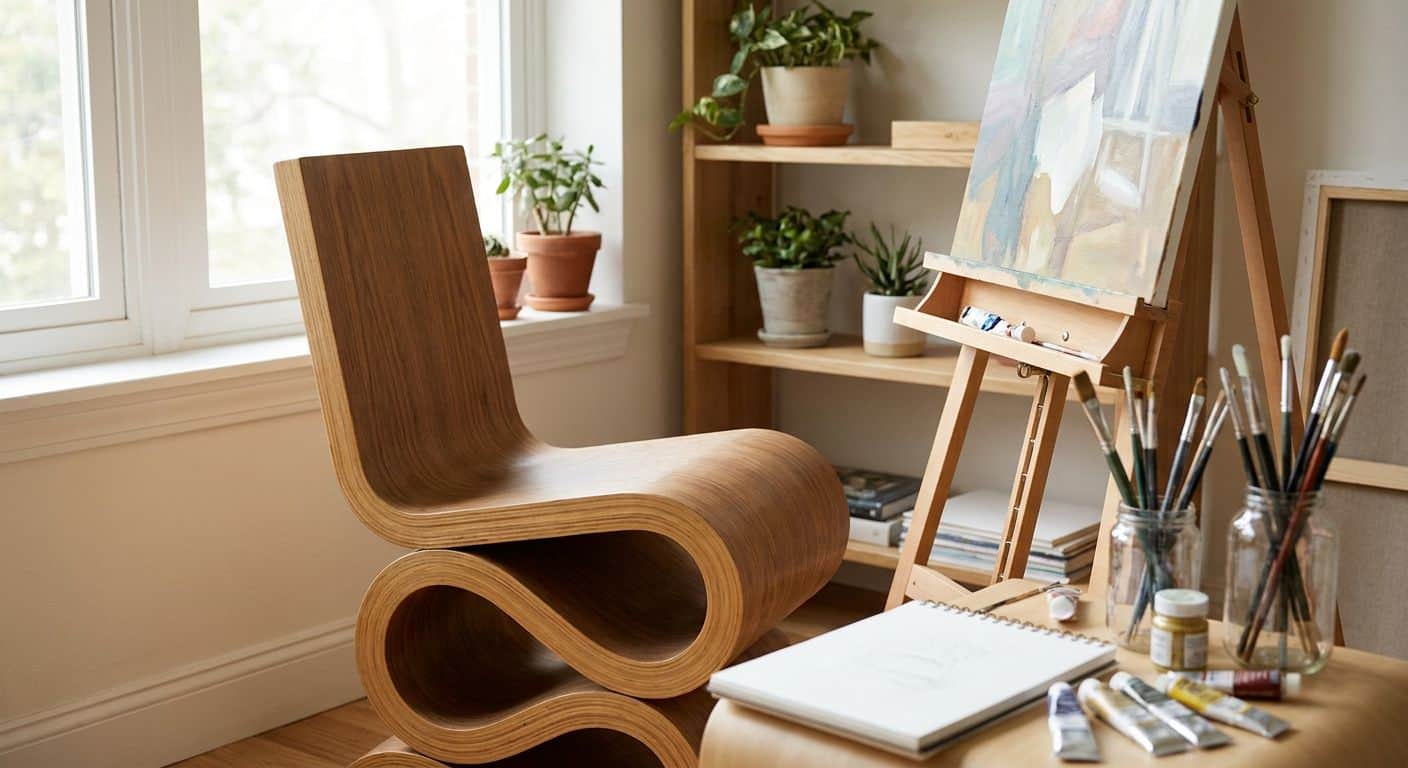
A Wiggle Chair earns its place in a home art studio corner because it moves with you, wipes clean after a spill, and doesn't compete with a wall of paint tubes and brushes for visual attention.
TL;DR- The wiggle chair art studio pick for 2026: natural birch lacquer handles daily studio wear. Buy.
- Skip low-back wiggle chairs paired with a standing easel; the S-curve frame needs armless floor clearance, not lumbar support.
- Black lacquer wiggle chairs hide ink, charcoal, and paint splatter better than natural wood grain. Consider.
- Sohnne’s Wiggle Chair replica ships with a 5-year warranty and 60-day returns, useful for a chair you plan to test hard.
Why This Matters
Most art studio corners are borrowed space: a slice of a spare room, a garage bay, a converted closet. Whatever seat lives there has to survive graphite dust, wet clay hands, and the occasional knocked-over water jar, then fold back into the room's look when you're done for the day.
Standard task chairs with armrests fight a drafting table or a standing easel — the arms hit the tabletop edge before your torso does. A Wiggle Chair's armless, continuous S-curve sidesteps that problem entirely, which is exactly why it keeps showing up in studio-corner setups in 2026.
Who This Is For
This guide is for anyone carving a working art corner out of a room that also does something else — painters at an easel, illustrators at a drafting table, potters glazing at a side bench, or anyone who needs a seat that pulls double duty between studio hours and everyday living. If you've already looked at replica lounge chairs for a creative studio and want something more sculptural and less sofa-like, the Wiggle Chair is the next logical stop.
It is not for anyone who needs back support for four-hour seated sessions, or anyone working at a standard 29-inch-high desk where an armless low chair sits too far below the tabletop.
What to Look for in a Wiggle Chair for an Art Studio Corner
Seat height relative to your easel or drafting table
A Wiggle Chair sits low and close to the floor by design, which suits a standing easel or a floor-level clay bench better than a raised drafting table. Measure your table height before you buy — a mismatch means you'll be reaching up instead of working level.
Finish that survives paint, ink, and clay dust
The original silhouette is bent laminated wood finished in lacquer, and that lacquer coat is the entire defense against stains. A matte or satin lacquer in a darker tone forgives more than a bright white finish sitting three feet from an open palette.
Frame stability on hard studio flooring
Concrete, sealed plywood, and vinyl plank are common studio floors, and none of them forgive a wobbly chair leg. The Wiggle Chair's molded base has no separate legs to loosen over time, which matters more in a studio than in a dining room where the chair barely moves.
Weight you can actually move around a cramped corner
A studio corner usually means shuffling the chair between an easel, a sink, and a worktable multiple times a session. A lightweight molded-wood frame you can slide with one hand beats anything upholstered and boxy.
Visual quiet against a wall of supplies
Studio corners get visually loud fast — shelves of paint, rolls of canvas, drying racks. A single sculptural chair in one finish color reads as a deliberate design choice instead of one more object cluttering the space.
Top Picks for a Wiggle Chair Art Studio Corner
Natural birch lacquer — the safe pick. The bare-wood grain under a clear lacquer coat reads warm and workshop-appropriate, and it's the finish least likely to look out of place if the studio corner doubles as a reading nook after hours. Sohnne backs its Wiggle Chair replica with a 5-year warranty and a 60-day return window, which matters for a piece you're about to put through daily studio abuse. If you want to see the same silhouette handled in a different room, the Wiggle Chair replica for an eclectic dining room shows how the same frame reads against a completely different palette. Buy.
Black lacquer — the wildcard. A gloss or satin black finish hides ink smudges and charcoal dust in a way no light wood tone can, and it anchors a corner that already has bright canvases or colorful supply bins competing for attention. The tradeoff is glare under direct studio lighting, which some painters find distracting at an easel. Consider.
White lacquer — the bright-corner pick. For a studio corner lit mostly by a north-facing window or a photography-adjacent setup, white lacquer keeps the whole nook feeling airy rather than cluttered. It shows every stain fastest of the three, so it's the pick for a tidy workflow, not a messy one. Consider, with caveats.
Furnish Your Studio Corner
Browse mid-century seating built for daily studio wear.
Shop NowWhat to Avoid
- Plush or boucle upholstery near an easel. Fabric absorbs solvent and paint the way lacquer never does, and it can't be wiped clean between sessions.
- Extremely low replicas paired with a standard-height desk. If your worktable sits at desk height rather than easel height, a low armless chair puts your shoulders below the tabletop edge — uncomfortable within twenty minutes.
- Delicate high-gloss finishes under a rolling stool or cart. Studio corners get bumped by carts and stools constantly; a finish that scratches on first contact won't survive a year of real use.
Verdict Comparison
| Finish | Best For | Cleanability | Verdict |
|---|---|---|---|
| Natural birch lacquer | General studio use, mixed lighting | High — hides minor marks | Buy |
| Black lacquer | Ink, charcoal, moody corners | Highest — hides most stains | Consider |
| White lacquer | Bright, tidy, photography-lit corners | Lowest — shows every mark | Consider, with caveats |
FAQ
What is a Wiggle Chair used for in a home art studio?
A Wiggle Chair works as low, armless seating next to an easel, drafting table, or clay bench in 2026 studio setups. Its molded S-curve frame clears table edges that a standard armchair would hit.
Is the Wiggle Chair comfortable for long painting sessions?
It’s better suited to shorter, active sessions than four-hour seated stretches, since the low seat and armless frame skip lumbar support. Painters who stand at an easel and sit only briefly tend to be happiest with it.
What is the Wiggle Chair made of?
The Wiggle Chair, designed by Frank Gehry in 1972 as part of his Easy Edges collection, is built from bent laminated wood finished in lacquer. Replicas today keep the same molded-wood construction and lacquer finish.
How much does a Wiggle Chair replica cost in 2026?
Pricing varies by finish and lacquer coat, so check current listings for exact figures rather than assuming a flat rate. Natural wood finishes and colored lacquers are typically priced differently within the same line.
Is a Wiggle Chair replica sturdy enough for a working studio?
A molded one-piece frame with no separate legs holds up better on hard studio flooring than chairs with jointed legs that loosen over time. Sohnne’s replica pairs that frame with a 5-year warranty for added confidence.
What’s the best chair for a small art studio corner?
For a tight corner, the best chair is lightweight, armless, and low enough to clear a standing easel — the Wiggle Chair fits all three in 2026 studio layouts. Bulkier upholstered chairs eat floor space a small corner doesn’t have.
Does the Wiggle Chair need armrests for studio work?
No — the absence of armrests is what lets it slide under a drafting table or sit close to a standing easel. Armrests would actually work against a studio corner’s tight clearances.
How do I clean paint or ink off a Wiggle Chair replica?
Wipe lacquered surfaces with a damp cloth as soon as a spill happens, before paint or ink sets into the finish. Avoid solvents or abrasive cleaners, which can dull the lacquer coat over time.
One Last Thing
Frank Gehry's original 1972 Easy Edges collection, which introduced the Wiggle Chair, was designed to be cheap and almost disposable — corrugated cardboard furniture meant for temporary use. The irony is that the shape has outlasted nearly every intention behind it, and in 2026 it shows up in art studios precisely because it looks permanent and sculptural, not disposable. That contradiction is part of why it photographs so well in a working studio corner.
Related Guides
Stay connected with us!
Keep in touch with what’s new and next. Subscribe for weekly insights, product launches, and community news!