Best Furniture for a Home Photography Studio (2026)

Sohnne Design Studio
July 31, 2026
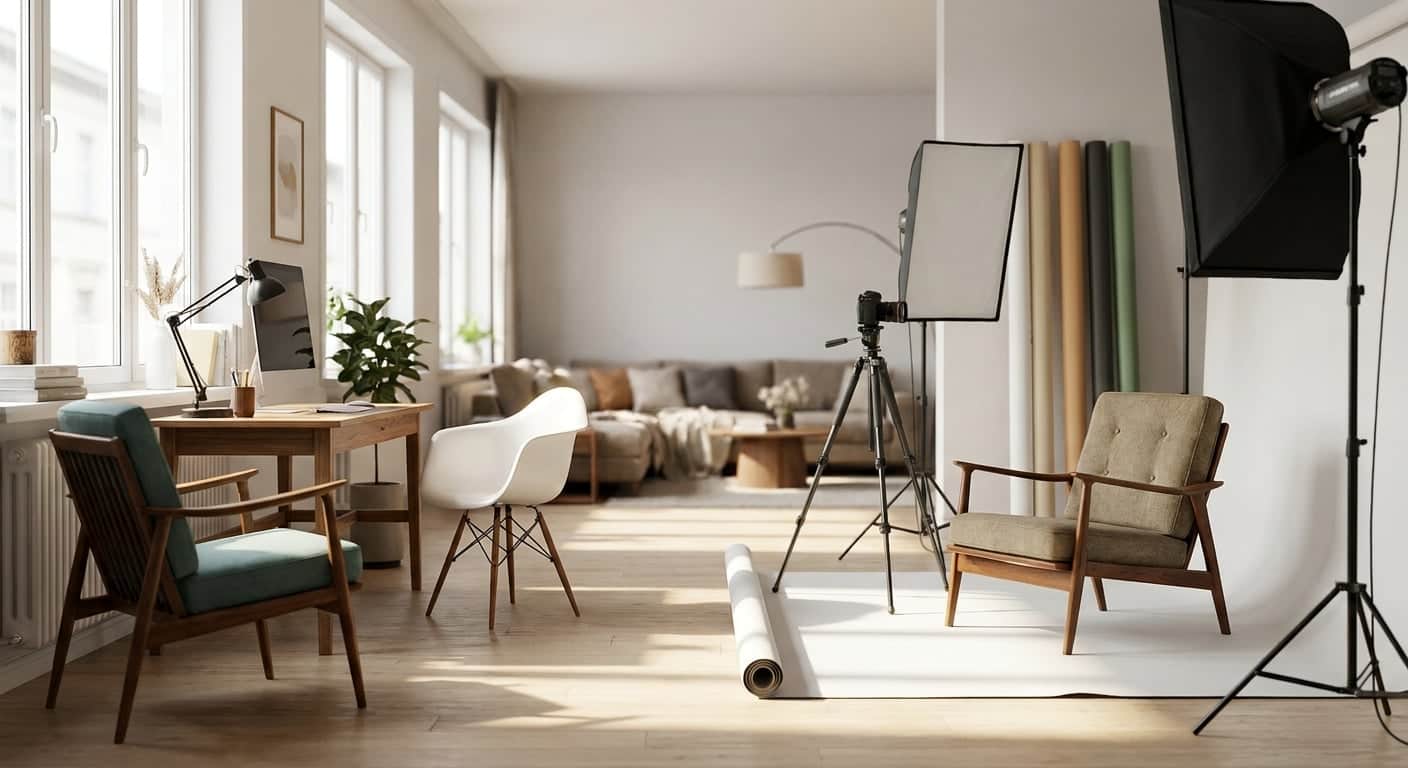
Furniture for a home photography studio has one job that furniture in the rest of your house doesn't: it has to look right on camera, under three different lighting setups, from three different lens distances, before your first client of the day even walks in.
TL;DR- Furniture for a home photography studio needs shapes that read clean under hot lights — the Ox Chair replica is the safe pick. Buy.
- Skip glass and high-gloss tabletops; they throw flash spill back into the lens on almost every angle.
- A designer sofa replica under $2,000 covers lifestyle and portrait backdrops without eating the whole gear budget.
- The PP501 Wishbone Chair replica works as both a prop and a subject seat because its open back doesn’t block light.
Why this matters
A living room chair only has to look good to a person standing in the doorway. A studio chair has to look good to a camera positioned six feet away, at eye level, with a softbox throwing light from a 45-degree angle it will never see in real life.
Most furniture buying guides don't account for that. They optimize for comfort and floor space, not for how a silhouette reads in a 4:5 crop or whether a fabric texture turns muddy under tungsten. That gap is why so many home studios end up furnished with pieces that photograph flat: correct proportions in person, wrong proportions in a viewfinder.
The fix isn't buying more furniture. It's buying fewer pieces that do more photographic work — a chair that reads as a full silhouette from three angles, a sofa that doesn't compete with the subject for attention, a surface that doesn't bounce light back into the lens. Replica lounge chairs built for a creative studio are a reasonable starting point if you're furnishing from zero in 2026.
Who this is for
This is for the photographer or content creator converting a spare room, garage, or basement into a working studio in 2026 — someone shooting portraits, product flat-lays, or lifestyle content who needs furniture that functions as both prop and set piece. It's not for someone furnishing a living room that occasionally hosts a photoshoot; that's a different brief with different priorities.
What to look for in furniture for a home photography studio
Silhouette clarity under hard and soft light
A chair or sofa with a busy, broken outline disappears into background clutter once a softbox flattens it. Look for pieces with one continuous line — a single curved arm, an unbroken back rail — because that line is what separates subject from set in a still frame. Furniture with fussy ornamentation photographs as noise, not detail.
Fabric and finish that doesn't fight your white balance
High-gloss lacquer and glass surfaces bounce your key light straight back at the lens, forcing a reshoot or a polarizing filter you didn't budget for. Matte wood, boucle, and leather with a low sheen hold color consistently whether you're shooting daylight-balanced LEDs or warm tungsten. This matters more in a home studio than a rented space, because you don't control the ambient light the way a commercial studio does.
A frame width that fits your crop ratios
If a chair or loveseat is wider than roughly 34 inches at the arms, it starts crowding a standard 4:5 portrait crop unless you shoot from farther back than most home studios allow. Measure your working distance from camera to subject before buying anything — an 8-foot studio needs narrower furniture than a 12-foot one.
Weight you can actually move solo
You'll be repositioning furniture between setups multiple times a day, sometimes mid-shoot when a client wants a different backdrop. A piece that takes two people to shift kills momentum and burns billable time. Prioritize pieces rated for single-person moves over pieces that just look lighter.
Neutral tones that don't date your portfolio
A trend-color sofa reads as "2026 shoot" the moment trends shift, which dates every image you've stored it in. Neutral wood tones and muted upholstery keep a portfolio shot in 2026 looking current in 2029, which matters if you're building a body of work rather than one campaign.
Build your studio furniture set
Browse mid-century replica seating and tables sized for shoot spaces.
Shop SohnneTop picks for a home photography studio
The versatile anchor: Ox Chair replica
The hook here is a single continuous curve on the backrest that holds its shape from any angle within a 180-degree arc around the subject, so you're not repositioning the tripod every time a client turns for a three-quarter profile. It works as a seated portrait chair and as a reading-nook prop in the same session. Verdict: Buy for anyone shooting seated portraits as a regular part of the creative studio lineup.
The flexible prop: PP501 Wishbone Chair replica
The open-back, woven-seat design keeps flash spill from turning into a hard black silhouette behind the subject in backlit shots — a lighting fix that matters more than almost any other line item under $200 in prop budget. It doubles as a dining accent and a flat-lay prop, which stretches its use across product and lifestyle content in the same afternoon. Verdict: Buy as the Wishbone Chair replica for anyone shooting mixed content types.
The budget-flex pick: sofa replicas under $2,000
A lifestyle backdrop sofa doesn't need six-figure provenance — it needs a clean line, a neutral fabric, and enough depth (aim for 34 to 36 inches) to photograph as a full seat rather than a perch. The designer sofa replicas priced under $2,000 hit that brief without pulling budget from lighting gear, which is the wrong place to cut corners in 2026. Verdict: Buy if your studio runs lifestyle or e-commerce content sessions.
The wildcard: an Egg Chair-style accent
A rounded, high-back accent chair breaks up a set that's otherwise all straight lines and reads as an editorial choice rather than a filler piece. It's not a daily-use chair in most home studios, but it earns its floor space on branding shoots where the set needs one striking element. Verdict: Consider — only if editorial or branding sessions are a regular part of your 2026 booking calendar, otherwise it's dead floor space.
“If a chair can’t turn under three different key lights without throwing a weird shadow, it’s not a studio piece, it’s just furniture.”
What to avoid
- Glass-top tables. They look sleek in a showroom and turn into a mirror the second a softbox hits them at the wrong angle, forcing a reshoot or a polarizer you didn't plan to buy.
- Deep-tufted sofas. The shadow pockets in tufting read as visual noise in a tight crop and photograph darker than they look in person, which throws off your exposure on every frame.
- Anything wider than your working distance allows. A statement sectional that looks generous in person crowds a 4:5 crop the moment your camera is closer than 10 feet, which is most home studio setups.
Verdict comparison
| Pick | Best photographic use | Key advantage | Verdict |
|---|---|---|---|
| Ox Chair replica | Seated portraits, editorial | Continuous silhouette across 180 degrees | Buy |
| PP501 Wishbone Chair replica | Flat-lay, dining/product shots | Open back reduces backlight silhouette | Buy |
| Sofa replica under $2,000 | Lifestyle, e-commerce backdrops | Neutral fabric, 34-36 inch depth | Buy |
| Egg Chair-style accent | Editorial, branding sessions | Rounded form breaks up straight-line sets | Consider |
FAQ
What’s the best furniture for a home photography studio?
The best furniture for a home photography studio combines a clean, continuous silhouette with a neutral fabric that holds color under mixed lighting. An Ox Chair replica or a designer sofa in the 34 to 36 inch depth range covers most portrait and lifestyle setups in 2026.
Is replica furniture good enough for a professional shoot?
Replica furniture built to original dimensions photographs identically to the source piece, since the camera only sees form and finish, not provenance. What matters for a shoot is fabric sheen and silhouette clarity, not whether a piece is an original.
How much space do I need for a home photography studio?
Most home studios run on 8 to 12 feet of working distance between camera and subject, which caps comfortable furniture width around 34 inches. Smaller rooms need narrower pieces and fewer of them to avoid crowding the frame.
Should I choose glass or wood tables for a studio?
Wood tables are the safer choice for a home photography studio because glass surfaces bounce flash and softbox light back into the lens. Matte or lightly finished wood holds a consistent tone across daylight LEDs and tungsten setups.
What color furniture works best for photography backdrops?
Neutral wood tones and muted upholstery — grays, off-whites, warm browns — keep images from looking dated once color trends shift. A trend-color sofa can date a portfolio shot in 2026 within a couple of years.
Can one chair work for both portraits and product shoots?
Yes, an open-back design like the PP501 Wishbone Chair replica works as both a seated portrait chair and a flat-lay or dining prop. The open frame avoids blocking light in either use case.
How many furniture pieces does a home studio actually need?
Most working home studios run on three to five core pieces: one anchor chair, one flexible prop chair, one backdrop sofa or bench, and a small side table. More than that adds storage and moving time without adding photographic range.
Does furniture weight matter for a studio setup?
Weight matters because studio furniture gets repositioned multiple times per session, often mid-shoot. Pieces one person can move solo keep a session moving; anything that needs two people to shift slows down a paid booking.
One last thing
The detail that trips up most new home studios isn't the furniture itself — it's forgetting to test a piece under the actual lighting rig before a paying client shows up. A chair that photographs beautifully under window light can throw an ugly shadow under a two-softbox setup, and the only way to know is to shoot a test frame in the room you'll actually use in 2026, not in the showroom or on a product page.
Related guides
Stay connected with us!
Keep in touch with what’s new and next. Subscribe for weekly insights, product launches, and community news!