Jeanneret Chair Replica: Buying and Styling Guide 2026

Sohnne Design Studio
August 8, 2026
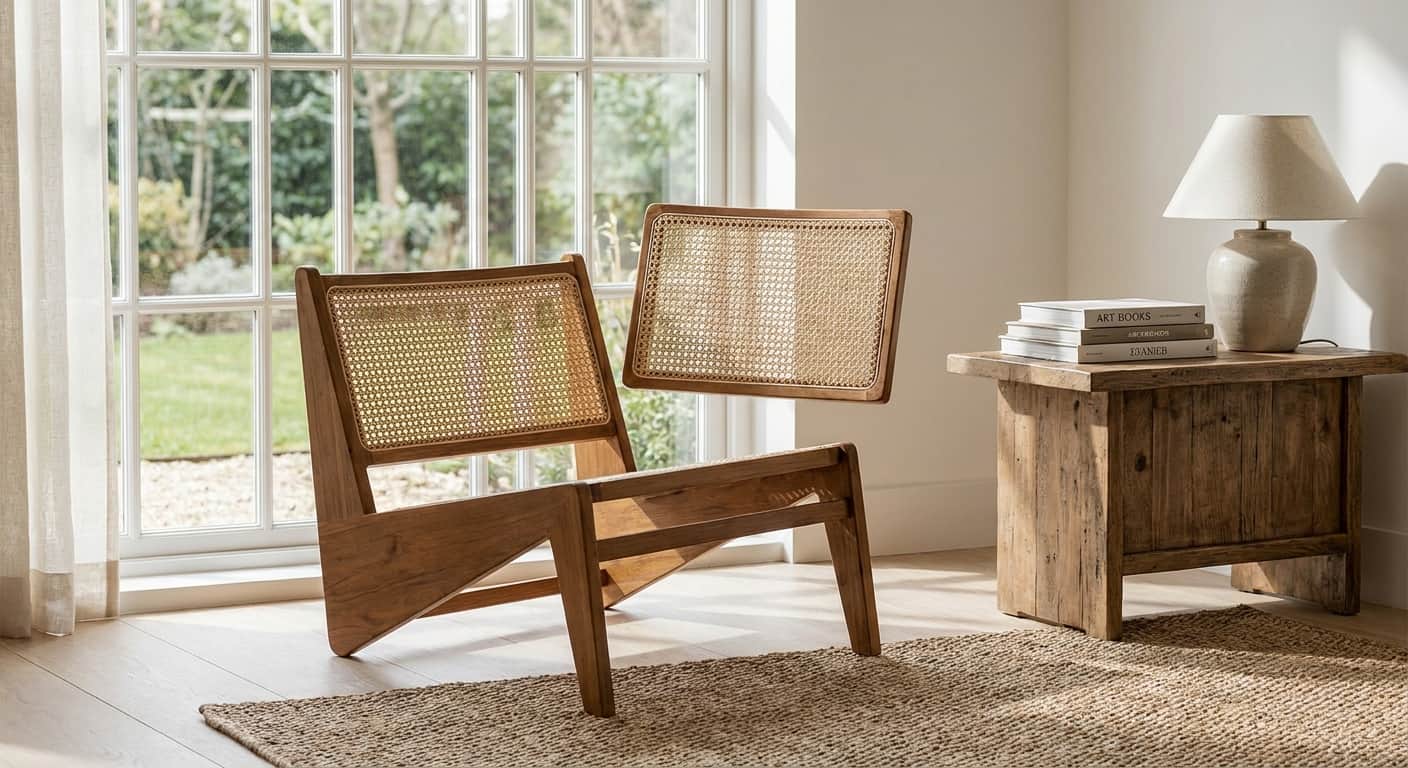
Pierre Jeanneret's chairs came out of a housing project, not a showroom, and that origin story still shapes which replica is worth your money in 2026.
TL;DR- Pierre Jeanneret designed the Chandigarh furniture in the 1950s using teak, cane, and a V-leg joint built for local workshops, not for polish.
- A good jeanneret chair replica keeps the V-leg proportions and hand-caned seat; anything with a bent-plywood shortcut is not the same chair.
- Sohnne builds its version with a 5-year warranty and 60-day returns, which matters for a caned seat you have not sat in yet.
- Pair the chair with warm wood tones and low-slung furniture, not with high-gloss or chrome pieces from other eras.
Why this matters
Pierre Jeanneret was Le Corbusier's cousin and collaborator, and from 1951 to 1959 he designed the furniture for Chandigarh, the planned capital of Punjab, India. He was not making gallery pieces. Government offices, courts, and university buildings in Chandigarh needed thousands of chairs, and Jeanneret designed them to be built by local carpenters with teak and woven cane, no imported hardware, no complicated joinery.
That constraint is why the silhouette reads as honest rather than decorative: a V-shaped leg, a low seat, a caned back that breathes in a hot climate. Original Chandigarh pieces have become some of the most collected mid-century furniture in the world, which pushed demand toward a jeanneret chair replica as the realistic way to own the look. Getting the proportions and materials right is the whole game here — get them wrong and you own a generic rattan chair with a famous name attached.
What you'll need
- A clear sense of which Jeanneret silhouette you want: the low Easy Chair, the upright Committee Chair, or the sculptural Kangaroo Chair
- A room with natural or warm-toned light — cane reads flat under cold LED
- 15 to 20 minutes to check frame joinery, cane weave, and finish before you buy
- A tape measure for seat height and depth against your existing furniture
- Patience for a slower checkout: a well-built cane seat is not a same-week impulse buy
Sohnne makes its own furniture in-house, which is worth knowing before you shop Sohnne's collection side by side with cheaper import listings — the difference usually shows up in the cane tension and the leg joint, not the photos.
The steps
1. Learn the three silhouettes before you shop
Jeanneret's Chandigarh output was not one chair, it was a furniture system. The Easy Chair sits low with a reclined cane back, built for lounging. The Committee Chair sits taller and squarer, built for desk work in government offices. The Kangaroo Chair has a distinctive curved arm that drops toward the seat, named for its silhouette. Knowing which one you're shopping for stops you from buying a "Jeanneret-style" chair that is actually none of the three.
2. Match the silhouette to the room, not the trend
A Committee-style chair belongs at a desk or dining table where an upright seat matters. An Easy Chair belongs in a living room or reading corner where a lower, reclined seat works. The Kangaroo silhouette reads as a statement piece — one per room, not a pair — because its curved arm draws the eye on its own. Buying the wrong silhouette for the room is the single most common styling mistake with this chair.
3. Check the leg joint and the cane before you buy
Original Jeanneret chairs use a V-leg that is structural, not decorative — the angle carries the load without a stretcher bar underneath. On a replica, press down on one corner of the seat. A properly built V-leg won't rock. Cane should be woven tight enough that you can't push a finger through the pattern; loose cane sags within a year under regular use.
4. Pick teak over a stained substitute
Jeanneret specified teak because Chandigarh's climate needed a wood that resisted humidity and insects without a heavy finish. A teak jeanneret chair replica will show visible grain and a slightly oily surface feel; a stained pine or rubberwood substitute looks flat under direct light and will not age the same way. Ask directly what wood species is used — this single question filters out most low-cost listings.
5. Verify the build before checkout, not after delivery
Read the manufacturer's own quality claims critically. Verify quality before buying replica furniture covers what to ask about frame construction and finish on any replica piece, and the same checklist applies directly to a caned Jeanneret piece. Confirm the return window in writing — a caned seat is one of the few furniture categories where the in-person feel can differ from photos, so a 60-day window matters more here than on a sofa.
6. Style it low and warm, not high-gloss
Jeanneret furniture reads best against materials it was designed alongside: teak flooring, jute or wool rugs, unlacquered brass, linen upholstery on anything nearby. Skip glass-top tables and chrome accents near it — the contrast fights the chair's handmade quality instead of complementing it. A single Kangaroo or Easy Chair works as an anchor in a mid-century modern apartment layout, angled toward a window rather than squared against a wall.
7. Maintain the cane and teak on a schedule
Cane needs humidity, not dryness — a chair kept near a heating vent all winter will crack faster than one in a humid bathroom corner. Wipe teak with a dry cloth monthly and avoid furniture polish with silicone, which builds a film over time. Rotate the chair out of direct afternoon sun every few months if it sits by a south-facing window; teak lightens unevenly under one-sided UV exposure.
Compare the Jeanneret silhouettes
See teak-and-cane construction details before you commit to a chair.
Browse the collectionTroubleshooting
- Cane feels loose after a few months — check humidity in the room first; cane tightens and loosens with moisture. If it stays loose, the weave was under-tensioned at build, not a wear issue.
- Chair rocks on one leg — this is almost always a V-leg cut unevenly at manufacture, not a floor problem. A properly built chair should sit flat on a level surface without shims.
- Seat feels too low for a desk setup — you likely bought the Easy Chair silhouette for Committee Chair use. Check seat height against your desk before ordering, not after.
- Finish looks dull compared to photos — teak often ships with a lighter, more matte finish than staged product photography suggests; this is normal and the finish deepens slightly with light oiling over the first year.
- Color doesn't match other wood pieces in the room — teak varies naturally between batches. Order a fabric or wood sample where the retailer offers one rather than matching from a screen.
Tools and resources
- A tape measure and a level for the pre-purchase leg and seat-height check
- Guide to verifying replica furniture quality before you place an order
- A humidity gauge if the chair sits somewhere dry, like near a radiator or vent
- Mineral oil or a wood-specific conditioner formulated for teak, applied sparingly
What to do next
Once the chair is in the room, the next decision is what sits around it. A single Jeanneret piece works best as a contrast note rather than matched with identical furniture — read up on how to mix a replica with vintage-era pieces so the room doesn't look like a showroom display.
FAQ
What is a jeanneret chair replica?
A jeanneret chair replica reproduces the furniture Pierre Jeanneret designed for Chandigarh, India between 1951 and 1959, typically in teak with a hand-caned seat and back. The V-leg joint and low, reclined proportions separate an accurate replica from a generic cane chair.
Is the Kangaroo Chair the same as the Easy Chair?
No, they are two different Jeanneret silhouettes. The Kangaroo Chair has a distinctive curved arm that drops toward the seat, while the Easy Chair has a lower, more reclined cane back built for lounging rather than statement seating.
How much does a Jeanneret chair replica cost in 2026?
Pricing varies widely by wood species, cane quality, and whether the piece is factory-made or imported at volume. Check current listings directly, since teak-frame construction typically costs more than stained-wood substitutes.
What wood is used in an authentic-style Jeanneret replica?
Teak is the historically accurate choice, since Jeanneret specified it for Chandigarh’s humid climate. Replicas using stained pine or rubberwood will look flatter under direct light and will not age the same way over years of use.
Does cane furniture need special care?
Yes, cane needs ambient humidity to stay taut and can crack if kept near constant dry heat, like a radiator or vent. Wipe the frame with a dry cloth monthly and avoid silicone-based polish, which builds a film over the wood.
Can I use a Committee Chair replica as a dining chair?
Yes, the Committee Chair’s upright seat height was designed for desk work, which translates well to dining table use. Measure seat height against your table before ordering, since the Easy Chair sits noticeably lower.
How do I check if a replica’s V-leg joint is well built?
Press down firmly on one corner of the seat while the chair sits on a level floor. A properly cut V-leg carries the load without rocking; any wobble points to an uneven leg angle at manufacture.
What return window should I expect on a caned chair?
Look for at least 60 days, since cane and teak can look and feel different in person than in product photos. A shorter window leaves little room to catch tension or finish issues after delivery.
One last thing
Jeanneret never signed his Chandigarh furniture — it was catalogued as government property, not designer work, which is why so many original pieces sat in storage or were sold as scrap decades before collectors caught on. That history is exactly why the V-leg and cane details matter more than any label on a replica: the design was always meant to be judged by how it is built, not by whose name is on it.
Related guides
- Best replica furniture for mid-century modern apartments
- How to mix replica furniture with vintage pieces
- Kangaroo Chair replica: what it is and who it suits
Stay connected with us!
Keep in touch with what’s new and next. Subscribe for weekly insights, product launches, and community news!