Pelican Chair Attic Reading Loft: 2026 Buyer Verdict

Sohnne Design Studio
August 31, 2026
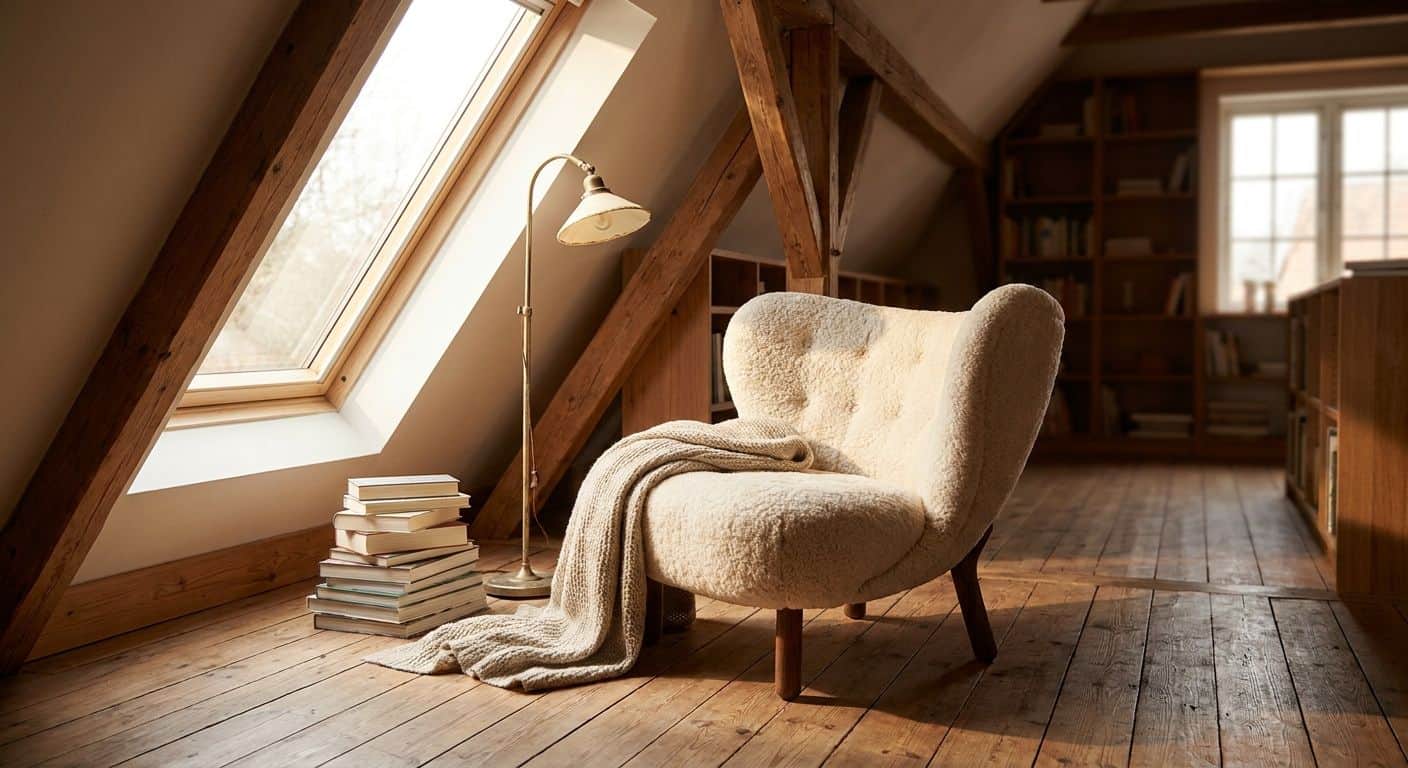
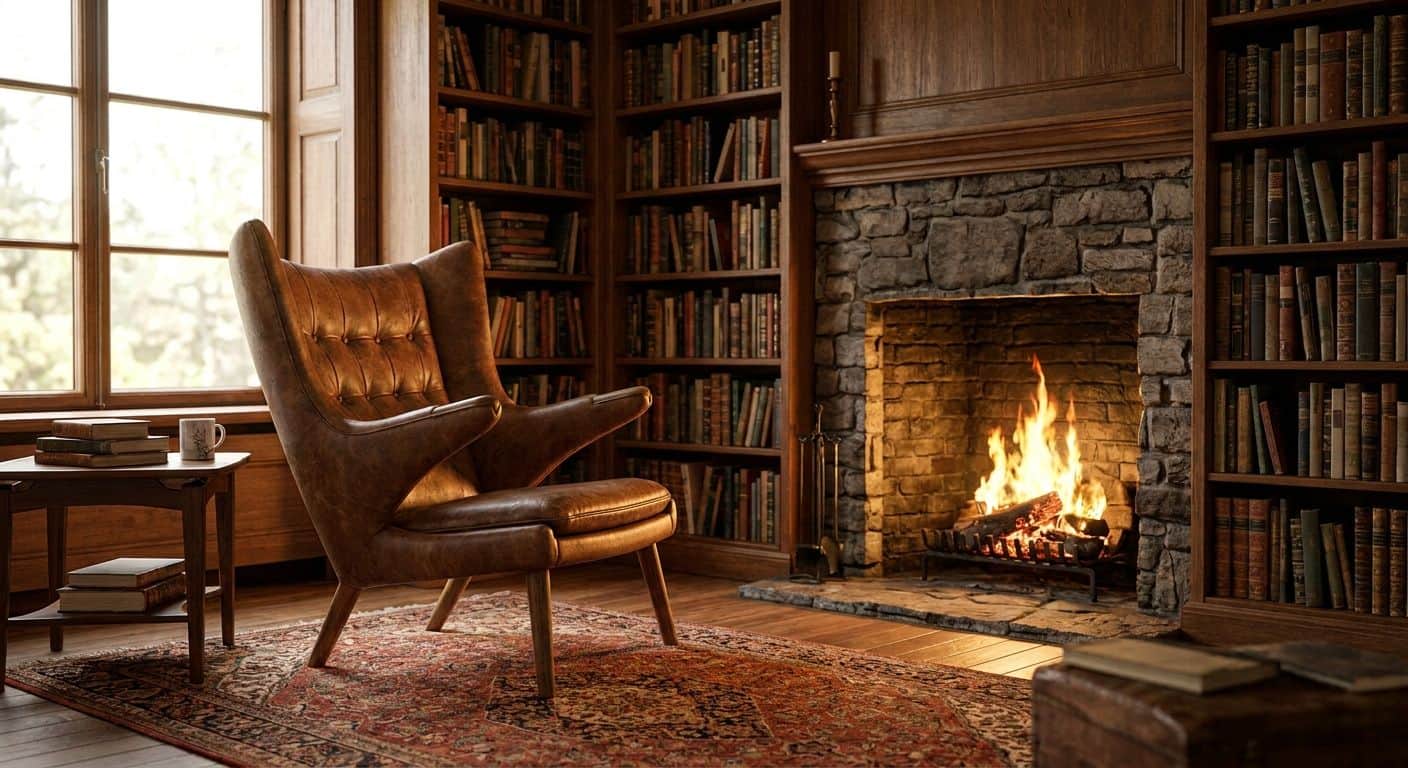
An attic reading loft solved with a Pelican Chair replica works because one deep, curved shell replaces the three or four pieces a normal living room needs — and in a room where the ceiling slopes to nothing on both sides, that matters more than style points.
TL;DR- Sohnne’s Pelican Chair replica fits an attic reading loft because its low, closed shell clears sloped ceilings a wingback can’t.
- Best for single-reader corners under 100 sq ft with one dormer or gable window as the light source.
- Pair the chair with one floor lamp and one side table — skip the full seating suite entirely.
- Sectionals, papasans, and tall wingbacks are the wrong call under a 7-foot peak height.
- A pelican chair attic reading loft setup works best against the tallest wall, not centered under the slope.
Why an attic reading loft needs different furniture rules
A finished attic is not a small living room — it's a room with one usable wall, a ceiling that drops to almost nothing at the eaves, and usually one window. Furniture that works in a 12-by-14 bedroom often can't get up the stairs, let alone sit comfortably under a slope.
The two real constraints are headroom and single-point light. A chair with a tall, straight back forces you toward the center of the room, where the ceiling is highest — but that's also where the floor space is narrowest before the slope eats it. A Pelican Chair replica solves this because its back curves inward and down, so it reads as low even when the seat depth is generous, and it can sit close to a knee wall without anyone hitting their head on the way to stand up.
Attics also run hotter in summer and colder against exterior walls in winter than the floor below — a real factor when you're picking upholstery and building a reading corner people actually want to sit in past October.
Measure the slope before you measure the chair
Get the ceiling height at the exact spot you want to place the chair, not the room's peak. A number that looks generous from the stairwell can be under 6 feet three feet to either side.
- Measure ceiling height at 24-inch intervals from the tallest point outward
- Check the width of the stairwell or hatch the chair needs to pass through
- Note where the knee wall starts — furniture backs that come up short work better there than tall wingbacks
- Confirm floor load if the loft was framed for storage, not living space
- Mark where a dormer or gable window sits relative to your planned seating spot
Position the chair for the room's one light source
Most attic lofts get natural light from a single dormer, gable window, or skylight — there's no second exposure to fall back on, so placement decides whether the space feels like a reading room or a closet with a chair in it.
Working through positioning a lounge chair for natural light before you commit to a floor plan saves a second round of furniture-dragging once the rug's already down.
- Angle the chair roughly 30-45 degrees to the window, not facing it directly
- Leave 18-24 inches of clearance between the chair back and any knee wall
- Test the spot at two different times of day before finalizing placement
- Add a floor lamp for evening reading since a single window won't carry the room after dark
- Keep the reading surface (side table or built-in ledge) on the same side as your dominant hand
Manage temperature and insulation before you buy upholstery
An attic that swings 15-20 degrees between floor level and the room below will punish the wrong fabric choice — leather that's comfortable in June can feel cold to the touch in January if the space isn't properly conditioned. This is also the point where the physical envelope of the room matters more than the furniture inside it. Getting the insulation right without eating into the low headroom you already fought to preserve is its own project — insulating a finished attic without losing headroom is worth solving before the chair goes in, not after.
- Check insulation at the roofline and knee walls, not just the attic floor
- Choose upholstery that tolerates temperature swings — top-grain leather and tight-weave wool both hold up better than loose bouclé in an unconditioned space
- Add a small space heater or mini-split if the loft runs more than 10 degrees off the rest of the house
- Weatherstrip the attic door or hatch to cut draft loss into the reading nook
Scale the chair to the room, not the other way around
A Pelican Chair replica reads as a large piece even though its footprint is modest, because the curved shell visually fills more space than a straight-backed chair of the same dimensions. In a loft under 100 square feet, that's an advantage — one chair can do the visual work of a chair-and-ottoman pair.
- Confirm seat width against the narrowest point of your planned traffic path
- Leave at least 30 inches of walking clearance on the entry side
- Skip a matching ottoman if floor space is under 80 square feet — a low side table does double duty instead
- Choose a single accent color rather than a patterned upholstery in a room this size, since pattern reads busier under a slope
Build the corner around one lamp and one surface
The mistake most attic conversions make is trying to replicate a full living room in miniature. A reading loft needs exactly three things: a chair, a light source, and a place to set a book down. Everything past that competes for floor space you don't have.
Starting from scratch, building a reading room from scratch with a short list of pieces rather than a full furniture plan keeps the loft from feeling cramped six months in.
- One chair, positioned per the light-source rules above
- One floor or table lamp rated for close reading, not ambient glow
- One small side table or built-in shelf within arm's reach
- A rug sized to sit under the chair's front legs only, not the whole room
Verify quality before ordering any replica for a hard-to-return space
Attic stairwells and hatches make returns genuinely painful — a chair that doesn't fit through the opening on day one is a bigger problem here than in a ground-floor room. Sohnne backs its replica furniture, including the Pelican Chair, with 60-day returns, a 5-year warranty, and free insured shipping, which matters more in a room where getting a piece back down the stairs is its own chore.
- Confirm exact dimensions, including depth with the back reclined, against your stairwell width
- Ask about frame material and foam density before ordering, not after delivery
- Check the warranty terms for the specific upholstery you're choosing
- Read the return window fine print if the piece needs disassembly to go back down
See the Pelican Chair replica
Finn Juhl’s curved shell, built to Sohnne’s 1:1 original dimensions.
View the Pelican ChairBrowse the collectionComparing seating options for an attic reading loft
| Option | Best for | Key limitation |
|---|---|---|
| Pelican Chair replica | Single-reader corners with sloped ceilings | Larger visual footprint than a slim armchair |
| Standard wingback | Rooms with full-height walls on all sides | Tall back doesn't clear a low knee wall |
| Papasan or bean bag | Casual, low-cost seating | Poor back support for long reading sessions |
| Egg chair with stand | Statement corners with higher ceilings | Stand height often exceeds attic peak clearance |
| Slim accent chair | Very tight footprints under 60 sq ft | Less cushioning for multi-hour sitting |
The Pelican Chair replica wins for attic lofts specifically because its curved back sits lower than a wingback of the same seat height — buy it for a sloped-ceiling reading corner; skip it if your loft has full 8-foot walls and no headroom constraint at all.
Common mistakes attic loft owners make
- Centering the chair under the peak. The tallest point of the ceiling is rarely the best spot for traffic flow — it forces the chair away from the window and the knee wall.
- Buying furniture before measuring the stairwell. A chair that fits the room but not the hatch is a return you'll regret in a hard-to-access space.
- Skipping the insulation question. Furniture placed against an underinsulated knee wall will feel drafty regardless of upholstery quality.
- Overfurnishing a small footprint. Adding a second chair or a coffee table in a sub-100-square-foot loft usually makes the room feel smaller, not more finished.
- Ignoring evening light. A single dormer window looks bright at 2 p.m. and useless at 8 p.m. without a dedicated lamp.
FAQ
What’s the best chair for an attic reading loft?
A Pelican Chair replica works best for most attic reading lofts because its curved, low-profile back clears sloped ceilings that stop taller wingbacks. It suits single-reader corners under roughly 100 square feet with one primary window.
How low can a ceiling be for a reading chair?
Many building codes set around 7 feet as the minimum ceiling height for habitable attic space, and a low-back chair like the Pelican Chair replica can sit comfortably even where the slope drops below that a few feet to either side.
Is a papasan chair good for an attic loft?
A papasan or bean bag works for casual, low-cost seating but offers weak back support for multi-hour reading, which makes a structured lounge chair the better pick for daily use.
How do I light an attic reading nook with one window?
Add a dedicated floor or table lamp positioned within arm’s reach of the chair, since a single dormer or gable window won’t carry the room once natural light fades in the evening.
Does an attic need special furniture for temperature swings?
Yes — attics can run 15-20 degrees hotter or colder than the floor below depending on insulation, so tight-weave wool or top-grain leather upholstery tolerates the swing better than loose bouclé fabrics.
What’s the return policy on Sohnne’s Pelican Chair replica?
Sohnne backs the Pelican Chair replica with 60-day returns, a 5-year warranty, and free insured shipping, which is worth checking against your stairwell access before ordering.
How much floor space does a reading loft chair need?
Plan for at least 30 inches of walking clearance on the entry side of the chair plus room for a small side table, which usually means a workable reading corner starts around 60-80 square feet.
One last thing
Most attic conversions fail on stairwell math, not style — measure the hatch or stairwell width before you fall for a fabric swatch, because a chair that can't get upstairs is the only mistake on this list with no fix.
Related guides