How to Reupholster a Replica Accent Chair (2026 Guide)

Sohnne Design Studio
August 31, 2026
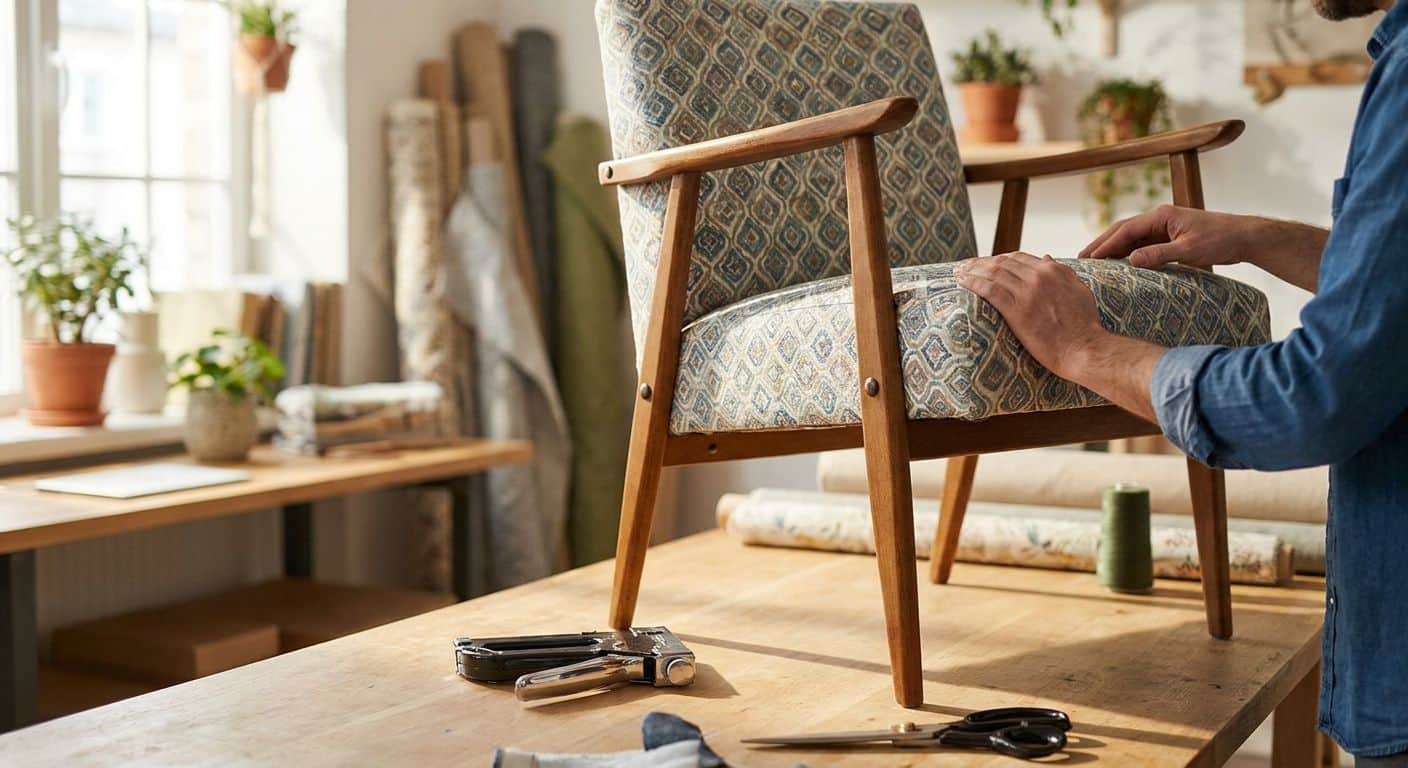
Reupholstering a replica accent chair at home is a weekend job for anyone comfortable with a staple gun, but the result lives or dies on prep work, not stitching. This guide walks through the real order of operations, where boucle and velvet chairs differ from leather ones, and when it's smarter to replace the piece instead of saving it.
TL;DR- How to reupholster replica chair projects succeed on pattern-matching the old cover piece by piece before cutting new fabric.
- Boucle and velvet need a nap check on every panel, or cushions look mismatched under lamp light.
- Tufted and piped silhouettes (Barcelona-style, Wassily-style) take two to three times longer than a plain slip-seat accent chair.
- Foam that’s compressed or crumbling should be replaced, not covered over with new fabric.
Why this matters
Replica accent chairs get reupholstered for one of two reasons: the original fabric has worn through at the arms and seat, or the owner wants a different color for a new room. Either way, the labor is the same regardless of whether the frame underneath is an original design or a well-made replica — the frame doesn't care where it came from, but the cover construction does. A chair with sewn-shut cushion covers and exposed wood trim takes longer to redo correctly than a chair with a simple slip seat and zippered cushions, and skipping that assessment is the most common reason DIY reupholstery jobs look uneven.
How do you reupholster a replica accent chair at home?
Follow this order and don't skip the labeling step — it's what separates a clean result from a lumpy one.
- Photograph and label every panel before removing anything. Number each piece (back, seat, arm left, arm right) with a marker on the underside.
- Remove the old cover with a staple lifter and flathead, pulling staples instead of ripping fabric so the panels stay intact as templates.
- Cut new fabric using the old panels, adding a consistent seam allowance around each piece — typically half an inch to an inch depending on the original construction.
- Replace foam or batting only where it's compressed, yellowed, or torn. Fresh foam over a worn frame won't fix sagging; it just delays the next redo.
- Staple the new fabric starting at the back rail, working from the center out toward the corners to keep tension even on both sides.
- Reattach piping, welt cord, or decorative trim last, once the main panels are stapled and pulled taut.
Boucle and fabric accent chairs
Boucle and woven fabrics have a visible texture direction, so every panel needs to run the same way or the cushions will catch light differently under a lamp. Cut all panels from the same fabric run when possible — dye lots vary between bolts even on the same colorway. Verdict: manageable for a first-timer if the chair has a simple slip seat and no tufting.
Leather and faux-leather replica chairs
Leather doesn't stretch the way fabric does, so pattern pieces need to be cut slightly larger and pulled tight before stapling, or the cover looks baggy within weeks. Faux leather is more forgiving but scars permanently if a staple pull tears the surface. Verdict: doable, but budget extra time for careful cutting — this is not the chair to learn on if it's your first reupholstery project.
Tufted and piped silhouettes (Barcelona-style, Wassily-style, Womb-style)
Button tufting, exposed piping, and curved backrests all multiply the number of seams and anchor points. A Barcelona-style chair with strap and buckle detailing, or a Wassily-style chair with exposed leather straps over a steel frame, needs the straps refitted separately from the cushion covers. Verdict: hire this one out or budget significantly more time than a plain accent chair.
Why reupholstery difficulty varies
- Curved backrests need eased, not pulled, fabric to avoid puckering at the seams
- Welt cord or piping adds a second sewing step most home sewers skip on their first project
- Button tufting requires precise button placement matched to the original depth
- Foam density in original vs. reproduction cushions can differ, changing how the new cover sits
- Cushion cover construction — zippered covers are far easier to redo than covers sewn shut at the factory
- Exposed wood or metal trim around the seat means working the fabric tight against a visible edge with no margin for error
Do you need to remove the old fabric before reupholstering a chair?
Yes — removing the old fabric first is standard practice because the old panels double as your cutting template. Skipping this step and cutting new fabric freehand is the fastest way to end up with pieces that don't match the frame's actual curves.
Can you reupholster an accent chair without a sewing machine?
A plain slip-seat accent chair can be reupholstered with just a staple gun and no sewing at all, since the fabric wraps and staples rather than sews. Chairs with piping, welt cord, or tailored cushion covers need at least basic straight-line sewing to finish those seams cleanly.
How much fabric do you need to reupholster an accent chair?
Most accent chairs take roughly 3 to 6 yards of fabric, with the range depending on the chair's size and the fabric's pattern repeat. Large-repeat prints and railroaded fabrics push toward the higher end because panels need to be cut to match the pattern across seams.
At some point in a worn chair's life, reupholstering stops making sense compared to replacing it — especially if the frame itself has started to loosen or crack. Sohnne builds its replica accent chairs in-house to original 1:1 dimensions and backs them with a 5-year warranty and 60-day returns, which is worth weighing against the labor and materials cost of a full re-cover. If you're not sure whether a piece is worth saving, checking construction quality before buying its replacement is a faster call than assessing a stripped frame mid-project.
Browse replica accent chairs
Factory-made replicas at 1:1 dimensions, backed by a 5-year warranty.
Shop accent chairsIs it cheaper to reupholster or buy a new replica accent chair in 2026?
Reupholstering is usually cheaper on materials alone if the frame and foam are still sound, but the math flips once foam replacement, new webbing, or frame repair get added in. A chair that needs all three is often past the point where reupholstery saves money over buying a chair built to last from the start.
FAQ
Do you need to remove the old fabric before reupholstering a chair?
Yes, removing the old fabric first gives you a template for cutting new panels. Skipping it means guessing at the frame’s actual curves and seam placement.
Can you reupholster an accent chair without a sewing machine?
A plain slip-seat chair can be done with just a staple gun and no sewing. Piped or tailored cushion covers need at least basic straight-seam sewing.
How much fabric do you need to reupholster an accent chair?
Most accent chairs take 3 to 6 yards depending on size and pattern repeat. Large-repeat prints push toward the higher end because panels must align across seams.
Is boucle or velvet harder to reupholster?
Velvet is harder because its nap direction has to match on every panel or the cushions read as mismatched colors under light. Boucle is more forgiving but still needs consistent panel direction.
Can you reupholster a chair with piping or welt cord yourself?
Yes, but it adds a sewing step most first-timers skip, and piping that’s pulled unevenly shows immediately along every seam. Practice on a scrap panel before cutting the final cord casing.
How long does it take to reupholster an accent chair at home?
A plain slip-seat chair is usually a weekend project for a first-timer. Tufted or piped silhouettes take two to three times longer because of the added seams and anchor points.
Should you replace the foam when reupholstering?
Replace foam that’s compressed, yellowed, or crumbling, since new fabric over old foam won’t fix sagging. Foam that still holds its shape can usually be reused under a fresh cover.
Is it cheaper to reupholster or buy a new replica accent chair?
Reupholstering is usually cheaper if the frame and foam are sound and only the cover needs replacing. Once foam, webbing, and frame repair all stack up, buying a new chair often costs about the same or less.
One last thing
The detail that trips up most first-time reupholsterers isn't the stapling — it's forgetting to match the fabric's texture direction across the seat and back panels, which shows up as a visible seam line in daylight even when every staple is perfectly placed. Cut every panel from the same fabric run, in the same direction, before you touch the staple gun in 2026 or any other year.
Related guides