Noguchi Akari Floor Lamp Replica for a Reading Nook (2026)

Sohnne Design Studio
August 25, 2026
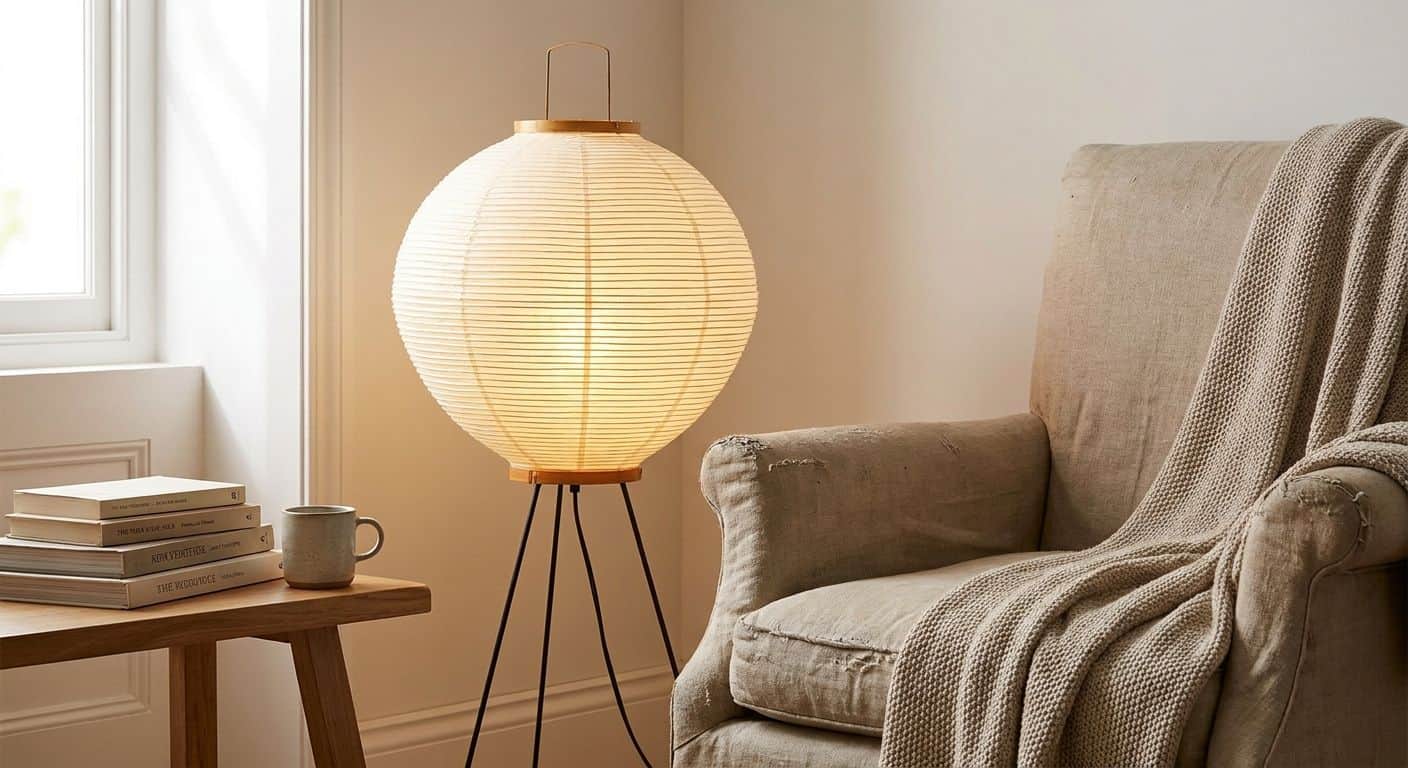
A reading nook lives or dies by its light source, and the Noguchi Akari floor lamp replica remains the reference point for a glow that flatters a page instead of glaring at it.
TL;DR- A Noguchi Akari floor lamp replica pairs best with a low-back lounge chair, not a recliner with a tall headrest.
- Washi-style paper shades over a bamboo rib frame diffuse light evenly; thin vinyl shades create hot spots.
- Set the lamp 12 to 18 inches beside the chair’s shoulder line for shadow-free reading in 2026.
- Sohnne’s Akari floor lamp replica ships with free insured shipping, 60-day returns, and a 5-year warranty.
Why this matters
Most reading-nook light fails for one of two reasons: it's too directional (a task lamp that spotlights the page and leaves the rest of the room dark) or too diffuse to actually read by after sunset. Isamu Noguchi designed the original Akari series in 1951 specifically to solve that tension – a paper shade over a collapsible bamboo rib frame that scatters light in every direction instead of throwing a beam. A well-made Noguchi Akari floor lamp replica keeps that same behavior, which is exactly what a reading corner needs at 8pm in January.
The catch is that not every replica on the market gets the shade material or the rib spacing right, and those two details are the difference between a lamp that glows and one that just looks like it should.
Who this guide is for
This is written for someone assembling a dedicated reading corner – a single chair, a side table, and a light source – in a bedroom, a converted alcove, or a quiet stretch of a living room. You're choosing between an Akari-style floor lamp, a swing-arm task lamp, or a torchiere, and you want the one that won't strain your eyes by the second chapter.
What to look for in an Akari floor lamp for a reading nook
Shade material and light diffusion
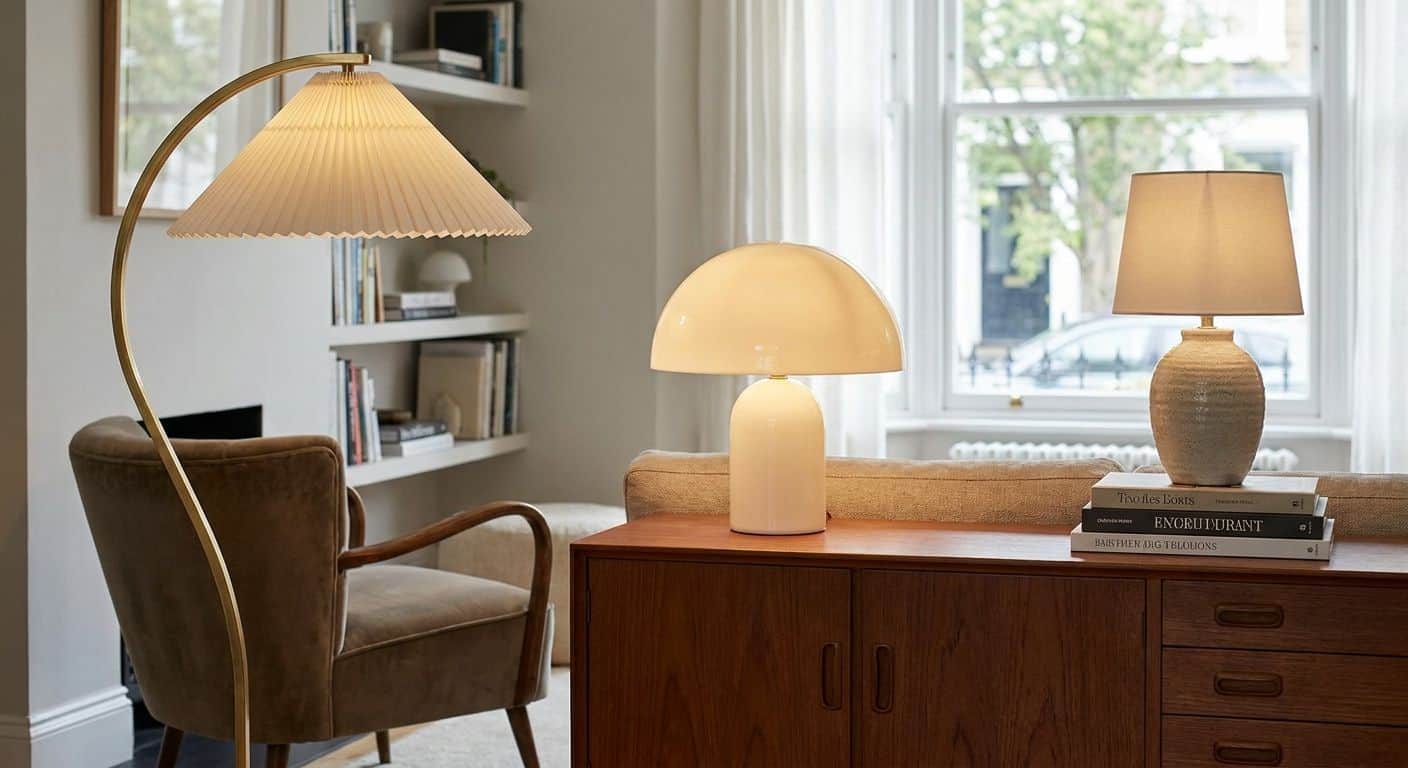
The original Akari shade is mulberry bark paper (washi) stretched over bamboo ribbing, and that combination is what produces the soft, shadowless wash of light Noguchi was after. A Noguchi Akari floor lamp replica built with a comparable paper-and-rib construction diffuses light in a full sphere; versions that substitute thin plastic or vinyl for the shade tend to create visible hot spots and a colder color temperature.
Height relative to your seated eye line
A reading nook lamp needs its light source above your shoulder and slightly behind it when you're seated, not level with your face. Most Akari floor lamp replicas run in the 60 to 71-inch range depending on the shape chosen, which puts the shade above the sightline of someone seated in a standard lounge chair.
Base footprint for a tight corner
Reading nooks are rarely spacious. A narrow tripod or cross-leg base under 16 inches in diameter fits beside a chair without eating floor space you need for an ottoman or a side table, while a wide circular base can crowd a small corner.
Bulb compatibility and warmth
The Akari form was designed around warm incandescent light, and a 2700K to 3000K LED bulb gets closest to that original tone without the heat output. Cooler bulbs above 4000K fight the warmth of the paper shade and make the whole fixture look slightly wrong.
Stability with foot traffic nearby
A reading nook often sits near a doorway or a walking path, and a top-heavy floor lamp with a narrow base tips easily. Check that the base is weighted or wide enough to handle an accidental brush from a passing foot or a curious pet.
Top picks for pairing an Akari floor lamp with your reading nook
The anchor piece. A Noguchi Akari floor lamp replica from Sohnne is built to the original's proportions rather than a scaled-down knockoff, which matters because undersized replicas throw light too low to clear a seated reader's shoulder. Sohnne backs it with a 5-year warranty and 60-day returns, so testing it in your actual room isn't a one-way decision. Buy if you want the lamp to be the visual anchor of the nook.
The seat pairing. The lamp only does its job if the chair underneath it holds you still for an hour. A low-back lounge chair sized for actual reading posture keeps your eye line below the shade rather than fighting it; see the picks in best lounge chairs for a home reading corner for chairs that sit at the right height for this exact pairing. Buy if your current chair has a headrest taller than 30 inches – swap it before the lamp goes in.
The placement fix. Where the lamp sits relative to natural light during the day changes how much artificial light you need at night. The positioning logic in how to position a lounge chair for natural light reading applies directly to where you set the Akari floor lamp once the sun goes down – same sightline, same 12 to 18-inch offset from your shoulder. Consider this step before you buy anything if you haven't mapped your window light yet.
The bedroom variant. If the reading nook is a bedside corner rather than a standalone room, a smaller Akari-style form scaled for a nightstand or narrow floor footprint fits better than a full-height version; the styling notes in Akari lamp replica for a Japandi bedroom cover that scaled-down approach. Consider if your nook is under 40 square feet.
What to avoid
- Undersized "tabletop-to-floor" conversions. Some Akari-style lamps marketed as floor lamps are really table lamps on a tall stem, and the shade sits too low to clear a seated reader's shoulder – you end up staring into the glow instead of past it.
- Cool-white LED bulbs. A 5000K bulb inside a warm paper shade looks clinical, not calming, and undercuts the entire point of choosing an Akari form in the first place.
- Glossy or laminated shade finishes. A shiny synthetic shade reflects rather than diffuses, which reintroduces the glare problem the paper shade was designed to eliminate.
Shop the Akari floor lamp replica
True-to-original proportions, 5-year warranty, 60-day returns.
Shop lightingVerdict comparison
| Criterion | What to check | Why it matters for a reading nook |
|---|---|---|
| Shade material | Paper over bamboo rib, not vinyl | Even diffusion vs. hot spots |
| Height | 60-71 in, shade above seated shoulder | Prevents glare into the eyes |
| Base footprint | Under 16 in diameter for tight corners | Leaves room for a chair and side table |
| Bulb tone | 2700-3000K LED | Matches the warmth the design was built for |
| Stability | Weighted or wide base | Withstands foot traffic near the nook |
FAQ
What is the best Noguchi Akari floor lamp replica for a reading nook in 2026?
A full-height replica with a paper-and-bamboo-rib shade in the 60 to 71-inch range works best because the shade clears a seated reader’s shoulder and diffuses light without glare. Sohnne’s version is built to the original’s proportions rather than a scaled-down copy.
Is an Akari floor lamp replica bright enough to actually read by?
Yes, with a 2700-3000K LED bulb rated at 800 lumens or higher, the diffused light is even across a reading chair’s radius. The shade scatters light rather than focusing it, so brightness depends more on bulb choice than the fixture itself.
How far should the lamp sit from my reading chair?
Position it 12 to 18 inches to the side of your seated shoulder line, slightly behind your eye line. Placing it directly in front or level with your face creates glare instead of ambient light.
Is a Noguchi Akari floor lamp replica better than a traditional task lamp for reading?
For ambient, eye-friendly light across an entire nook, yes – an Akari-style shade diffuses light in every direction, while a task lamp focuses a narrow beam on the page and leaves the rest of the corner dark. Task lamps still win for close, detailed reading like small-print text.
What bulb should I use in an Akari-style floor lamp?
Use a 2700-3000K LED bulb to match the warm tone the original paper shade design was built around. Cooler bulbs above 4000K clash with the paper’s natural warmth and flatten the effect.
Does Sohnne’s Akari floor lamp replica come with a warranty?
Sohnne backs its replica furniture and lighting, including the Akari floor lamp replica, with a 5-year warranty and 60-day returns as of 2026. Shipping is free and insured.
Can an Akari floor lamp fit in a small bedroom reading nook?
A scaled-down Akari-style form with a narrower base fits nooks under 40 square feet without crowding a chair or nightstand. Full-height versions work better in larger corners with at least 3 feet of clearance around the base.
One last thing
The detail most people skip is the shade orientation – vertical-oriented Akari shapes throw more light upward and sideways, which suits a reading nook far better than a squat, horizontal shade that pools light straight down onto the floor. If you're choosing between two shapes in 2026, pick the taller, more vertical silhouette for a reading corner and save the wider forms for entryways or living rooms where the light needs to spread across a larger footprint.
Related guides