Tulip Chair Breakfast Nook: 2026 Styling Guide

Sohnne Design Studio
August 25, 2026
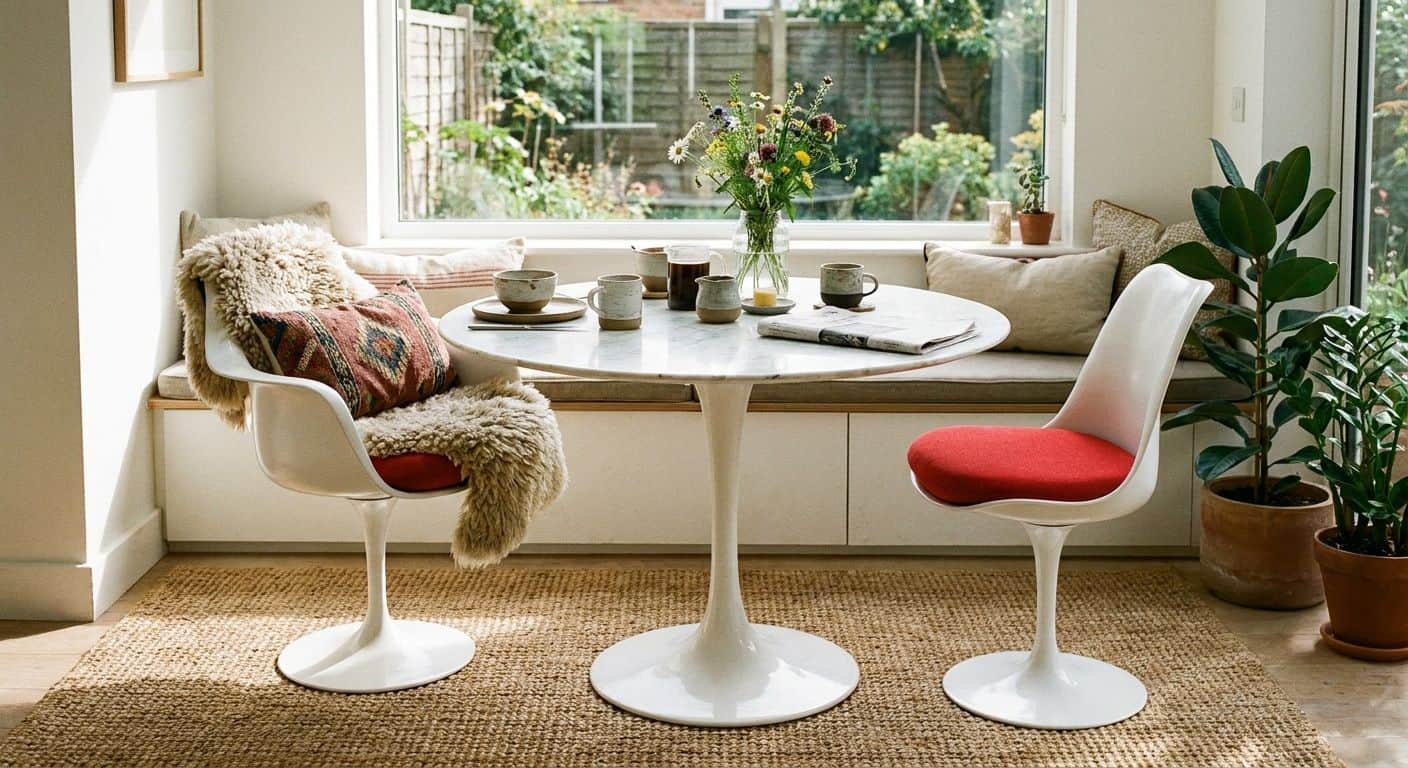
A Saarinen tulip chair turns a breakfast nook from an afterthought into the room's best seat, but only if you get the base height, the table pairing, and the finish right for a tight footprint.
TL;DR- Pair a tulip chair breakfast nook with a 28-29 inch table height and 42-44 inch round or oval table for two to four people.
- White or black pedestal bases read cleanest in small nooks; wood tones compete with cabinetry in 2026 kitchens.
- Leave 24-26 inches of clearance behind each chair so the pedestal swivels without hitting a wall.
- Mix two tulip chairs with a bench on the wall side to save 10-14 inches of floor space.
Why this matters
A breakfast nook is usually the smallest dedicated dining space in the house, and the wrong chair silhouette makes it feel cramped even at 60 square feet. The tulip chair, designed by Eero Saarinen for Knoll in 1956, solves the clutter problem other dining chairs create: no four-legged base, no chair legs tangling under the table, just a single pedestal column that keeps sightlines open. In a nook flanked by a bay window or built-in bench, that visual lightness matters more than in a formal dining room where you have space to spare.
The design also reads as a single sculptural object rather than a set of parts, which is why it still shows up in 2026 kitchen renovations built around minimal, mid-century modern lines. Get the proportions wrong, though, and the same chair that looks effortless in a photo will crowd a 6-foot nook.
What you'll need
- A tulip chair replica in a finish that matches or contrasts with your table base
- A round or oval table between 36 and 48 inches in diameter, with a pedestal base to match the chair's single-column silhouette
- A tape measure and painter's tape to mock up floor clearance before you buy
- 24-26 inches of clearance behind each seat for the chair to swivel and for someone to walk past while seated guests stay put
- A rug (optional) sized at least 24 inches larger than the table on all sides, or none at all if your nook floor is tile or hardwood you want visible
Most breakfast nooks run smaller than a formal dining space, so measure the actual floor footprint before ordering anything. A nook under 7 feet wide struggles with more than two or three chairs regardless of the base style.
The steps
1. Measure the nook before you shop
This step prevents the single most common mistake: ordering a table too large for the space. Pull the tape measure wall to wall and subtract 30 inches minimum for chair pull-out and walking clearance on any open side.
A nook measuring 8 feet by 6 feet comfortably fits a 42-inch round table with three or four tulip chairs. Anything tighter than 6 feet by 6 feet does better with a 36-inch table and two chairs plus a built-in bench.
Common mistake: measuring only the table diameter and forgetting the 24-26 inches each seated person needs behind their chair to sit down and stand up without bumping a wall.
2. Match table height to chair height
Standard dining height is 28-30 inches from floor to tabletop, and the tulip chair's seat sits around 19-20 inches, which lines up with that range. Confirm the seat-to-tabletop gap lands between 10 and 12 inches — that's the comfortable range for arm and knee clearance.
If your nook has a built-in bench at counter height instead of standard dining height, you need a counter-height tulip table (around 36 inches) and a taller tulip stool version, not the standard dining chair. Mixing heights is the fastest way to make a nook feel off even when every other choice is right.
3. Choose a base finish that doesn't compete with cabinetry
A white pedestal base disappears against light cabinetry and keeps the eye on the tabletop material instead. A black base does the opposite — it becomes a visual anchor point, which works in nooks with a lot of natural light and pale surfaces that need contrast.
Skip wood-tone pedestal bases in a nook with wood cabinets or wood flooring already present in 2026 kitchen palettes; three different wood tones in one sightline reads as clutter rather than warmth. Verdict: white or black base — Buy. Wood-tone base in a wood-heavy kitchen — Skip.
4. Pick a seat material for daily breakfast use
Molded shell seats with a fitted cushion handle daily wear better than loose cushions that slide during a quick weekday breakfast. If kids will use the nook, a wipeable vinyl or performance fabric cushion beats natural fiber upholstery that stains from spilled juice.
A bare fiberglass shell with no cushion looks clean in photos but gets uncomfortable after 15-20 minutes at the table, which matters if breakfast turns into a work-from-home laptop session. Verdict: fitted cushion in performance fabric — Buy for daily use.
5. Set the layout: chairs only, or chairs plus a bench
Four tulip chairs around a round table works in nooks 7 feet and wider. Below that, put two chairs on the open side and a straight bench against the wall — the bench eliminates the need for chair clearance on that side and can save 10-14 inches of usable floor space.
A bench also lets more people squeeze in for a quick weekend breakfast without adding chair count. Common mistake: pushing a bench flush against a wall with no gap, which traps crumbs and makes the bench impossible to wipe down properly.
6. Add a rug only if the floor needs it
A rug under a tulip table breakfast nook grounds the setting when the surrounding floor is a busy tile pattern or an open-plan hardwood that runs into the kitchen. Size the rug so it extends at least 24 inches past the table edge on all sides, so a pulled-back chair still sits on the rug rather than sliding onto bare floor.
Skip the rug entirely in a nook with radiant floor heating or a lot of morning food traffic — crumbs and spills are easier to sweep off a bare floor than to vacuum out of a rug every day.
7. Style the walls to frame the chair, not fight it
Because the tulip chair's silhouette is already a strong shape, keep window treatments and wall art simple. A single piece of art or a pendant light overhead is enough; a gallery wall behind the table competes with the pedestal's clean lines and makes the whole nook feel busier than its actual square footage.
A pendant light hung 30-34 inches above the tabletop finishes the look and keeps the eye moving vertically instead of sideways, which helps a small nook feel taller than it is.
Shop the tulip chair collection
1:1 dimension replicas with free insured shipping and a 5-year warranty.
Shop tulip chairsTroubleshooting
- Chairs look too small for the table. The tulip chair's low-profile seat can read as undersized against a table wider than 44 inches. Drop to a 42-inch table or switch to four chairs instead of two to balance the visual weight.
- Pedestal base wobbles on uneven flooring. Tile and older hardwood floors are rarely perfectly flat. Add adjustable felt levelers under the base plate rather than shimming with folded paper, which compresses and shifts within weeks.
- Chairs scrape when swiveling. A pedestal base needs a smooth swivel mechanism and enough seat-to-floor clearance; if the seat drags, the chair is sitting on a base built for a different table height.
- Nook feels cold and clinical. An all-white or all-black tulip set with no texture reads sterile. Add a textured cushion, a runner, or a warm-toned pendant to soften the palette.
- Bench and chairs mismatch in height. Confirm the bench seat height sits within an inch of the tulip chair's 19-20 inch seat height, or diners on the bench will feel like they're sitting too low relative to the table.
- Cushion slides during use. Loose cushions without ties or a fitted back slide on the smooth fiberglass shell. Choose a cushion designed to clip or tie to the seat shell rather than a flat pad.
Tools and resources
- Tape measure and painter's tape for the floor mock-up in step 1
- A round or oval tulip table replica sized to your nook's actual clearance
- A guide to how to verify quality before buying replica furniture if this is your first replica purchase — check base weight, seat shell finish, and swivel mechanism before committing
- Sohnne pieces ship with free insured shipping, a 60-day return window, and a 5-year warranty, so measuring twice before ordering still leaves room to correct a sizing mistake after delivery
What to do next
Once the tulip chairs and table are in place, the next decision is usually storage and lighting around the nook rather than the seating itself. If the breakfast nook sits inside a larger open kitchen, check sizing rules for a small kitchen dining table to confirm your table choice works with the rest of the room's traffic flow before finalizing the layout.
FAQ
What size table works best with a tulip chair breakfast nook?
A 36-42 inch round table fits two to three tulip chairs comfortably in a nook under 7 feet wide. Nooks 7 feet or wider handle a 42-48 inch table with four chairs.
Is a tulip chair comfortable for daily breakfast use?
A tulip chair with a fitted cushion is comfortable for typical 15-30 minute breakfast seating. A bare fiberglass shell without a cushion gets uncomfortable faster during longer sit-down meals.
Should tulip chairs match the table base color?
Matching the chair and table pedestal in the same white or black finish creates a unified look in small nooks. Contrasting bases work too, but mixed wood-tone bases against wood cabinetry tend to look cluttered.
How much clearance does a tulip chair need behind it?
Leave 24-26 inches behind each tulip chair for pull-out and walking space. This clearance matters more in nooks than formal dining rooms because floor space is already limited.
Can you mix a bench with tulip chairs in a breakfast nook?
Yes, pairing a wall-side bench with two tulip chairs on the open side is a common layout for nooks under 7 feet wide. The bench removes the need for chair clearance on that side and saves 10-14 inches of floor space.
What year was the tulip chair designed?
Eero Saarinen designed the tulip chair in 1956 for Knoll as part of his Pedestal Collection. The single-column base was meant to eliminate what Saarinen called the clutter of chair legs.
Does a rug help or hurt a tulip chair breakfast nook?
A rug helps ground the setting when surrounding flooring is patterned tile or open-plan hardwood, as long as it extends at least 24 inches past the table edge. Skip the rug in nooks with heavy food traffic or radiant floor heating, since bare floor is easier to clean daily.
What seat material handles kids and spills best in a nook?
A performance fabric or vinyl cushion wipes clean faster than natural fiber upholstery and holds up to daily breakfast spills through 2026 without staining. A bare fiberglass shell is easiest to clean but least comfortable for longer sits.
One last thing
The detail most people skip is the swivel: a tulip chair's pedestal base lets the seat rotate a full 360 degrees, which means a nook with a bench on one side and swivel chairs on the other lets diners turn to face the kitchen without pushing back from the table — a small mechanical feature that matters more in a tight nook than it ever does in an open dining room.
Related guides
- Best Saarinen tulip table replicas for a small kitchen
- Best replica dining tables for a small kitchen
- Best replica furniture for a mid-century modern dining room