Marshmallow Sofa Replica 2026: Irving Harper Design Guide

Sohnne Design Studio
July 18, 2026
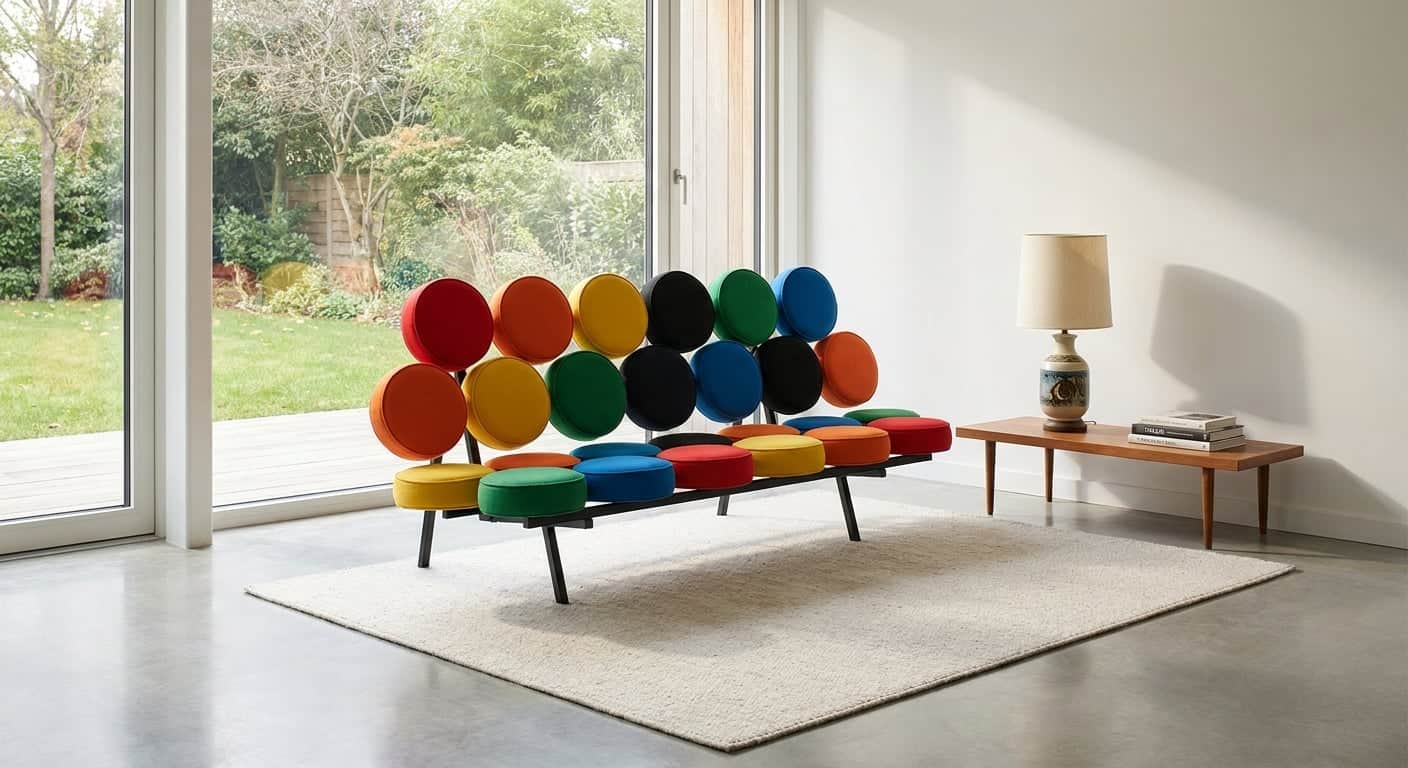
The Marshmallow Sofa is one of the most recognizable silhouettes in mid-century modern design, and in 2026 the market for a marshmallow sofa replica is more crowded than it's ever been. This guide breaks down Irving Harper's original concept, what separates a replica that holds its shape from one that sags within a year, and where to look before you buy.
TL;DR: The Marshmallow Sofa was designed by Irving Harper in 1956 while working at George Nelson Associates for Herman Miller, and its 18 independent cushion discs are the detail every marshmallow sofa replica lives or dies on. A purist reproduction with individually foam-filled discs and a steel-tube frame is the buy in 2026; anything with fused or flat-panel cushions is a skip. Pair the piece with mid-century modern furniture that gives it room to breathe, since it reads as sculpture as much as seating.
Why this matters
Irving Harper sketched the Marshmallow Sofa in 1956 as part of George Nelson Associates' output for Herman Miller, and the piece is often misattributed to Nelson himself even though Harper did the actual design work. Herman Miller produced it in limited numbers before discontinuing the line in 1961, then relaunched it in 1999 once mid-century modern design came back into fashion.
That production gap is exactly why the replica market exists. Original units from the first run are scarce and priced like art, which pushes most buyers toward a marshmallow sofa replica that captures the geometry of 18 round cushions on a steel frame without the vintage price tag or the vintage foam that's likely disintegrated by now.
Who this is for
This guide is for anyone furnishing a living room, office lobby, or reading nook who wants the marshmallow sofa's sculptural presence without hunting down an original Herman Miller piece from the 1950s or 1999 relaunch. It's for design-literate buyers who care about proportion and cushion construction, not just the general shape, and who are comparing a mid-century modern replica furniture piece against other statement seating before committing.
What to look for in a marshmallow sofa replica
Cushion count and disc spacing
The original design uses 18 individual discs arranged in three rows, and the spacing between them is what gives the piece its signature rhythm. A replica with fewer discs, or discs pressed too close together, loses the visual lightness Harper built into the original. It starts looking like a lumpy loveseat instead of a composition.
Frame and leg construction
The steel frame carries every disc independently, so weld quality and tube gauge matter more here than on a standard sofa frame. Thin-gauge steel or plastic-composite substitutes flex under regular use and the discs start sitting unevenly within a year or two.
Upholstery material
Vinyl was the original 1956 material and it's still the historically accurate choice, but wool and boucle versions have become common in 2026 for buyers who want a softer hand. Whatever you pick, check that the upholstery is applied disc-by-disc rather than stretched over the whole assembly. Stretched fabric telegraphs every seam and loses the puffed, individual-cushion look.
Foam density and cushion feel
Each disc should have its own foam core, not a single slab cut into circles. Individually filled discs hold their round shape for years; slab-cut foam flattens at the edges within months and the discs start looking like pancakes instead of marshmallows.
Scale and proportion accuracy
The piece is meant to read as compact and sculptural, closer to a loveseat than a full three-seat sofa. A replica stretched wider to compete with standard sofa dimensions loses the tight, graphic proportion that makes the original photograph so well.
Top picks by build type
The purist pick — vinyl upholstery, chrome-plated steel frame, all 18 discs individually foam-filled. This is the closest a 2026 reproduction gets to Herman Miller's 1956 spec, and it's the version that photographs and wears the way the original does. Buy.
The everyday pick — wool or boucle upholstery on the same steel-frame construction. Softer to sit on, more forgiving in a family living room, and it still keeps the disc-by-disc upholstery detail that matters. Consider, especially if you want the shape without the vinyl feel year-round.
The statement pick — a two-tone or contrast-color disc arrangement instead of a single upholstery color. It leans harder into the piece as sculpture rather than seating, which works well next to a statement sofa styling approach in a room that already has a strong focal point. Buy if the room can support two anchor pieces without competing.
The budget flex — reproductions with a reduced disc count (commonly 14 instead of 18) or fused cushion panels dressed up to look segmented. These are lighter on the wallet but they don't hold their shape and the proportion reads off next to any reference photo of the original. Skip unless you're buying for a low-traffic space where longevity isn't a priority.
What to avoid
- Flat-panel cushions marketed as "disc-style." They look correct in a thumbnail photo but sag flat within months because there's no individual foam core under each circle.
- Undersized frames stretched to standard sofa width. This throws off the tight proportion that makes the design recognizable and turns a sculptural piece into an awkward loveseat.
- No stated warranty or return window. Given how specific the internal cushion construction is, you want a maker who stands behind the discs holding their shape. A 5-year warranty and a 60-day return window are the kind of terms that signal confidence in the build, not just the photo.
Before buying anything, it's worth running through how to verify replica furniture quality so you're checking weld points and foam density rather than just upholstery color.
Verdict comparison
| Build type | Disc count | Frame | Upholstery | Verdict |
|---|---|---|---|---|
| Purist pick | 18 | Chrome steel | Vinyl | Buy |
| Everyday pick | 18 | Steel | Wool / boucle | Consider |
| Statement pick | 18, two-tone | Steel | Vinyl or wool | Buy (room-dependent) |
| Budget flex | 14 or fused | Thin-gauge steel | Vinyl | Skip |
FAQ
Who designed the Marshmallow Sofa?
Irving Harper designed the Marshmallow Sofa in 1956 while working at George Nelson Associates, the design firm contracted by Herman Miller. The piece is frequently credited to George Nelson alone, but Harper did the design work.
How many cushions does a Marshmallow Sofa have?
The original design uses 18 individual round cushions arranged across a steel frame, and that count is the single biggest tell for whether a marshmallow sofa replica is built to the original spec.
Is a marshmallow sofa replica comfortable for daily use?
It depends on foam density more than cushion count. Versions with individually foam-filled discs and a supportive frame hold up fine for daily seating, while slab-cut foam versions flatten within months and feel harder over time.
What's the difference between vinyl and boucle versions?
Vinyl is the historically accurate 1956 material and wipes clean easily, while wool or boucle upholstery in 2026 gives a softer texture at the cost of slightly more maintenance around spills.
Does the Marshmallow Sofa work in a small living room?
Yes. Its compact, loveseat-adjacent footprint makes it one of the more space-efficient statement pieces available, though the 18-disc silhouette needs some clear wall space behind it to read properly.
How much does a marshmallow sofa replica typically cost compared to an original?
Original Herman Miller units from the 1956 run or the 1999 relaunch trade well into the tens of thousands at auction, while a well-built replica sits at a fraction of that cost. Check current pricing directly with the retailer since it varies by upholstery and finish.
Can the Marshmallow Sofa be reupholstered later?
Because each disc is upholstered individually rather than as one continuous panel, reupholstering is possible but labor-intensive. Factor that into your decision if you're choosing between vinyl and a lighter-colored wool that shows wear sooner.
One last thing
Herman Miller pulled the Marshmallow Sofa from production in 1961 after a short run, and it sat out of the catalog for nearly four decades before the 1999 relaunch brought it back. That means most people's mental image of a classic mid-century sofa is actually a design that spent longer out of production than in it.