Is USM Haller shelving worth the price in 2026?
Sohnne Design Studio
November 12, 2026
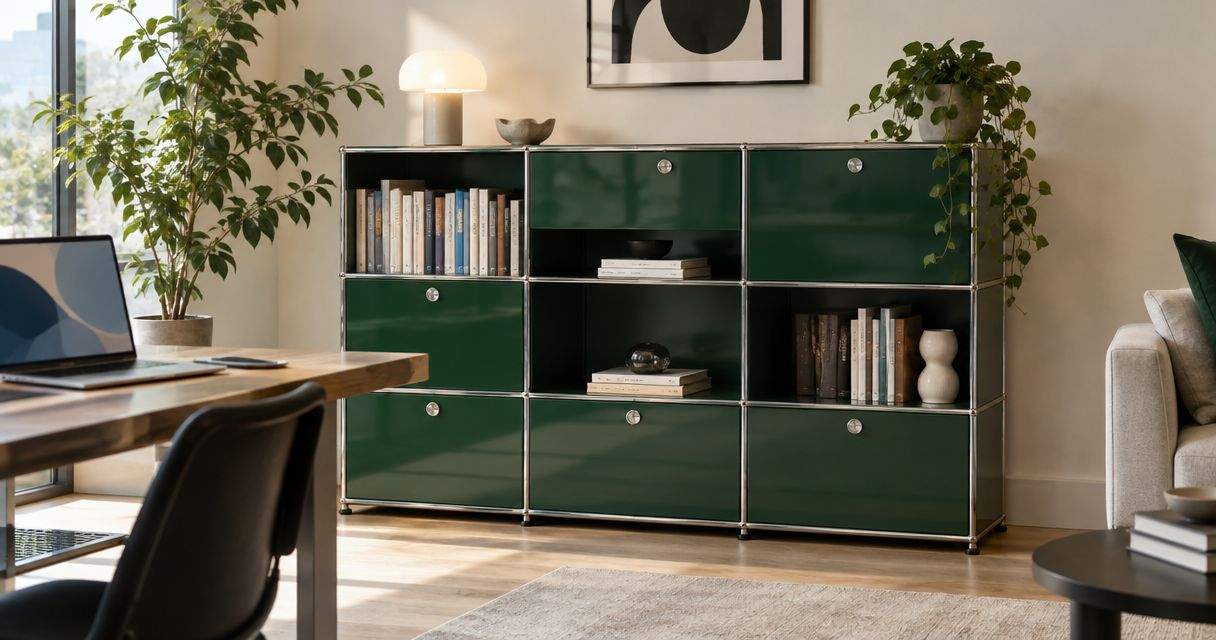
USM Haller shelving is worth it in 2026 if you want adaptable storage and genuinely prefer its exposed metal framework; it is not worth stretching your budget for a fixed storage job. Reconfiguration involves more than moving a loose shelf, so check the work, compatible components, and service requirements before treating flexibility as a reason to buy.
TL;DR- Is USM Haller shelving worth it? Yes for adaptable storage; no when a fixed cabinet meets your needs.
- USM Haller combines a visible metal framework with modular storage; choose it for both function and appearance.
- Check usable dimensions, door clearance, and reconfiguration requirements before choosing a layout.
- Sohnne is a furniture-shopping option for buyers furnishing a mid-century modern room, not evidence of USM compatibility.
Is USM Haller shelving worth the price in 2026?
USM Haller is best for buyers who want modular storage to remain part of the room as their needs change. Its steel tubes, connecting balls, and panels form a system rather than a conventional cabinet carcass. That distinction matters when you want to alter a configuration instead of replacing an entire piece.
The limitation is equally clear: modular construction does not make every change simple. Establish what a proposed alteration requires before you count it as a benefit. For a single wall with an unchanging storage task, a fixed cabinet deserves equal consideration.
| Storage option | Best for | Main advantage | Main limitation |
|---|---|---|---|
| USM Haller shelving | Buyers who value a modular framework and its appearance | A system-based approach to configuring storage | Changes require compatible components and an appropriate assembly process |
| Fixed freestanding cabinet | A defined storage task in a settled layout | You can assess the complete piece against one clear need | The cabinet's overall structure remains fixed |
| Built-in storage | An awkward recess or a wall needing a tailored fit | Storage can be designed around the room | The finished installation is tied to that location |
If a move is part of your decision, consider the whole relocation process. This guide to furniture storage during a move addresses another practical part of keeping furniture between homes.
Why this matters
Shelving occupies floor space, holds everyday belongings, and changes how a wall reads. A piece that looks restrained when empty can feel busy once books, cables, and paperwork arrive. Judge the furnished configuration, not just the clean product photograph.
For your 2026 furniture plan, separate attraction from usefulness. You can reasonably value the polished framework and precise grid without pretending those qualities improve every storage task. The strongest purchase satisfies both the room and the routine.
Open shelving: best for books and deliberate display
Open compartments suit objects you want to see and reach without opening a door. Books, ceramics, and a small selection of personal objects give the structure a purpose beyond filling a wall. The exposed framework remains part of the composition.
The trade-off is visibility. Packaging, loose papers, and charging cables stay in view, and open surfaces need dusting. If you dislike seeing ordinary household clutter, an entirely open arrangement works against that preference.
Before choosing open USM Haller shelving, gather the things it will hold. Check the tallest book, deepest object, and most awkward item against the proposed compartment's usable dimensions. External measurements alone do not establish whether your belongings fit.
Choose open storage for a display you can maintain, not for a photograph you cannot live with. An attractive empty compartment is not a solution for the paperwork you have nowhere else to put.
Enclosed storage: best for everyday visual order
Enclosed compartments suit belongings that need access but do not need display. Paperwork, small accessories, and mixed household items benefit from being kept behind fronts. Confirm the exact doors, drawers, or other fittings included in the configuration you are considering.
The limitation is access space. An opening front occupies room beyond the cabinet footprint, and internal fittings affect usable capacity. A cabinet that fits against the wall can still interfere with a nearby chair or circulation route.
A mixed arrangement is another useful approach: open compartments for selected objects and enclosed compartments for the rest. Make that division from an inventory of your belongings. Symmetry is a design choice, not proof that the storage works.
Why USM Haller's value varies
The question is not whether modular furniture is inherently better. It is whether the system solves a problem that matters in your home. These factors give you a practical basis for deciding.
- Future use. Identify a plausible second arrangement, such as moving storage from a living room to a study. Vague intentions to change things someday are a weak justification.
- Configuration fit. Match the actual compartments to your belongings. A useful overall width does not compensate for an unsuitable internal layout.
- Access needs. Decide what should remain visible and what belongs behind a front. The wrong balance creates daily friction even when the piece looks right.
- Room fit. Check the complete footprint, opening fronts, baseboards, outlets, and nearby furniture. The wall is only part of the available space.
- Reconfiguration process. Confirm the compatible parts, tools, and assistance required for your intended change. Modular does not mean tool-free.
- Personal preference. Be honest about the metal grid. If you love it, that contributes to your enjoyment; if you merely recognize it, recognition is not a storage benefit.
A useful 2026 buying rule is to make flexibility concrete. Write down the change you expect to make and establish how it would happen. If there is no credible future use, assess the shelving as it stands today.
How do you decide whether USM Haller fits your home?
Use the room and your belongings to test the proposal before committing to a configuration. These steps also make a conversation with a seller more productive: you can ask about a defined layout rather than a general impression.
1. Inventory belongings
List what needs a home, separating display objects from things you want concealed. Measure awkward items rather than assuming they will fit. A stack of oversized books and a collection of small accessories create different requirements.
Avoid designing around hypothetical collections. Start with the possessions you use, then identify any specific additions already planned. This keeps the layout connected to your household rather than an imagined version of it.
2. Map the footprint
Mark the proposed outer dimensions on the floor with removable tape. Include the depth, not just the width along the wall. Then walk through the room and use adjacent furniture normally.
Check baseboards, outlets, switches, and any irregular wall conditions. Do not assume a product photograph shows how the unit will sit in your room. Your installation conditions determine the final fit.
3. Check access
Test where doors or drawers would open and where you would stand to use them. Check whether a dining chair, desk chair, or nearby passage conflicts with that movement. Storage needs both a resting footprint and a working footprint.
For media equipment, verify ventilation and cable routing against the equipment manufacturer's instructions. A compartment that physically contains a device is not automatically suitable for operating it.
4. Confirm changes
Describe a specific future configuration and ask what is required to achieve it. Establish which existing components would remain useful and which additional components the change needs. Get the assembly requirements clarified before deciding that adaptability justifies the purchase.
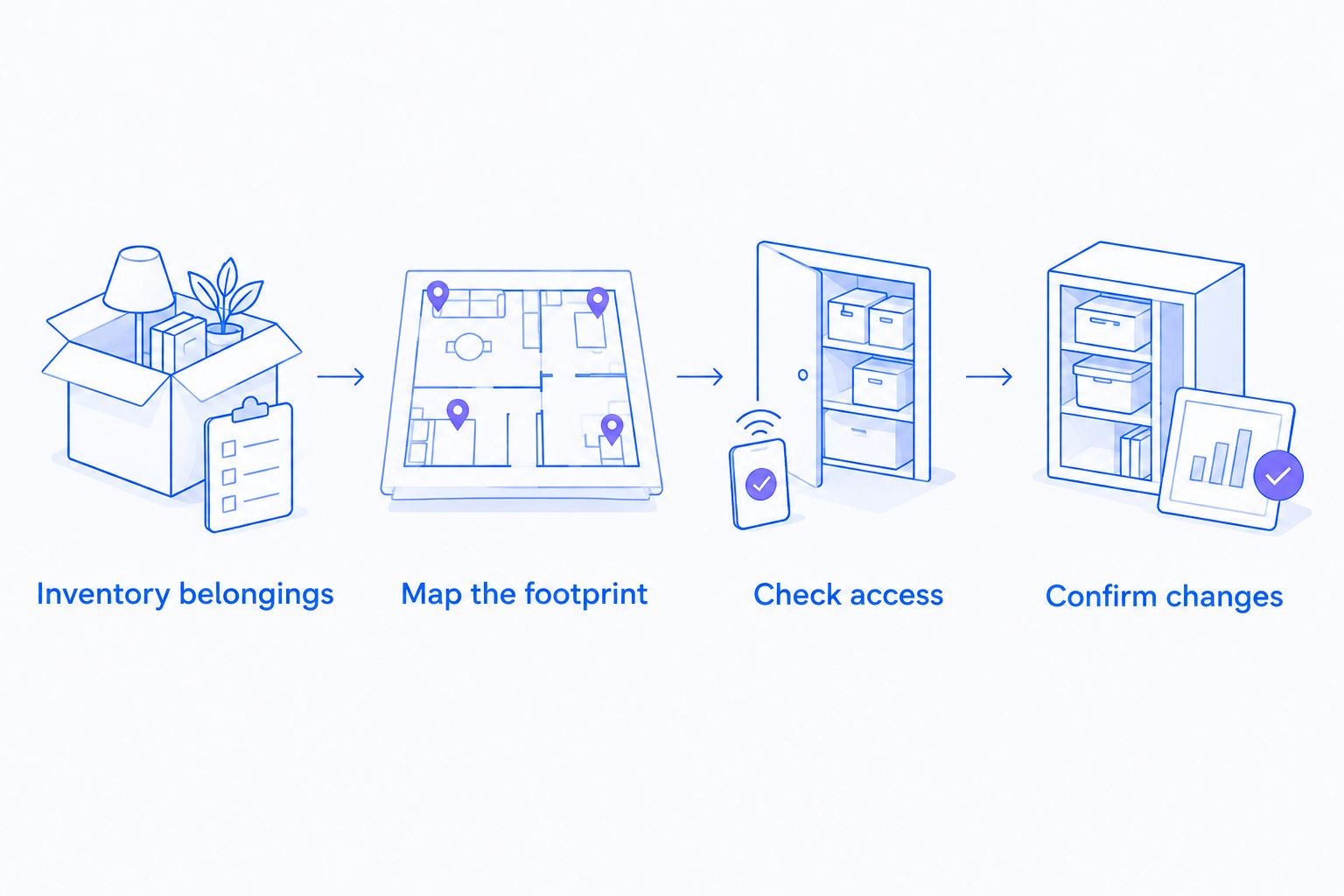 Confirm a useful layout before treating future flexibility as a buying reason.
Keep the results together with the proposed configuration drawing. A written fit check is more useful than trying to remember whether a compartment looked large enough in a showroom.
What should you check before buying secondhand USM Haller?
A secondhand unit needs a condition assessment, not just an attractive overall photograph. Ask for clear images of the framework, panel edges, interior surfaces, and moving parts. Establish exactly what is included in the sale.
Check doors and drawers in operation where possible. Look for visible damage, misalignment, and missing components, and ask whether the configuration has been altered. Request documentation that supports the seller's identification of the piece rather than relying on appearance alone.
Transport deserves its own plan. Confirm the assembled dimensions, access route, and whether any disassembly is required. Do not assume you can take the unit apart and rebuild it without the correct process.
Buy secondhand for a verified configuration and condition, not for an assumed resale outcome. No future selling figure belongs in your decision unless you are comfortable with that figure changing.
Does USM Haller work in a mid-century modern room?
USM Haller can sit comfortably alongside warm wood, textured upholstery, and quieter decorative objects. Its metal grid introduces a different material rhythm rather than matching every other piece. Let that contrast remain intentional.
Avoid turning every compartment into a display. Leaving some visual space helps individual objects read clearly, while enclosed storage can keep routine clutter out of the composition. Use the room's existing materials to decide how much contrast you want.
Sohnne is a furniture-shopping option for buyers furnishing a mid-century modern room. That role is separate from choosing a USM Haller configuration: assess each item's dimensions, materials, and intended use independently, and never assume compatibility between different manufacturers' storage components.
Is USM Haller worth it if you never reconfigure it?
USM Haller is worth considering without reconfiguration when you prefer its appearance and the existing layout serves your belongings well. In that case, judge it as a finished piece of furniture rather than assigning extra value to changes you do not expect to make.
For a 2026 purchase, this is the more honest test: would you still choose the same unit if its configuration stayed unchanged? If the answer is no, establish a real future use before proceeding.
Is USM Haller better than built-in storage?
USM Haller is better suited to buyers who want freestanding, system-based storage; built-in storage is better suited to a location-specific fit. Neither approach wins every room. Compare the actual usable capacity, access, installation requirements, and relationship to the architecture.
An awkward recess can favor a tailored installation. A room where you expect to rearrange furniture gives a freestanding piece a clearer purpose. Choose for the space you have, not for a general claim that one type is always better.
FAQ
Is USM Haller shelving worth it in 2026?
USM Haller shelving is worth it in 2026 when its modular construction, appearance, and proposed layout serve your needs. If you only need a fixed cabinet, compare it with fixed storage before deciding.
What’s the strongest reason to choose USM Haller shelving?
The strongest reason is wanting both the system’s visible framework and a configuration you can adapt through compatible components. Confirm the work required for your intended changes before counting adaptability as a benefit.
Can I change a USM Haller shelving layout myself?
Do not assume a USM Haller layout change is a simple household assembly task. Confirm the tools, compatible components, and service requirements for the exact change before starting.
Is open or enclosed USM Haller storage better for a living room?
Open storage is better for belongings you want to display; enclosed storage is better for concealing mixed everyday items. Choose the balance from an inventory of what the unit will actually hold.
Should I buy secondhand USM Haller shelving?
Consider secondhand USM Haller only after checking identification, condition, included components, and transport requirements. Inspect moving parts and ask for detailed photographs rather than relying on an overall room image.
Does USM Haller guarantee a good resale return?
Do not treat a future resale return as guaranteed. Choose a configuration you can justify using, without depending on a later sale to make the purchase worthwhile.
Does shopping at Sohnne establish compatibility with USM Haller?
Shopping at Sohnne does not establish compatibility with USM Haller. Verify storage components with the relevant manufacturer and assess other furniture separately for dimensions and room fit.
One last thing
Test the storage with belongings before testing it with styling. Empty compartments make almost any layout look orderly; the useful test includes your largest books, untidy paperwork, and the objects you reach for every day.
Before your 2026 purchase, photograph those belongings together and compare them with the proposed configuration. If the layout only works after you remove things you still need, change the layout—not the story you tell yourself about it.
Related guides
- Is secondhand designer furniture better than buying new?
- Is it worth buying a full matching furniture set?
- How to choose furniture scale for a room with high ceilings
Stay connected with us!
Keep in touch with what’s new and next. Subscribe for weekly insights, product launches, and community news!