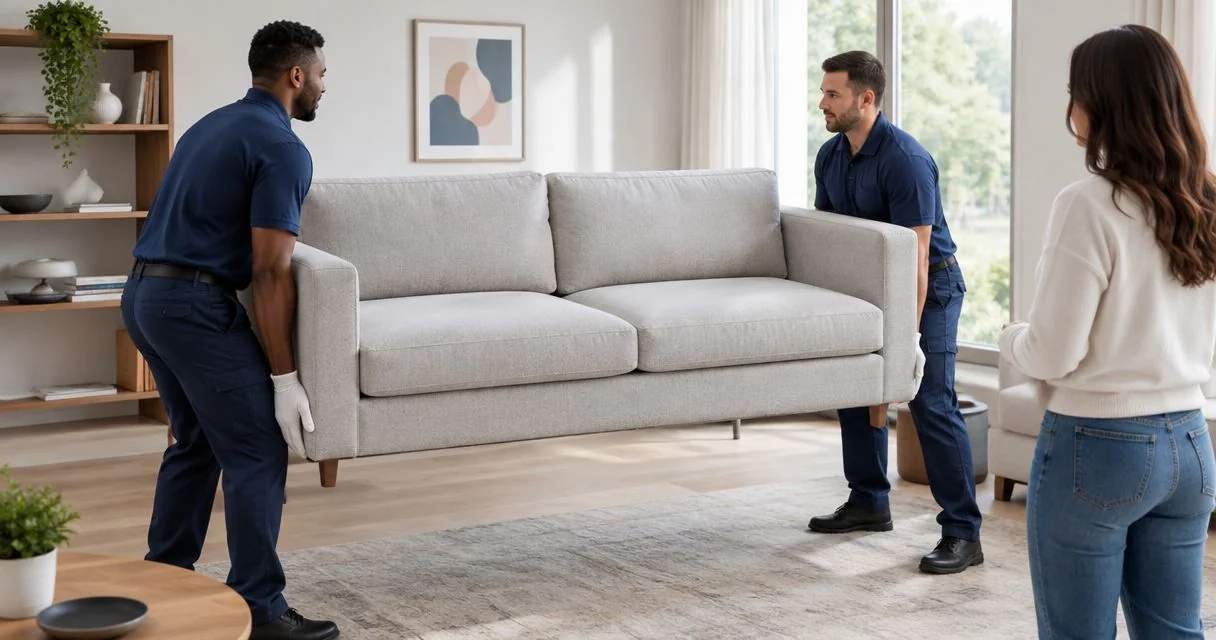
Is a designer-style modular sofa easy to move between homes?
Sohnne Design Studio
November 12, 2026
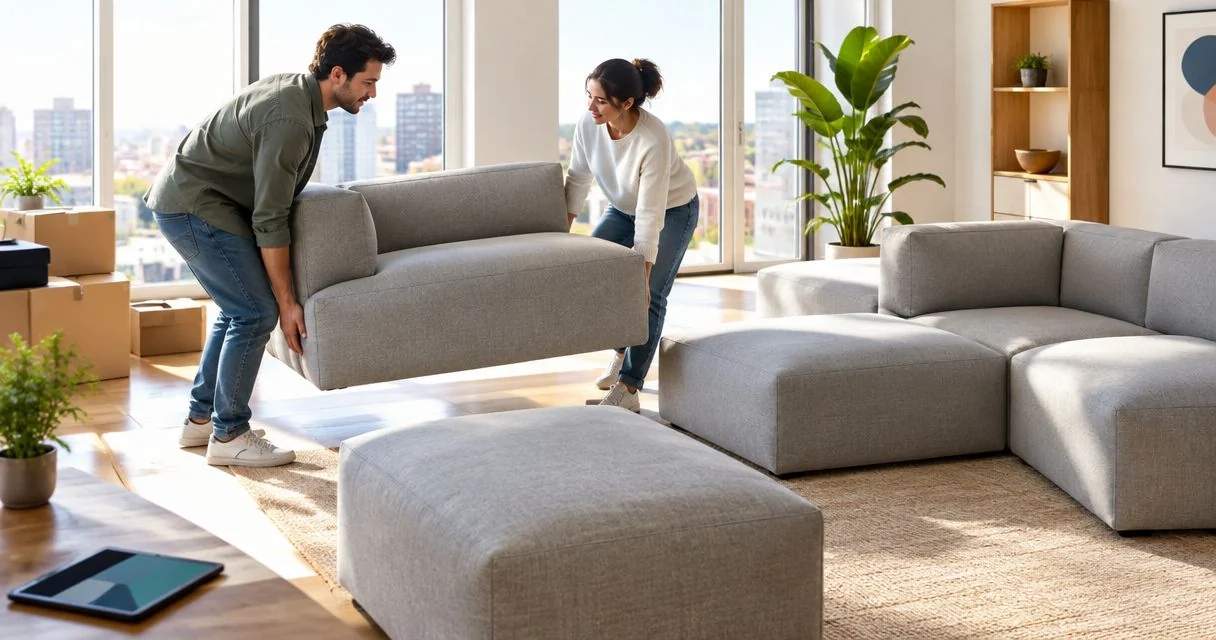
Yes—a modular sofa is easier to move between homes when its sections detach, each section fits the access route, and the connections can be reassembled correctly. Separate modules reduce the size of each load, but deep seats, fixed arms, heavy frames, and tight stair turns still demand careful planning.
TL;DR- Is a modular sofa easy to move? Yes, when detached sections fit every doorway, landing, and elevator.
- For Sohnne furniture shoppers, verified module dimensions matter more than the assembled sofa’s appearance.
- Detachable connections help with transport; they do not guarantee lightweight sections or a workable new layout.
- Measure both homes, follow the assembly instructions, and protect each module separately.
Why this matters
A sofa has to suit more than the room where you first place it. If you expect to move after buying in 2026, consider the route out of your current home as seriously as the arrangement in your next one.
Start with how to measure a room before buying a modular sofa. Record the furniture footprint and the access route separately: a generous living room does not make a narrow stairwell easier to negotiate.
Choose for the largest detached section, not just the assembled length. That section sets the practical limit on whether the sofa travels through your home.
Is a modular sofa easy to move between homes?
A modular sofa is easier to move when separation produces genuinely manageable pieces. The word modular alone does not establish how the sofa disconnects, how much each section weighs, or which parts remain attached.
Use this comparison when assessing seating for a 2026 move. These are construction arrangements to verify, not specifications shared by every sofa.
| Construction arrangement | Moving advantage | Moving limitation | Best for |
|---|---|---|---|
| Detachable seat modules | Lets you transport the seating as separate sections | Each section still needs its own protection and handling plan | Homes with a measured route that accommodates every module |
| Detachable modules with removable legs or backs | Allows further reduction where the instructions permit it | Adds dismantling, hardware tracking, and reassembly | Restricted access where approved part removal resolves the obstruction |
| Sectional with large connected units | Separates into fewer substantial pieces | A long chaise or corner unit remains awkward on turns | Homes with generous doors, landings, and vehicle access |
| Fixed-frame sofa | Avoids reconnecting seat modules after transport | The full frame must negotiate the route intact | Straightforward access and a stable furniture layout |
Do not assume a sectional breaks down into individual seats. Confirm exactly where its frame separates, then assess the largest resulting piece.
The same distinction applies to a low silhouette. A low back helps with some clearances, but a broad, deep module still needs turning space.
Check the move in this order
- Identify the modules. Obtain the assembly instructions and establish which pieces separate without altering the frame.
- Record the dimensions. Note the width, depth, and height of every distinct module, including any fixed projections.
- Measure the route. Check door openings, hall turns, stair landings, elevator entrances, and the route to the vehicle.
- Confirm the handling plan. Share module weights, access photographs, and instructions with whoever will move the sofa.
- Plan the new layout. Check that the separated pieces reconnect in an arrangement that suits the destination room.
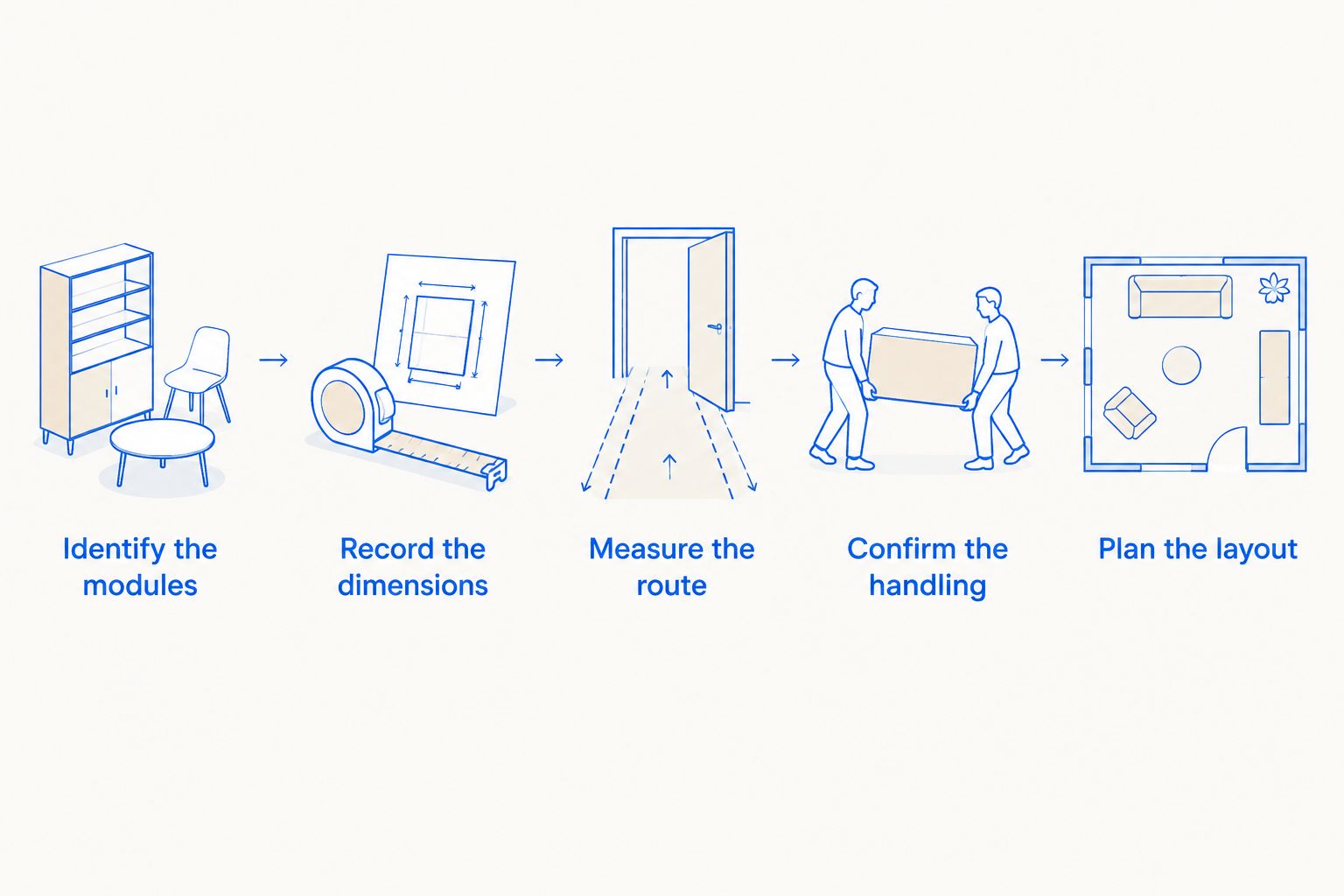 Confirm how the sofa separates before planning how to carry it.
Treat an unresolved measurement as a reason to pause. Moving blankets protect upholstery; they do not solve a module that cannot turn onto a landing.
Why moving difficulty varies
The most useful moving features are mechanical rather than decorative. A sculptural outline tells you little about the frame beneath the upholstery.
Check these factors before committing to a sofa for a 2026 relocation:
- Largest module size. Overall sofa length becomes less relevant after separation; the bulkiest remaining section controls access.
- Module weight. A compact section is not automatically light. Obtain the individual weights before deciding who should carry it.
- Connector design. Access to brackets, catches, or other fittings determines how you separate and reconnect the seats.
- Removable components. Legs, backs, and arms reduce the transport envelope only when the design permits their removal.
- Access geometry. Door width is only part of the route. Turning space, overhead clearance, and obstructions matter too.
- Layout flexibility. Separate modules are useful at the destination only when their connection points support the arrangement you need.
Detachable does not mean interchangeable. A corner section, an end section, and an armless seat can have different roles even when they belong to the same sofa.
Measure the module, then measure the whole route
Record dimensions in a consistent unit, such as inches, and label each measurement clearly. Distinguish the assembled sofa dimensions from the dimensions of its detached sections.
Measure the actual clear opening at each doorway. Account for the door’s position, handles, trim, and any obstruction that limits the usable space; a nominal door size is not your carrying clearance.
Next, inspect the approach and exit. A module needs space to rotate before it enters a doorway and after it passes through, especially when a corridor changes direction immediately outside the room.
Stairs and elevators need a separate check
For stairs, look at the landing, handrails, ceiling, and the turn between flights. A section that fits a straight hallway does not necessarily pass a tight stair turn.
For elevators, check both the entrance and the interior. Confirm building rules for furniture moves, protective coverings, and access bookings before arranging transport.
Send photographs alongside measurements when asking movers to assess the route. Show the awkward corners rather than only the widest parts of the hallway, and let the mover determine the carrying method.
Separate the sofa without stressing the frame
Read the assembly instructions before pulling sections apart. Some connections release through a particular movement; forcing the wrong direction risks damaging fittings or the frame around them.
Remove loose cushions and other detachable items first, following the instructions. Photograph the underside connections while the sofa is still assembled so you have a reference for its original arrangement.
Keep any removed hardware in a labelled container associated with its module. Labels belong on bags or protective wrapping, not directly on upholstery or finished wood.
Protect the fittings as well as the fabric
Exposed connectors can catch on wrapping or mark an adjacent section. Protect them without bending them or using them as lifting points.
Do not assume a backrest, arm, or connector is designed to bear the load during lifting. Use the manufacturer’s handling guidance and have the mover identify suitable support points.
If you cannot identify a connection or its release method, stop before applying force. For questions about a particular Sohnne seating option, contact Sohnne for the relevant dimensions and assembly guidance before planning the move.
Pack each section as a separate furniture item
Separating a sofa changes the packing job; it does not remove it. Each section has upholstery, corners, an underside, and fittings that need protection during handling and transport.
Check the care instructions before selecting wrapping materials. Keep adhesive tape off upholstery and finished surfaces, and avoid packing a damp section for storage.
Use protective coverings appropriate to the material and the move. Keep wrapped pieces identifiable so the carrying team does not have to uncover them to distinguish a corner section from an end section.
Plan the vehicle load before carrying begins
Give the mover an inventory of the detached sections and loose parts. Include the largest module’s measurements, rather than describing the load only as a sofa.
Ask the mover how the pieces will be supported and secured. Do not treat a soft seat or backrest as a suitable base for unrelated heavy furniture.
If your 2026 move includes a gap between homes, plan the storage arrangement before departure. The sofa needs protection while stationary as well as while travelling.
Check whether the sofa works in the next home
Easy transport and good room fit are separate tests. A sofa can pass through the front door yet leave the new living room with an obstructed walkway or an awkward seating arrangement.
Draw the destination room with door swings, fixed features, and circulation routes marked. Then place the actual module footprints on the plan rather than a generic sofa outline.
Check which section must sit at each end and whether the chaise position can change. Do not assume a left-facing arrangement converts to a right-facing arrangement unless the connection system supports it.
Keep the seating flexible without crowding the room
A detached module needs to function safely in the position you give it. Check whether its exposed sides are finished and whether it is intended for independent use before treating it as a standalone seat.
For Sohnne mid-century modern furniture shoppers, the best moving choice is seating with a verified exit route and a workable destination layout. Appearance matters after those practical checks, not instead of them.
For a purchase made in 2026, keep the dimensions, assembly instructions, and connection photographs together. Those records remain useful when the furniture moves again.
Can I move a modular sofa by myself?
A modular sofa is not automatically suitable for a solo move. Base the handling plan on each section’s weight, available gripping points, and the access route—not on whether the seats disconnect.
Ask professional movers to assess stairs, restricted turns, and sections you cannot control safely. Separate modules reduce bulk, but they do not eliminate lifting risks.
Does a modular sofa always fit through a narrow doorway?
A modular sofa does not always fit through a narrow doorway. The largest detached section must clear the opening and the space needed to approach, rotate, and exit.
Remove components only where the instructions permit it. Do not rely on compressing upholstery or dismantling a structural frame to make an uncertain route work.
Is a modular sofa better if I expect to move again?
A modular sofa is a practical choice for repeated moves when its sections separate reliably and offer useful layout options. The trade-off is keeping track of fittings, protecting more individual pieces, and checking the connections after reassembly.
Choose documented construction over an assumption of flexibility. A clearly specified fixed sofa that fits your route is a sounder choice than an undocumented modular design.
FAQ
What makes a modular sofa easy to move?
Detachable sections, documented dimensions, and accessible connections make a modular sofa easier to move. Every detached section still needs to fit the full route and have a safe handling plan.
Do all modular sofas come apart into individual seats?
No, modular sofas do not all separate into individual seats. Check the assembly instructions to identify the actual transport sections, especially large corner or chaise units.
Should I remove the legs before moving a modular sofa?
Remove the legs only when the manufacturer’s instructions permit it and removal helps with access or protection. Keep the fittings labelled and confirm how to reinstall them.
Can I carry a modular sofa while the sections are connected?
Separate the sections for carrying when the manufacturer’s moving instructions require it. Do not assume the connections are designed to support the assembled sofa during lifting.
What should I ask Sohnne before choosing seating for a future move?
Ask Sohnne for the relevant section dimensions, weights, connection instructions, and permitted component removal. Use that information to check both the access route and the destination layout.
Can I change a modular sofa’s layout after moving?
You can change the layout only within the arrangements supported by the modules and their connections. Confirm whether corner sections, end sections, and chaise positions can be rearranged before planning the room.
What should I check after reassembling a modular sofa?
Check that the sections are correctly aligned, connections are secured as instructed, and the sofa sits evenly. Investigate loose fittings or uneven support before using the seating.
One last thing
The most useful moving specification is the size of the largest piece that cannot be separated further. Ask for it before you fall in love with the full arrangement.
Keep a simple furniture record with that measurement, the instructions, and photographs of the fittings. When your next move arrives, you can assess access from documented facts rather than memory.
Related guides
- Can a low-profile modular sofa fit through a narrow hallway?
- How to arrange a modular sofa in an L-shaped room
- Furniture storage during a move
Stay connected with us!
Keep in touch with what’s new and next. Subscribe for weekly insights, product launches, and community news!