How to Style a Lounge Chair in a Bedroom (2026 Guide)

Sohnne Design Studio
July 26, 2026
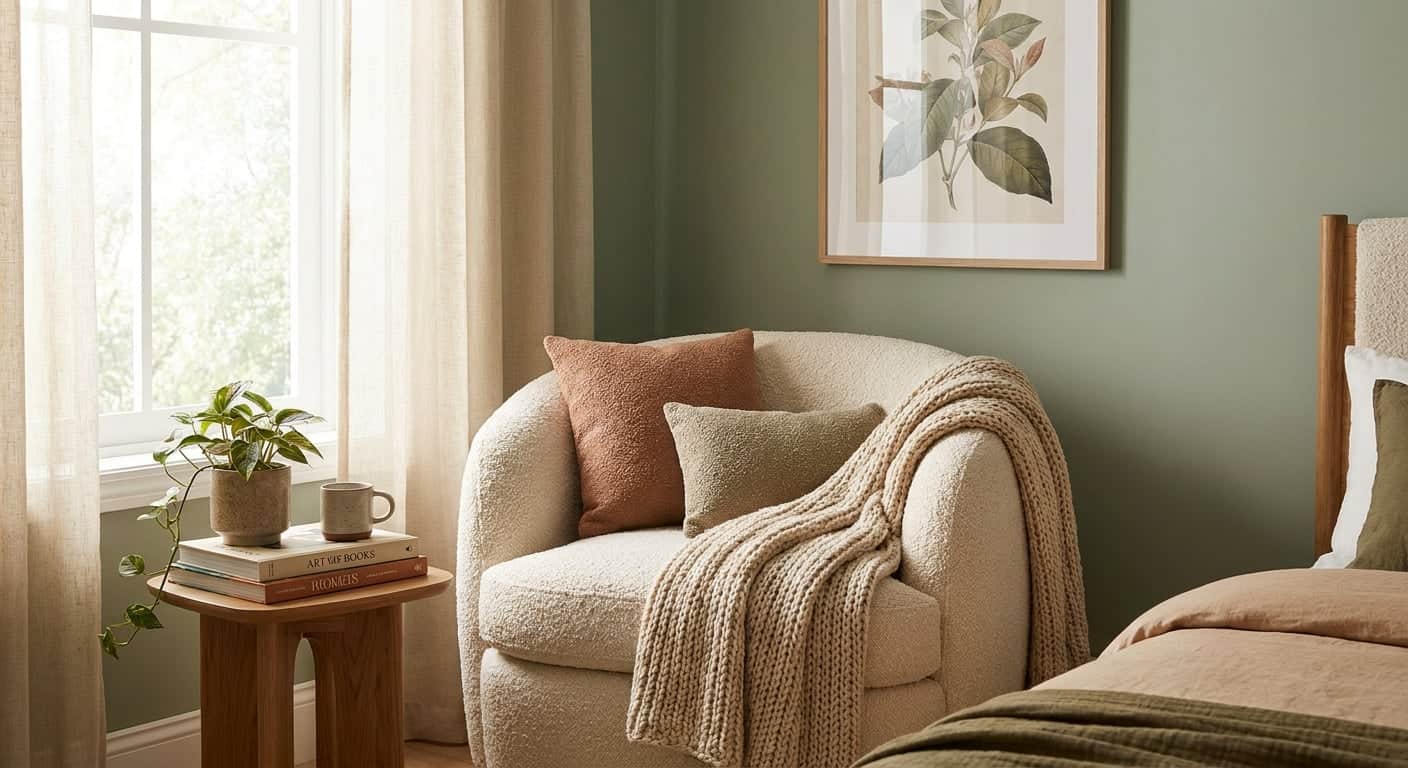
A lounge chair earns its place as a bedroom focal point when the placement, lighting, and surrounding pieces all point toward it — get those three right and the chair reads as intentional, not leftover from the living room.
TL;DR- Anchor the lounge chair on a diagonal or against a blank wall, never wedged into a corner behind the bed.
- A 36-42 inch clearance path around the chair keeps it functional, not just decorative.
- Pair one lounge chair with a single side table and a floor lamp — skip the ottoman if the room is under 140 sq ft.
- The Corbusier LC4 chaise and the Little Petra lounge chair both work as bedroom anchors in 2026, but need different wall setups.
- Layer one rug under the chair zone to separate it visually from the bed zone.
Why this matters
Most bedrooms treat a lounge chair as an afterthought — shoved against the wall under the window, holding a pile of clothes by week two. That's a placement failure, not a furniture failure.
A lounge chair styled as a focal point does two jobs: it gives the room a second reason to exist beyond sleeping, and it pulls the eye away from the bed as the only visual anchor. Interior stylists have used this trick in small bedrooms for years — one chair, one lamp, one rug, positioned where natural light hits mid-morning. It works because it creates a destination inside a room that otherwise only has one.
What you'll need
- One lounge chair with a distinct silhouette — bulky recliners disappear into a room, sculptural chairs don't
- A side table or small pedestal, roughly 18-22 inches tall to sit level with the chair's arm
- A floor lamp or a wall sconce with a dimmer, since bedroom lounge zones read better under warm, low light
- A rug sized to sit under the chair and table together, minimum 4×6 feet
- A tape measure and 30 minutes to test the clearance path before committing to a spot
- Optional: a small throw and one accent pillow, no more than that
The steps
1. Measure the room before you pick a wall
This step decides everything else. Walk the bedroom's perimeter and mark any wall segment at least 5 feet wide that isn't interrupted by a door swing, closet, or window seat.
A lounge chair needs 36 to 42 inches of clearance in front of it to stay usable — anything tighter and it becomes a shelf for laundry. If your bedroom is under 150 square feet, look for a diagonal corner instead of a flat wall; angling the chair 30-45 degrees off the wall makes a small room feel larger because it breaks the room's rectangle.
Common mistake: measuring only the chair's footprint and forgetting the arc a person's legs need to sit down and stand up.
2. Choose the chair's silhouette to match the room's ceiling height
A tall-backed lounge chair, like the Corbusier LC4 chaise, works in rooms with 9-foot ceilings or higher because the reclined line reads as elongated, not cramped. In a standard 8-foot bedroom, a lower, more compact silhouette — something closer to the Little Petra lounge chair's scale — keeps the eye from hitting a visual ceiling too fast.
Sohnne's lounge chair lineup spans both categories, so match the chair's proportions to the room before matching it to the color scheme. Buy the taller piece for open, high-ceiling rooms; consider the lower profile for standard builders' spec bedrooms.
3. Position the chair on a diagonal, not against the bed wall
Never place the lounge chair on the same wall as the headboard — it competes with the bed instead of complementing it. The strongest placement in 2026 design work is the opposite corner from the bed, angled toward the window or the room's natural light source.
This single move does most of the "focal point" work. The chair becomes the second thing your eye finds when you walk in, rather than a shadow behind the bed frame.
4. Add a side table at arm height, not coffee-table height
A side table next to a bedroom lounge chair should sit level with the chair's armrest, typically 18-22 inches. Anything shorter forces you to reach down for a book or a glass of water; anything taller blocks the sightline that makes the chair read as a "spot," not just a chair.
Common mistake: using a leftover nightstand that's too tall and too bulky, which visually merges the chair zone with the bed zone instead of separating them.
5. Layer one rug under the chair and table together
A rug under the lounge chair does the job that walls can't in an open bedroom layout — it draws a visible boundary around the reading nook. Size it so both the chair and the side table sit fully on it, with at least 6 inches of rug showing past the chair's front legs.
Skip the mistake of a rug that's too small; a rug that only covers the chair's footprint looks like a bath mat, not a zone.
6. Light it with one warm source, not the room's overhead fixture
Overhead lighting flattens a lounge chair into the rest of the room. A floor lamp positioned just behind the chair's shoulder, or a wall sconce on a dimmer, gives the corner its own mood and makes it read as a deliberate feature after dark.
Aim for warm white bulbs, around 2700K, and keep the lamp's light pool tight to the chair rather than spilling across the whole room.
7. Restrain the styling — one throw, one pillow, nothing else
The instinct is to pile the chair with texture: a throw, two pillows, a blanket basket. Resist it. One folded throw over an arm and a single accent pillow is the ceiling for a bedroom lounge chair — anything more and it stops looking like a place to sit and starts looking like storage.
Verdict: skip the multi-pillow styling that works on a sofa; it reads as clutter on a single chair.
Troubleshooting
- The chair feels like it's floating in the middle of nowhere. Pull it 6-8 inches closer to a wall or window frame — a lounge chair needs something behind it to feel anchored, even if it's just drapery.
- The reading corner competes visually with the bed. Drop the lamp's brightness relative to any bedside lighting; the eye follows the brighter light source first.
- There's no room for a side table. A wall-mounted shelf at arm height solves this in bedrooms under 120 square feet without eating floor space.
- The rug keeps sliding on hardwood. Use a rug pad rated for the rug's weight — this is the single most skipped step in DIY styling.
- The chair clashes with the room's existing palette. Match the chair's frame material (wood, chrome, or blackened steel) to one other metal or wood tone already in the room rather than trying to match fabric colors exactly.
Tools and resources
- A tape measure and painter's tape to mark the clearance zone before moving furniture
- Sohnne's lounge chair guide for reading nooks for silhouette comparisons across low, mid, and tall-back profiles
- The Corbusier LC4 chaise lounge replica guide for bedrooms if your ceiling height supports a reclined piece
- The Little Petra lounge chair styling guide for compact, standard-ceiling bedrooms
- A rug layering guide for replica furniture setups — the same zoning logic applies to bedrooms
What to do next
Once the chair, table, and rug are placed, the fastest way to check the styling is standing in the doorway. If the lounge chair is the second thing you notice after the bed, the placement worked. If it's competing with the bed or disappearing into the wall, go back to step 3 and try the diagonal opposite corner instead.
For a wider set of picks by silhouette and budget, Sohnne's guide to designer lounge chairs for bedroom reading nooks breaks down which shapes suit which room sizes.
FAQ
How do I style a lounge chair in a small bedroom?
Place it on a diagonal in the corner opposite the bed, angled 30-45 degrees off the wall, with 36 inches of clearance in front. This makes a small bedroom feel larger by breaking up its rectangle.
What’s the best lounge chair for a bedroom focal point in 2026?
The Corbusier LC4 chaise works in rooms with 9-foot ceilings or higher, while the Little Petra lounge chair suits standard 8-foot ceiling bedrooms. Match the chair’s proportions to the ceiling before matching color.
Should a bedroom lounge chair face the bed or the window?
Angle it toward the window or the room’s natural light source, not directly at the bed. Facing the bed makes the chair compete with it instead of functioning as a separate reading zone.
How much clearance does a bedroom lounge chair need?
Leave 36 to 42 inches in front of the chair for the sit-and-stand arc. Anything tighter turns the chair into a spot for piling clothes instead of a usable seat.
Do I need a rug under a bedroom lounge chair?
Yes, a rug at least 4×6 feet under the chair and side table together visually separates the reading zone from the sleeping zone. Skip a rug sized only to the chair’s footprint since that reads as a bath mat.
What size side table pairs with a bedroom lounge chair?
An 18-22 inch table set level with the chair’s armrest works best. Taller pieces block the sightline that makes the corner read as an intentional feature.
How many pillows should a bedroom lounge chair have?
One accent pillow plus a folded throw is the ceiling. More than that reads as storage clutter rather than a styled seat.
What lighting works best for a bedroom lounge chair nook?
A floor lamp or dimmable wall sconce positioned behind the chair’s shoulder, using warm 2700K bulbs. Overhead lighting flattens the corner and erases the mood a lounge nook needs.
One last thing
The detail most people skip: match the chair's frame material to something else already in the room instead of chasing a matching fabric color. A blackened-steel-framed lounge chair next to a bed with chrome legs reads as disconnected even if the upholstery colors are perfect — the metals are what the eye actually tracks first, not the fabric.
Related guides
- Best lounge chairs for a home reading corner
- Corbusier LC4 chaise lounge replica for bedroom
- Little Petra lounge chair replica styling guide
- How to layer rugs and replica furniture for a warm room
- Best designer lounge chairs for a bedroom reading nook
Stay connected with us!
Keep in touch with what’s new and next. Subscribe for weekly insights, product launches, and community news!