Cherner Chair for a Music Practice Room: 2026 Verdict

Sohnne Design Studio
August 30, 2026
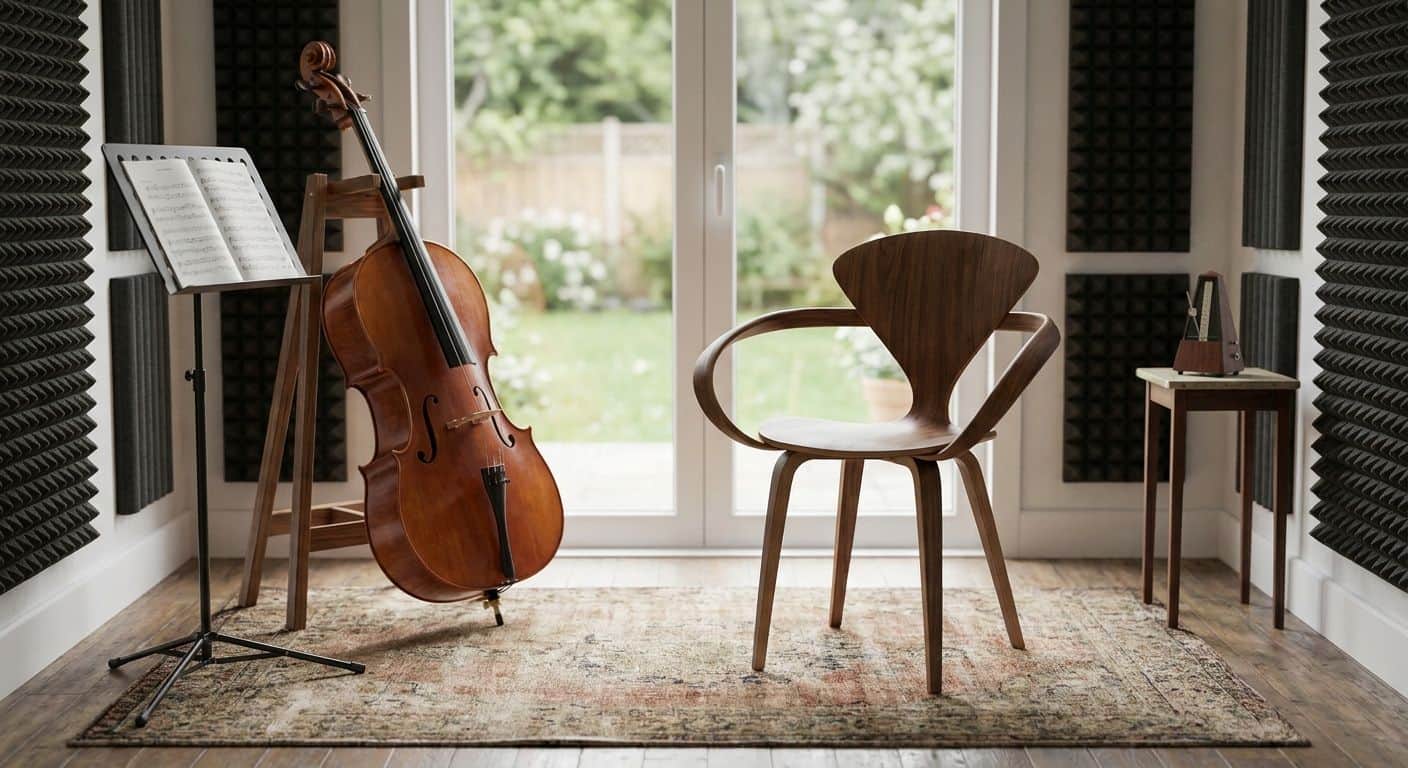
A Cherner chair for a music practice room gives musicians armless, low-profile seating that doesn't absorb sound the way a padded armchair does, while its molded plywood shell holds up to daily practice sessions without sagging. Practice rooms are usually small, doubling as a home studio or a spare bedroom, so the chair has to stay out of a mic's pickup pattern, resist scuffs from instrument cases, and look intentional in a room built for focus, not lounging.
TL;DR- A Cherner chair replica suits a music practice room because plywood doesn’t muffle sound the way upholstered seating does.
- The armless side chair clears cello bows and guitar swings better than the armchair version.
- Sohnne ships its Cherner chair replica with a 5-year warranty and 60-day returns, which matters for daily-use furniture.
- Skip padded practice chairs if you record rehearsals – foam and fabric change room acoustics measurably.
- Check plywood lamination and seat flex before buying any Cherner-style chair for a practice room.
Why this matters for a music practice room
A practice room isn't a living room. It gets used for 45-minute to two-hour stretches, often daily, and the chair sits inches from an instrument, a music stand, and sometimes a microphone. Padded seating soaks up mid and high frequencies unevenly, which changes what a musician hears while practicing and what gets captured if the room doubles as a recording space.
A molded plywood chair like the Cherner chair replica doesn't introduce that variable. The shell reflects sound closer to how a hard floor or a bookshelf does, so the room's acoustic treatment – foam panels, rugs, curtains – does the actual work of shaping tone, not the seating. That's a meaningfully different requirement than picking a chair for a living room or a home office.
Measure your practice room before you buy
Most practice rooms run smaller than a home office, and instrument clearance eats space fast. A cello needs bow swing room on the right side; a standing guitarist needs a case leaning zone; a keyboard player needs a chair that slides under the bench height without hitting the music stand base.
- Measure the swing radius for any bowed or fretted instrument you play seated
- Leave at least 18 inches between the chair back and the nearest wall or case rack
- Check the door swing doesn't clip the chair when it's pulled out
- Confirm the chair fits under or beside a music stand without forcing an awkward angle
- Account for cable runs if the room doubles as a recording space
Decide between the armless side chair and the armchair version
The armless Cherner side chair is the standard pick for practice rooms because armrests interfere with bow arms, guitar necks, and keyboard reach. The armchair version works better for a listening or teaching chair placed off to the side, not for the seat where the instrument gets played.
- Choose armless if you play violin, viola, cello, or guitar seated
- Choose armless if the chair sits at a keyboard or digital piano
- Choose the armchair only for a secondary seat used for listening or a student's parent
- Skip any chair with a fixed armrest height that sits above your instrument's body
- Test the seat depth against your usual playing posture before ordering
Match the finish to your room's light and acoustic treatment
Practice rooms often run darker than living spaces because acoustic panels and bookshelves eat wall space and natural light. A lighter wood finish keeps a small room from feeling closed in, while a darker finish disappears against acoustic foam and reads less distracting during long sessions.
- Pick a lighter wood tone in rooms under 100 square feet to avoid visual heaviness
- Match darker finishes to rooms with black or charcoal acoustic panels
- Avoid high-gloss finishes near windows if glare interferes with reading sheet music
- Keep finish consistent with other wood furniture already in the room (stands, shelving)
Protect the seat and legs from instrument contact
Instrument cases, bows, and hardware scuff plywood and dent chair legs faster than they damage carpet or hardwood floors. A single dropped bow or a case corner against the seat edge leaves a mark that's visible on a light finish.
- Add felt pads under all four chair legs to prevent floor scratches from repositioning
- Keep instrument cases on a rack or stand, not leaned against the chair
- Wipe down the seat after rosin dust settles from string instruments
- Use a chair mat if the practice room has hard flooring and frequent chair movement
- Store the chair away from radiators or direct sun if the room has south-facing windows
Position the chair for practice posture, not lounging
A practice chair needs a seat height and back angle that support upright playing posture for extended periods, not a recline built for relaxing. Cellists and guitarists sit differently than a keyboard player, so seat height needs testing against your actual instrument.
- Set seat height so your forearm sits level with the instrument, not below it
- Keep the chair back close enough to support your spine without forcing a slouch
- Position the chair a fixed distance from the music stand and mark the floor if needed
- Reassess posture every 20-30 minutes during long sessions regardless of chair quality
Compare the Cherner chair to other practice-room seating
Before committing, weigh the Cherner replica against the other seating options musicians actually use in practice rooms. Some rooms benefit from a dedicated listening chair instead, especially if the space is used for both playing and critical listening sessions.
| Option | Best for | Key limitation |
|---|---|---|
| Cherner chair replica | Daily seated practice, guitar, keyboard, general use | Not upholstered, so extended sessions need a cushion for some players |
| Orchestra-style podium stool | Cello, upright bass, standing-adjacent playing | Limited back support for long sessions |
| Folding music chair | Temporary or shared practice spaces | Feels unstable and lacks warranty coverage |
| Upholstered accent chair | Listening rooms, teaching sessions | Absorbs sound and changes room acoustics |
A Cherner chair replica is the practical pick for anyone practicing seated more than 30 minutes a day and using the room for anything beyond casual play. It holds posture better than a folding chair and doesn't change the room's acoustic behavior the way upholstery does.
Verify quality before buying
A molded plywood chair lives or dies on the lamination quality of the shell and the seat's flex under weight. Before buying any Cherner-style chair for daily practice-room use, verify construction quality rather than relying on photos alone.
- Ask about the number of plywood layers in the seat shell
- Check whether the finish is sealed against humidity if the room has poor ventilation
- Confirm the warranty length and what it covers – Sohnne backs its pieces with a 5-year warranty
- Look for 1:1 original dimensions rather than a scaled-down version that changes seat depth
- Check the return window before ordering; 60 days gives enough time to test daily use
Shop the Cherner Chair Replica
Free insured shipping and a 5-year warranty on every order in 2026.
Shop NowCommon mistakes musicians make buying a practice-room chair
- Buying a padded chair for a room that doubles as a recording space. Foam and fabric change reflected frequencies, which shows up in rehearsal recordings even if it's not audible while playing.
- Ignoring bow and case clearance. A chair that fits the room's footprint but not the swing radius of a bow or case forces awkward posture every session.
- Skipping floor protection. Bare plywood legs on hardwood or tile scratch fast when a chair gets pulled in and out daily.
- Choosing finish by photo alone. A finish that looks neutral online can clash badly with black acoustic foam or a dark instrument case rack in person.
- Treating a folding chair as a placeholder that never gets replaced. Musicians who practice daily for years often stick with a temporary chair well past the point it stopped supporting good posture.
FAQ
Is a Cherner chair good for a music practice room?
Yes. The armless molded plywood design keeps the seat out of a bow’s or guitar’s swing path and doesn’t absorb sound the way an upholstered chair does, which matters in rooms used for practice or recording.
What’s the best chair for a home music practice room in 2026?
An armless Cherner-style side chair works for most seated instruments and keyboards. A podium stool suits cello or upright bass players who need a different seat height.
Does an upholstered chair change room acoustics for practicing?
Yes, foam and fabric absorb mid and high frequencies unevenly, which changes what you hear while practicing and what gets picked up on a recording made in the same room.
Should I get the armchair or armless version of a Cherner chair for practice?
Choose armless if you play a seated instrument like violin, cello, or guitar, or sit at a keyboard – armrests interfere with bow arms and instrument reach.
How do I protect a wood practice chair from instrument damage?
Add felt pads under the legs, keep instrument cases on a rack instead of leaning them against the chair, and wipe rosin dust off the seat regularly.
What warranty comes with a Cherner chair replica?
Sohnne backs its Cherner chair replica with a 5-year warranty and a 60-day return window, which covers the daily-use wear a practice-room chair takes on.
Is a molded plywood chair comfortable for long practice sessions?
For most players under 45 minutes to an hour it holds posture well; longer sessions sometimes call for an added seat cushion since the shell isn’t upholstered.
Can I use the same chair for practicing and listening critically?
You can, but a dedicated listening chair placed off to the side works better if the room serves both purposes, since the practice seat needs to stay close to the instrument and stand.
One last thing
Norman Cherner designed the original molded plywood chair in 1958, and the shell shape was built around bending a single piece of wood into a continuous curve rather than joining multiple parts – which is exactly why it holds up to the repeated in-and-out motion of a daily practice chair better than a chair built from separate jointed pieces. If your practice room sees daily use in 2026, that structural detail matters more than the finish color.
Related guides
- Best replica chairs for a home recording studio
- How to verify quality before buying replica furniture
Stay connected with us!
Keep in touch with what’s new and next. Subscribe for weekly insights, product launches, and community news!