Butterfly Stool Plant Corner Guide 2026 | Sohnne

Sohnne Design Studio
September 1, 2026
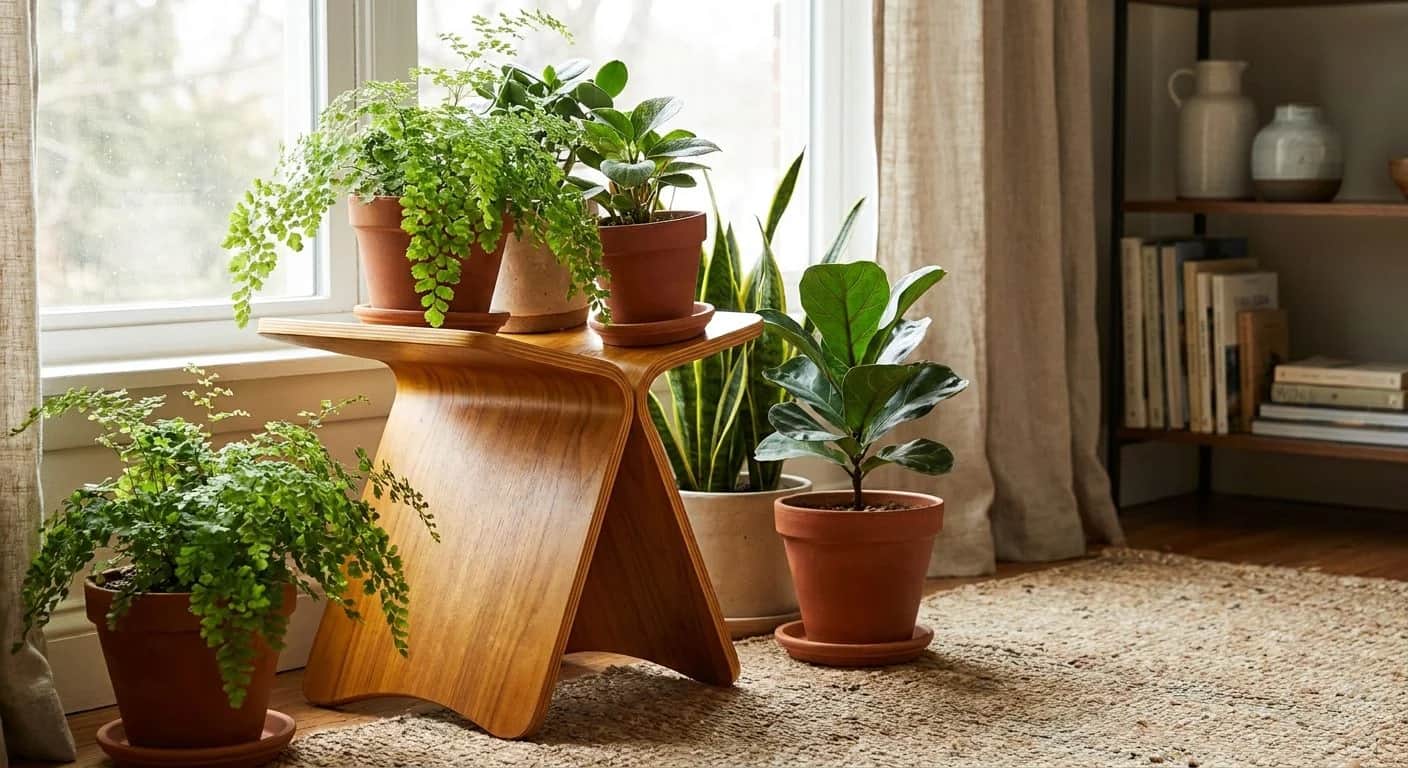
Butterfly stool plant corner styling turns one piece of molded plywood into a plant pedestal, using the saddle-shaped seat of the Butterfly Stool as a stage for a trailing pothos, a snake plant, or a small fern. Unlike a full plant stand, the stool does double duty as low seating when the corner isn't holding greenery, which is why it fits studio apartments and reading nooks as easily as it fits a sunroom.
TL;DR- A butterfly stool plant corner works best with one lightweight plant, not a cluster of heavy pots.
- Sori Yanagi’s molded plywood seat needs a saucer in 2026 setups near real sun exposure to avoid warping.
- Match the stool’s veneer tone to your floor or nearby wood furniture before you buy.
- Butterfly Stool replicas from Sohnne come in rosewood and black ash, both suited to a plant-corner build.
Why a butterfly stool works for a plant display corner
The butterfly stool replica design solves a problem most plant stands don't: it has a sculptural silhouette even without a plant on top. Sori Yanagi built the seat from two curved plywood halves joined at a narrow waist, and that negative space reads as art in a corner that would otherwise need a rug, a lamp, and a piece of wall decor to feel finished.
A true plant stand only looks intentional when it's staged. A butterfly stool looks intentional as furniture first, plant stand second, which is why designers keep specifying it for corners with awkward proportions, a shallow footprint next to a window, or a gap beside a reading chair. The category term matters here: this is a butterfly stool plant corner, not a generic accent table doing plant duty by accident.
The measurements that decide whether it fits
Most butterfly stools sit low, in the same height range as a side table, which is exactly why they work under a trailing plant instead of a tall floor plant. Before ordering, walk the actual corner with a tape measure rather than eyeballing it from across the room.
- Corner width, measured wall to wall, with at least 4 inches of clearance on each side of the stool base
- Ceiling height above the display, especially if you're adding a hanging plant or a floor lamp beside it
- Pot diameter against the seat's narrowest point, since the saddle curve is narrower than it looks in photos
- Walking clearance if the corner sits near a doorway or a traffic path
- Distance from the wall, so a saucer's runoff doesn't sit against baseboard trim
Match the plant to the stool's saddle-shaped seat
The butterfly stool's curved seat isn't flat, and that changes which plants actually sit stable on it. A wide, heavy pot rocks on the curve; a narrow, tall pot balances fine.
Choose plants suited to a curved seat
- Trailing pothos or philodendron in a 6-8 inch pot, letting vines spill over the stool's edge
- A single snake plant, upright and narrow, which reads as sculptural next to the stool's own lines
- A small ZZ plant, tolerant of the indirect light most corners get
- A compact fern in a humid bathroom corner, paired with a saucer to catch drainage
- Skip anything in a pot wider than 10 inches or heavier than a few pounds of wet soil; the seat wasn't built as furniture-grade plant furniture and the curve makes wide pots unstable
Verdict: one lightweight, narrow-potted plant per stool is the rule — treat the butterfly stool as a pedestal for a single specimen, not a shelf for a collection.
Protect the seat from water and root rot
This is the step people skip, and it's the one that shortens the life of a plywood stool fastest. Water sitting directly on a veneer seat swells the wood grain and can lift the finish within a season of regular watering.
- Use a saucer or a drip tray under every pot, no exceptions
- Add felt pads under the saucer to stop moisture wicking sideways into the seat
- Never let soil touch the seat directly, even briefly during repotting
- Rotate the pot a quarter turn every few weeks so condensation doesn't collect on one spot
- Wipe the seat dry after watering instead of letting it air-dry on the wood
Match the stool's wood tone to the room
A butterfly stool in the wrong finish looks like an afterthought instead of a design choice, and finish mismatches are one of the fastest ways a plant corner reads as cluttered instead of curated. Mixing wood tones with replica furniture has its own rules, but the short version for a single accent piece: pick a stool tone that either matches your floor within one shade or contrasts hard enough to read as intentional.
- Rosewood veneer against warm oak or walnut flooring for a tonal match
- Black ash veneer against light oak or white-washed floors for contrast
- Avoid a mid-tone stool in a room with both warm and cool wood already competing
- If your nearby furniture is already walnut, keep the stool in the same family rather than introducing a third tone
Layer height around the single stool
A lone stool with a plant on top reads flat from across the room. Plant display corners that photograph well and hold attention almost always stack at least two height levels.
- Pair the stool with a floor lamp or a Noguchi Akari floor lamp to add vertical light above the plant
- Hang a second, smaller plant above the stool from a ceiling hook so the eye travels up
- Add a low object beside the stool, not behind it, to widen the footprint of the vignette
- Anchor the corner with a small rug that extends a few inches past the stool's base
- Skip a second stool of the same height right next to the first; it reads as a matched pair, not a layered display
Staging a corner with two surface heights instead of one is a habit worth borrowing from retail visual merchandising, where a single-tier display gets walked past and a layered one gets a second look. Pairing a low stool with glass shelving for display pieces mounted on the adjacent wall gives the corner a third level without adding floor clutter, letting a second small plant or a ceramic object sit above the stool rather than competing with it for the same six square feet.
Add texture and light without crowding the corner
Once the plant, the stool, and one height layer are set, resist adding more. A plant display corner built around a butterfly stool works because it's restrained.
- Place the display within a few feet of a window for indirect light the plant actually needs
- Add one textured object, like a woven basket or a ceramic vessel, rather than three small ones
- Use a mirror across the room to bounce light into the corner instead of adding a second lamp
- Rotate the plant seasonally rather than adding new plants every few months
Comparing options for a plant display corner
| Option | Best For | Material | Key Limitation |
|---|---|---|---|
| Butterfly Stool, rosewood veneer | A single trailing plant on warm-toned floors | Molded plywood, rosewood | Curved seat means wide pots without a saucer rim can slide |
| Butterfly Stool, black ash finish | High-contrast corners against light walls | Molded plywood, black ash veneer | Shows water rings fast if a saucer leaks, so felt pads matter |
| Small round accent stool | A heavier pot or two plants clustered together | Varies by piece | Flat top loses the sculptural profile a butterfly stool has |
| Barcelona stool replica | A taller plant needing more underneath clearance | Steel frame, leather-wrapped cushion | Larger footprint competes for space in a tight true corner |
| Low side table | Three or more small pots grouped together | Mixed materials | Flat surface, no sculptural line to anchor the vignette |
Verdict: the Butterfly Stool wins for a single-plant corner in 2026 where the goal is a sculptural accent, not storage for multiple pots — for a cluster display, a low side table or the accent stool option handles the load better.
Common mistakes in a butterfly stool plant corner
- Overloading the seat. A pot wide enough to need both hands stresses the curved plywood and risks tipping; the seat was designed as a stool, not a plant table rated for heavy loads.
- Skipping the saucer. Direct water contact swells veneer within one growing season of regular watering, and it's the single most common damage complaint with molded plywood furniture.
- Mismatching the finish. A mid-tone stool dropped into a room with two other competing wood tones looks like an accident, not a choice.
- Placing the corner near a heat source. A radiator or vent dries the air fast enough to stress humidity-loving plants like ferns, even if the stool itself is fine.
- Treating it as the only object in the corner. A single stool with a single plant and nothing else at a second height reads as unfinished rather than minimal.
Find the right Butterfly Stool finish
Compare rosewood and black ash options for your corner.
Browse SohnneFAQ
What’s the best plant for a butterfly stool display corner?
A trailing pothos or a narrow snake plant in a 6-8 inch pot works best on a Butterfly Stool’s curved seat. Wide or heavy pots rock on the saddle-shaped surface and risk tipping.
Is a butterfly stool sturdy enough to hold a plant every day?
Yes, for a lightweight plant in a small to medium pot with a saucer underneath. It’s not built to hold a heavy fiddle leaf fig or multiple large pots at once.
How do I protect a butterfly stool from water damage?
Use a saucer or drip tray under every pot and add felt pads to stop moisture from wicking into the plywood seat. Wipe the surface dry after watering instead of letting it air-dry on the wood.
What finish should I pick for a butterfly stool in a plant corner?
Match rosewood veneer to warm oak or walnut floors, and use black ash for contrast against lighter floors. Avoid a mid-tone finish in a room where two other wood tones are already competing.
Can a butterfly stool double as seating and a plant stand?
Yes, that’s part of its appeal over a dedicated plant stand. Move the plant off temporarily if you need the extra seat, since the pot and stool share the same surface.
How tall is a butterfly stool compared to a side table?
A Butterfly Stool sits in roughly the same height range as a low side table, which is why it pairs naturally with a trailing plant rather than an upright floor plant needing more clearance.
Does a butterfly stool work in a small apartment corner?
Its narrow footprint and sculptural shape make it one of the better options for a tight corner, since it doubles as decor even without a plant staged on it.
One last thing
The detail most people miss: a butterfly stool's curved seat is narrower at its center than at either end, so a pot that looks fine sitting near the edge in the store can still shift toward the middle once it's carrying wet soil. Test the pot's balance on the actual curve before you finalize the corner, not after the plant is already growing roots into it.
Related guides