Best Eames Wire Chair Replica for a Home Office (2026)

Sohnne Design Studio
August 19, 2026
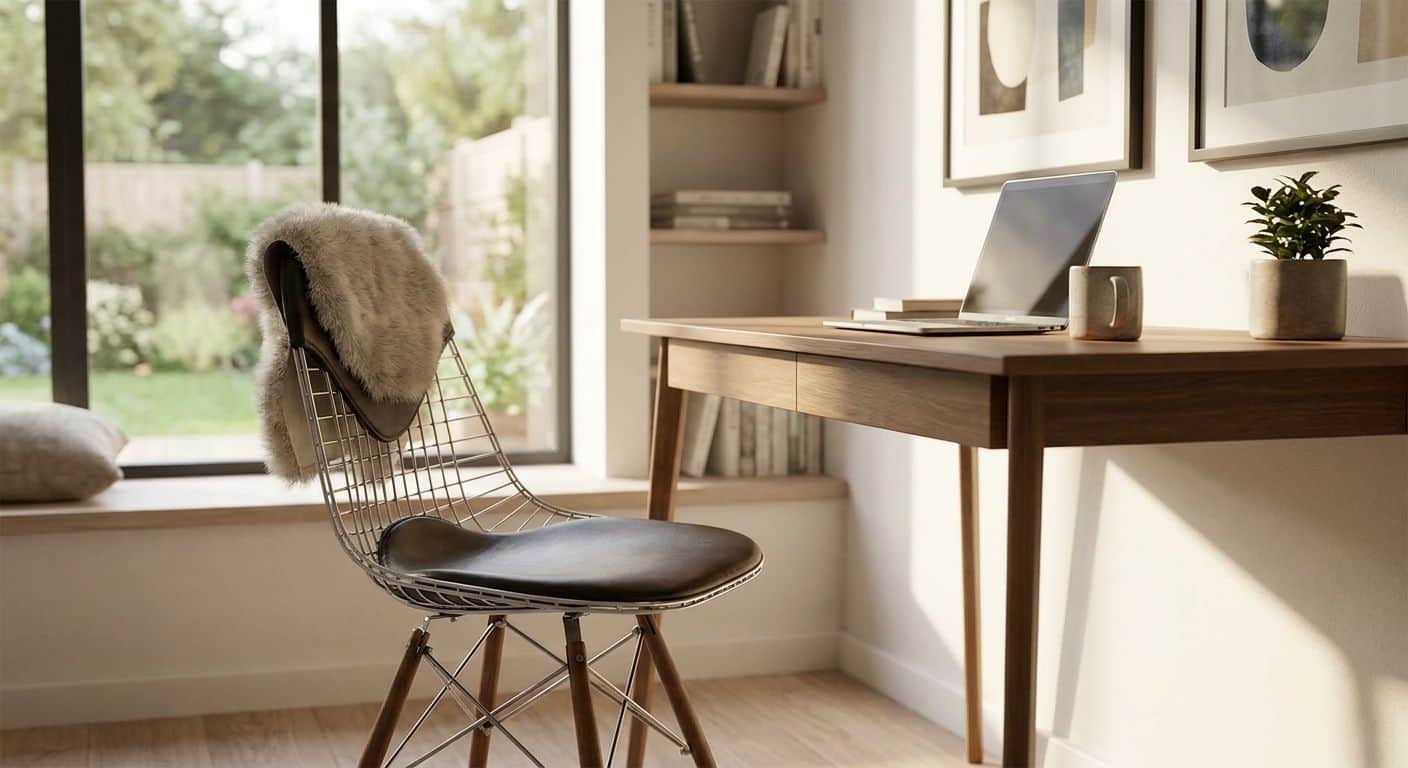
The Eames Wire Chair replica turns the 1951 Herman Miller original into an accessible option for a home office, but not every version handles a full workday of sitting. This guide ranks the wire chair configurations that actually work at a desk, and flags the ones that look right in a photo but fall apart under daily use.
TL;DR- The Eiffel-base eames wire chair replica with a seat pad is the strongest home office pick for 2026 — buy it for desks under 3 hours a day.
- Swivel-base wire chair replicas beat fixed 4-leg bases for full-day desk work — check rotation resistance before ordering.
- Skip stacking wire chairs with no seat pad for home office use; the flat steel mesh punishes anyone sitting more than an hour.
- Rocker-base wire chairs belong in a reading corner, not a desk setup — Hold for accent seating instead.
- Wood-dowel-leg wire chairs (DKR-style) trade some desk stability for warmth — Consider them for low-intensity, laptop-only offices.
Why this matters
A wire chair replica reads as a design statement — the exposed steel rod frame and the shallow seat shell are instantly recognizable from the original Charles and Ray Eames design. But a home office isn't a dining room. You're asking the same shell to hold you through calls, spreadsheets, and afternoon slumps, and the base type, seat pad, and finish decide whether that's comfortable or a mistake by month two.
Most buyers shopping an eames wire chair replica compare it against dedicated task seating, and the honest answer is that it works for some office setups and not others. If your workday is under three hours at the desk and you split time between a wire chair and a sofa or standing desk, it holds up fine. If you're at the desk seven hours a day, pair it with minimalist home office chairs built for longer sitting instead, or treat the wire chair as your secondary seat.
How this list is ranked
Each configuration below is judged on four things that matter specifically for desk use: seat comfort without a cushion, base stability under swivel or rolling motion, how the finish holds up to daily contact (arms, hands, rolling a chair back), and whether it photographs and functions as advertised once it's actually under a desk rather than in a dining set. Historical accuracy to the 1951 original matters for the aesthetic, but it doesn't override ergonomics — a chair that's true to the archive and miserable after 45 minutes still gets marked down.
The ranked list
1. Eiffel base with a seat pad — the safe pick
The four-splayed-leg steel base, known as the Eiffel base for its resemblance to the tower's silhouette, is the most stable configuration for a desk chair that won't roll or swivel. Paired with a fitted seat pad, it turns the bare wire mesh into something you can sit in for two to three hours without shifting every ten minutes.
The fixed base means zero wobble when you lean on the desk, which matters more than people expect until they've tried a wobbly chair during a video call. Buy this configuration if your home office chair doubles as a dining or guest chair and desk seat.
2. Swivel base with casters — the desk workhorse
Swap the fixed Eiffel legs for a swivel base with casters and the wire chair replica starts behaving like an actual task chair for a home office desk. You get rotation for reaching a second monitor or a filing drawer, plus the ability to roll back without standing up first.
The tradeoff is that swivel mechanisms add moving parts that can loosen over a year or two of daily rolling, so check the swivel resistance and caster quality before ordering. For anyone at the desk five-plus hours a day in 2026, this is the configuration that actually competes with a standard office chair. Buy it if desk hours are your primary use case.
3. Rocker base — the lounge crossover
The rocker base curves the wire chair's legs into a gentle rock, which is a genuinely nice feature in a reading nook or nursery but works against you at a desk. Rocking while typing is distracting at best and a repetitive-strain risk at worst if you're bracing against the motion all day.
This base shines as a secondary seat near a window rather than as the primary desk chair. Hold for a different room; it's not built for sustained desk sitting.
4. Wood dowel legs (DKR-style) — the warm-toned pick
Swapping the steel wire base for turned wood dowel legs, the configuration popularized as the DKR variant, softens the industrial look and fits a home office with more wood tones or a Scandinavian palette. The wire seat shell stays the same, so comfort without a pad is identical to the standard version.
Stability is solid on a hard floor but wobbles slightly faster than steel on carpet over 2026-era rolling-chair habits, since wood dowels flex more than welded rod. Consider it if the room's finish matters as much as the desk function, and you're not rolling the chair constantly.
5. Bare wire shell, no pad, stacking version — the wildcard to skip
Some retailers sell the wire chair replica as a stackable, pad-free shell meant for overflow seating or event use. It's the cheapest entry point into the eames wire chair replica category, and it looks identical to the padded version in a product photo.
Sit in it for a full workday and the flat steel mesh will remind you why the original 1951 design always shipped with an optional seat pad for extended use. Skip this for a home office; it belongs in a dining nook for guests who sit for 30 minutes, not a desk.
6. Powder-coated black frame vs. chrome — the finish decision
This isn't a separate chair, but it changes daily use enough to rank on its own. Chrome frames show fingerprints and desk-chair rolling scuffs faster under office lighting than a powder-coated matte black or white frame, which hides contact marks for longer between cleanings.
If the chair sits under a desk where knees and rolling motion contact the frame daily, matte powder coat is the lower-maintenance choice. Buy powder-coated for daily-use offices; Consider chrome only for lower-traffic accent placement.
Comparison at a glance
| Configuration | Best for | Desk stability | Verdict |
|---|---|---|---|
| Eiffel base + seat pad | Desk under 3 hrs/day, dual-use dining | High | Buy |
| Swivel base + casters | Desk 5+ hrs/day | High | Buy |
| Rocker base | Reading nook, not desk | Low for desk use | Hold |
| Wood dowel legs (DKR-style) | Warm-toned rooms, laptop-only use | Medium | Consider |
| Bare wire shell, stackable | Overflow dining seating | Low | Skip |
| Chrome frame (any base) | Low-traffic accent seat | Medium | Consider |
Shop mid-century seating built to last
Browse Sohnne’s replica chairs with free insured shipping and a 5-year warranty.
Browse the collectionWhere to buy it
- Check the seat pad attachment before ordering. A pad that clips onto the wire shell rather than sitting loose stays put through daily desk use; a floating pad slides and bunches within weeks.
- Confirm the base type matches your use case, not just the photo — a dining-room product page showing the Eiffel base won't always list the swivel option separately, so ask before assuming.
- Read the return and warranty terms before committing. A 60-day return window and a 5-year warranty on the frame give you room to test the chair at a real desk for a few weeks before deciding it's a keeper, which matters more for a wire chair than almost any other seat type because comfort issues show up slowly, not on day one. Verify quality before buying replica furniture covers what to check on the frame welds and finish before you check out.
FAQ
What’s the best eames wire chair replica for a home office?
The Eiffel base with a fitted seat pad is the best eames wire chair replica for a home office in 2026 if you’re at the desk under three hours a day; a swivel base with casters is the better pick for full workdays.
Is a wire chair replica comfortable for all-day desk work?
Not without a seat pad. The bare steel mesh shell is fine for short sitting sessions but becomes uncomfortable after roughly an hour without added cushioning.
Does an eames wire chair replica need a seat pad?
Yes for any desk use beyond short sessions. The original 1951 design offered an optional pad specifically because the wire shell alone isn’t built for extended sitting.
What’s the difference between the Eiffel base and the DKR wood-dowel base?
The Eiffel base uses splayed steel rod legs for maximum stability, while the DKR-style wood dowel legs add warmth and a softer look but flex slightly more on carpet over time.
Can you get a swivel base on a wire chair replica?
Yes, swivel bases with casters exist and are the closest configuration to a standard task chair, making them the strongest choice for a home office desk used daily.
How long should a wire chair replica frame last?
A well-welded steel frame with a solid finish should hold up for years of daily use; check the warranty length before buying since it signals how the maker rates the frame’s own durability.
Is chrome or powder-coated finish better for daily desk use?
Powder-coated matte finishes hide fingerprints and rolling scuffs better than chrome under daily desk contact, making them the lower-maintenance choice for an office.
Should I buy a stacking wire chair for a home office?
No. Stacking, pad-free wire chairs are built for short-term overflow seating, not sustained desk sitting, and will feel uncomfortable well before a workday ends.
One last thing
The detail most buyers skip: the seat pad's attachment point, not the base, is what fails first on a wire chair replica used daily at a desk. A clipped pad outlasts a floating one by a wide margin, and it's the cheapest thing to check before you order in 2026.
Related guides