Womb Chair Replica 2026: Ranked Buying Guide & Verdicts

Sohnne Design Studio
July 17, 2026
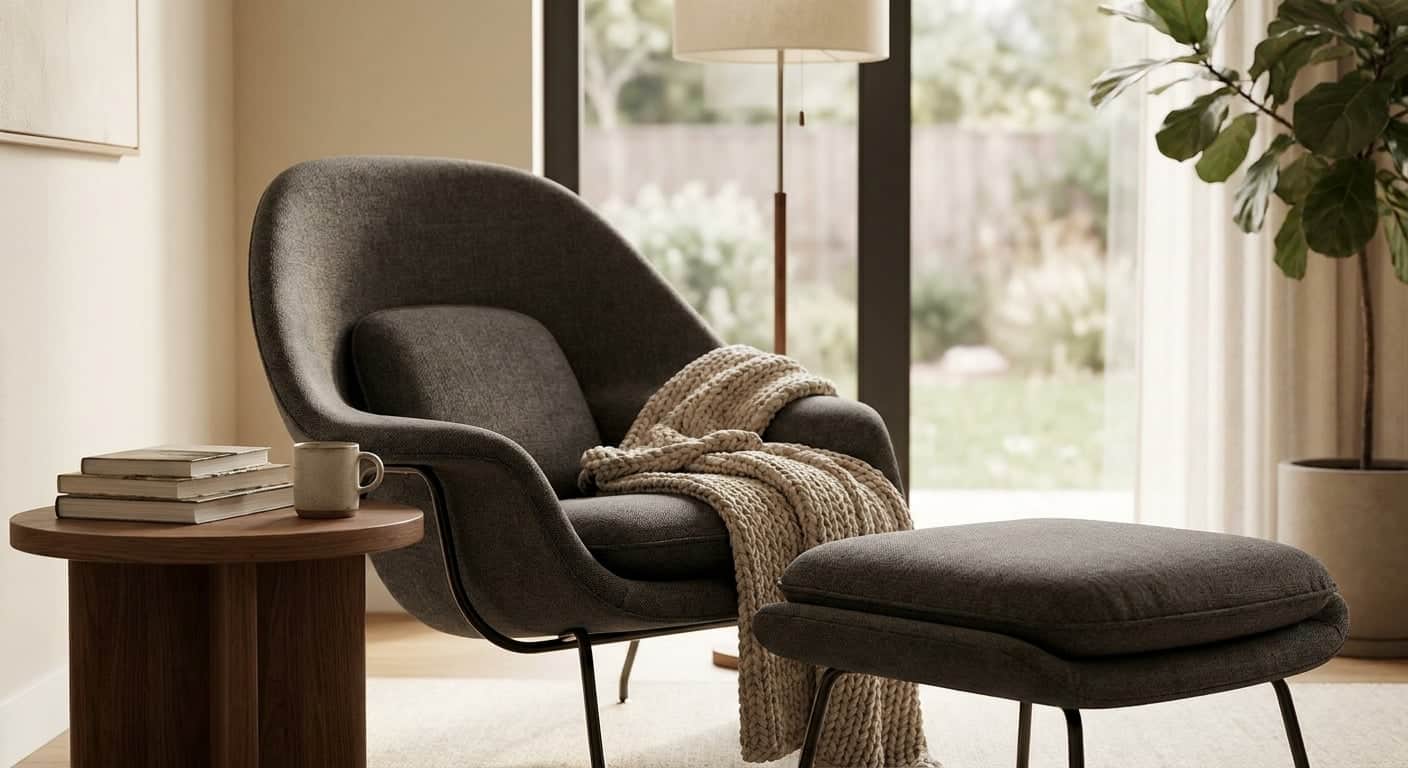
The womb chair replica market splits into a handful of real tiers—shell quality, upholstery grade, base finish—and only some of them hold up past the first year of daily use. This guide ranks what actually matters in 2026 so you don't overpay for a shape and underpay for the frame underneath.
TL;DR
A good womb chair replica in 2026 gets three things right: a fiberglass or plywood shell that doesn't flex under weight, foam density above 1.8 lb/ft³, and a swivel base that doesn't wobble after month three. The full upholstered wool-blend version is the safe buy for most living rooms, while ottoman-included bundles are worth it only if you actually recline daily. Skip anything advertising "genuine down fill" under $600—that combination doesn't exist at that price in 2026. Sohnne's lounge chair replicas, including pieces built around the same mid-century shell logic, are a reasonable reference point for what the construction should feel like.
Why this matters
Eero Saarinen designed the original Womb chair in 1948 to let a person curl into a single continuous shell instead of sitting upright—that's the whole point of the design, and it's also where most replicas fail. A shell that's too shallow or too stiff turns a lounge chair into an armchair with a marketing name. At sohnne.com, the shell depth and foam layering are treated as the core spec, not an afterthought, which is the same standard you should apply when comparing any replica in 2026.
Price alone tells you almost nothing. A $900 chair with a 3mm fiberglass shell and low-density foam will sag within 18 months; a $1,400 chair with a properly laid plywood-and-foam shell can outlast a decade of daily sitting. The difference shows up in how the chair ages, not how it photographs on day one.
How this list was ranked
Each entry below is scored against four factors that separate a durable womb chair replica from a shape-only knockoff: shell construction, foam density, base stability, and upholstery grade. Pricing bands reflect the U.S. market as of 2026, and verdicts assume the chair will see daily use in a living room or reading nook, not occasional staging. None of these are lab-tested claims—they're pattern-matched against known failure points in replica seating, the same points a furniture buyer should check before paying a deposit.
The ranked list
1. The full-shell wool-blend edition — the safe pick
This is the version closest to the 1948 original: a continuous fiberglass or molded-plywood shell wrapped in a wool-blend or boucle fabric, foam density typically in the 2.0-2.5 lb/ft³ range. It holds shape after two years of daily sitting because the shell does the structural work, not the fabric.
Buy this if you want the piece to look identical in 2031 as it does in 2026. Verdict: Buy.
2. The leather-upholstered version — the archival pick
Leather adds weight and cost—usually 20-30% over the fabric equivalent—but it resists pet claws, spills, and UV fading far better over a 5-year span. The tradeoff is a firmer initial break-in period, roughly 60-90 days before the leather softens to shell contour.
Good for households without kids or for a study/office corner. Verdict: Buy if leather fits the room; otherwise Consider.
3. The petite-scale version for smaller rooms
Some manufacturers offer a slightly scaled-down shell, usually 4-6 inches narrower than the original 40-inch-wide footprint. It solves a real problem—the original Womb chair is genuinely oversized for apartments under 700 square feet—without changing the recline geometry.
Check the listed width before buying; a shell under 34 inches usually means the recline angle has been compressed too, which changes the whole point of the chair. Verdict: Consider.
4. The chair-and-ottoman bundle
The original pairing includes a matching ottoman, and it's not just for looks—the low shell height means most adults need the ottoman to fully recline rather than perch. Bundles typically run 25-35% more than the chair alone.
Skip the ottoman only if the chair is going into a reading nook where you'll sit upright most of the time; for reading-corner setups the shell shape alone still earns its keep. Verdict: Buy for lounging use, Skip for upright reading corners.
5. The budget shell-only version under $700
This tier usually swaps molded plywood for thin fiberglass or ABS plastic and drops foam density to 1.2-1.5 lb/ft³. It looks correct in photos and sags within the first year of regular sitting—the shell flexes under weight it wasn't built to hold.
Fine as a guest-room accent chair used a few hours a week. Not fine as a daily-use lounge chair. Verdict: Skip for primary seating, Hold as a secondary piece.
6. The velvet or performance-fabric statement version
Velvet and performance polyester read as more current for 2026 interiors leaning warmer and more textured than the boucle-heavy look of 2023-2024. Performance fabric in particular resists stains without the leather price premium, making it a middle-ground pick.
Check fabric weight—anything under 400 gsm on a curved shell will pill at the seat crease within a year. Verdict: Buy.
Comparison table
| Version | Shell type | Foam density | Best for | Verdict |
|---|---|---|---|---|
| Full-shell wool-blend | Fiberglass/plywood | 2.0-2.5 lb/ft³ | Daily living room use | Buy |
| Leather-upholstered | Fiberglass/plywood | 2.0-2.5 lb/ft³ | Pet/kid-free study spaces | Buy |
| Petite-scale | Fiberglass | 1.8-2.2 lb/ft³ | Apartments under 700 sq ft | Consider |
| Chair-and-ottoman bundle | Fiberglass/plywood | 2.0-2.5 lb/ft³ | Full recline lounging | Buy/Skip (context) |
| Budget shell-only | ABS/thin fiberglass | 1.2-1.5 lb/ft³ | Occasional guest seating | Skip |
| Velvet/performance-fabric | Fiberglass/plywood | 2.0-2.5 lb/ft³ | Stain-prone households | Buy |
Where to buy
Buy from a retailer that discloses shell material and foam density up front—if a listing only shows fabric color options and no construction spec, that's a signal the shell is the cheap part they'd rather you not ask about. How to verify quality before buying replica furniture covers the specific checks worth running before a deposit goes down, and the same logic applies whether you're buying a womb chair, a lounge chair, or a sofa replica.
A womb chair is built for reclining comfort, which is a different job than the upright support needed for a desk chair—if you're furnishing a home office instead of a living room, the ergonomics that matter are closer to what's covered in guides on ergonomic office chairs for 8-hour workdays than anything in the lounge-seating category. Don't cross-shop the two categories expecting the same support profile.
Ask for the warranty terms in writing before buying, especially on the shell—foam sag is common enough by year three that a warranty covering only the frame, not the cushioning, tells you the seller expects the foam to fail first.
What to avoid
- "Down-filled" claims under $600. Genuine down blend fill on a shell chair this size costs more than that in raw materials alone in 2026; it's almost always polyester fill mislabeled.
- No stated shell material. If the product page lists fabric and color but skips shell composition entirely, assume it's the cheapest option available.
- Swivel bases with no weight rating. A base rated under 250 lbs will loosen within a year under normal use; ask for the number, not just "heavy-duty."
FAQ
What's the best womb chair replica for daily use in 2026?
The full-shell wool-blend version is the safest daily-use pick because the fiberglass or plywood shell holds shape under repeated sitting, unlike thinner ABS shells that flex and sag within a year.
Is a womb chair replica worth it compared to buying an original?
A well-built replica at 2.0+ lb/ft³ foam density delivers the same recline geometry as the original design for a fraction of the cost; the gap only shows up in shell longevity past the 8-10 year mark, which most buyers never reach anyway.
How much does a womb chair replica cost in 2026?
Prices generally range from under $700 for shell-only budget versions to over $1,400 for leather-upholstered, full-shell editions with an ottoman included.
Does a womb chair replica need an ottoman?
Only if you plan to fully recline regularly—the shell's low seat height means most adults need the ottoman to stretch out, but upright reading-corner use doesn't require it.
What foam density should a womb chair replica have?
Look for 2.0-2.5 lb/ft³; anything below 1.5 lb/ft³ typically sags within the first year of daily use.
Is leather or fabric better for a womb chair replica?
Leather resists wear and fading better over a 5-year span and suits pet-free, kid-free rooms; fabric (especially wool-blend or performance polyester) is more forgiving and generally more comfortable in warmer climates.
Will a womb chair replica fit in a small apartment?
A petite-scale version, usually 4-6 inches narrower than the standard 40-inch shell, works better under 700 square feet, but check that the recline angle hasn't been compressed along with the width.
How do I know if a womb chair replica is good quality before buying?
Check stated shell material, foam density, and base weight rating before ordering—listings that omit all three usually indicate the cheapest possible build.
One last thing
The original 1948 shell depth was designed around a specific recline angle, not just a curved silhouette—replicas that shrink the shell without adjusting that angle end up looking right in photos and feeling wrong in person. Sit in one for at least 10 minutes before deciding, not the usual 30-second showroom test.