Timothy Oulton Furniture Replica Alternatives 2026

Sohnne Design Studio
August 8, 2026
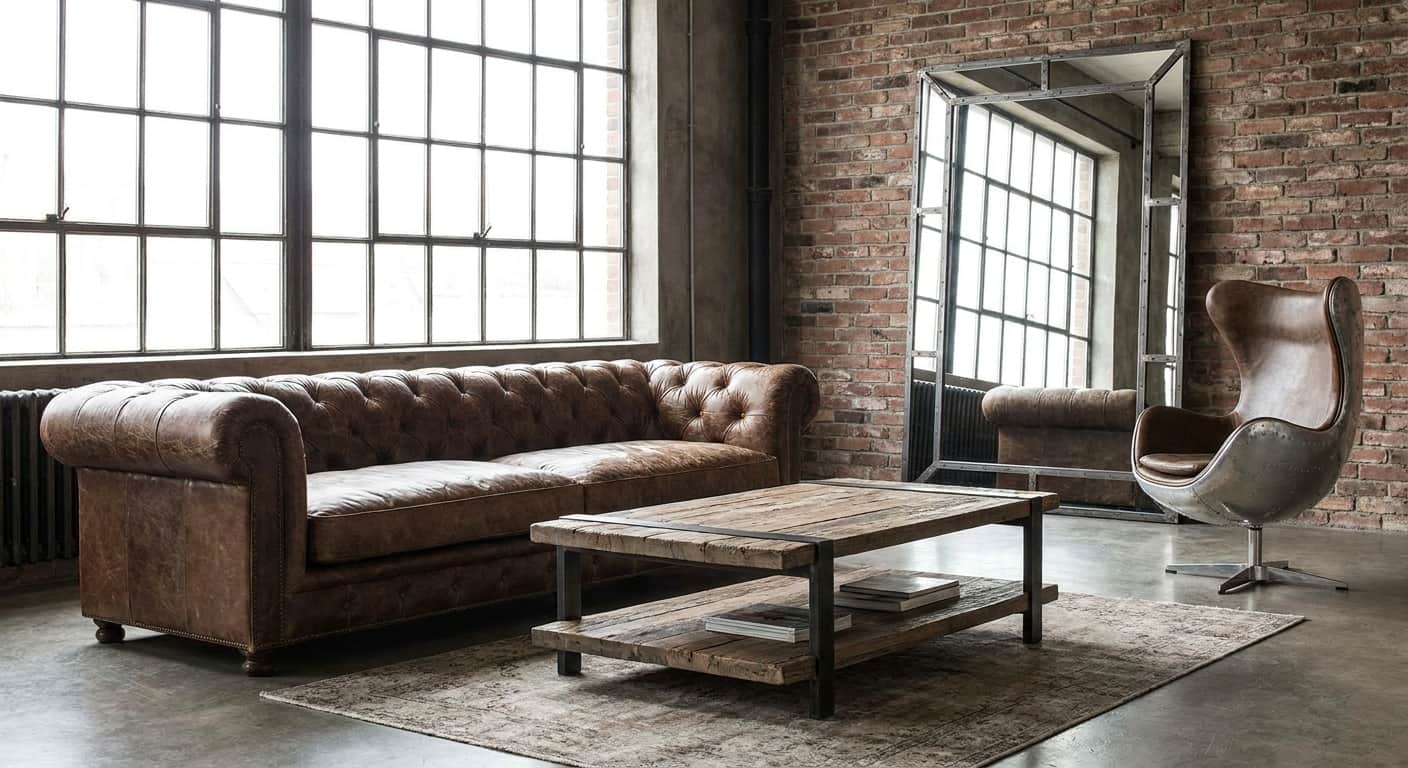
Timothy Oulton built its name on aviator leather, reclaimed metal, and pieces that look like they survived a shipyard fire. Nobody sells a true timothy oulton furniture replica, but mid-century designs sharing the same raw materials palette get you the industrial look in 2026 with construction details you can actually check before you buy.
TL;DR- No workshop makes a true timothy oulton furniture replica; mid-century leather and steel pieces achieve the same look.
- Camaleonda sofa replica wins for modular industrial lofts in any configuration — Buy.
- LC2 armchair replica gives you the tubular-steel frame industrial rooms need — Buy.
- Skip glossy tufted Chesterfields; they read too formal against exposed concrete and brick.
- Leather earns its patina over 12-18 months of daily use — buy for the wear pattern, not the showroom shine.
Why this matters
Searches for a timothy oulton furniture replica usually come from one place: someone fell for the aviator leather and reclaimed-iron look in a showroom or on Pinterest, then hit a price tag or a shipping timeline that killed the deal. The brand doesn't license reproductions, and secondhand pieces are scarce and inconsistent in condition.
The workaround isn't a copy of Timothy Oulton's catalog. It's furniture built from the same raw ingredients — full-grain or aniline leather, blackened or tubular steel, timber that isn't trying to hide its grain — assembled around mid-century proportions instead. Sofas built for concrete-floor industrial lofts sit lower, run heavier, and read grounded in exactly the kind of open, raw-material space Timothy Oulton designs for.
Who this is for
This guide is for anyone furnishing a converted warehouse, an exposed-brick loft, a barn conversion, or a living room with concrete floors and steel beams left visible on purpose. You want furniture that looks like it belongs next to raw material, not furniture that's trying to soften it. If your room already has polished surfaces and crown molding, most of this list will fight your space instead of finishing it.
What to look for in industrial-style furniture
Leather that ages instead of leather that shines
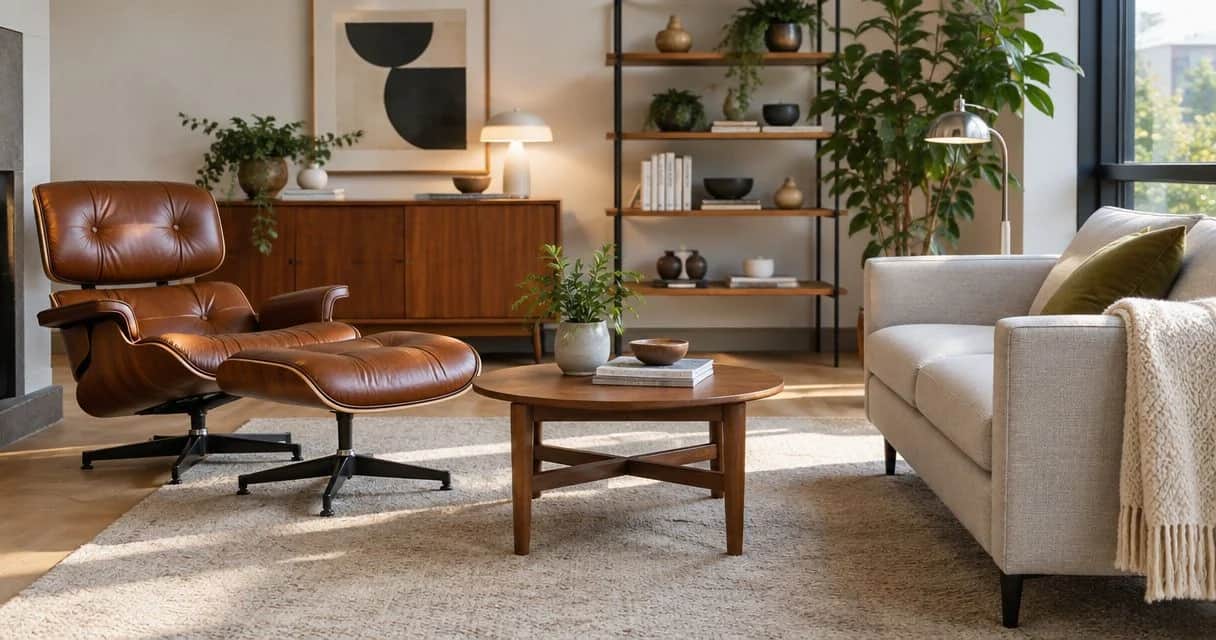
Aniline and full-grain leathers develop a matte, worn patina within a year of daily use — that's the look Timothy Oulton built a brand around. Bonded or heavily coated leathers stay glossy and never soften, which reads wrong against raw brick or concrete within a few months of ownership.
A visible metal frame
Blackened steel, tubular chrome, or raw iron legs do more visual work in an industrial room than any fabric choice. A sofa or chair with a hidden wood base disappears into a loft; one with an exposed metal structure anchors it.
Weight and grounded proportions
Industrial rooms tend to have high ceilings and long sightlines, and lightweight furniture gets visually lost in them. Pieces with deep seats, thick cushions, and low-slung silhouettes hold their own against 10-foot ceilings and exposed ductwork.
A weathered, neutral palette
Cognac, chocolate, charcoal, and oxblood leathers pair with brick and steel the way bright upholstery never does. Save saturated color for a single accent chair, not the anchor sofa.
Modularity for open-plan layouts
Lofts and converted warehouses are usually one continuous room with no walls to define zones. Modular seating lets you carve a living area out of open square footage without boxing it in with a rug and four walls' worth of furniture.
Construction you can verify before buying
A 1:1 dimension spec and a stated warranty period tell you more about long-term durability than a brand name does. Ask for exact measurements and materials before you commit — not just a lifestyle photo.
Top picks for industrial interiors
The modular anchor: Camaleonda sofa replica
Mario Bellini's original design from 1970 was built to be rearranged, which makes the Camaleonda sofa replica the closest thing to Timothy Oulton's oversized, lived-in leather sofas on this list. Full-grain leather over deep, loose cushions holds a worn look within a year of regular use, and the modular sections let you configure it around a loft's open floor plan instead of forcing a fixed footprint. Buy if your living area doesn't have a fixed back wall to work against.
The steel-frame classic: LC2 armchair replica
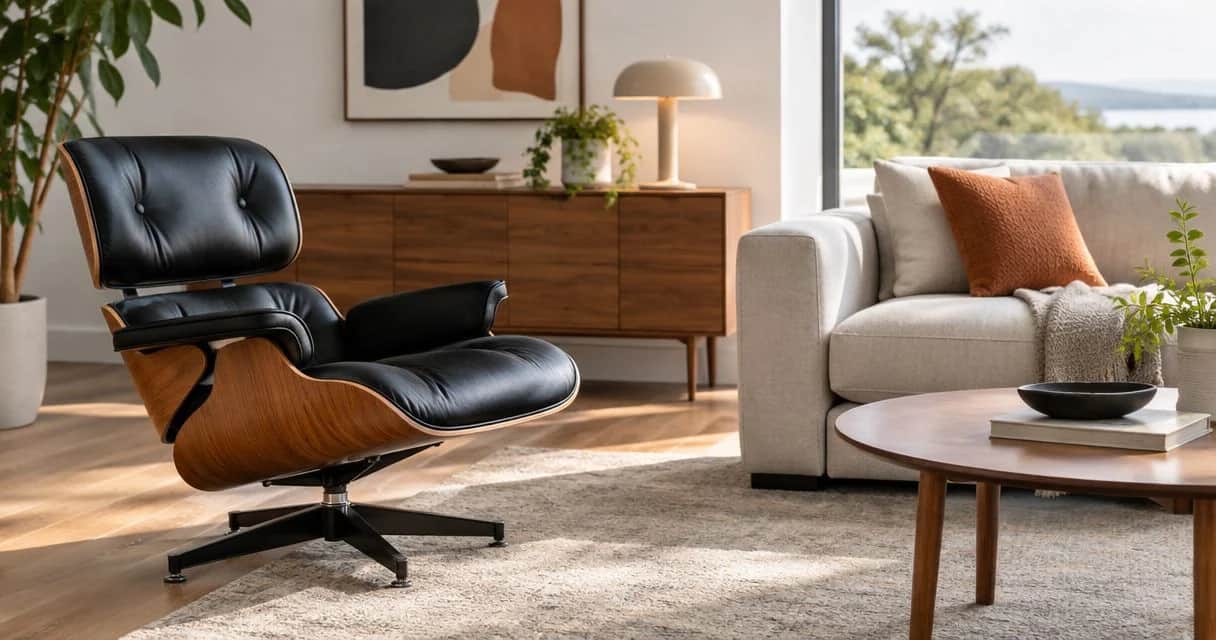
Le Corbusier's 1928 design puts the frame on the outside of the cushions — a chrome or blackened tubular steel cage wrapped around leather pillows. That exposed metal structure does the same visual job as Timothy Oulton's reclaimed-iron frames, at a fraction of the footprint. Buy for a single statement chair next to a steel-frame window or an exposed beam.
The storage workhorse: Haller shelving system replica
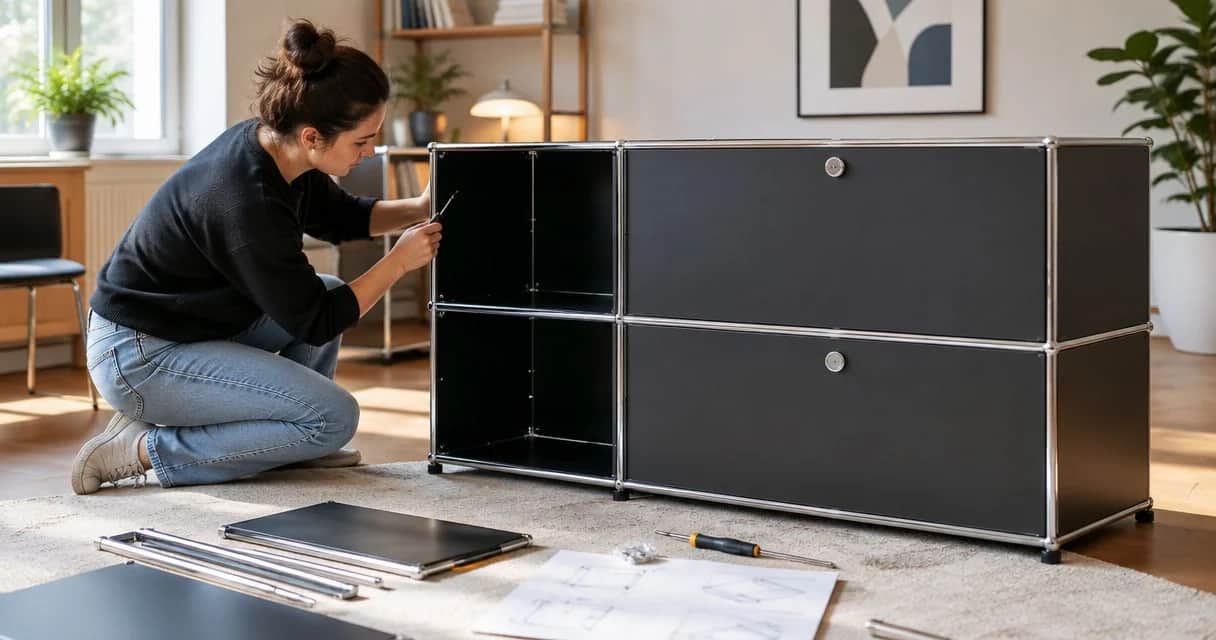
The original USM Haller system uses a chrome-plated steel frame with panel infills, which is about as industrial as shelving gets without looking like a warehouse rack. It holds books, records, and display objects without a single piece of visible wood, and the modular grid scales to whatever wall length a loft gives you. Consider it for a room that needs storage and a visual counterpoint to leather seating.
The reading chair: Papa Bear chair replica
Hans Wegner's 1951 wingback pairs leather upholstery with a solid wood frame and a low, deep seat that anchors a corner the way Timothy Oulton's leather club chairs do. It reads warmer than tubular steel pieces, which makes it a good second seat once the room already has one hard-metal anchor. Consider for a reading corner away from the main seating group.
The wildcard: Chieftain chair replica
Finn Juhl's 1949 design mixes oak and leather in a sculptural frame that's more refined than anything in Timothy Oulton's catalog, but the leather-and-timber combination still lands in the same raw-material family. It's a harder piece to place — too sculptural for a room full of straight lines — but striking as a single accent next to a plain leather sofa. Skip it if your room is already leather-heavy; Consider it as the one warm-wood counterpoint in an otherwise all-metal-and-leather space.
Compare full leather and steel-frame lineups
Browse the current mid-century collection before you commit to a room plan.
Browse the collectionWhat to avoid
- Glossy tufted Chesterfields. They look industrial in a catalog photo but read formal and stiff against concrete and exposed brick in person.
- Bright, saturated upholstery. Cobalt or emerald fabric fights the neutral, weathered palette that makes industrial rooms work; it belongs in one accent piece, not the anchor sofa.
- Delicate glass-and-chrome coffee tables. Thin, minimal MCM tables built for polished apartments visually disappear against raw material — you need something with more mass and a darker finish.
Verdict comparison table
| Pick | Frame material | Best role in the room | Verdict |
|---|---|---|---|
| Camaleonda sofa replica | Full-grain leather, steel-strap base | Main modular seating | Buy |
| LC2 armchair replica | Tubular steel, leather cushions | Statement single chair | Buy |
| Haller shelving system replica | Chrome-plated steel grid | Storage and display wall | Consider |
| Papa Bear chair replica | Solid wood frame, leather | Secondary reading chair | Consider |
| Chieftain chair replica | Oak and leather | Accent piece only | Skip / Consider |
FAQ
Is there a real timothy oulton furniture replica available to buy?
No workshop produces licensed or unlicensed replicas of Timothy Oulton’s catalog at scale in 2026. The closest alternative is mid-century leather-and-metal furniture that shares the same raw materials and industrial-luxury look.
What furniture style works best in an industrial loft?
Leather seating on exposed steel or tubular metal frames works best in an industrial loft because it matches raw brick, concrete, and visible ductwork instead of fighting it. Modular pieces also adapt better to open floor plans than fixed-footprint furniture.
Is leather or fabric better for an industrial interior?
Leather is better for an industrial interior because it develops a worn patina that matches raw materials, while most fabrics stay flat and uniform. Full-grain or aniline leather ages into that look within 12 to 18 months of regular use.
Can mid-century modern furniture work in an industrial space?
Yes, mid-century modern furniture works in industrial spaces when it uses exposed metal frames and leather upholstery rather than delicate wood-and-glass construction. Pieces like the LC2 armchair or Camaleonda sofa were built around the same material honesty industrial rooms need.
What metal finish matches exposed brick or concrete?
Blackened steel and raw or brushed chrome match exposed brick and concrete better than polished brass or gold-toned metal. Matte, darker finishes read as industrial; high-shine finishes read as glam or transitional.
How do you keep leather furniture from looking too new?
Leather furniture loses its showroom shine through regular use, direct sunlight exposure, and avoiding heavy conditioning treatments that keep it glossy. Full-grain and aniline leathers soften and darken faster than coated or bonded leather.
Does modular seating work in an open-plan industrial room?
Yes, modular seating works well in open-plan industrial rooms because it lets you define a living area without adding walls. Sections can be rearranged as the room’s use changes, which fixed-footprint sofas can’t do.
What should you avoid when furnishing an industrial-style room?
Avoid glossy tufted furniture, bright saturated upholstery colors, and delicate glass-and-chrome tables in an industrial-style room. All three fight the raw, weathered materials that define the look.
One last thing
The detail most people miss: Timothy Oulton's aviator leather looks distressed on day one because it's treated to look that way in the factory. A full-grain leather piece without that treatment starts smoother and earns its worn look through actual use over 12 to 18 months — slower, but the wear pattern is real instead of manufactured, and it tends to age better past the five-year mark.
Related guides
Stay connected with us!
Keep in touch with what’s new and next. Subscribe for weekly insights, product launches, and community news!