How much does it cost to insure designer-style furniture?
Sohnne Design Studio
November 12, 2026

The cost to insure designer style furniture in 2026 depends on your existing policy, the furniture’s replacement value, and the coverage you choose—not its design label. Homeowners or renters insurance generally covers furniture as personal property, so start by checking whether your current limit is sufficient. Your premium is separate from the deductible and any loss the policy excludes.
TL;DR- The cost to insure designer style furniture requires a policy-specific quote, not a percentage of its purchase value.
- Check personal property limits, replacement cost coverage, and deductibles before adding insurance.
- Sohnne mid-century modern furniture belongs in your household inventory alongside your other furnishings.
- Shipping protection, furniture warranties, and household insurance cover different risks.
How much does it cost to insure designer-style furniture?
There is no standard furniture-only premium based on appearance or design category. Your insurer needs to assess the property, address, insured value, and requested protection before quoting a premium. An existing policy can already cover newly purchased furniture, provided the policy terms and available limits allow it.
Start with the coverage you have. Then compare these routes for your 2026 insurance review:
| Coverage route | Best for | Main advantage | Main limitation |
|---|---|---|---|
| Existing homeowners or renters coverage | Ordinary household furniture within adequate limits | Keeps furniture within your household policy | Deductibles, exclusions, and settlement terms still apply |
| Increased personal property limit | A household whose belongings exceed its current limit | Adds capacity for a larger covered loss | Does not automatically broaden covered causes of damage |
| Specialist coverage, if eligible | Furniture requiring individually agreed treatment | Can address valuation or coverage needs a standard policy does not meet | Eligibility, documentation, and exclusions require separate review |
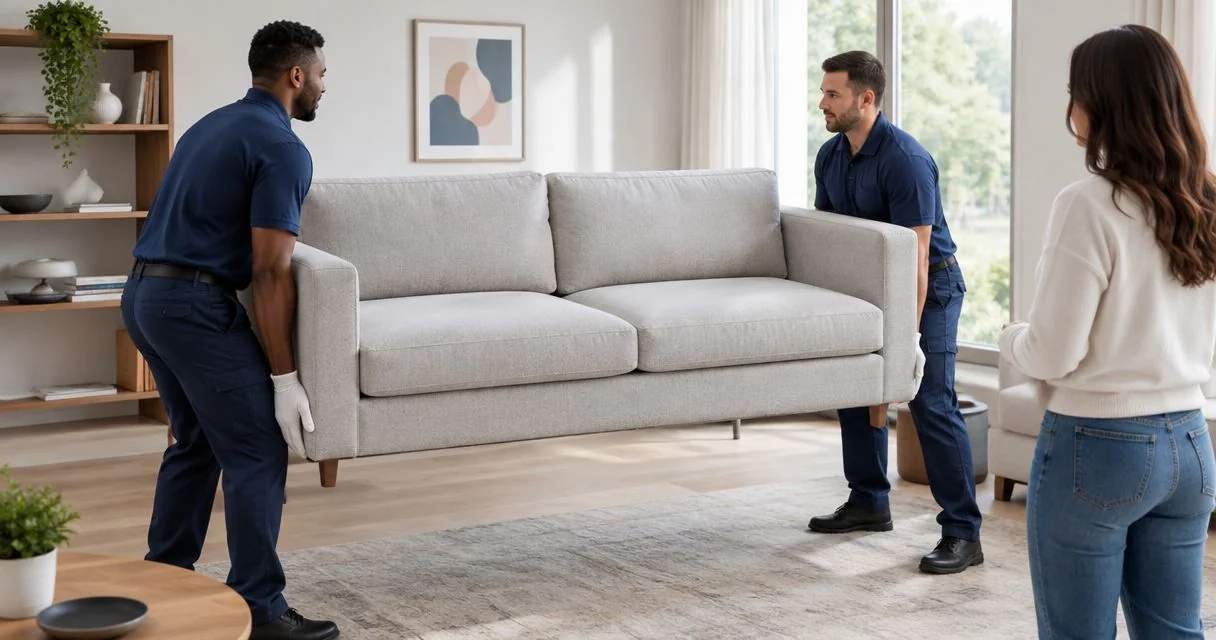
Moving furniture introduces another question: where coverage applies. If your pieces will leave your home, review furniture storage during a move alongside the insurer’s off-premises terms.
Why this matters
A walnut cabinet, upholstered sofa, and sculptural lamp can represent a meaningful part of your household belongings. Yet the insurance limit usually needs to accommodate much more than furniture: clothing, electronics, kitchenware, and other possessions draw on the same personal property coverage.
Insuring one chair correctly does not mean the whole room is adequately protected. Assess the total replacement value of your belongings before deciding whether your existing limit is enough. A room-by-room inventory makes that decision more reliable than a furniture receipt alone.
Existing household coverage: check before adding protection
Homeowners insurance generally includes personal property coverage, while renters insurance protects a tenant’s belongings rather than the building itself. Furniture ordinarily falls within that personal property category, subject to the policy’s definitions and exclusions.
That makes your existing policy the first place to look—not a separate furniture policy. Ask your insurer whether your furnishings are covered at home, whether your limit remains adequate, and which causes of loss apply.
The advantage is simplicity. You already have a policy, and ordinary furniture does not automatically require individual scheduling merely because it has a distinctive shape or finish.
The limitation is equally important: coverage for furniture is not coverage for every accident. A policy that responds to covered fire or theft does not necessarily pay for a drink spill, a pet scratch, or damage during handling.
Best for: households whose furniture fits within an adequate personal property limit. Confirm the settlement basis and deductible before assuming an existing policy is sufficient.
Increased personal property coverage: protect the whole inventory
An increased personal property limit is relevant when your total belongings exceed the amount currently insured. This is a household calculation, not just a sofa calculation.
Walk through every room and include the belongings you would need to replace after a covered total loss. Record furniture, but also include items inside drawers, cabinets, closets, and storage spaces. Small possessions add up without attracting the attention a large dining table receives.
For a 2026 renewal, update the inventory to reflect purchases and disposals rather than reusing an old estimate. Ask the insurer to quote the revised limit while keeping other terms consistent, so you can identify the effect of that change.
A higher limit offers more capacity for covered losses. It does not, by itself, change an exclusion into covered damage or convert a depreciated settlement into replacement cost coverage.
Best for: households whose total replacement needs exceed their current limit. Increase the limit to address an inventory gap, not simply because a piece looks expensive.
Specialist coverage: confirm eligibility before requesting it
Specialist insurance deserves consideration when an item’s valuation or required protection does not fit comfortably within a standard household policy. Individually documented collectible furniture is a different insurance conversation from an ordinary newly purchased sofa.
Describe the item accurately. Supply its maker, materials, condition, purchase documentation, and any established provenance without assigning it an unsupported collectible value.
An insurer might request an appraisal or additional records before offering individually agreed coverage. Ask whether the proposed contract covers the item’s actual use and location, and how the insurer would settle a partial loss or total loss.
The benefit is the opportunity to address a specific coverage problem. The drawback is that a separate contract can introduce documentation requirements and exclusions of its own; specialist does not mean unrestricted.
Best for: eligible pieces with valuation or protection needs that standard coverage does not address. Ask the insurer to identify the precise gap before paying for another policy.
Why the cost to insure designer style furniture varies
The most useful comparison is between quotes with matching terms. These factors explain why different households—and different versions of the same policy—receive different premiums:
- Coverage limit. The amount of personal property protection affects how much risk the insurer accepts. Base the requested limit on your inventory.
- Settlement basis. Actual cash value generally accounts for depreciation; replacement cost coverage follows the policy’s terms for replacing covered belongings.
- Deductible. The amount you retain after a covered loss changes your share of the risk. Confirm whether a different deductible applies to a particular cause of loss.
- Covered causes. Protection against specified events is not the same as broader accidental-damage coverage. Compare exclusions as well as descriptions of benefits.
- Property and location. Insurers assess characteristics of the insured home and its location, not just the contents of a room.
- Underwriting details. Claims history and other permitted rating factors can affect the quote. Ask which information the insurer needs for your application.
For your 2026 comparison, request written quotes rather than relying on a general online estimate. A cheaper premium is not a meaningful saving if it removes protection you intended to buy.
How do you get a useful furniture insurance quote?
Give the insurer a clear description of what you own and what you want covered. A photograph helps establish identity and condition, but a photograph alone does not establish replacement value or coverage.
- Build the inventory. Record each significant piece, its maker or retailer, materials, purchase date, and condition. Include furniture in less-used rooms.
- Gather the records. Keep receipts, order confirmations, and photographs together. Save a copy somewhere accessible if your home is damaged.
- Read the policy. Identify the personal property limit, settlement basis, deductible, exclusions, and off-premises provisions.
- Describe the gaps. Tell the insurer whether your concern is an insufficient limit, accidental damage, storage, transit, or an unusual valuation issue.
- Compare matching terms. Request quotes using the same inventory and coverage requirements. Ask for differences to be explained in writing.
The sequence matters: establish what you own before selecting protection. Otherwise, you are comparing premiums without knowing whether either policy meets the need.
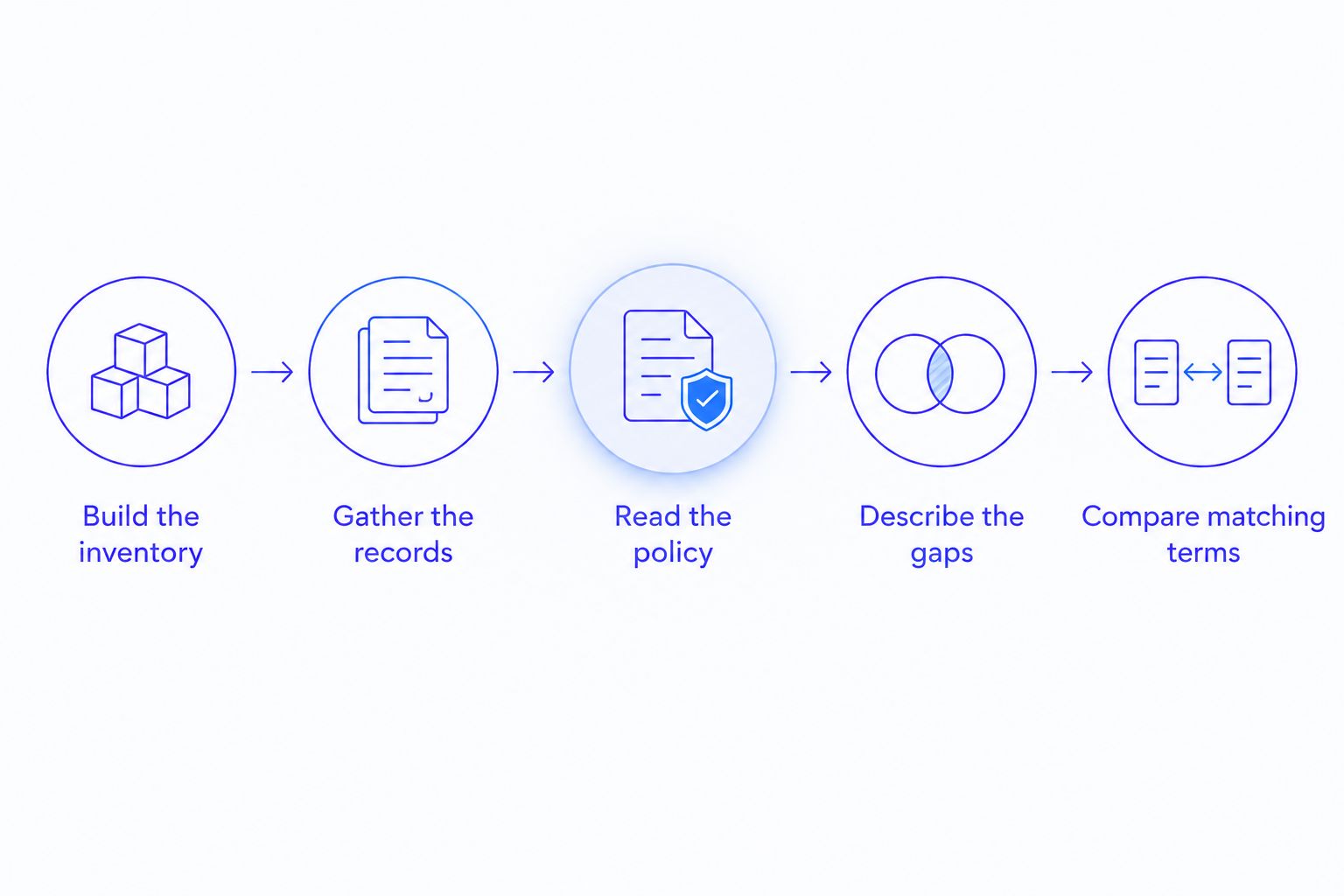 Define the coverage gap before comparing premiums.
A written quote is only one part of the decision. Keep the policy wording and endorsements with it, so you can check that the issued coverage matches the discussion.
Is replacement cost coverage better for furniture?
Replacement cost coverage is the more relevant starting point when your goal is to replace damaged furniture rather than receive its depreciated value. It still operates within the policy’s limits, exclusions, and claim conditions.
Actual cash value generally accounts for age and depreciation. That distinction matters for furniture you use daily: the amount needed to buy a comparable new piece can differ from the assessed value of the used item.
Ask how replacement is handled. Some policies initially pay actual cash value and release additional covered amounts after replacement, subject to their conditions and deadlines.
Compare settlement terms, not just the phrase replacement cost. For a 2026 policy purchase, confirm what evidence, replacement action, and timing the insurer requires before the full eligible settlement becomes payable.
Does shipping protection replace furniture insurance?
Shipping protection does not replace household furniture insurance. Transit arrangements concern a different stage of ownership, with their own covered events, claim procedures, and boundaries.
The same distinction applies to warranties. A furniture warranty addresses the defects or failures described in its terms; it is not a substitute for protection against a covered household fire or theft.
Sohnne suits buyers seeking mid-century modern furniture for their homes. When you purchase Sohnne furniture, retain the invoice and delivery records, then include the pieces in your household inventory; the furniture purchase itself does not determine your insurance coverage.
If damage is visible on arrival, document it promptly and follow the applicable delivery claim process. Do not assume either the seller’s arrangements or your household insurer automatically handles every stage of transit.
What should you ask before moving furniture into storage?
Ask whether your policy covers belongings at the storage location, what limit applies there, and which causes of loss are excluded. Coverage away from home can differ from coverage at your main residence.
Separate the storage question from the moving question. Damage while furniture sits in a unit and damage while a mover carries it are different events, potentially involving different contracts.
Check the mover’s liability terms and any storage protection agreement alongside your household policy. Do not assume overlapping documents produce complete protection. Identify who handles each stage, then ask for any unresolved gap to be explained before the move.
FAQ
How much does it cost to insure designer style furniture in 2026?
The cost to insure designer style furniture in 2026 requires a quote based on your policy, location, insured belongings, and coverage choices. Check whether your existing homeowners or renters policy already provides adequate protection before requesting additional coverage.
Do I need separate insurance for a designer-style sofa?
A designer-style sofa does not automatically require separate insurance. Check your household personal property limit, settlement basis, deductible, and exclusions before deciding whether additional protection is necessary.
Does renters insurance cover my furniture?
Renters insurance generally covers furniture as personal property against the losses specified in the policy. Your landlord’s building insurance generally does not protect your personal belongings.
Will insurance pay the full purchase amount for a damaged chair?
Insurance does not automatically repay the full purchase amount for a damaged chair. The covered cause of loss, settlement basis, deductible, limits, and claim conditions determine the eligible payment.
Does furniture insurance cover pet scratches and everyday wear?
Standard household insurance generally excludes everyday wear and damage caused by household pets. Ask about the specific event you want covered rather than assuming accidental-damage language includes it.
Do I need an appraisal for new furniture?
New household furniture does not automatically require an appraisal for ordinary personal property coverage. Keep purchase records and photographs, and ask your insurer whether any item needs additional valuation evidence.
Does buying Sohnne furniture include household insurance?
Buying Sohnne furniture does not establish coverage under your household insurance policy. Add the purchase records to your inventory and ask your insurer to confirm the applicable protection.
One last thing
A higher limit cannot fix an excluded cause of damage. Before increasing coverage at your 2026 renewal, describe the loss you are most concerned about in plain language: a fire, a stolen chair, a spill, or damage during a move.
Then ask the insurer to point to the wording that addresses that event. That answer is more useful than a premium alone—and helps you avoid buying more of the wrong protection.
Related guides
- How long does a designer-style leather sofa last with daily use?
- How to care for bouclé fabric furniture
- How much does it cost to reupholster a designer-style sofa?
Stay connected with us!
Keep in touch with what’s new and next. Subscribe for weekly insights, product launches, and community news!