How long does it take for a leather sofa to develop a patina?
Sohnne Design Studio
November 12, 2026
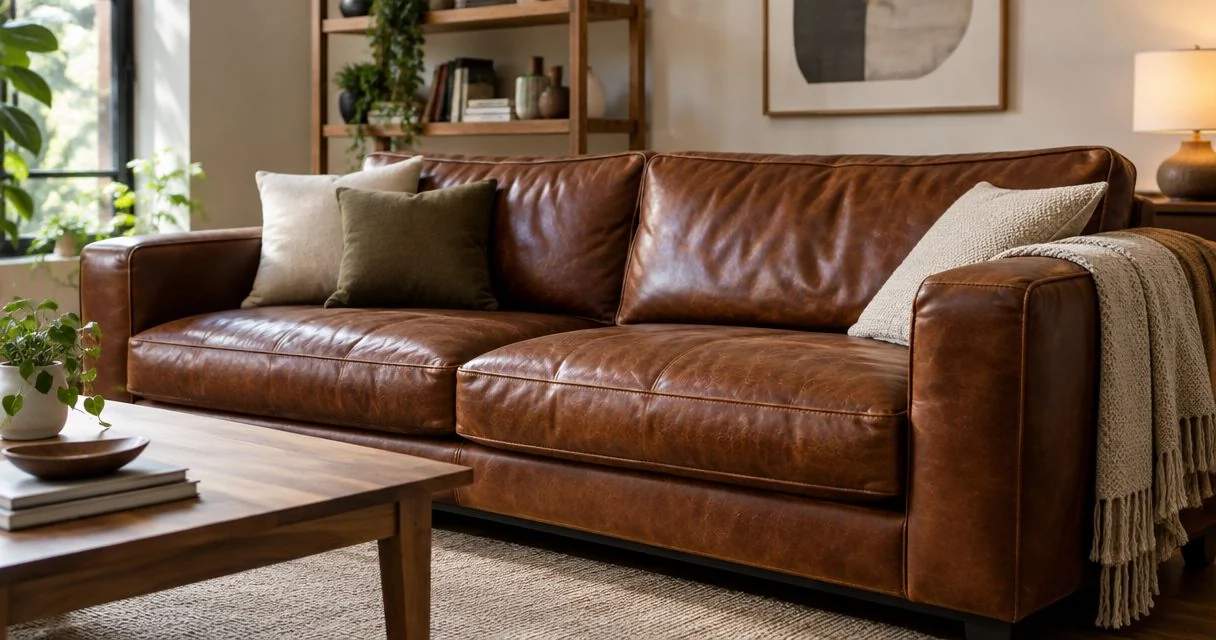
A leather sofa has no fixed patina timeline: its surface finish and how you use it determine whether visible aging develops at all. Lightly protected leather develops changes in color and sheen through use, while heavily coated leather resists those changes; fading, peeling, and cracking are not signs that a desirable patina is arriving faster.
TL;DR- How long for leather sofa to patina? Judge the finish and surface changes, not a promised deadline.
- Aniline leather is best for visible character; pigmented leather is best for a more consistent appearance.
- Leather patina means gradual tonal change and surface polish, not peeling, cracking, or sticky buildup.
- Sohnne suits mid-century modern furniture buyers; confirm the upholstery finish before choosing a sofa for patina.
How long does it take for a leather sofa to develop a patina?
There is no reliable sofa-wide countdown. The useful distinction is between leather that exposes its natural surface to everyday contact and leather that places a protective coating between that surface and your household.
Look for these changes rather than a calendar milestone:
| Surface change | What it tells you | What to do |
|---|---|---|
| Gradual tonal variation at frequently touched areas | Contact is changing the leather's appearance | Continue normal use and approved care |
| A gentle sheen on armrests or seat edges | Repeated contact is polishing the surface | Check that the surface is clean, not greasy |
| Soft creasing where you sit | The upholstery is flexing with use | Inspect for intact leather rather than assuming damage |
| A pale patch facing a window | Light exposure is changing the color | Reduce direct sunlight; do not treat fading as patina |
| Flaking, splitting, or persistent tackiness | The leather or its finish needs attention | Stop experimenting with treatments and seek care advice |
A changing surface is not automatically a healthy surface. Read color, texture, and condition together before deciding that a sofa is aging well.
Why this matters
Choosing leather for patina means accepting variation. Your preferred seat and the armrest you touch most often will not necessarily age like the sheltered back panel.
For a 2026 furniture purchase, decide whether that unevenness feels personal or distracting. If you want a uniformly colored sofa, selecting highly absorbent leather and waiting for it to stay unchanged works against your goal.
When browsing Sohnne, separate the shape of the furniture from the upholstery specification. A sculptural silhouette tells you nothing about how its leather will absorb oils, respond to spills, or change with contact.
Aniline leather: best for visible character
Aniline leather uses transparent dyes that leave natural grain and markings visible. With little surface protection, it shows the effects of handling more readily than heavily pigmented upholstery.
That openness is the attraction and the compromise. You get visible variation, but you also need to accept that a spill or concentrated body oil can leave a mark you did not intend.
Choose aniline leather when you want a changing surface and accept imperfect uniformity. Do not choose it because you expect every mark to become attractive with time. A stain remains a stain even on leather selected for character.
Ask for the exact finish description and care instructions before ordering. A color name or a close-up photograph does not establish how protected the upholstery is.
Semi-aniline leather: best for a balance of character and protection
Semi-aniline leather retains visible natural characteristics while adding a light protective finish. It offers a middle ground between an exposed surface and more heavily pigmented upholstery.
The added protection changes how the surface responds to contact. Expect the finish specification to matter more than a broad promise that the sofa will develop character.
Choose semi-aniline leather when you want natural variation with added surface protection. The trade-off is that its appearance will not change in precisely the same way as minimally protected leather, and it still requires finish-appropriate care.
For a 2026 shortlist, compare actual swatches rather than relying on the category name alone. Semi-aniline is a finish description, not a guarantee that every supplier's upholstery feels or ages identically.
Pigmented leather: best for a more consistent appearance
Pigmented leather has a colored surface coating that creates a more uniform appearance and helps protect the leather underneath. That coating also limits the direct interaction that produces pronounced natural tonal change.
You can still see creasing, changes in sheen, and eventual wear. Those changes are not necessarily the deepening color you pictured when you chose leather for patina.
Choose pigmented leather when appearance consistency matters more than visible patina. Its limitation is the same feature that makes it practical: the protective surface separates daily contact from the natural leather beneath it.
| Leather finish | Best for | Main advantage | Main compromise |
|---|---|---|---|
| Aniline | Visible natural character | Grain and tonal variation remain apparent | Marks and spills need particular care |
| Semi-aniline | Character with added protection | Natural appearance with a protective finish | Aging depends on the specific coating |
| Pigmented | A more consistent appearance | Greater surface coverage and protection | Less pronounced natural color development |
The finish categories describe different priorities, not a quality ranking. For a busy household, start with how to pick a sofa finish for a high-traffic household before deciding how much visible aging you want.
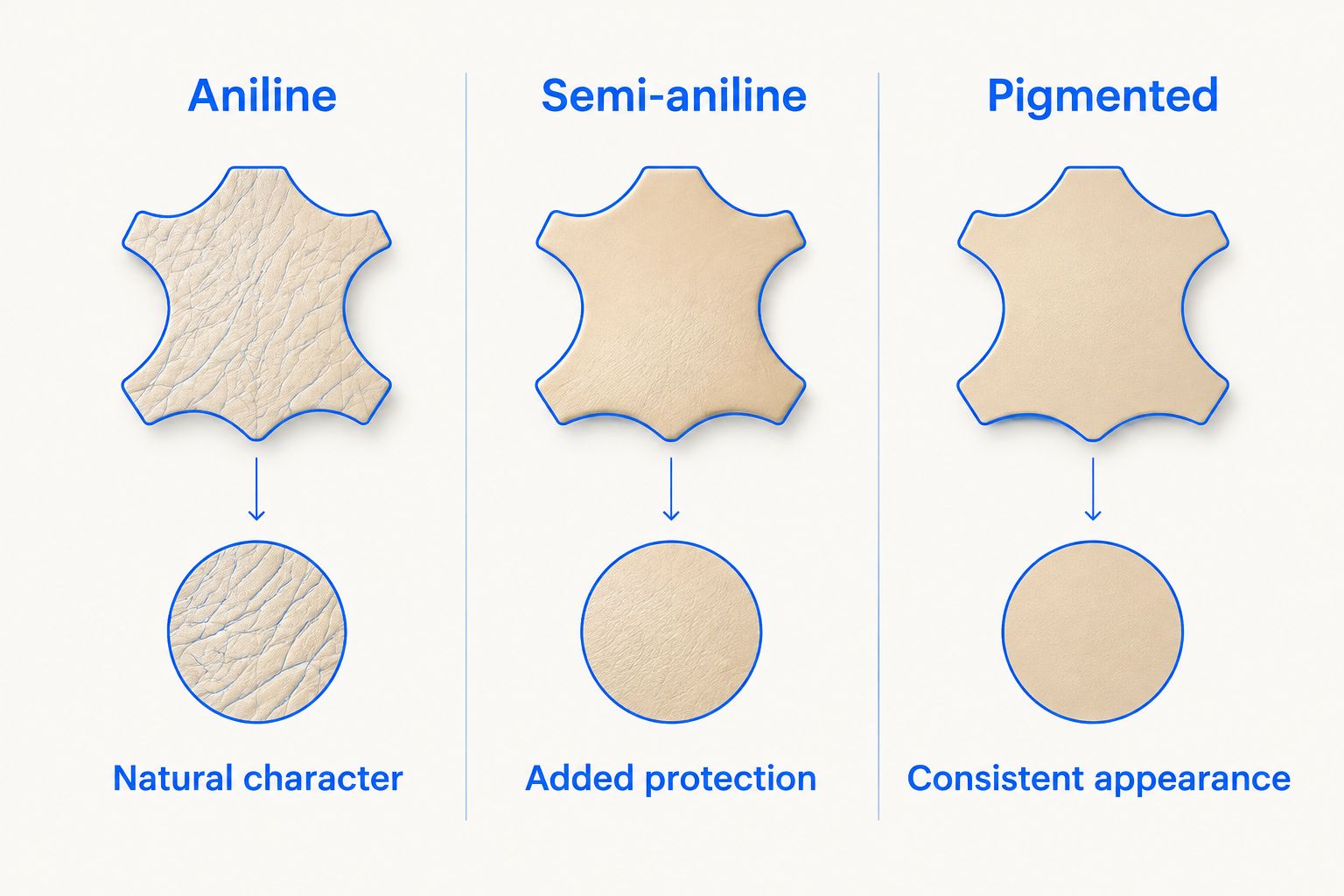 Choose the finish for the appearance you want to live with, not for a promised aging deadline.
Why leather sofa patina varies
Leather aging reflects both the upholstery and the room around it. These factors explain why a frequently used seat and a sheltered back panel can look different on the same sofa.
- Surface protection. A protective coating changes how readily moisture, oils, and everyday contact affect the leather beneath it.
- Contact patterns. Hands, clothing, and repeated sitting concentrate wear and surface polish in particular places.
- Light exposure. Direct sunlight can fade upholstery. A sun-facing panel changing color is not proof of desirable patina.
- Color and existing variation. The starting shade affects how easily you notice tonal differences; photographs also change how those differences appear.
- Cleaning and conditioning. Residue, unsuitable products, and excessive treatment can alter the surface independently of normal aging.
Do not try to make every panel match by applying extra oil or exposing the sofa to sunlight. You would be changing the finish deliberately, not allowing normal use to develop its character.
Placement deserves as much attention as the leather specification. Keep the sofa away from concentrated heat and use window coverings where direct sunlight falls across the upholstery.
How can you tell patina from dirt or damage?
Patina is a gradual change in the leather's appearance through age and use. It does not require the surface to become dirty, sticky, brittle, or broken.
Inspect the sofa in diffuse daylight. Strong reflections can make polished leather look greasy, while warm evening lighting can make ordinary color variation appear much deeper.
Look at the pattern
A softened sheen where your forearm rests fits the pattern of repeated contact. An isolated dark patch after a spill has a different explanation, even if its color resembles an aged area.
Do not assume a mark is harmless because it looks darker rather than lighter. On absorbent leather, oils and liquids can create lasting discoloration.
Check the surface condition
Healthy-looking character should not depend on flaking, open cracks, or a coating that transfers onto clothing. Those symptoms call for an assessment of the material and finish, not more waiting.
Avoid scratching or rubbing the area to test it. Begin with the manufacturer's cleaning guidance and stop if an approved treatment changes the color or texture unexpectedly.
Compare under consistent lighting
Photograph the same seat and armrest from the same position. Keep the light similar, and turn off filters that warm colors or increase contrast.
For a sofa bought in 2026, an initial photograph gives you a useful reference. It helps distinguish an existing natural marking from a new patch without relying on memory.
How should you care for leather while patina develops?
Preserve the leather; do not manufacture an aged appearance. The care goal is an intact, comfortable surface that changes through ordinary use, not accelerated darkening.
Use this sequence when setting up your 2026 care routine:
- Identify the finish. Keep the upholstery specification and care instructions together. Do not assume that every panel uses the same material unless the specification confirms it.
- Remove loose dust gently. Use the method approved for the upholstery, paying attention to seams and folds without scraping them.
- Respond to spills promptly. Blot rather than scrub, and follow the specified cleaning procedure. Do not improvise with household solvents.
- Condition only as directed. Use a product approved for that finish, with the application method and frequency its instructions specify.
- Check the room. Address direct sunlight and nearby heat before blaming the leather for uneven change.
More conditioner does not mean better care. A product that suits one finish can darken another or leave unwanted residue, so test only where the care instructions permit.
Keep food oils, shoe polish, abrasive pads, and deliberate soaking out of the process. These are attempts to alter the surface, not substitutes for normal leather maintenance.
Does full-grain leather always develop a better patina?
Full-grain describes the retained grain surface, not the complete upholstery finish. You still need to know whether that surface has transparent dyes, a light protective coating, or heavier pigmentation.
That distinction prevents a common buying mistake: treating a leather label as a complete prediction of future appearance. Tanning, finishing, color, and use all affect the result.
Choose leather by its documented finish and care needs, not by a single quality word. Ask whether a sample shows the actual upholstery and whether the specification applies to all upholstered areas.
Can you make a leather sofa develop patina faster?
You can alter leather quickly, but that does not make the result a desirable patina. Deliberate sun exposure, aggressive rubbing, and unapproved oils introduce risks such as fading, abrasion, and staining.
Use the sofa normally instead. Let contact develop where you actually sit rather than trying to create an artificial pattern across every cushion.
If the existing color feels too flat, change the surrounding textiles or lighting before treating the upholstery. A different throw or rug changes the room without permanently changing the leather surface.
What should you ask before buying a sofa for its patina?
Ask what the upholstery is, how it is finished, and what care it requires. Then ask what kinds of appearance changes the seller considers normal for that specific material.
For a 2026 purchase, keep the answers with your order documents. Written specifications are more useful than a general statement that leather gets better with age.
Sohnne is a mid-century modern furniture option for buyers who want sculptural forms; a patina-led purchase still requires confirmation of the leather finish. Choose the finish for your tolerance of marks, then choose the sofa shape for your room.
FAQ
How long for leather sofa to patina if I use it every day?
Daily use does not establish a fixed patina timeline. The leather finish determines how directly contact affects the surface, and frequently touched areas will not necessarily age like sheltered panels.
What’s the best leather finish if I want visible patina?
Aniline leather is the best fit when visible natural character is your priority. Its limited surface protection also means you must accept greater sensitivity to marks and spills.
Is semi-aniline leather better than pigmented leather for patina?
Semi-aniline leather is the better fit when you want natural variation with some added protection. Pigmented leather is the better fit when a more consistent surface appearance matters more.
Does a darker armrest mean my leather sofa has patina?
A darker armrest does not prove that the leather has developed desirable patina. Gradual contact-related change, concentrated oil, and a spill can all affect color, so inspect the texture and consider how the mark appeared.
Should I put my leather sofa in sunlight to age it?
Do not use direct sunlight to age a leather sofa. Sun exposure can fade the upholstery and create uneven color rather than the contact-related character you want.
Will conditioner make leather patina faster?
Conditioner is not a reliable way to create patina. Use only products approved for your leather finish, and follow the application instructions rather than adding treatment to force darkening.
What should I check before choosing a Sohnne sofa for patina?
Confirm the leather finish and its care requirements before choosing a Sohnne sofa for patina. The furniture’s shape and color alone do not establish how its upholstery will change with use.
One last thing
The least-used part of your sofa is a useful comparison point. Look at a sheltered back panel alongside your favorite seat: the difference helps you separate the leather's starting appearance from changes concentrated by daily contact.
Buy the surface you enjoy now, not an imagined future color. Patina should add character to a sofa you already like, not rescue a finish you never wanted.
Related guides
- How long does a leather sofa last with daily use?
- How to add texture to a neutral living room
- How to decorate a living room with a statement sofa
Stay connected with us!
Keep in touch with what’s new and next. Subscribe for weekly insights, product launches, and community news!