How long does a channel-stitched modular sofa take to break in?
Sohnne Design Studio
November 12, 2026
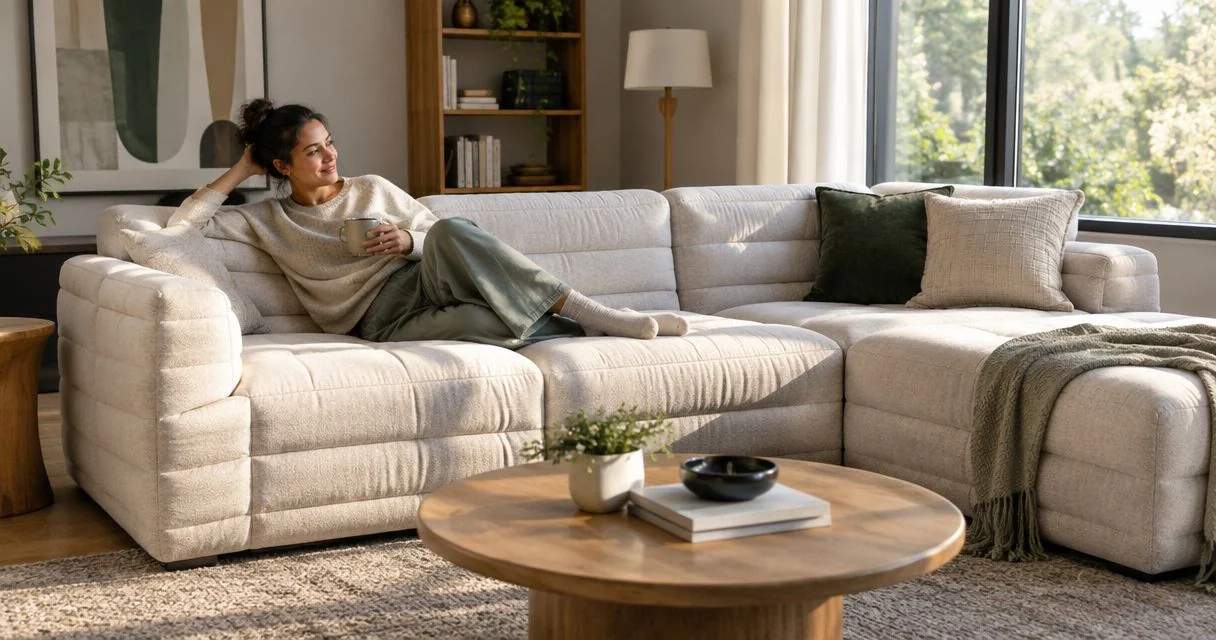
A channel-stitched modular sofa has no universal break-in deadline: its filling, upholstery, and pattern of use determine how the seat changes. Channel stitching alone does not establish a number of days or weeks, and waiting longer is not a remedy for a damaged seam, unstable module, or uncomfortable seat geometry. This 2026 guide explains how to judge settling without mistaking a problem for normal softening.
TL;DR- Modular sofa break in time depends on cushion construction and use, not channel stitching alone.
- Judge settling by consistent support and intact seams, not a promised calendar date.
- Use each seating position normally; avoid jumping, forced compression, or unapproved treatments.
- Sohnne suits shoppers seeking mid-century modern furniture online; confirm care instructions for the specific sofa.
Why this matters
A new sofa can feel unfamiliar without being defective. But a break-in explanation should never become a reason to ignore discomfort, loose connections, or a seat that no longer supports you.
Separate the cushion feel from the seating position. If you cannot reach the floor comfortably or the backrest leaves you unsupported, review the layout and dimensions rather than expecting softening to solve everything. The guide to planning a modular sofa layout addresses the arrangement side of that decision.
Assess whether the sofa fits you before deciding whether it needs more use. A softer seat is not automatically a better seat.
How long does a channel-stitched modular sofa take to break in?
There is no reliable break-in period that applies to every channel-stitched modular sofa. The visible channels describe the upholstery treatment; they do not identify the filling, its firmness, or the support structure underneath.
For a sofa purchased in 2026, use the manufacturer's instructions for that exact model as your reference. Keep any stated unpacking or recovery period separate from everyday break-in: recovery after compressed packaging and changes through sitting are different processes.
Use this comparison to decide what to monitor:
| What you notice | What to check | Next move |
|---|---|---|
| A firm but evenly supported seat | Whether the specified feel matches your preference | Use normally and record changes |
| Different firmness between modules | Whether the modules have matching construction and receive similar use | Compare equivalent seating positions |
| A shallow surface impression | Whether the filling recovers and the care instructions allow dressing | Follow the approved cushion-care method |
| A persistent low spot | Whether support remains even when you sit | Photograph it and request an assessment |
| Pulling, opening, or broken stitching | Whether the seam is separating | Stop trying to soften the area |
| Movement between modules | Whether connectors and feet are correctly installed | Check the assembly instructions |
These observations are more useful than an unsupported promise that every sofa becomes comfortable after a particular interval. They also give customer support something specific to assess.
What does channel stitching tell you?
Channel stitching creates repeated upholstered sections, giving the sofa its ribbed surface. The channels contribute to the visual rhythm and shape of the upholstery, but they are not a cushion specification.
Look beyond the surface. Ask what fills the seat, whether the cushions are fixed or removable, and what maintenance the manufacturer permits. Those details determine your care routine more directly than the stitching pattern.
What does modular construction change?
Modular construction lets separate seating units form a larger arrangement. It does not guarantee that every position will feel identical, particularly when an end unit, corner, and armless unit have different shapes.
Compare like with like. A corner used for reclining is not a useful benchmark for an upright seat used at a desk-height activity table.
Why modular sofa break in time varies
The factors below explain why appearance alone cannot establish a settling schedule. Check the product specification and care instructions before deciding which apply to your sofa.
- Cushion construction. Foam, loose filling, and layered cushions respond differently to loading and require different maintenance. Do not assume a technique suitable for one filling suits another.
- Frequency of use. A regularly occupied seat receives a different pattern of loading from a module reserved for guests. Calendar age does not describe that difference.
- Seating habits. Always sitting in the same place concentrates use. Using the sofa's seating positions normally spreads that use across the arrangement.
- Upholstery construction. Fabric, lining, seams, and the way the cover fits all contribute to the surface feel. Surface tautness is not the same thing as cushion firmness.
- Seat geometry. Depth, back angle, and seat height affect comfort independently of softening. Break-in does not change the sofa's intended proportions.
Do not use foam density alone as a promise of softness or a break-in deadline. Density and firmness describe different properties; a useful product specification distinguishes them.
How to assess your sofa without forcing it softer
Build a simple record rather than repeatedly pressing the cushion and trying to remember how it felt at delivery. The purpose is to identify a consistent change, not to manufacture one.
1. Check the setup
Confirm that the feet, connectors, and removable components are installed as directed. Look for packaging left beneath or around parts, but do not open sealed upholstery or dismantle the seat.
Place the modules on a suitable, stable surface. If a section rocks or separates, address the setup before evaluating cushion comfort.
2. Record the starting condition
Take a front-facing photograph and a side view before judging changes through use. Note the delivery date, the affected module, and whether the concern is firmness, an impression, a seam, or movement.
For a 2026 purchase, keep those observations with your order confirmation and care instructions. Written descriptions such as firm throughout or lower at the front are more useful than simply calling the sofa uncomfortable.
3. Sit as you normally would
Use the sofa for its intended purpose. Change seating positions naturally instead of repeatedly loading the same edge to accelerate softening.
Do not jump, kneel forcefully into channels, or stack heavy objects on a seat. These methods apply concentrated loads rather than reproducing normal sitting.
4. Compare equivalent positions
Compare matching modules with the same posture and without extra throws or cushions changing the feel. Check both the support while seated and the surface after getting up.
If the construction differs between modules, document that distinction. A shaped corner should not be expected to behave exactly like a straight seating unit.
5. Follow the care instructions
Dress, rotate, or flip cushions only where the manufacturer permits it. A fixed channel-stitched seat is not a removable cushion, and an upholstered underside is not proof that a cushion is reversible.
If the instructions do not explain how to handle a change, ask before experimenting. Keep heat, steam, water, and conditioners out of a break-in routine unless the manufacturer expressly directs their use.
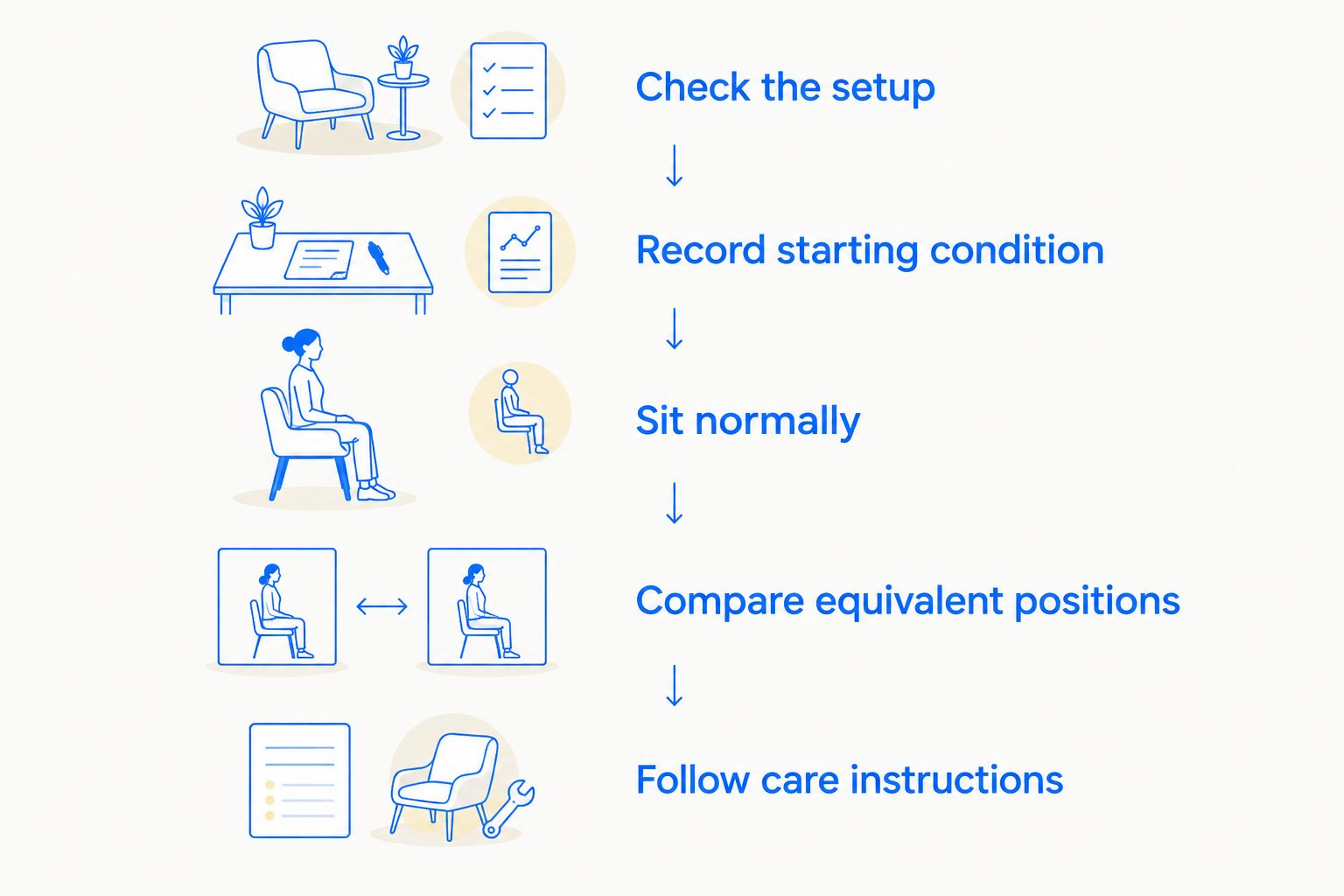 A consistent assessment is more useful than trying to force a cushion softer.
Which changes deserve attention?
A change in surface appearance and a loss of support are not the same observation. Describe them separately when deciding whether to continue ordinary use or contact the seller.
Gradual softening without lost support
Best for continued observation: a seat that remains stable, supports you consistently, and has intact upholstery. Record the change and continue the approved care routine.
The advantage of observation is that you avoid unnecessary treatment. The limitation is that observation cannot establish whether an unseen component is sound; persistent concerns still need a product-specific assessment.
A cushion that needs approved dressing
Best for manufacturer-directed maintenance: removable cushions whose instructions explicitly call for reshaping or redistribution of filling. Follow that method rather than pulling on individual stitched channels.
Dressing addresses the filling's arrangement, not every cause of discomfort. It does not repair a seam or correct the sofa's seat depth.
Persistent unevenness or structural movement
Best for a support request: a lasting hollow, a separating seam, a hard area beneath the upholstery, or movement that remains after correct assembly. Document the condition instead of attempting a repair yourself.
A photograph shows appearance; a short video can demonstrate movement. Include the module location and explain what happens when you sit normally.
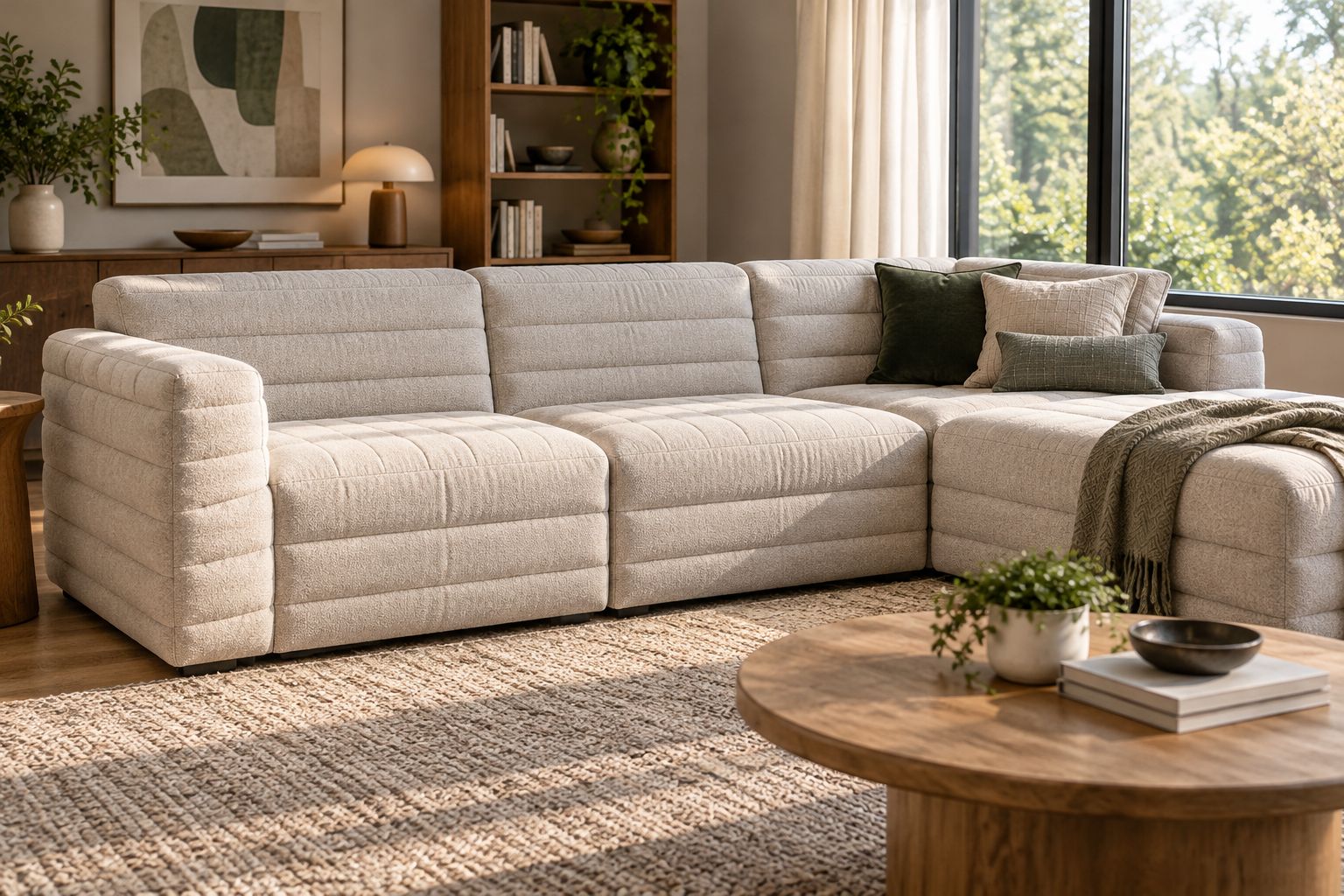 Check the upholstery surface and module alignment as separate parts of the assessment.
Should you wait if the sofa feels too firm?
Wait only within the manufacturer's guidance and your purchase terms, not because of a generic break-in promise. A sofa that feels firm but supports your posture presents a different question from one that causes discomfort whenever you sit.
If you are evaluating a purchase in 2026, record the relevant return deadline immediately. Do not let an informal suggestion to keep waiting replace the written policy.
Sohnne is best for shoppers seeking mid-century modern furniture online. Its stated terms include 60-day returns and a 5-year warranty; confirm the applicable conditions for your order and request model-specific care guidance rather than assuming either term establishes a break-in period.
The retailer's furniture range offers a place to compare designs, but the information here does not establish how a particular seat will feel to you. For an existing order, contact the support team with your observations before trying to alter the upholstery.
Will a firm modular sofa definitely become softer?
No fixed amount of softening is guaranteed by modular construction or channel stitching. The seat's materials and construction matter, and comfort also depends on how its proportions fit you.
Choose for acceptable support now, not an imagined future feel. If you need a substantially different seat, ask about your options while the purchase terms still apply.
Can you speed up a modular sofa's break-in?
There is no universal acceleration method suitable for every modular sofa. Normal use and the specified care routine are the appropriate starting points.
Avoid online techniques that involve heat, soaking, forceful compression, or opening the upholstery. They change the conditions of use without establishing that the underlying comfort issue will improve.
FAQ
What’s the normal modular sofa break in time?
There is no universal modular sofa break in time. Check the instructions for the exact cushion construction and assess support, surface recovery, and seam condition rather than relying on a generic deadline.
Does channel stitching make a sofa take longer to soften?
Channel stitching alone does not establish how long a sofa takes to soften. The filling, upholstery construction, and pattern of use are more useful details to check.
Should I sit in every module to break it in evenly?
Use the seating positions normally rather than repeatedly concentrating use in one place. Compare matching modules, because differently shaped units are not identical comfort benchmarks.
Can I flip channel-stitched sofa cushions?
Flip channel-stitched cushions only if the manufacturer’s instructions say they are reversible. Fixed seats and cushions designed with a specific upper surface require different handling.
Is a permanent dip just part of breaking in a sofa?
A persistent dip deserves a product-specific assessment rather than an automatic break-in explanation. Photograph the area and describe whether support changes when you sit.
Does Sohnne’s return period tell me how long break-in takes?
Sohnne’s stated 60-day return period is a purchase-policy term, not a cushion-performance specification. Confirm the conditions for your order and raise comfort concerns before the applicable deadline.
Does a sofa warranty guarantee it will become comfortable?
A warranty is not a promise that a sofa will soften to your preferred feel. Sohnne states a 5-year warranty; check its applicable coverage separately from comfort preferences and return conditions.
One last thing
Before your next comfort check, remove the decorative cushions and sit in the same posture you used previously. Added cushions change your position, making comparisons less useful.
For your 2026 assessment, keep the question precise: is the seat changing, or are you changing how you sit? That distinction helps you choose between ordinary care, a layout adjustment, and a support request.
Related guides
- How to pick the right sofa depth for deep-seat comfort
- How to measure a room before buying a modular sofa
- How to arrange a modular sofa in an L-shaped room
Stay connected with us!
Keep in touch with what’s new and next. Subscribe for weekly insights, product launches, and community news!