DS-600 Modular Sofa Replica 2026: Build Your Configuration

Sohnne Design Studio
July 10, 2026
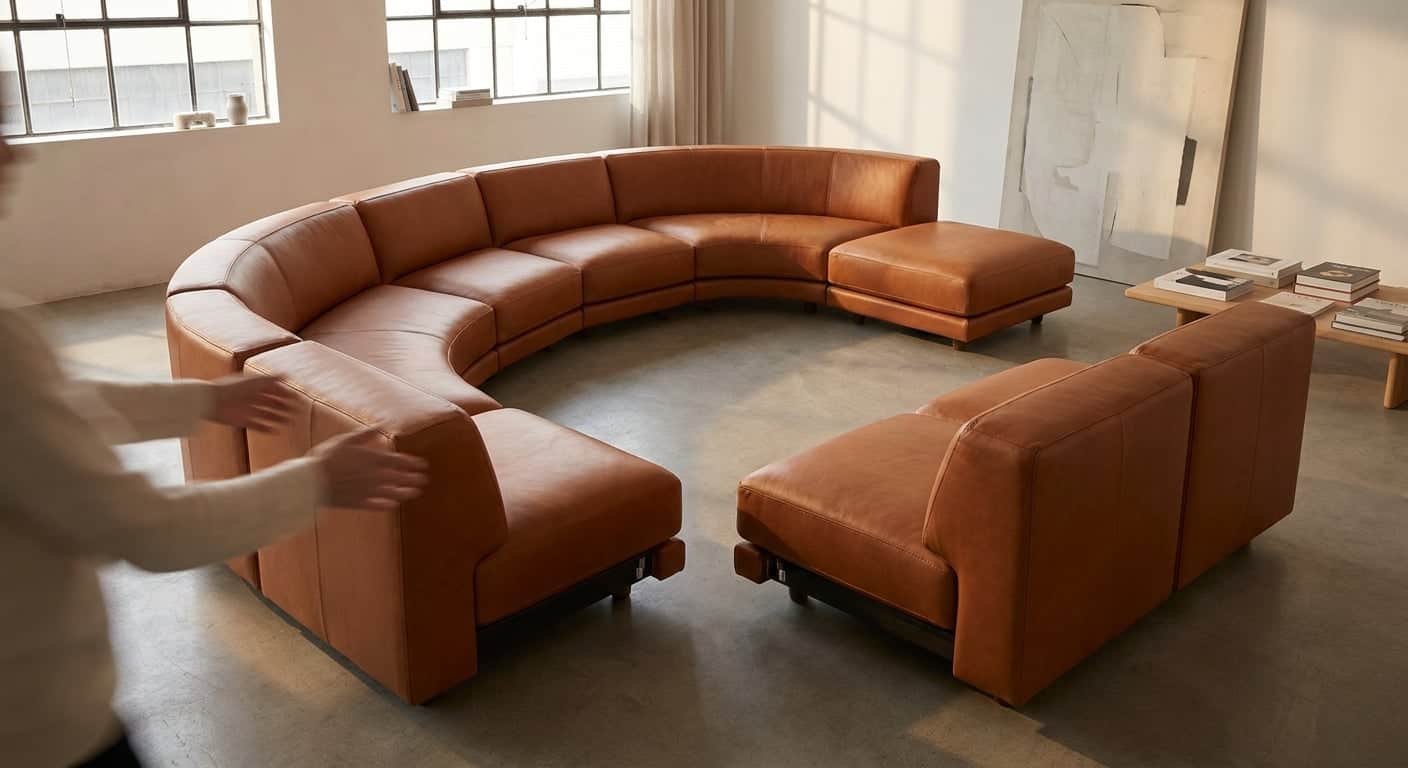
Building a DS-600 modular sofa replica configuration is less about picking a couch and more about solving a floor plan — and the choices you make on module count, seat depth, and connection hardware decide whether the whole thing reads as one piece or a row of mismatched cushions.
TL;DR
A DS-600 modular sofa replica works when the modules share identical foam density, seat height, and upholstery batch — buy them as a matched set, not piecemeal over separate orders. For a first apartment or a den, a three-module configuration (roughly 90 to 110 inches assembled) is the Buy; a full U-shape five-module build is a Consider reserved for rooms over 250 square feet. Sohnne's own Camaleonda sofa replica follows the same building-block logic if you want a sourced, in-stock modular alternative rather than sourcing DS-600-style modules from multiple vendors.
Why this matters
Modular sofas built on the DS-600 system live or die on connection quality. The original concept — low-slung, tufted seating that snakes into whatever shape a room demands — only works if every module locks to its neighbor without gapping or sagging at the seams.
Search interest around "ds-600 modular sofa replica" sits at 1,183 monthly searches with a difficulty score of 20, which tells you two things: enough people are shopping this specific configuration to matter, and the competition for real buying guidance is thin. Most of what ranks is product listings, not floor-plan math. That's the gap this guide fills.
Who this is for
This guide is for someone furnishing a living room, den, or open-plan space who wants a sofa that can be rearranged as the room changes — not a fixed sectional bolted into one layout. If you're renting, moving within the next 3 to 5 years, or simply hate committing to one furniture footprint, a modular system built on DS-600 principles solves that. If you want a single static sofa you'll never touch again, skip modular entirely and look at a fixed three-seater instead.
What to look for in a DS-600 modular sofa replica
Consistent seat height across modules
Every module in the set needs the same seat height, usually within a quarter inch of each other. A half-inch mismatch between modules is invisible on a showroom floor and glaring once you sit down — your hip drops or rises moving from one section to the next. Buy modules from a single production batch, never mixed sourcing.
Foam density, not just foam thickness
DS-600-style seating relies on a soft top layer over a firmer support core, not a single slab of foam. Look for density specs in the 1.8 to 2.2 lb/ft³ range for the support layer — anything softer collapses within 18 months of daily use. Thickness alone tells you nothing about how the cushion holds shape.
Real connecting hardware, not just adjacent placement
A true modular system uses steel brackets, dowels, or interlocking clips between modules so the sofa functions as one unit when pushed together and can be pulled apart cleanly when you rearrange. Some listings market loose modules as "modular" simply because they're the same style — check for actual hardware in the product description before buying.
Frame material under the upholstery
Kiln-dried hardwood or engineered plywood frames hold their joints through repeated reconfiguration; softwood or particleboard frames loosen at the screws within a year or two of moving modules around. This matters more for modular systems than fixed sofas because the frame takes more mechanical stress every time you reshape the layout.
Upholstery dye lot matching
Leather and heavy linen both vary slightly between production runs. If you're buying modules over separate orders months apart, request dye lot confirmation — a mismatched module standing next to its neighbors is the fastest way to make a modular sofa look assembled from spare parts. How to choose a replica sofa that lasts covers the underlying construction checks in more depth.
Footprint math before you order
Measure the finished room, not the empty one. A three-module DS-600-style build runs roughly 90 to 110 inches in a straight line; add a corner module and depth jumps by another 34 to 38 inches. Order the wrong footprint and you're stuck returning individual pieces, which is far more painful than returning one sofa.
Top configurations to build
The Two-Seat Starter — the entry point. A single corner plus one armless module, roughly 84 inches wide. This is the configuration to buy first if you're not sure how the room will evolve — it's small enough to sit against a wall and expandable later without wasting a purchase. Buy for studios and first apartments.
The Three-Module L-Shape — the safe pick. Two armless sections plus one corner, landing between 96 and 112 inches depending on module depth. This is the most common DS-600-style build because it seats four to five people comfortably without swallowing a mid-size living room. Buy for most standard living rooms between 180 and 250 square feet.
The Five-Module U-Shape — the room commander. A full wraparound build spanning 130-plus inches, usually two corners and three armless modules. It seats six to eight and anchors an open-plan space, but it needs real square footage to breathe — under 250 square feet it will feel like the sofa ate the room. Consider only if your space clears that threshold.
The Chaise Extension — the wildcard. Adding a single chaise module to an existing L-shape build extends the footprint by another 30 to 34 inches and turns a seating sofa into a lounging one. It's the easiest single-module upgrade if you already own a base configuration and want more stretch-out room without a full rebuild. Consider if you already have a matched base; Skip buying it as a standalone first purchase since matching an isolated chaise to modules bought later gets harder.
Sohnne's Camaleonda Replica — the sourced alternative. If sourcing true DS-600 modules piecemeal feels like too much coordination, Sohnne's Camaleonda sofa replica runs on the same modular logic — matched batches, real connecting hardware, and documented configuration options — without you having to hunt down compatible pieces from separate listings. Buy if matched sourcing matters more to you than replicating the exact DS-600 silhouette.
What to avoid
- Foam-only cushions with no down wrap. They look identical to the real thing in photos and flatten within a year of regular sitting.
- Modules bought across separate orders months apart. Dye lots shift, foam suppliers change, and you end up with a sofa that reads as three different purchases instead of one system.
- "Modular" listings with no visible hardware. If the description doesn't mention brackets, dowels, or clips, the modules are just separate sofas sold next to each other — they'll shift and gap within weeks.
Configuration comparison
| Configuration | Width | Seats | Best for | Verdict |
|---|---|---|---|---|
| Two-Seat Starter | ~84 in | 2-3 | Studios, first apartments | Buy |
| Three-Module L-Shape | 96-112 in | 4-5 | Standard living rooms (180-250 sq ft) | Buy |
| Five-Module U-Shape | 130+ in | 6-8 | Open-plan rooms over 250 sq ft | Consider |
| Chaise Extension add-on | +30-34 in | +1 lounge spot | Existing owners upgrading | Consider |
| Isolated chaise, standalone | +30-34 in | 1 | First-time buyers | Skip |
FAQ
What is a DS-600 modular sofa replica?
It's a reproduction of the low-slung, tufted modular seating system built from individual sections that connect and reconfigure into different shapes — L-shapes, U-shapes, or straight runs — rather than one fixed sofa form.
How many modules do I need for a standard living room?
Three modules — two armless sections plus one corner — cover most rooms between 180 and 250 square feet and seat four to five people comfortably.
Is a DS-600 modular replica better than a fixed sectional?
It's better if you plan to move or rearrange within 3 to 5 years; a fixed sectional wins on stability and cost if you're settling into a permanent layout and never touching the configuration again.
Can I add modules later?
Yes, but only if you buy from the same production run or confirm dye lot matching first — adding a module bought a year later without checking upholstery batch is the most common way modular sofas end up looking mismatched.
What foam density should I look for?
Aim for a support core in the 1.8 to 2.2 lb/ft³ range under a softer top layer. Anything lighter collapses within about 18 months of daily use.
How much floor space does a five-module U-shape need?
At 130-plus inches wide with two corners, plan for a room over 250 square feet — smaller spaces will feel overtaken by the sofa rather than anchored by it.
Is Sohnne's Camaleonda replica the same as a DS-600 replica?
No — they're separate design lineages, but both run on true modular hardware and matched-batch sourcing, which is the harder part to get right in either system.
What's the biggest mistake buyers make with modular sofas?
Buying modules across separate orders instead of one matched batch. It's the single fastest way to end up with visible seams in seat height, foam feel, or upholstery color.
One last thing
The detail most buyers skip is measuring the doorway, not just the room. A five-module U-shape build that fits the living room perfectly can still get stuck at a 30-inch hallway door if the corner sections aren't designed to pass through at an angle — check module dimensions against your tightest doorway before you order in 2026, not after delivery arrives.