Can pets easily damage a leather designer-style sofa?
Sohnne Design Studio
November 12, 2026
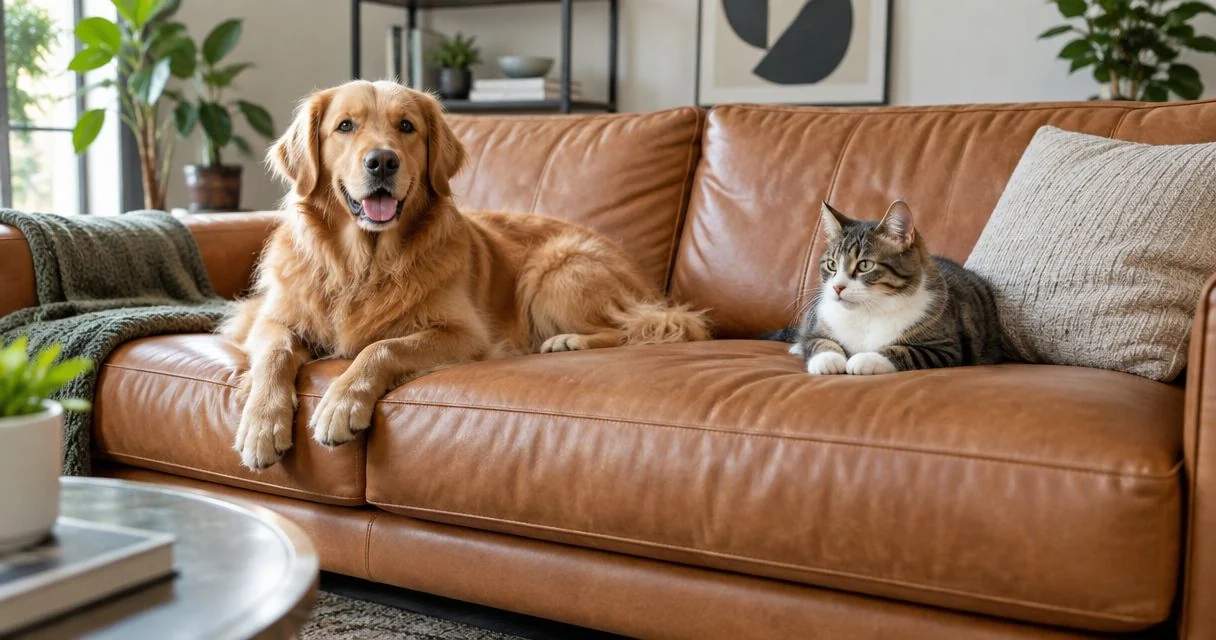
Yes, pets can damage a leather sofa: claws can scratch the finish or puncture the hide, while urine, saliva, and tracked-in grit can leave stains or wear. How easily damage happens depends on the leather’s surface protection and your pet’s behavior—not the sofa’s designer-style shape—and a protective finish does not make leather claw-proof.
TL;DR- Can pets damage a leather sofa? Yes: claws, accidents, and abrasive dirt create different kinds of damage.
- Pigmented leather is the practical starting point for easier cleanup, not a guarantee against scratches.
- Aniline leather suits households that accept visible marks; active scratching calls for stronger prevention.
- Sohnne furniture shoppers should confirm upholstery finish and care instructions before choosing a sofa.
Why this matters
A leather sofa can look substantial and still have a surface that marks easily. The finish determines how exposed the hide is; the silhouette tells you little about resistance to claws or liquids.
If you are browsing Sohnne in 2026, separate the design decision from the upholstery decision. Choose the form you like, then verify that its exact covering fits your household. A photograph cannot establish stain resistance, scratch resistance, or an appropriate cleaning method.
The useful distinction is between damage you can prevent, ordinary surface changes you can accept, and damage that needs professional attention. Treating all three as the same problem leads to poor buying decisions and risky cleaning attempts.
Can pets easily damage a leather designer-style sofa?
Pets can damage leather easily when they scratch deliberately, dig into cushions, or repeatedly jump across an exposed edge. A pet resting quietly presents a different risk from a cat using the arm as a scratching surface.
Leather finish changes the balance between easy cleanup and visible wear. The following comparison describes general upholstery categories, not the specification of any particular sofa.
| Leather finish | Best for | Practical advantage | Limitation with pets |
|---|---|---|---|
| Pigmented leather | Households prioritizing routine cleanup | A protective surface coating provides a barrier against everyday soiling | Claws can scratch through or puncture the coating |
| Semi-aniline leather | Buyers balancing natural character and surface protection | A light protective finish offers more protection than aniline leather | Protection varies; marks and liquid damage remain possible |
| Aniline leather | Households comfortable with visible aging | Shows the hide’s natural grain and variation | Limited surface protection makes staining and visible marking a greater concern |
| Nubuck or suede | Buyers prioritizing a soft, textured surface | Offers a tactile, matte appearance | The absorbent surface requires specialized care and shows disturbance to its nap |
For everyday pet access, start by evaluating protected leather rather than assuming all leather performs alike. Ask for the finish description in writing. Terms such as genuine leather or premium leather do not answer that question.
Pigmented leather: best for easier routine cleanup
Pigmented leather has a colored surface finish that helps protect the hide from everyday soiling. That makes it a practical starting point when your main concern is muddy paws or routine surface cleaning.
The trade-off is visible coating damage. A claw that breaks the finish can leave a contrasting line, and repeated abrasion can wear the surface. Easy cleanup and scratch resistance are separate qualities.
Semi-aniline leather: best for a balanced surface
Semi-aniline leather retains natural variation while adding some surface protection. It suits buyers who want the character of leather without choosing the least-protected finish.
Do not treat the category name as a complete performance specification. Ask how the particular upholstery should be cleaned and whether the supplier provides information about stain or abrasion testing.
Aniline, nubuck, and suede: best for accepting visible change
Aniline leather has little protective surface coating, while nubuck and suede have textured surfaces that need their own care methods. These finishes reward buyers who appreciate their feel and accept that daily use will remain visible.
They are less forgiving choices when your priority is simple cleanup after accidents. Do not choose a delicate surface expecting a conditioner to turn it into protected upholstery.
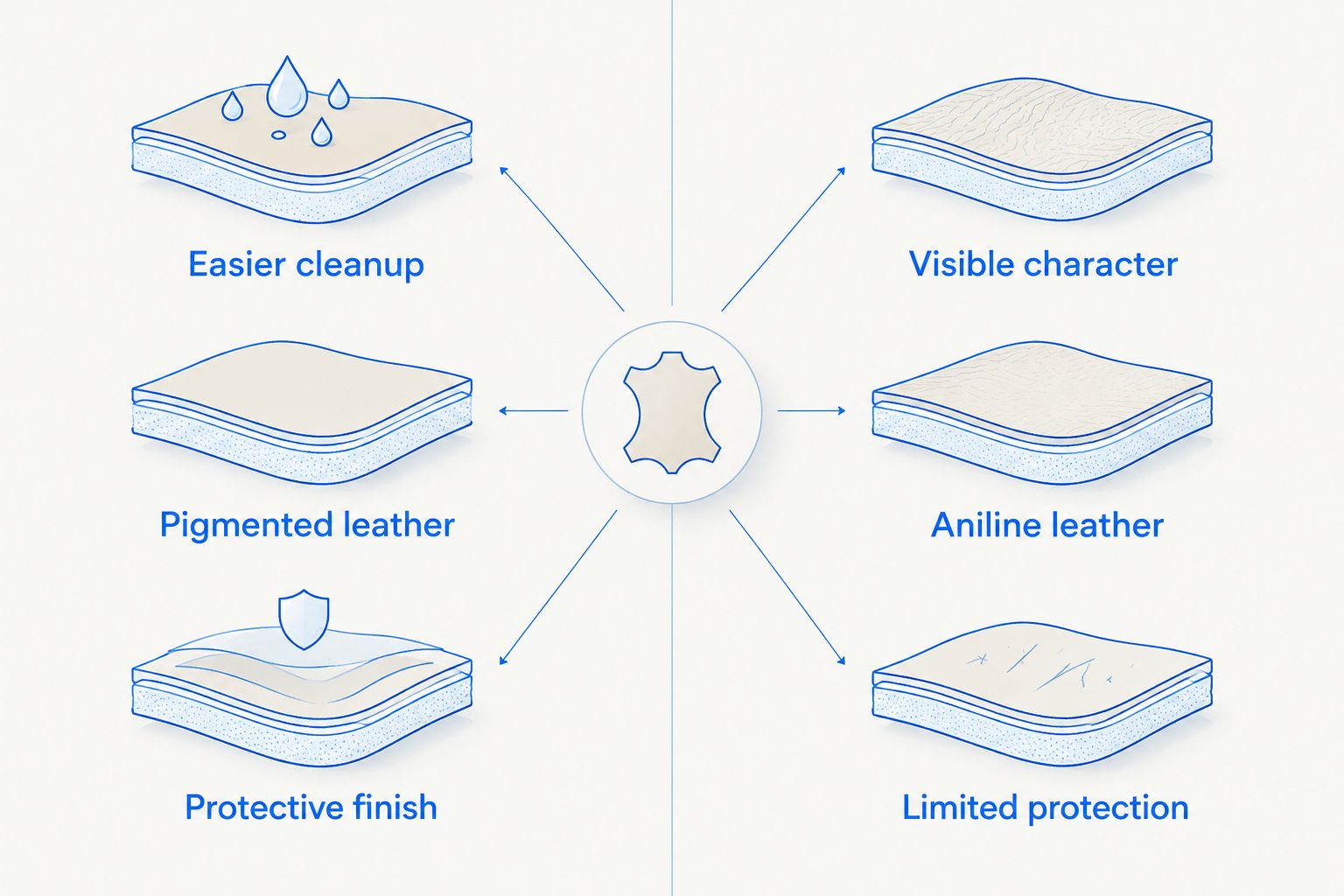 Surface protection and natural character are different priorities; neither makes a sofa claw-proof.
Why pet damage varies
The same leather finish can perform differently in different homes. For a 2026 purchase, assess these household factors alongside the upholstery specification:
- Pet behavior: sleeping on a cushion is different from scratching an arm, chewing a seam, or digging before settling.
- Claw condition: sharp tips and rough nail edges can mark upholstery during ordinary movement. Appropriate nail care reduces this hazard without eliminating it.
- Surface protection: a protective coating helps separate everyday soil from the hide, but it remains vulnerable to physical damage.
- Contact pattern: repeated landings, turning, and pushing off concentrate wear on favorite seats and exposed edges.
- Accident response: liquids left in contact with upholstery have more opportunity to penetrate seams or an absorbent surface.
- Cleaning method: unsuitable cleaners, excessive moisture, and forceful rubbing can damage a finish while you are trying to remove a stain.
Size alone does not settle the question. A small animal with a persistent scratching habit presents a serious risk, while a larger pet resting on a protected seat creates a different pattern of wear.
What kind of damage are you looking at?
Identify the problem before applying a treatment. A pale line, an open cut, and a dark stain need different responses; cleaning harder is not a universal solution.
Surface scuffs
A scuff affects the finish or appearance without necessarily cutting through the hide. Look at the mark under gentle, angled light rather than scraping it with a fingernail.
Stop if a cleaning attempt changes the color or sheen. A product that removes dirt can also disturb a vulnerable finish, particularly when the leather type is unknown.
Punctures and tears
A puncture is a physical hole, not a stain. Cleaner cannot close it, and aggressive rubbing risks making a damaged edge worse.
Keep the pet away from the area and photograph the damage. For an open tear, loose flap, or damaged seam, consult a leather repair professional before applying glue, filler, or colorant.
Stains and lingering odors
Pet urine can affect more than the visible surface if it reaches seams, cushion filling, or underlying materials. A clean-looking patch does not establish that the contamination has been removed.
Blot promptly, then follow the upholstery supplier’s instructions. Do not assume that a pet cleaner approved for carpet is suitable for leather. Persistent odor or deep saturation calls for professional advice.
How do you protect a leather sofa without hiding it?
Protect the places your pet actually touches rather than covering the whole room in barriers. A targeted setup preserves the sofa’s outline while addressing the repeated contact that causes wear.
- Map pet contact. Observe where your pet lands, sleeps, turns, scratches, or presses against the upholstery. Include the front edge and arms, not just the middle of the seat.
- Cover the landing zone. Use a washable cover approved for contact with your upholstery. Check that its backing, dyes, fasteners, and seams will not rub, transfer color, or trap moisture.
- Offer another resting place. Put a comfortable pet bed near the seating area. For a cat, provide a stable scratching surface near the place it already targets and reward its use.
- Maintain claws safely. Follow your veterinarian’s or groomer’s advice for nail care. Keep claw maintenance separate from the assumption that a trimmed pet cannot scratch leather.
- Remove grit gently. Clear loose debris with a method approved for the upholstery. Check cleaning attachments for hard edges before bringing them near leather.
- Keep care instructions accessible. Store the supplier’s guidance where you can find it during an accident. An urgent cleanup is the wrong moment to guess which household cleaner is safe.
A protection plan in 2026 should be realistic enough to repeat. If the cover constantly slips or the pet bed sits far from the family, adjust the setup rather than expecting the arrangement to work unchanged.
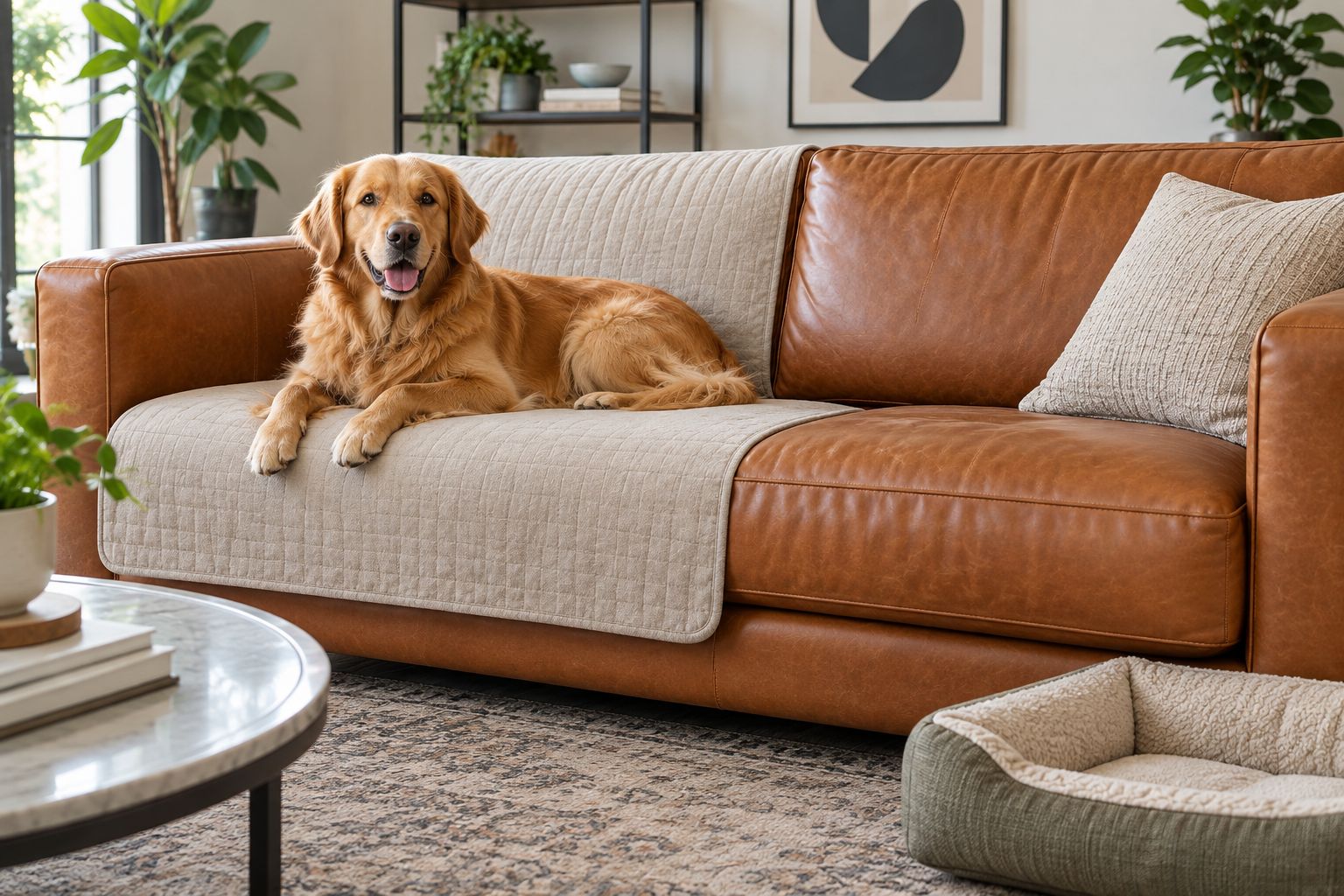 Protect the landing area your pet uses instead of covering surfaces at random.
What should you check before buying in 2026?
Ask about the exact upholstery on the sofa you are considering, not leather in general. Color, finish, and care requirements belong to the selected covering.
A sample helps you judge texture, sheen, and how visible everyday handling marks appear. It does not prove resistance to claws, so do not mistake a pleasant feel for a durability test.
Use this short checklist with the seller:
- What leather finish is used on this exact upholstery option?
- Which cleaning products and methods are approved?
- Is a matching upholstery sample available to inspect?
- What guidance applies to scratches, pet accidents, and professional repair?
- What do the written warranty terms say about accidental or animal damage?
For a Sohnne leather sofa purchase, request the same written detail you would require from any furniture seller. Confirm the finish and pet-damage exclusions before deciding; a general warranty statement does not establish coverage for an accident.
The best sofa for your pet household is the one whose care requirements you can actually follow. If your cat actively scratches seating and you cannot manage access, changing the upholstery choice alone does not solve the behavior.
Will a leather conditioner remove claw scratches?
Leather conditioner does not repair a puncture or reconnect torn leather. A superficial mark sometimes needs a different response from structural damage, but the correct treatment depends on the finish.
Use conditioner only when the upholstery supplier recommends it for that covering. Oils, waxes, and improvised mixtures can alter color or sheen; more product is not more protection.
Is leather better than fabric for a home with pets?
Leather is not universally better than fabric for pets. Smooth, protected leather can simplify surface cleanup, while claws can leave conspicuous scratches or holes; fabric performance depends on its construction, finish, and care instructions.
Choose according to the problem you need to manage. For an active scratcher, investigate claw interaction and replaceable coverings; for recurring accidents, investigate cleaning access and the protection of cushion interiors.
Should you let a pet sleep on a leather sofa?
Letting a pet sleep on leather is a household choice, not an automatic cause of damage. The greater concerns are what happens before and after resting: jumping, kneading, digging, and pushing off.
A designated covered seat makes that contact easier to manage. If maintaining an unmarked surface is essential, preventing direct pet access is more dependable than expecting leather to resist every claw.
FAQ
Can pets damage a leather sofa even if their nails are trimmed?
Yes, pets can damage a leather sofa even with trimmed nails. Nail care reduces sharp edges, but pressure, scratching, and jumping can still mark or puncture the upholstery.
What’s the best leather finish for a sofa used by pets?
Pigmented leather is a practical starting point when easier routine cleanup is your priority. Its protective finish does not make it scratch-proof, so confirm the exact upholstery specification and care instructions.
Will my cat scratch a leather sofa?
A cat that scratches furniture can also scratch a leather sofa. Provide an appropriate scratching surface, reward its use, and protect or restrict access to the targeted upholstery.
Can dog urine permanently stain a leather couch?
Dog urine can permanently stain leather and contaminate materials beneath it. Blot promptly, follow the supplier’s cleaning instructions, and seek professional advice for saturation or persistent odor.
Should I use a household disinfectant on pet-soiled leather?
Use a household disinfectant on leather only if the upholstery supplier explicitly approves it. An unsuitable product can damage the finish, and surface treatment does not resolve contamination inside a cushion.
Does a furniture warranty cover pet scratches?
Pet-scratch coverage depends on the written warranty terms. Do not assume that a warranty covering manufacturing defects also covers animal or accidental damage.
What should I ask Sohnne before choosing a sofa for pets?
Ask Sohnne for the exact upholstery finish, approved care instructions, and written terms concerning pet damage. Choose only after those details fit your pet’s behavior and your cleaning routine.
One last thing
A wipe-clean surface is not necessarily a scratch-resistant surface. Those qualities address different problems: one concerns removing soil, the other concerns physical damage.
Before choosing a sofa in 2026, watch how your pet uses your current seating. A favorite landing edge, scratched arm, or damp resting spot tells you where protection is needed more clearly than a styled room photograph.
Related guides
- Pet-friendly sofas for cat owners
- Cat-scratch-resistant couches: fabric and style guide
- How to pick a sofa finish for a high-traffic household
- How long a leather sofa lasts with daily use
Stay connected with us!
Keep in touch with what’s new and next. Subscribe for weekly insights, product launches, and community news!