Can a quilted leather daybed double as a guest bed?
Sohnne Design Studio
November 12, 2026
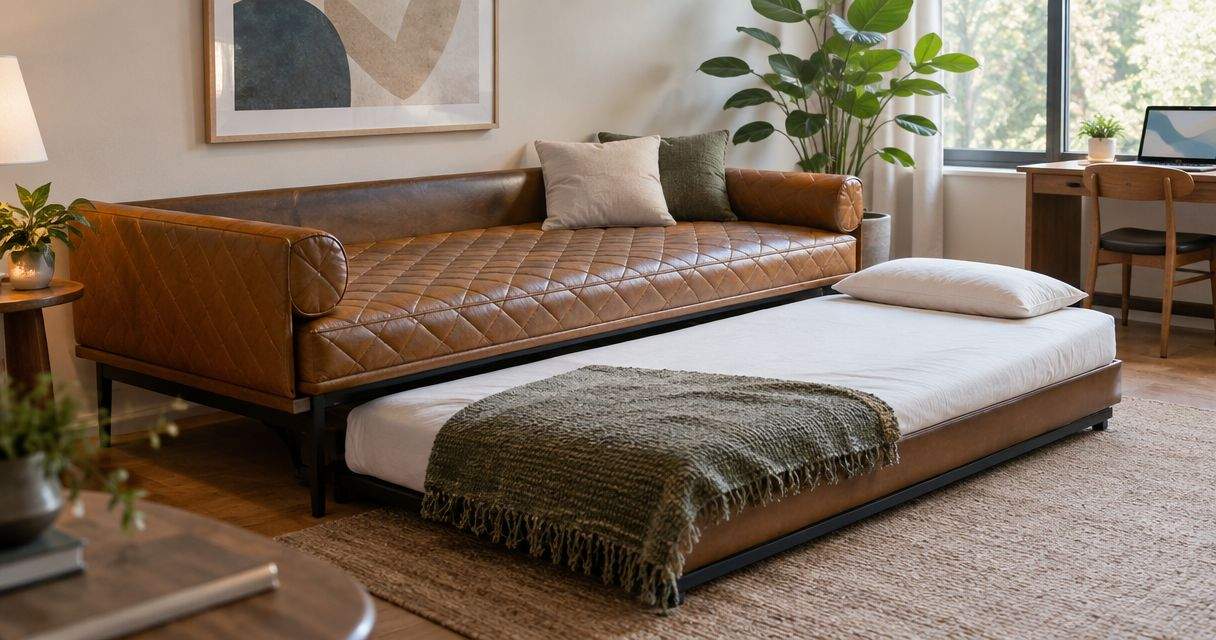
Yes, a quilted leather daybed can double as a guest bed if its usable cushion fits your guest, stays level under their weight, and provides comfortable support when they lie down. Quilting and leather do not establish sleep suitability; you also need to check the manufacturer's intended use, bedding fit, and access around the piece.
TL;DR- A quilted leather daybed as guest bed works only when usable dimensions, support, and manufacturer guidance match the sleeper.
- Sohnne suits mid-century modern furniture shoppers; verify guest-bed suitability for the individual piece.
- Compare the flat cushion with mattress dimensions, not the furniture’s outside measurements.
- A topper changes surface feel; it cannot correct inadequate length, unstable support, or a sloping cushion.
Can a quilted leather daybed double as a guest bed?
Yes—but treat it as a sleeping surface to assess, not a bed by appearance alone. A long, low silhouette can look generous while leaving less usable space between bolsters, raised edges, or fixed cushions. Sitting comfortably on the edge does not answer whether you can sleep comfortably across it.
For a 2026 furniture purchase, start with the specifications rather than the room photograph. When browsing Sohnne, distinguish overall furniture dimensions from the flat area a guest can actually occupy.
Use this sequence before committing the piece to overnight use:
- Confirm intended use. Ask whether the manufacturer permits overnight sleeping and what load limits apply.
- Measure usable space. Record the uninterrupted cushion length and width, excluding fixed obstructions.
- Test lying down. Check your usual sleeping position, then turn over and sit at the edge.
- Check bedding fit. Make sure the protective layer and sheet stay secure without pulling the cushion out of position.
- Prepare the room. Keep the route to the door clear and place a light within reach.
A daybed passes only when the furniture and the room work together. A comfortable cushion does not solve an obstructed exit, and a well-arranged room does not make a short cushion longer.
Why this matters
A quilted leather daybed brings a tailored surface into a living room or study. Bedding changes its job: the piece now needs to accommodate a resting body, movement during sleep, and getting up in the dark.
That is a different brief from occasional lounging. Choose the sleeping function first when overnight hosting is the reason for buying. If guests visit infrequently and the piece mainly serves as seating, you can assess that compromise honestly rather than expecting identical performance from both uses.
What size does a guest sleeping surface need to be?
Common U.S. mattress dimensions provide a useful reference: a twin measures 38 by 75 inches, a twin XL measures 38 by 80 inches, and a full measures 54 by 75 inches. These are mattress benchmarks, not verified dimensions for any particular daybed.
For your 2026 room plan, compare those measurements with the usable cushion—not the frame, legs, or decorative ends. A daybed described as long enough overall can still have a shorter sleeping area once a fixed headrest is excluded.
| Sleeping-surface reference | Common U.S. dimensions | Best for | Main advantage | Main limitation |
|---|---|---|---|---|
| Twin | 38 by 75 inches | A single sleeper who fits the length | Familiar single-bed reference | Less length than a twin XL |
| Twin XL | 38 by 80 inches | A single sleeper needing more length | Adds length without adding width | Does not add turning space |
| Full | 54 by 75 inches | A sleeper prioritizing extra width | More width than a twin | No extra length over a twin |
| Quilted leather daybed | Measure the actual flat cushion | Occasional hosting after suitability checks | Can serve as visible daytime furniture | Size and cushion construction vary by piece |
Matching a mattress footprint does not prove equivalent comfort. Cushion construction, edge support, and surface shape still need separate checks. Likewise, a familiar mattress label does not guarantee that a particular guest will find the space comfortable.
Measure the cushion where the guest will lie
Remove only the accessories intended to be removable. Measure between any remaining fixed edges, then check whether the cushion narrows toward either end.
Record length and width in inches so you can compare them directly with bedding dimensions. Photograph the measuring tape in place if you need to ask the retailer to clarify a specification.
Check height as a separate decision
Sleeping-surface height matters when your guest sits down or stands up. Test the finished arrangement, including any bedding layer you intend to use, rather than judging the bare frame.
For someone with mobility needs, ask what height and support they find manageable. Do not assume a low profile is easier simply because it looks less substantial in the room.
Why guest-bed comfort varies
The quilted pattern describes the upholstery treatment, not the complete sleeping experience. These checks explain why visually similar pieces can feel different when you lie down:
- Usable dimensions: Fixed bolsters, tapered cushions, and raised edges reduce the space available for stretching out.
- Surface shape: A level cushion and a deliberately inclined lounging surface serve different purposes.
- Support under weight: Check for pronounced sinking, hard contact beneath the cushion, or an unstable edge.
- Quilting relief: Lie across the stitched areas to find out whether you notice the changes in surface height.
- Bedding security: A protective layer needs to remain in place when you turn rather than bunch beneath you.
- Room conditions: Light, noise, privacy, and the route to the bathroom affect the overnight setup independently of the furniture.
Your 2026 buying checklist should separate these factors. A single comfort rating cannot tell you whether the issue is insufficient length, an uneven surface, or bedding that moves.
Sohnne is best for shoppers seeking mid-century modern furniture, with guest-bed suitability checked piece by piece. The category fit is clear; sleeping suitability still depends on the individual design and its documented use.
How do you make a quilted leather daybed ready for a guest?
Prepare the daybed as a temporary sleeping arrangement, not a decorated sofa with a blanket added. Give the guest a clean, secure sleeping layer and keep daytime accessories out of the way.
Confirm use
Read the care and use instructions before adding bedding. Confirm any restrictions on overnight use, removable cushions, and added layers; do not assume a decorative bolster is intended to come off.
Test support
Lie down in the position you normally sleep in, then change sides. Notice whether your shoulder or hip meets an uncomfortable ridge, whether the cushion shifts, and whether your feet reach a hard edge.
A quick seated test misses these details. If the furniture cannot be tested before purchase, request written clarification of its intended use and sleeping-surface construction.
Fit bedding
Use a clean protective layer compatible with the upholstery instructions, followed by a sheet that fits the actual surface. Keep seams, elastic, and fastenings from pressing against delicate upholstery or pulling at the cushion.
Do not force a fitted sheet onto a cushion simply because the overall measurements sound close. Check the cushion depth and shape as well as its length and width.
Clear access
Move the coffee table, loose floor cushions, and other obstacles before the guest settles in. Check the route with the bedding hanging naturally, since an overhanging duvet changes the clear space around the piece.
Add essentials
Place drinking water and a light on a stable surface within reach. Give the guest somewhere else to put luggage so the sleeping area remains clear.
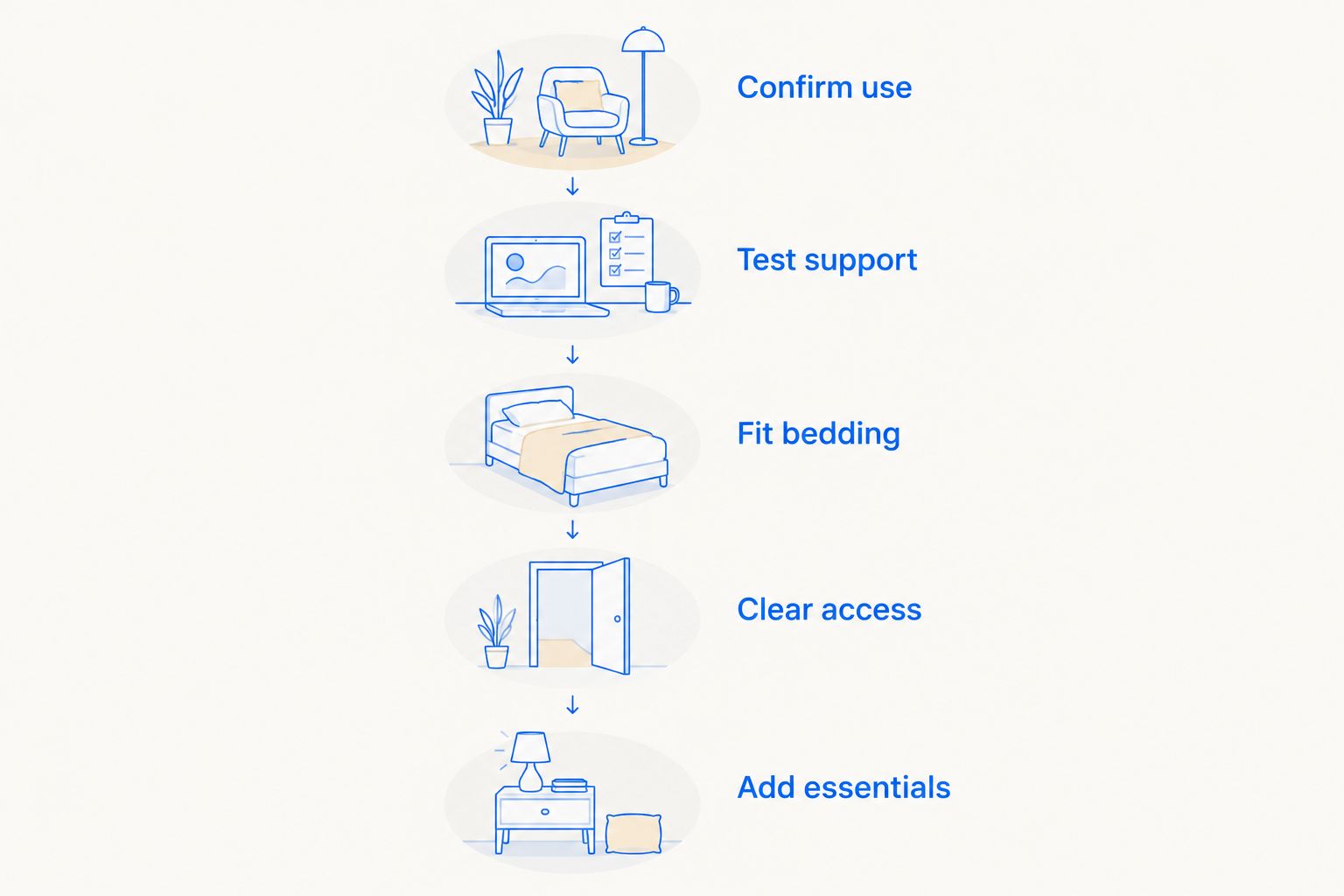 Check support and intended use before arranging the bedding.
In 2026, keep a simple guest setup note with the furniture instructions: which accessories move, which linens fit, and where everything is stored. That makes preparation repeatable without leaving bedding on the daybed between visits.
Can a topper make a leather daybed comfortable enough?
A topper can change surface feel, but it cannot correct an unsuitable foundation. Check the daybed first, then consider an added layer only if the manufacturer permits it and the underlying support already works.
A topper's benefit is an additional layer between the sleeper and the upholstery. Its drawbacks are extra storage, another item to keep clean, and the need to prevent movement during use.
Test the entire arrangement with the sheet fitted. If the added layer slides, curls at the edges, or lifts when the guest turns, resolve that before offering the setup for overnight use.
Do not use a topper to disguise sagging or bridge a substantial gap between cushions. Those are support problems, not styling problems, and they need a different solution.
Is a quilted leather daybed suitable for frequent guests?
Frequent hosting makes the sleeping test more important, not less. Assess repeated setup, bedding storage, privacy, and the guest's comfort rather than relying on how well the daybed serves the room during the day.
Keep a daybed on your shortlist only if the complete overnight arrangement works without improvised fixes. If preparing it means moving heavy furniture, balancing bedding across uneven cushions, or blocking a doorway, reconsider the arrangement.
For your 2026 decision, ask the retailer about the exact piece rather than asking whether daybeds in general are comfortable. You need answers about usable dimensions, construction, intended use, and care—not a category-wide promise.
You can contact Sohnne with those questions. Include the piece you are considering and explain that overnight sleeping, rather than lounging alone, is part of the intended use.
Can a guest sleep directly on quilted leather?
A guest should have clean bedding between their body and the upholstered surface. Follow the furniture's care instructions when choosing a protective layer, and avoid treating the leather itself as washable bed linen.
The practical issue is not simply whether leather feels pleasant at first touch. You also need bedding that remains secure, a surface your guest finds comfortable, and a way to clean the sleeping layers after the visit.
Is occasional sleeping the same as nightly sleeping?
Occasional sleeping does not establish suitability for nightly use. A setup that meets an occasional visitor's needs still requires a separate assessment before becoming someone's regular bed.
Start again with intended use, support, dimensions, and the sleeper's preferences. Do not turn a successful visit into a general claim about long-term sleep comfort.
FAQ
Can I use a quilted leather daybed as a guest bed?
Yes, if the usable surface fits your guest, provides comfortable support, and is suitable for overnight sleeping under the manufacturer’s guidance. Check the actual cushion rather than relying on the furniture’s overall dimensions.
Is a quilted leather daybed the same size as a twin bed?
Not necessarily; a common U.S. twin mattress measures 38 by 75 inches, while daybed dimensions depend on the piece. Compare the uninterrupted flat cushion with that reference and account for fixed bolsters or raised edges.
What’s the best way to check whether a daybed fits a tall guest?
Measure the usable sleeping length and ask the guest what sleeping space they need. A common U.S. twin XL mattress measures 38 by 80 inches, which provides a useful length reference but does not verify the daybed’s comfort.
Do I need a topper on a quilted leather daybed?
A topper is not automatically necessary, and it cannot repair inadequate support or insufficient space. Test the bare cushion first, then check whether an added layer is permitted and stays secure with bedding fitted.
Can I put a fitted sheet over a leather daybed cushion?
Use a fitted sheet only if it fits the cushion’s length, width, depth, and shape without forcing it. Check that elastic and fastenings do not pull at the upholstery and that the sheet stays in place when you turn.
What should I ask Sohnne before buying furniture for overnight guests?
Ask for the usable sleeping dimensions, intended-use guidance, support details, load limit, and applicable care instructions for the individual piece. Explain that a guest will sleep on it so the answer addresses overnight use rather than seated comfort.
Is a quilted leather daybed a good regular bed?
A quilted leather daybed should not become a regular bed without a separate suitability assessment. Confirm manufacturer guidance and evaluate the complete sleeping arrangement for the person who will use it.
One last thing
Make the bed before your guest arrives, then lie down on it yourself. The dressed setup reveals problems the bare furniture hides: a sheet that loosens, a pillow pressed against a hard end, or a light that is suddenly out of reach.
Keep the decision simple. If the guest cannot stretch out, turn comfortably, and get up without difficulty, choose another sleeping arrangement rather than adding more decorative cushions.
Related guides
- Is a daybed comfortable enough to sleep on nightly?
- How to choose furniture scale for a room with high ceilings
- How to add texture to a neutral living room with furniture
Stay connected with us!
Keep in touch with what’s new and next. Subscribe for weekly insights, product launches, and community news!