Psychiatrist Office Furniture: Best Picks for 2026

Sohnne Design Studio
July 28, 2026
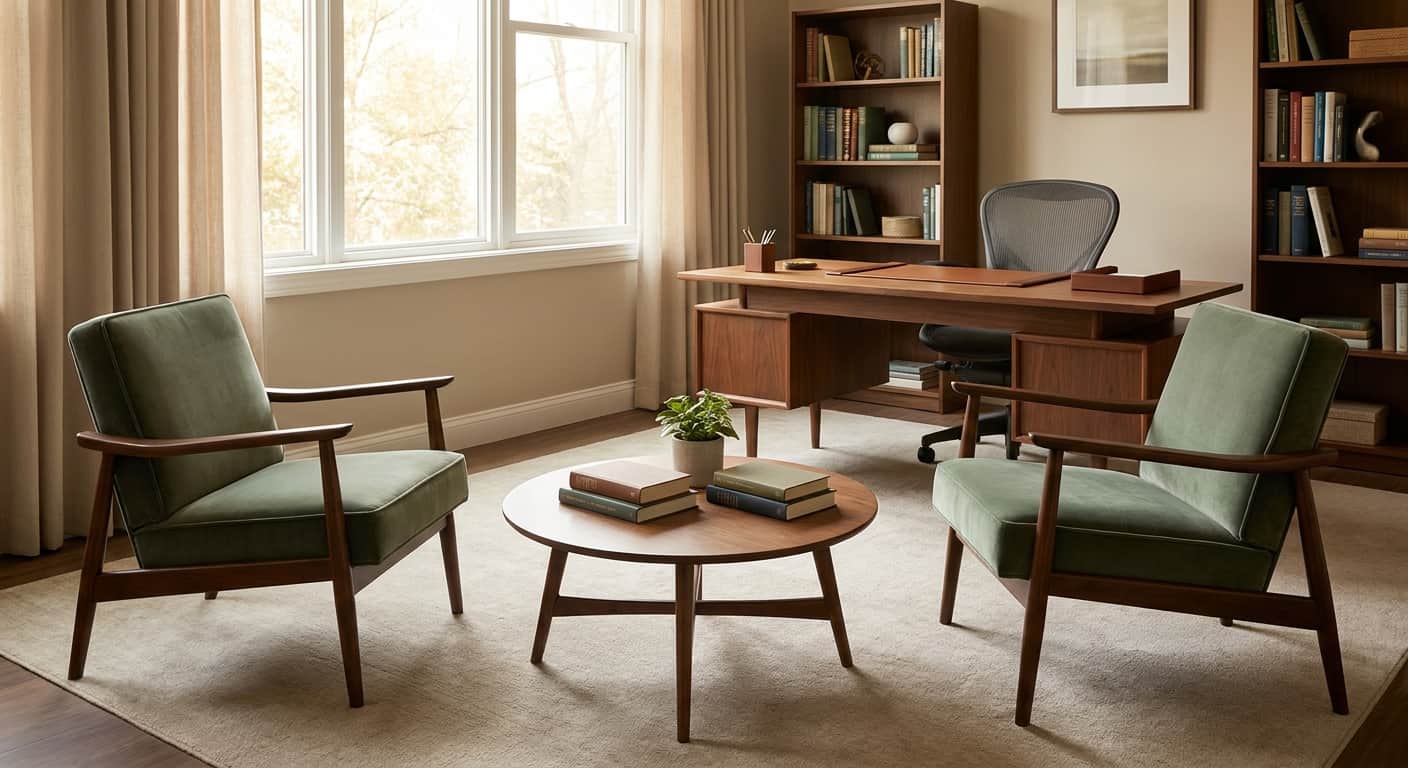
A psychiatrist's office does two jobs at once: it has to hold a patient's attention for a 45- to 50-minute session, and it has to look like nobody spent a fortune doing it. Replica mid-century furniture handles both jobs — recognizable design language without the museum-piece price tag, built for 2026 practices that need pieces to survive years of daily sitting.
TL;DR- Womb Chair replica is the top pick for psychiatrist office furniture in 2026 — buy it for the primary patient chair.
- Egg Chair replica wins single-chair consult rooms that need a clear personal boundary — buy.
- Pelican Chair replica belongs in the waiting area, not the session chair itself — consider it for that role only.
- Skip glass-and-chrome tables and backless benches; both read clinical and fail during 45-50 minute sessions.
Why this matters
Furniture choice affects how fast a patient settles into a session, and a psychiatrist doesn't control much else in that first minute — the chair does half the work. A stiff chrome-and-leather chair signals an intake form. A low, upholstered lounge chair signals sit down, you're not being processed.
The therapist office chairs guide covers the adjacent case, and most of that logic carries over to psychiatry practices running similar session lengths. The difference is usually a desk and sometimes a second consult chair for medication reviews, so the furniture list runs slightly wider than a pure talk-therapy room.
Replica furniture matters here specifically because budget matters. A private practice furnishing two or three consult rooms in 2026 isn't buying original designer pieces at five-figure prices each — it's buying 1:1-dimension reproductions that hold up to daily use and still read as intentional.
Who this is for
This guide is for solo-practice psychiatrists furnishing a first office, group practices standardizing consult rooms across multiple providers, and med-management specialists seeing patients for 20-30 minute follow-ups rather than full therapy hours. If you're outfitting a waiting room, the seating math changes — more chairs, less individual character. If you're outfitting the room where the session actually happens, one or two chairs need to do more: hold posture for a full session, read as calm, and survive a decade of daily contact.
What to look for in psychiatrist office furniture
Seat depth built for a full session
A psychiatrist's chair gets sat in for 45-50 minutes at a stretch, several times a day. Shallow seat pans force patients to perch rather than settle, which works against getting someone to open up. Look for a seat deep enough to support the full thigh without pressure behind the knee.
Upholstery that reads warm, not clinical
Cold materials — hard plastic, unheated leather, bare metal — put a body on alert before a word is spoken. Boucle, wool, and warm-toned leather do the opposite. This matters more in a psychiatrist's office than in almost any other commercial setting, because the patient's nervous system is already primed to notice threat cues.
Frame durability for daily multi-hour use
A chair that wobbles or creaks under a shifting patient breaks concentration mid-sentence. Solid wood or steel frames rated for repeated daily use outlast furniture built for occasional home sitting. Sohnne backs its replica furniture with a 5-year warranty, a reasonable proxy for how a frame should hold up under years of daily contact.
Visual weight and sightlines
A chair too large for the room shrinks the psychological distance a patient needs. A chair too low relative to the psychiatrist's seat creates a power imbalance most practices want to avoid. Match seat heights within an inch or two across both chairs in the room.
Layout flexibility for two-chair or three-chair rooms
Most psychiatry consult rooms run one chair for the patient, one for the psychiatrist, and sometimes a small side table between them. A single-piece lounge chair replica gives more room-arrangement options than a fixed sofa, which matters in rooms often under 150 square feet.
Maintenance realism
Patients aren't gentle with armrests and headrests over years of daily contact. In 2026, a 60-day return window and a 5-year warranty — both standard with Sohnne's replica pieces — give a practice room to test a chair in the actual space before committing long-term.
Top picks for a psychiatrist's office
The picks below come from Sohnne's replica furniture catalog, each with its own upside and its own reason to skip.
The safe pick: Egg Chair replica
Arne Jacobsen designed the Egg Chair in 1958 for the lobby of Copenhagen's SAS Royal Hotel — a piece built to give one person a defined zone in a busy public room, close to the exact job a psychiatrist's consult chair needs to do. The 360-degree swivel base lets a patient angle away without standing up, which matters in a modality where eye contact is a variable, not a constant. The Egg Chair replica works as the patient-facing seat in a single-chair consult room. Buy it if your room seats one patient at a time and you want a chair that reads as private without a screen or divider.
The design-history pick: Womb Chair replica
Eero Saarinen designed the Womb Chair in 1948 at Florence Knoll's request for a chair she could curl up in like a chair should envelop you. That brief — a piece built to make a body feel held rather than exposed — is close to a literal design spec for a psychiatry consult room. The Womb Chair replica seats one comfortably with room to draw legs up, which some patients do instinctively during a difficult session. Buy it for the primary patient chair in any consult room built around 50-minute sessions.
The statement pick: Pelican Chair replica
Finn Juhl's Pelican Chair, from 1940, has a sculptural, wing-like shape that reads as a design object first and a seat second. That's exactly why it's the wrong choice for the actual session chair — it draws attention to itself, which competes with the conversation. The Pelican Chair replica earns its place in a waiting room instead, where a practice wants the space to feel considered before a patient reaches the consult room. Consider it for the waiting area; skip it as the therapy chair itself.
The low-profile pick: PK22 lounge chair replica
Poul Kjaerholm's PK22, released in 1956, pairs a flat steel frame with a woven cane or leather seat — low, minimal, and quiet in a room. It reads less iconic silhouette and more well-made chair nobody notices, useful in a practice that wants furniture to fade into the background rather than announce a design budget. Consider the PK22 lounge chair replica for a psychiatrist who wants function over recognizability; note the low seat height reads more casual than clinical-appropriate for some practices.
“If a chair announces itself before it holds a conversation, it doesn’t belong in a psychiatrist’s consult room.”
Furnish your consult room
Browse Sohnne’s mid-century replica seating built for daily, commercial-adjacent use.
Browse the collectionWhat to avoid
Glass-and-chrome coffee tables
Cold materials and sharp edges look sleek in a lookbook and clinical in a session room. A patient describing a hard week doesn't need a glass corner in their peripheral vision.
Backless benches or stools
These work in a waiting room where visits run five minutes. They fail hard in a room where someone sits for 45-50 minutes and needs back support to stay grounded through a full session.
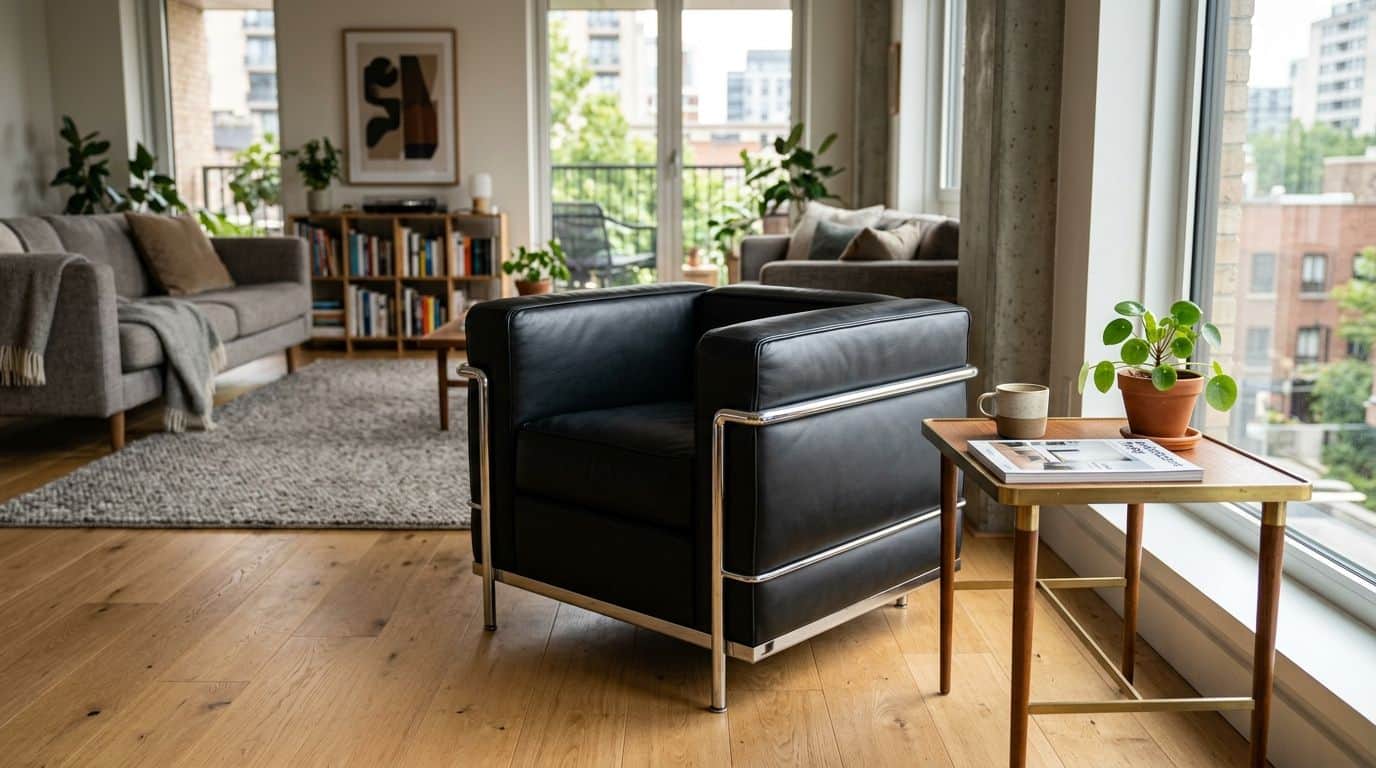
All-black leather with no texture break
A single-material black leather room reads corporate-interrogation rather than calm. One warm textile — a wool throw, a boucle accent chair — breaks the effect without changing the whole room.
Verdict comparison
All four chairs below come from Sohnne's replica catalog and share the same 1:1 dimension standard, so the differences that matter are role and feel, not build quality.
| Chair | Best role | Seat feel | Verdict |
|---|---|---|---|
| Egg Chair replica | Single-patient consult room | Enclosed, private | Buy |
| Womb Chair replica | Primary session chair | Enveloping, low | Buy |
| Pelican Chair replica | Waiting area | Sculptural, upright | Consider |
| PK22 lounge chair replica | Low-profile consult seating | Low, minimal | Consider |
FAQ
What furniture is best for a psychiatrist’s office in 2026?
Womb Chair and Egg Chair replicas are the strongest picks for psychiatrist office furniture in 2026 because both were designed to make one person feel enclosed rather than exposed. Pair either with a low side table and keep the rest of the room simple.
Is a Womb Chair replica good for a therapy or psychiatry session room?
Yes, the Womb Chair replica was originally designed so a person could curl up and feel held, close to the exact job a session chair needs to do. It works best as the primary patient chair in rooms built around 45- to 50-minute sessions.
Does a psychiatrist’s office need different furniture than a therapist’s office?
Mostly the same furniture works for both, with one difference: psychiatry practices often need a desk for medication charts and a second consult chair for shorter follow-up visits. Therapy rooms built around full-hour sessions can skip the desk entirely.
Should waiting room furniture match the consult room furniture?
No, waiting rooms can carry a more sculptural, statement piece like a Pelican Chair replica, while consult rooms should stay quieter and less visually dominant. The waiting room sets a tone; the consult room needs to disappear into the background.
How long does replica furniture last in a private practice setting?
A well-built replica with a solid wood or steel frame holds up to years of daily multi-hour sitting, which is why a 5-year warranty is a reasonable benchmark to check before buying. Fabric and leather wear faster than frames, so budget for reupholstering before frame replacement.
Is boucle or leather better for a psychiatrist’s consult chair?
Boucle and warm-toned leather both outperform cold materials like unheated leather or hard plastic for patient-facing seating. Boucle reads slightly warmer and more approachable; leather holds up better to years of daily contact and is easier to clean.
What should a psychiatrist’s office avoid in furniture choices?
Avoid glass-and-chrome tables, backless benches, and all-black leather rooms with no texture break, since all three read clinical rather than calm. One warm textile, like a wool throw or a boucle accent chair, fixes the effect without a full redesign.
Do replica furniture pieces cost less than the original designer versions?
Replica furniture reproduces the original 1:1 dimensions and design details at a lower cost than commissioning or sourcing an authenticated original piece. Exact pricing varies by piece and finish, so check current options directly before budgeting a room.
One last thing
Saarinen built the Womb Chair specifically so Florence Knoll could curl up in it during long work sessions — the original 1948 brief had nothing to do with offices and everything to do with a body needing to feel enclosed during hard, extended thinking. That's the same job a psychiatrist's consult chair does for a patient in 2026, just applied to a different kind of work.
Related guides