Best Chairs for a Therapist Office (2026 Verdict)

Sohnne Design Studio
July 16, 2026
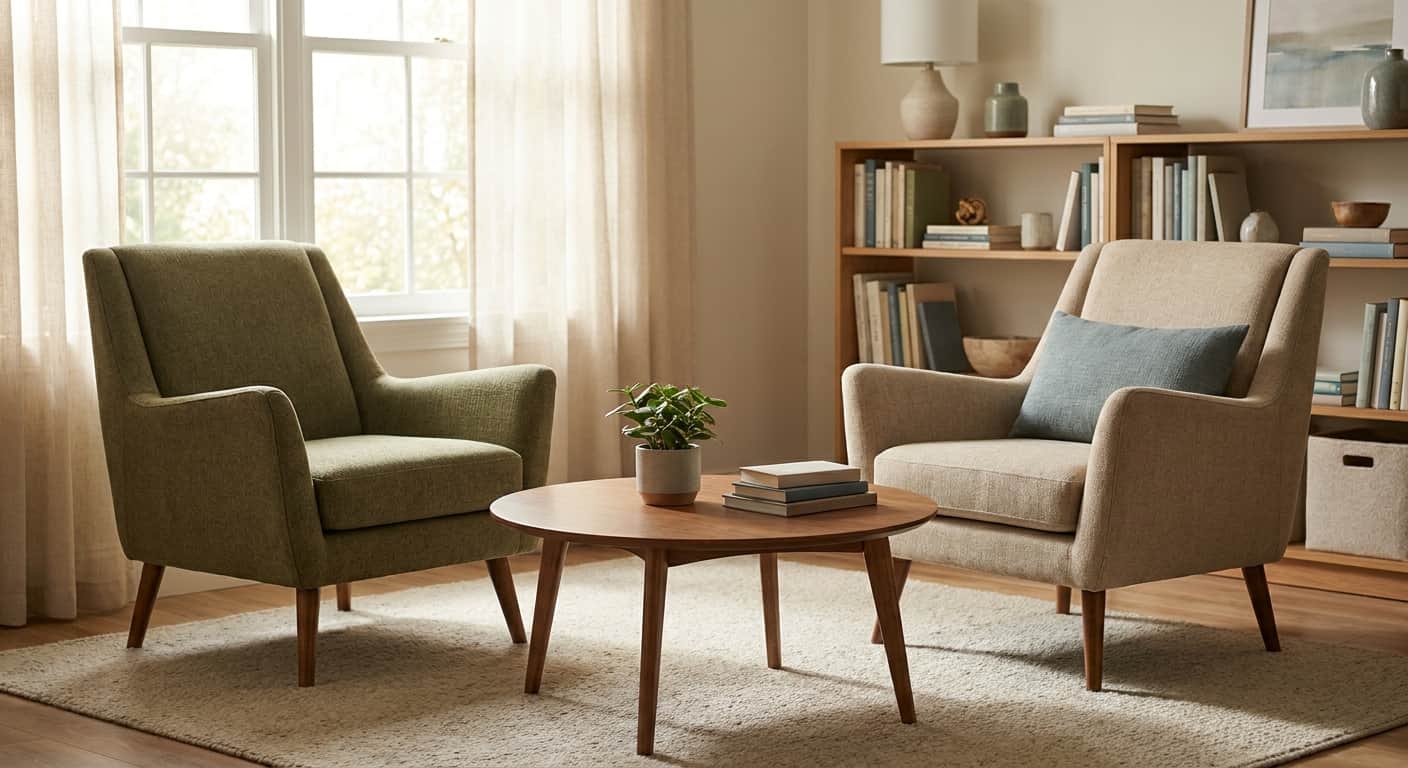
Therapists sit in the same chair for eight, sometimes ten, sessions a day, and the wrong seat shows up in posture complaints and afternoon fatigue by session five. This guide ranks the replica lounge chairs that hold up to that schedule without turning a therapy office into a furniture showroom.
TL;DR
The Eames Lounge Chair replica is the safest buy for a therapist office in 2026 — it seats clients comfortably for 50-minute sessions and reads as calm authority rather than clinical sterility. The Egg Chair replica wins for small offices under 120 square feet where a swiveling, enclosed seat helps anxious clients feel less exposed. Skip anything with a hard lacquered shell and no lumbar contour — those look sharp in photos and hurt after session three. Best chairs for a therapist office balance eight-hour comfort, low maintenance upholstery, and a seat that doesn't dominate the room.
Why this matters
A therapist's chair choice isn't decor — it's a clinical tool. Clients spend 45 to 60 minutes in a fixed position, and the practitioner sits across from them for six to ten sessions a day, five days a week. That's real cumulative load on a spine, not a weekend lounging scenario.
Seat height, lumbar support, and armrest height affect whether a client leans forward and opens up or stiffens and shuts down. Practitioners who've swapped a cheap task chair for a proper lounge chair report fewer end-of-day back complaints, and that's the practical case for spending on the right piece once instead of replacing a bad one every 18 months. If neck strain is already a problem in your practice, how to pick the right lounge chair for neck pain walks through the angle and headrest details that matter most before you buy anything.
How we ranked these
Ranking criteria for 2026: seat depth and lumbar contour for sessions running 45 minutes or longer, upholstery that survives daily contact without pilling within a year, a silhouette that doesn't overpower a room under 200 square feet, and swivel or recline function that supports posture changes during a long clinic day. Each pick below is scored against those four factors, not against showroom looks alone.
The ranked list
1. Eames Lounge Chair replica — the safe pick
The molded plywood shell and 360-degree swivel base let a practitioner shift position without breaking eye contact with a client, and the leather upholstery on the Sohnne version is rated for daily use rather than occasional lounging. Seat height sits around 15 inches, low enough to feel grounded but not sunken. For an office running back-to-back 50-minute sessions, this is the chair that won't need replacing in three years. Before buying, what to know about the Eames Lounge Chair replica covers the leather grades and base finishes worth comparing. Buy.
2. Egg Chair replica — the wildcard
The enclosed, cocoon-like shell of the Egg Chair does something no flat-back lounge chair can: it gives an anxious client a sense of partial privacy while still facing the room. It swivels a full 360 degrees on a swiveling base, which helps in offices under 120 square feet where the chair has to double as both client seat and reading corner. Egg Chair replica options inspired by Arne Jacobsen breaks down the wool and cashmere upholstery choices that hold up best under daily wear. Buy for small, intimate offices.
3. Pelican Chair replica — the design statement
Finn Juhl's original design has a low, wide seat that suits practitioners who want a client to physically settle rather than perch. The curved wooden legs and deep-set cushion keep the chair from feeling clinical, which matters in trauma-informed practices where the room itself needs to signal calm. The Pelican Chair replica by Finn Juhl has the full sizing breakdown if you're pairing it with a compact side table. Consider if your office leans warm and residential rather than corporate.
4. Hiroshima Armchair replica — the minimalist option
Naoto Fukasawa's design keeps a narrow footprint and a straight-backed posture that works better for practitioners than clients, since the upright seat doesn't invite the kind of lounging a 50-minute session usually calls for. It's a strong pick for the therapist's own chair, less so for the client seat. Consider for the clinician side of the room only.
5. Papa Bear Chair replica — the oversized comfort pick
Hans Wegner's high-backed design wraps around a seated client, which some practices love for grounding anxious clients and others find too enveloping for a professional setting. The winged headrest supports a full recline position that most therapy chairs don't offer. It runs large — measure your doorway and room clearance before ordering. Consider for larger offices over 180 square feet; Skip in tight rooms.
6. PK22 Lounge Chair replica — the low-profile pick
Poul Kjærholm's steel-framed design sits lower than most of this list, which suits offices going for a mid-century modern gallery look over a residential one. The flat cane or leather seat lacks deep lumbar support, so sessions past 45 minutes can get uncomfortable for clients with lower back issues. Consider for shorter session formats; Skip if your sessions regularly run past 50 minutes.
7. Swan Chair replica — the visual anchor
Arne Jacobsen's Swan Chair has a sculptural shell that photographs well for a practice's website but offers less back support than the Egg Chair from the same design era. It works better as a waiting-room accent than the primary session chair. Wait unless you're furnishing a reception area rather than the therapy room itself.
Comparison table
| Chair | Best for | Session length fit | Room size fit | Verdict |
|---|---|---|---|---|
| Eames Lounge Chair replica | All-purpose daily use | 45-60+ min | Any | Buy |
| Egg Chair replica | Small, intimate offices | 45-50 min | Under 120 sq ft | Buy |
| Pelican Chair replica | Warm, residential feel | 45-50 min | Any | Consider |
| Hiroshima Armchair replica | Clinician's own seat | Any | Any | Consider |
| Papa Bear Chair replica | Larger, grounding rooms | 45-60+ min | Over 180 sq ft | Consider/Skip |
| PK22 Lounge Chair replica | Shorter sessions | Under 45 min | Any | Consider |
| Swan Chair replica | Waiting room only | N/A | Any | Wait |
Where to buy
Buy from the manufacturer or a direct-to-consumer retailer rather than a marketplace listing — replica furniture quality varies enormously between factories, and a chair that will sit under daily clinical use for six to eight sessions a day needs a real warranty behind it, not a third-party seller with no accountability. Confirm the upholstery grade before ordering; leather rated for residential lounging isn't always rated for eight-hour-a-day contact.
If you're comparing this decision against a straight ergonomic office chair rather than a lounge chair, it's worth noting that the calculus for ergonomic chairs for long workdays runs on different criteria entirely — lumbar adjustability and seat pan tilt matter more than silhouette when the seat is functional rather than client-facing. A therapy room chair is furniture with a clinical job; a desk chair is a tool. Don't mix the two shopping lists.
Check return policy windows before you buy — a 60-day return window gives you time to actually sit in the chair through a full week of sessions before committing, which matters more than any spec sheet.
FAQ
What's the best chair for a therapist office in 2026?
The Eames Lounge Chair replica is the strongest all-around pick because it handles daily 45-60 minute sessions without sagging support and doesn't overwhelm a small room.
Is an Egg Chair replica good for a small therapy office?
Yes — its enclosed shell and 360-degree swivel base work especially well in rooms under 120 square feet where privacy and flexibility both matter.
How much should a therapist office chair cost?
Pricing varies by material and finish, so check current pricing directly on the retailer's site rather than relying on outdated figures.
Do therapy chairs need a warranty?
Yes, given the daily use load — look for a warranty of several years, not months, since these chairs see far more wear than a living room piece.
Is leather or fabric better for a therapy chair?
Leather wipes clean faster between clients and resists daily contact wear better than most fabrics, though wool blends on chairs like the Egg Chair hold up well too.
What chair height works best for client comfort?
A seat height around 15 to 17 inches suits most adult clients and keeps feet flat on the floor, which supports a more relaxed, open posture during sessions.
Should the therapist and client chair match?
They don't need to match exactly, but pairing a lower-backed chair for the clinician with a deeper lounge chair for the client, like a Hiroshima Armchair replica paired with an Eames Lounge Chair replica, keeps the room balanced without looking staged.
Are Swan Chair replicas comfortable for long sessions?
Not especially — the shell offers less lumbar support than deeper lounge chairs, which is why it ranks better as a waiting-room piece than a primary session chair.
One last thing
The detail most practices miss: the chair's swivel radius matters as much as its cushioning. A client who can turn slightly away from direct eye contact during a hard moment in session settles faster than one locked into a fixed-facing chair — which is exactly why the Eames Lounge Chair replica and Egg Chair replica outrank fixed pieces like the Pelican Chair replica on this list, even though the Pelican wins on pure visual warmth.
For practices furnishing the rest of the room around whichever chair you land on, replica furniture for home offices covers the desk and storage pairings that keep a small therapy office from feeling cluttered by 2026 standards.