Pierre Paulin Furniture Replica Styling: 2026 Room Guide

Sohnne Design Studio
July 23, 2026
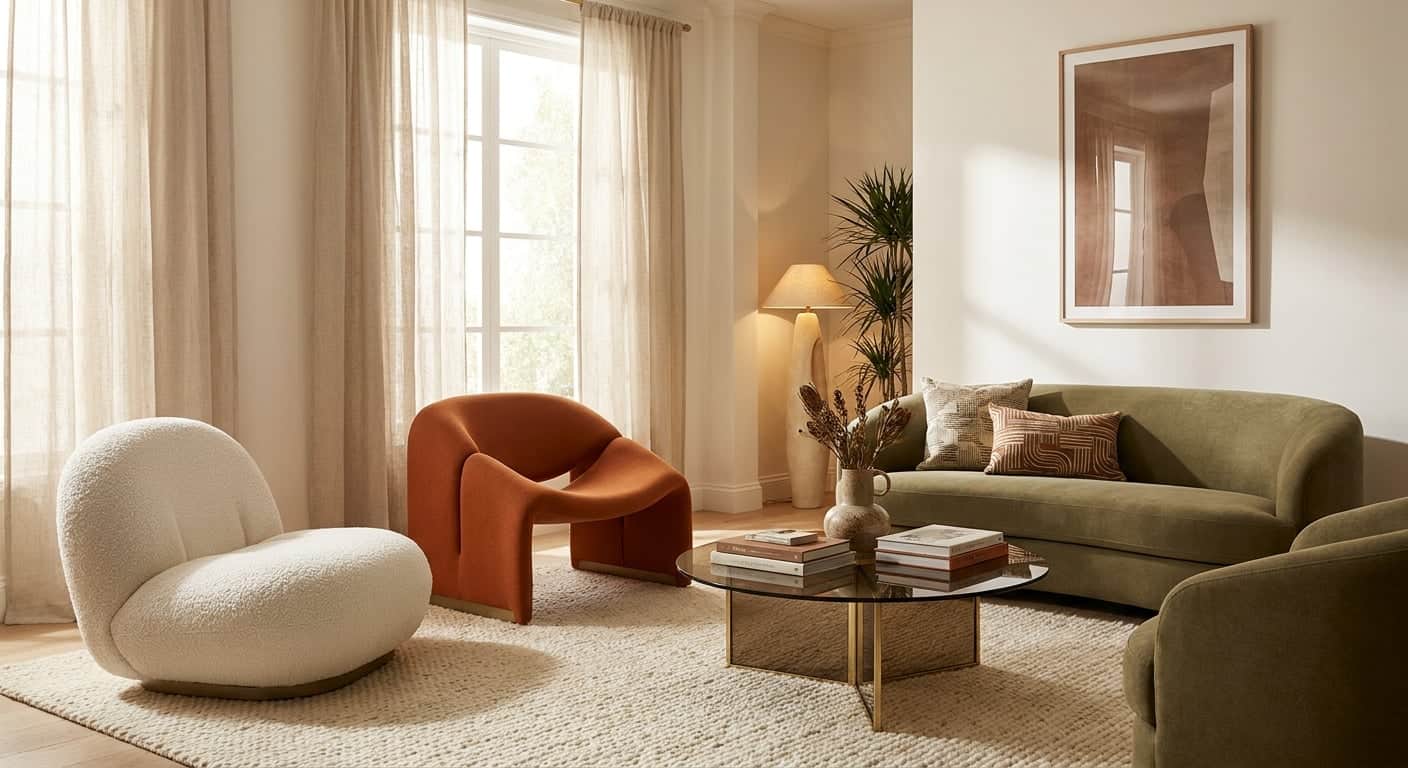
A Pierre Paulin room isn't about matching a museum plaque — it's about getting the proportions, palette, and materials right so the pieces read as intentional, not staged. This guide walks through building one from a single anchor piece to the final rug, with the exact order to do it in.
TL;DR- Anchor the room with one Dune sofa replica or Flair O armchair replica — never both as competing centerpieces.
- Keep the palette inside three earth tones: ochre, chocolate, cream boucle — Paulin’s actual 1968-1972 range.
- Low, open seating layouts read as Paulin in 2026; tall-backed or boxy furniture kills the effect.
- Pierre Paulin furniture replica styling works with one hero piece, one supporting chair, and a jute rug — skip the third statement piece.
Why This Matters
Pierre Paulin's most cited forms — the Flair O, the Dune sofa, the Tongue chair — still show up on interior mood boards as shorthand for biomorphic '70s design. Anyone searching pierre paulin furniture replica styling is usually holding one piece already, often a Dune sofa replica by Pierre Paulin, and trying to build a room around it without it looking like a costume set.
The material palette Paulin worked in — stretched jersey, boucle, molded foam over low steel frames — is specific enough that one wrong fabric or the wrong seat height throws off the whole room. Get the anchor, the palette, and the floor level right, and the room reads curated in 2026 the same way it read intentional in 1968. Get any one of those wrong and the piece sits in the room like a prop instead of furniture.
What You'll Need
- One Pierre Paulin hero piece — a Dune sofa or Flair O armchair, not both
- A supporting seat in a contrasting but era-correct form (wishbone chair, wire-base stool)
- Boucle, jersey, or brushed wool upholstery swatches to check against daylight before buying
- A low-pile jute or wool rug sized to sit under the front legs of every seat
- Warm, low-temperature lighting — a floor lamp or wall sconce, not a single overhead fixture
- 60-90 minutes to lay out furniture on paper or with painter's tape before moving anything
The Steps
1. Pick the One Anchor Piece and Commit to It
Decide between a Dune sofa and a Flair O armchair before anything else — the whole room layout follows from this choice. The Dune sofa reads as a low, curved sculpture and works as the room's main seat; the Flair O is a single molded shell and works better as a reading corner or a second-seat accent.
Do not buy both as competing centerpieces in the same room. Two Paulin heroes fighting for attention is the single most common mistake in rooms that look busy instead of designed. Pick one, then build everything else to support it.
Common mistake: buying the piece on sale without measuring the clearance around it — Paulin forms are wide and low, and they need at least 30 inches of walking space on the open side to avoid looking cramped.
2. Lock the Palette to Three Paulin-Era Tones
Paulin's originals from the Artifort years sat in ochre, chocolate brown, and cream — rarely more than three tones in one room. Pick your dominant tone from the anchor piece's upholstery, then add one deeper tone (chocolate or rust) and one light tone (cream or bone) for walls, trim, or a throw.
Hold fabric swatches against the wall paint in daylight before ordering anything upholstered. Boucle in particular shifts warmer under incandescent light than it looks on a screen, and a tone that reads cream in a photo can look yellow in a north-facing room.
Common mistake: adding a fourth accent color "for interest." A fourth tone almost always fights the anchor piece instead of supporting it.
3. Match Materials Before Furniture
Paulin's era mixed textures more than colors — stretched jersey against boucle against a low wool rug. Before adding a second piece of furniture, decide what texture contrast the room needs: a smooth wool rug against a boucle sofa, or a jersey-covered chair against a jute rug.
One texture pairing per room is enough. Three or more textures competing at the same visual weight is what makes a room look like a fabric sample board instead of a living space.
4. Set the Seating Low and Open
Paulin pieces sit low — often 12 to 14 inches off the floor at the seat — and the room layout has to match that height or the anchor piece looks orphaned next to taller furniture. Pull side tables and consoles down to 18-20 inches wherever possible, and keep the conversation grouping open rather than boxed against a wall.
For a working layout example, the guide on styling the Dune sofa in a living room walks through exact placement distances for a low-seat sofa against a standard 12×14 room.
Common mistake: pushing the sofa flush against a wall the way you would a standard three-seater. Paulin pieces read better floated a few inches off the wall with the back visible, since the molded shape is part of the design.
5. Add One Contrast Chair, Not Two
One supporting seat balances the room without competing with the anchor. A Flair O armchair replica works as that second seat when the Dune sofa is the hero, since the two pieces share the same molded-form language without duplicating the silhouette.
If you're using the Flair O as the hero instead, choose a straight-lined wishbone or wire-base chair as the support — the contrast in line reads intentional rather than mismatched.
6. Light for Curves, Not Corners
Overhead lighting flattens molded forms and erases the shadow lines that make Paulin's pieces look sculptural. A floor lamp angled across the sofa's curve, or a low wall sconce at seat height, throws shadow into the folds and makes the shape read three-dimensionally.
Use warm-temperature bulbs, roughly 2700K, and skip a single ceiling fixture as the only light source in the room.
7. Ground It With the Right Rug
A low-pile jute or wool rug anchors the low seating without competing with the molded shapes above it. Size the rug so it extends under the front legs of every seat in the grouping — a rug that stops short of the seating makes the whole layout look unfinished, even if every other choice is right.
“If the room reads busy, you’ve mixed two Paulin-era heroes instead of one.”
Troubleshooting
- Room feels flat or too beige. Add one dark contrast point — a chocolate boucle throw or a black metal side table — to break up the earth-tone palette.
- The anchor piece looks small in a large room. The rug is undersized. Extend it 12-18 inches past the seating edges so the piece has a defined zone instead of floating.
- Guests complain the seating is too low. Pair it with a slightly taller side table, 20-22 inches, so there's a comfortable surface for drinks at arm height.
- The room reads like a costume set. You've mixed too many designer icons from different eras. Limit the room to one Paulin hero and one supporting piece; keep everything else neutral.
- Boucle fabric shows soil fast. Vacuum weekly with a soft brush attachment and treat spills immediately — boucle's texture traps dust more than a flat weave does.
Tools and Resources
- Fabric swatch cards — request them before ordering any upholstered piece, especially boucle or jersey
- A tape measure and painter's tape for laying out the furniture footprint before you move anything heavy
- How to verify quality before buying replica furniture — a checklist for frame material and foam density before spending on a Pierre Paulin piece
- A color wheel or paint chip set to hold against boucle tones in daylight, not under store lighting
What to Do Next
If you haven't chosen your anchor piece yet, start there. The guide to best mid-century modern replica furniture for living rooms breaks down how a Dune sofa and a Flair O armchair each perform in different room shapes before you commit to either one in 2026.
FAQ
What is the best Pierre Paulin piece to start a room with?
The Dune sofa replica is the safer starting anchor because it works as a primary seat in most living room layouts. The Flair O armchair replica is the bolder pick and works best as a second seat or a dedicated reading chair.
How many Pierre Paulin pieces should be in one room?
One hero piece and one supporting chair is the practical limit for most rooms in 2026. Mixing two large Paulin silhouettes in the same space usually competes for visual weight instead of complementing it.
What colors work best for Pierre Paulin furniture replica styling?
Stick to three earth tones — ochre, chocolate, and cream — matching Paulin’s original Artifort-era palette. A fourth accent color almost always pulls attention away from the anchor piece.
Is boucle or jersey fabric more authentic for a Pierre Paulin room?
Both appear in Paulin’s original designs, but jersey gives a smoother, tauter surface while boucle adds texture. Pick jersey for a cleaner, more minimal room and boucle when the room needs texture contrast against a smooth rug.
How low should seating be in a Pierre Paulin styled room?
Paulin pieces typically sit 12 to 14 inches off the floor, so side tables and consoles should drop to 18-20 inches to stay visually connected to the seating rather than towering over it.
Can a Pierre Paulin piece work in a small living room?
Yes, as long as it’s the only large-scale statement piece in the room. A single Flair O armchair or a compact Dune sofa configuration works well in smaller footprints when the supporting furniture stays low and simple.
What rug works best under a Dune sofa replica?
A low-pile jute or wool rug sized to extend 12-18 inches past the seating edges grounds the low-profile sofa without adding visual bulk above the floor line.
One Last Thing
Paulin designed the Flair O in the late 1960s using a single molded foam shell with no visible internal frame — the entire silhouette comes from the foam form itself, not from upholstered panels over a skeleton. That's why the piece looks wrong the moment it's paired with anything boxy or hard-edged: there's no straight line anywhere in the original design for a rectangular side table or a square ottoman to talk to. Keep every other piece in the room curved, low, or soft-edged, and the Paulin anchor stops looking like an outlier and starts looking like the reason the room works.