Hiroshima Armchair Replica 2026: Buy or Skip Guide

Sohnne Design Studio
July 15, 2026
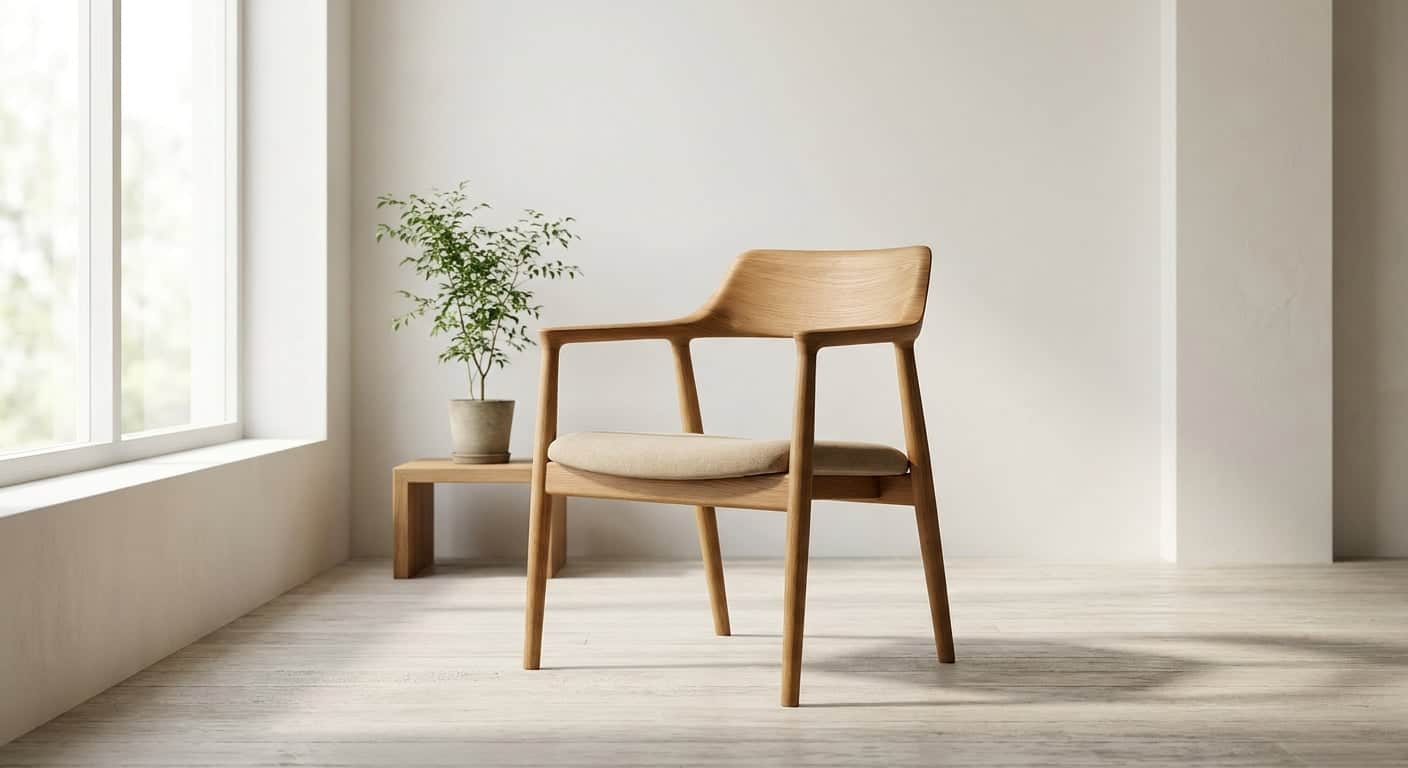
The Hiroshima armchair replica reproduces Naoto Fukasawa's 2008 design for Maruni — the single, unbroken curve of the arm melting into the backrest — and this guide breaks down which frame, upholstery, and proportion combination actually earns a place in your living room in 2026.
TL;DR: The Hiroshima armchair replica works best for buyers who want Japanese restraint without going cold and minimal — small dens, reading corners, dining-adjacent lounge spots. The Hiroshima armchair in solid walnut with a fabric seat is the Buy: it holds the original's proportions, seats comfortably at a standard 17-inch height, and carries Sohnne's 5-year warranty and 60-day return window. Leather versions and oversized "lounge" reproductions that stray from Fukasawa's original arm-to-seat ratio are the ones to Skip.
Why This Matters
Fukasawa didn't design the Hiroshima chair from a sketchbook — Maruni developed it in 2008 as part of a project to put well-made, affordable furniture into schools and public spaces in Hiroshima, using a five-axis NC lathe to carve the arm and backrest from a single mass of wood instead of joining separate pieces. That manufacturing detail is why the chair reads as one continuous gesture instead of a frame with parts bolted on.
That single detail also explains why so many replicas fail. A joined arm-and-back assembly, even upholstered well, breaks the visual line the original design depends on. If you're shopping a Hiroshima armchair replica in 2026, the joinery is the first thing to check — everything else is secondary.
Who the Hiroshima Armchair Replica Is For
This chair suits people furnishing a room where restraint matters more than statement-making — a reading nook, a small den, a home office corner, or a dining room that needs an accent seat without visual clutter. If you gravitate toward Japanese-Scandinavian crossover pieces over louder mid-century icons, the Hiroshima profile fits that instinct. Buyers pairing it with a reading corner setup get the most out of its scale — it's built for one-person, close-quarters comfort, not sprawling.
It is not the chair for a large open-plan living room that needs a visual anchor, and it's not built for households wanting a recliner-style lounge seat with deep sink-in cushioning.
What to Look for in a Hiroshima Armchair Replica
Frame Material and Joinery
The original uses solid ash, oak, or walnut carved as a continuous piece, not a boxed frame with separate arm supports. Check whether the replica's arm curves into the seat rail without a visible seam — that seam is the single biggest tell of a shortcut reproduction.
Seat Height and Proportions
The Hiroshima armchair sits around 17 inches at the seat, lower and more compact than a typical lounge chair. Reproductions that bump the height to 19-20 inches to feel more "substantial" lose the low, grounded stance that defines the design.
Upholstery and Cushion Fill
Fukasawa's original shipped with a thin, tailored cushion, not a deep pillow-top seat. A high-density foam core with a fitted fabric or leather cover keeps the silhouette tight; overstuffed cushions round out the edges the design is known for.
Arm Curve and Ergonomics
The "melted" arm-to-back transition isn't decorative — it's what lets you rest an elbow at multiple angles without a hard edge. Run a hand along the curve in photos or in person; a replica with a sharp inside angle where arm meets seat has cut corners on the carving process.
Warranty and Return Policy
Solid wood furniture this precisely shaped needs a real backstop. A 5-year warranty and a 60-day return window, which Sohnne offers on its replica pieces, tell you the maker stands behind the joinery long-term — not just at unboxing.
Finish Consistency
If you're buying the armchair alongside a Hiroshima dining chair or bench, check that the wood tone and grain finish are described as matched across the line. Mismatched walnut stains between pieces bought months apart are a common complaint with replica furniture generally.
Top Picks
The safe pick — Walnut frame, fabric seat. This is the closest match to Fukasawa's original material palette and keeps the seat height near that 17-inch mark. It reads warm without being heavy, and it's the version that photographs closest to the Maruni original. Buy.
The everyday-durability pick — Oak or ash frame, performance fabric. Lighter wood tone, same carved-arm construction, better suited to sun-exposed rooms where walnut can shift color over a few years. If your room gets strong afternoon light, this is the more sensible long-term choice. Buy.
The wildcard — Leather seat version. Leather changes the character of the chair from soft-Japanese-minimal to something closer to a boardroom accent seat. It's not wrong, but it moves the chair away from the reading-nook, low-key use case most buyers are after. Consider, only if the room's other materials already lean leather-heavy.
The comparison pick — Pelican chair replica. If you want the same sculptural, single-material confidence but with a curvier, more enclosing shape, the Pelican lounge chair replica is worth cross-shopping. It's a bigger footprint and a different design lineage (Finn Juhl, not Fukasawa), so it suits a room that wants more presence. Consider as an alternative, not a substitute.
The bolder alternative — Chieftain chair replica. For buyers who like the wood-and-upholstery pairing but want a heavier, more sculptural Scandinavian statement, the Chieftain chair replica trades restraint for visual weight. It won't disappear into a small room the way the Hiroshima does. Skip if the room is under 120 square feet.
What to Avoid
- Oversized "lounge" versions marketed under the Hiroshima name. The original is a compact armchair, not a recliner. If the listing shows a deep, wide seat pan over 22 inches, it's a different chair wearing the name.
- Boxed-frame construction disguised with upholstery. A skirt or wrap-around fabric panel at the arm-to-seat junction is often hiding a joined frame rather than a carved one.
- Unfinished or inconsistent stain across a matched set. Before buying an armchair to pair with existing dining chairs or a bench, confirm the finish is described as matched, not "similar tone." Check quality-control expectations against a general standard like the one laid out in how to choose a replica sofa that lasts — the same joinery and finish logic applies to chairs.
Verdict Comparison
| Variant | Frame | Seat Height | Upholstery | Best For | Verdict |
|---|---|---|---|---|---|
| Walnut, fabric | Solid walnut | ~17 in | Fitted fabric | Reading nooks, dens | Buy |
| Oak/ash, performance fabric | Solid ash or oak | ~17 in | Performance weave | Sun-exposed rooms | Buy |
| Walnut, leather | Solid walnut | ~17 in | Leather | Leather-forward interiors | Consider |
| Oversized "lounge" version | Varies | 19-20+ in | Deep cushion | Not recommended | Skip |
FAQ
Is the Hiroshima armchair replica comfortable for daily use?
Yes, for one-person, upright-leaning use — reading, working, casual seating — but it's not built as a deep-recline lounge chair, so extended sprawling isn't its strength.
What wood is closest to the original Hiroshima chair?
Walnut and ash are closest to Naoto Fukasawa's original material choices from the 2008 Maruni release; oak versions are a common and acceptable substitute in replicas.
How much does a Hiroshima armchair replica cost compared to the original Maruni piece?
Replica pricing runs well below Maruni's retail line since the originals are produced in Japan under licensed design rights; check current pricing directly on the product page, as it varies by frame and upholstery choice.
Does the arm curve matter that much on a replica?
Yes — the continuous carved arm-to-back line is the single design signature of the Hiroshima chair, and a visible seam at that joint is the clearest sign of a lower-effort reproduction.
Is a Hiroshima armchair replica good for small apartments?
It's one of the better mid-century replica picks for small spaces because of its compact ~17-inch seat height and single-seat footprint, unlike wider lounge chairs.
What's the difference between the Hiroshima armchair and the Pelican chair replica?
The Hiroshima is a Naoto Fukasawa design built around one continuous carved curve; the Pelican is a Finn Juhl design with a deeper, more enclosing shell shape — different eras, different silhouettes.
Does Sohnne offer a warranty on the Hiroshima armchair replica?
Sohnne backs its replica furniture with a 5-year warranty and a 60-day return window, along with Affirm financing and free insured shipping on qualifying orders.
Can I match a Hiroshima armchair with dining chairs from the same design line?
Yes, but confirm the wood finish is described as matched across pieces before ordering separately, since stain batches can shift slightly between production runs.
One Last Thing
The detail most buyers miss: Maruni's original Hiroshima project wasn't a design flex — it began as an effort to put quality furniture into Hiroshima's public schools after years of budget furniture wearing out fast. The carved single-arm construction was chosen specifically because it holds up to decades of daily handling better than a joined frame. That's the actual test for a Hiroshima armchair replica in 2026: not how it looks in a photo, but whether the arm-to-seat curve still feels solid after five years of actual use.
Stay connected with us!
Keep in touch with what’s new and next. Subscribe for weekly insights, product launches, and community news!