Best Replica Furniture for a Museum Lobby (2026)

Sohnne Design Studio
August 27, 2026
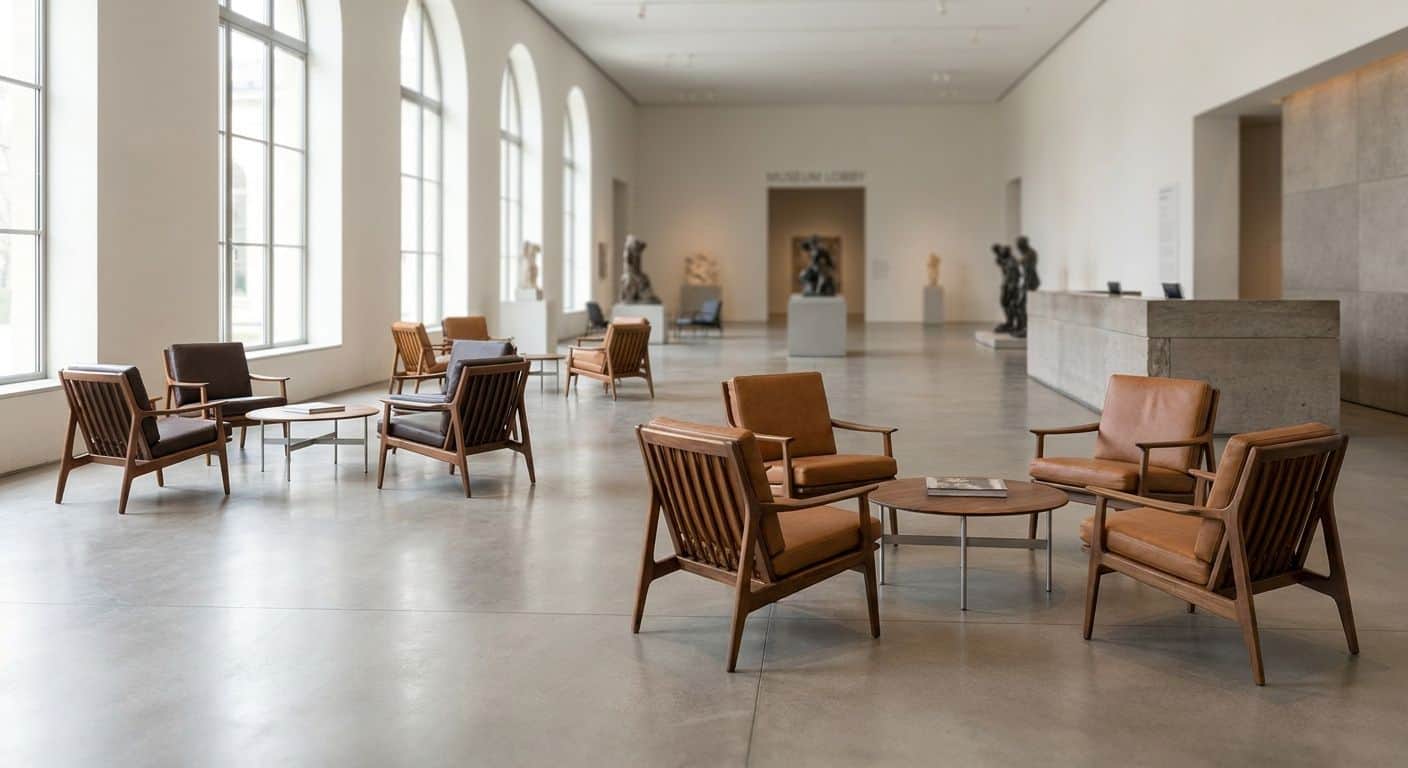
Museum lobbies need seating that photographs like art and survives a school field trip stampede on the same afternoon — most replica furniture museum lobby searches turn up chairs that look right in a catalog and wrong at scale. This guide ranks the pieces that actually hold up in a high-visibility public space in 2026, not just a living room.
TL;DR- Barcelona Chair replica wins for replica furniture museum lobby seating clusters — low, wide, and built for pairs. Buy.
- Womb Chair replica handles open-plan lobbies without repeating the same silhouette everywhere. Buy.
- Eames Lounge Chair replica is the wildcard: iconic, but its recline eats floor space fast. Consider.
- Wassily Chair replica skips for high-traffic lobbies — the leather straps show wear within months of heavy use.
- PK22 Lounge Chair replica suits smaller reception nooks better than a main lobby floor. Consider.
Why this matters
A museum lobby isn't a living room with better lighting. It's a semi-public transit zone that thousands of visitors pass through weekly, often carrying bags, kids, and cameras, and the furniture has to read as design-forward while surviving that traffic without babysitting.
Institutions also buy in multiples — two, four, six of the same chair — so a scale mistake or a durability gap gets multiplied across the whole order. That's different math than a single household purchase, and it's why the criteria below lean harder on frame material and warranty terms than they would for replica furniture for a corporate reception area, which sees lighter, more controlled foot traffic.
How this list was ranked
Every piece below gets judged on four things: historical accuracy against the original 1:1 dimensions, how the material holds up under repeated public use, whether the silhouette reads at distance in a room with high ceilings, and what warranty or return coverage backs the purchase. Provenance matters to an institution's reputation, so a replica that fudges proportions or swaps in a thinner-gauge frame gets marked down even if it looks fine in a photo.
Sohnne pieces used as reference points here are factory-made to original specifications, carry a 5-year warranty, and ship with a 60-day return window — three facts that matter more once you're ordering six chairs instead of one.
The ranked list
1. Barcelona Chair replica — the safe pick
Designed by Mies van der Rohe for the 1929 Barcelona International Exposition, this chair was built for exactly this job: a formal public space that needs seating without visual clutter. Its low, wide stance pairs naturally into clusters of two or four, which is how most museum lobbies actually seat visitors waiting on a group or a tour.
The steel frame reads as sculpture from across a lobby floor, and the flat cushion profile survives constant sitting and standing better than deep upholstery. For a Barcelona Chair replica styled into a corporate lobby, the same logic applies to museum entries: pair it, don't scatter it. Verdict: Buy.
2. Womb Chair replica — the wildcard that works
Eero Saarinen designed the Womb Chair in 1948 to let a sitter curl up sideways instead of sitting square, which is exactly why it doesn't repeat the Barcelona Chair's formality across the same room. Its rounded shell reads as a single sculptural object even in a lobby with 20-foot ceilings, where flat-backed chairs tend to disappear.
A full Womb Chair replica buyer's guide for 2026 covers fabric and base options in more depth, but the short version for institutional use: it seats one comfortably and photographs as a design statement on its own. Verdict: Buy.
3. Eames Lounge Chair replica — the wildcard, and a warning
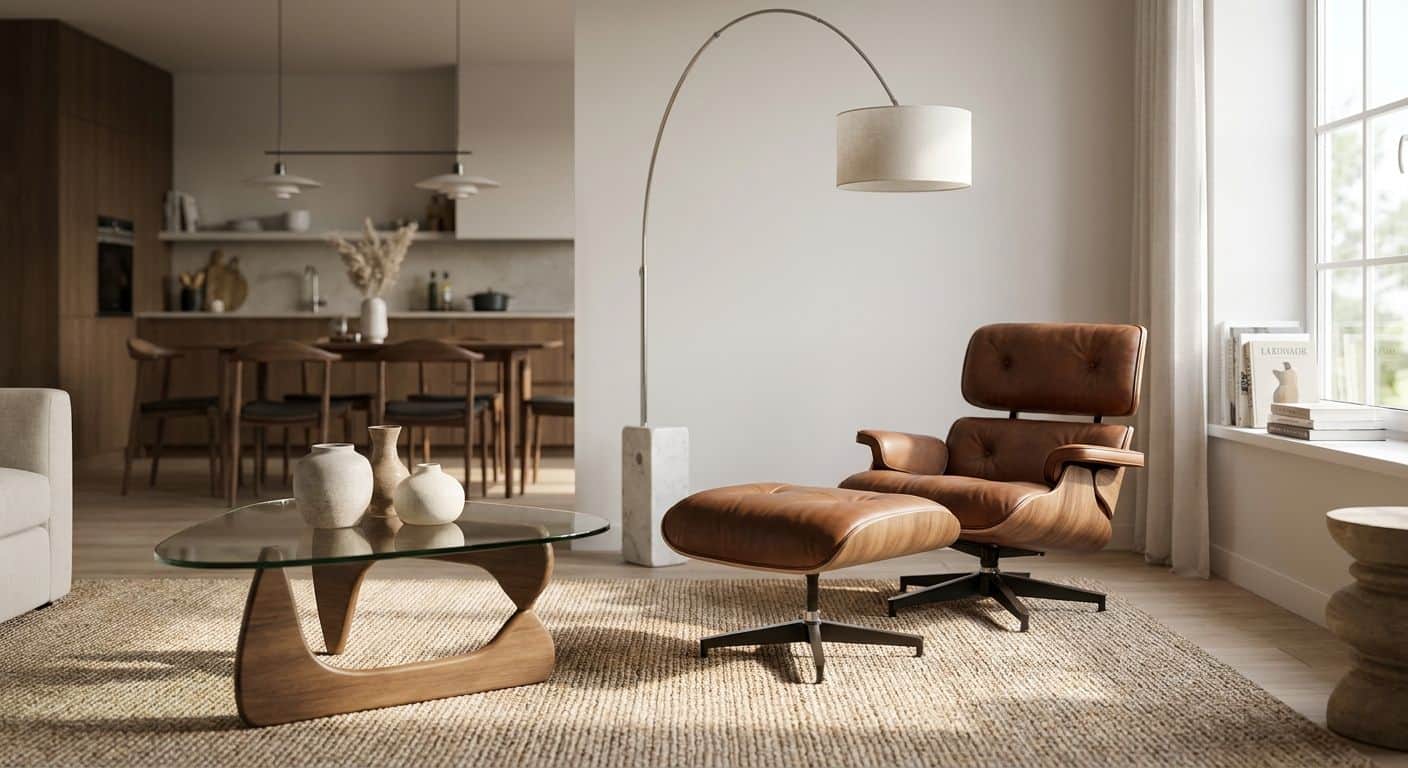
Charles and Ray Eames released this chair in 1956, and it remains the single most recognizable lounge silhouette in mid-century design — which is exactly the appeal for a lobby that wants to signal design literacy. The molded plywood shell and swivel base are unmistakable at any distance.
The catch: its reclined depth eats significantly more floor footprint than the Barcelona or Womb chair, and it works better as one or two anchor pieces than as repeated seating. Before ordering multiples, read what to know before buying an Eames Lounge Chair replica — the ottoman alone changes the footprint math. Verdict: Consider.
4. Wassily Chair replica — looks right, wears wrong
Marcel Breuer's 1925 tubular steel frame is a Bauhaus landmark, and it's a tempting pick for a museum with a modernist collection. The problem is the leather strap construction: in a home, it flexes and ages gracefully; in a lobby under constant public use, the straps show stretch and wear far faster than a fully upholstered seat.
A Wassily Chair replica pairs beautifully with a leather sofa in a private lounge, but a museum lobby isn't that setting. Verdict: Skip.
5. Platner Chair replica — elegant, but fragile-feeling
Warren Platner's 1966 wire-frame design is delicate by intention — a chair meant to look like it's barely there. That's a liability in a public lobby where visitors lean, rest bags on arms, and occasionally test furniture they think is decorative rather than functional.
It suits a formal, lower-traffic seating alcove better than a main entrance floor. Verdict: Consider.
6. Swan Chair replica — strong for smaller footprints
Arne Jacobsen's 1958 Swan Chair brings a soft, organic curve that contrasts well against a museum's typically hard architecture — concrete, glass, stone. Its compact base takes up less floor space than the Eames Lounge Chair, which makes it a reasonable substitute where square footage is tighter.
It reads best in twos rather than as a single statement piece. Verdict: Hold until you've measured the lobby's actual clearance around high-traffic paths.
7. PK22 Lounge Chair replica — better for a side nook
Poul Kjærholm's 1956 design is low, flat, and minimal — closer in spirit to the Barcelona Chair but with a lighter visual weight. It works well in a smaller reception nook or a side seating area rather than the main lobby floor, where its low profile can get visually lost against a large open space.
Verdict: Consider for secondary seating, not the primary lobby zone.
Comparison table
| Piece | Original Year | Best Lobby Role | Footprint | Verdict |
|---|---|---|---|---|
| Barcelona Chair replica | 1929 | Primary clustered seating | Low, wide | Buy |
| Womb Chair replica | 1948 | Standalone statement seat | Rounded, compact | Buy |
| Eames Lounge Chair replica | 1956 | Anchor piece, 1-2 units | Deep, reclined | Consider |
| Wassily Chair replica | 1925 | Not recommended for high traffic | Compact | Skip |
| Platner Chair replica | 1966 | Low-traffic alcove | Airy, wire-frame | Consider |
| Swan Chair replica | 1958 | Secondary seating pair | Compact, curved | Hold |
| PK22 Lounge Chair replica | 1956 | Side nook, not main floor | Low, flat | Consider |
Furnish a Lobby with Museum-Grade Replicas
Factory-made 1:1 replicas with a 5-year warranty and free insured shipping.
Shop lounge chairsWhere to buy
- Confirm 1:1 dimensions against the original design specs before ordering multiples — a lobby order of four or six chairs magnifies any scale mistake.
- Check the frame material, not just the upholstery photo. Steel and cast aluminum hold up under public use; thin tubular knockoffs flex and loosen faster.
- Order one unit first using the return window to test it against the actual lobby floor before committing to a full set — a 60-day return window exists for exactly this kind of test-fit.
FAQ
What’s the best replica furniture for a museum lobby?
The Barcelona Chair replica is the strongest overall pick for 2026 — its low, wide frame clusters well for group seating and its steel construction holds up under constant public traffic. The Womb Chair replica is the better choice if you want a single standalone statement piece instead.
Is the Eames Lounge Chair replica too bulky for a lobby?
It works as one or two anchor pieces but not as repeated seating, because its reclined shell and matching ottoman take up more floor space than a Barcelona or Womb chair. Reserve it for a focal corner rather than a main seating row.
Is replica furniture durable enough for high-traffic public spaces?
It depends on the piece and the construction. Fully upholstered, steel-framed designs like the Barcelona Chair hold up well, while strap-based designs like the Wassily Chair show wear faster under constant public use.
How much does replica furniture cost compared to the originals?
Replica furniture is generally priced well below licensed originals, though exact costs depend on materials, size, and finish options. Institutional buyers should request per-unit pricing before ordering multiples.
Should a museum lobby mix multiple lounge chair designs or stick to one?
Mixing two designs — one clustered seating piece like the Barcelona Chair and one standalone statement piece like the Womb Chair — reads better than repeating a single silhouette across the whole floor. More than two designs starts to look cluttered.
What warranty coverage should institutional buyers look for?
Look for at least a multi-year warranty on frame and upholstery, since public seating sees far more use cycles than residential furniture. A 5-year warranty is a reasonable baseline for a lobby-grade order.
Can replica furniture match the historical accuracy a design-forward lobby needs?
Yes, when the replica is built to the original’s 1:1 dimensions rather than an approximate scale. Check the listed dimensions against the historical record before ordering, especially for iconic pieces like the Barcelona Chair or Eames Lounge Chair.
How do you clean and maintain leather replica chairs in a public lobby?
Wipe leather surfaces with a dry or slightly damp cloth on a regular schedule and avoid direct sun exposure near entrance glass, which accelerates fading. Strap-based designs need more frequent inspection since public use stretches the material faster than home use.
One last thing
The Womb Chair's rounded shell wasn't designed for a lobby at all — Saarinen built it so a sitter could tuck their legs up sideways, the opposite of formal public seating. That's precisely why it works in a museum entrance: an irregular, sculptural shape holds its own as a single object in a room with 20-foot ceilings, where a row of identical straight-backed chairs just reads as furniture instead of design.
Related guides