Best Lounge Chair for Reading in 2026: Ranked & Reviewed
Sohnne Design Studio
July 14, 2026
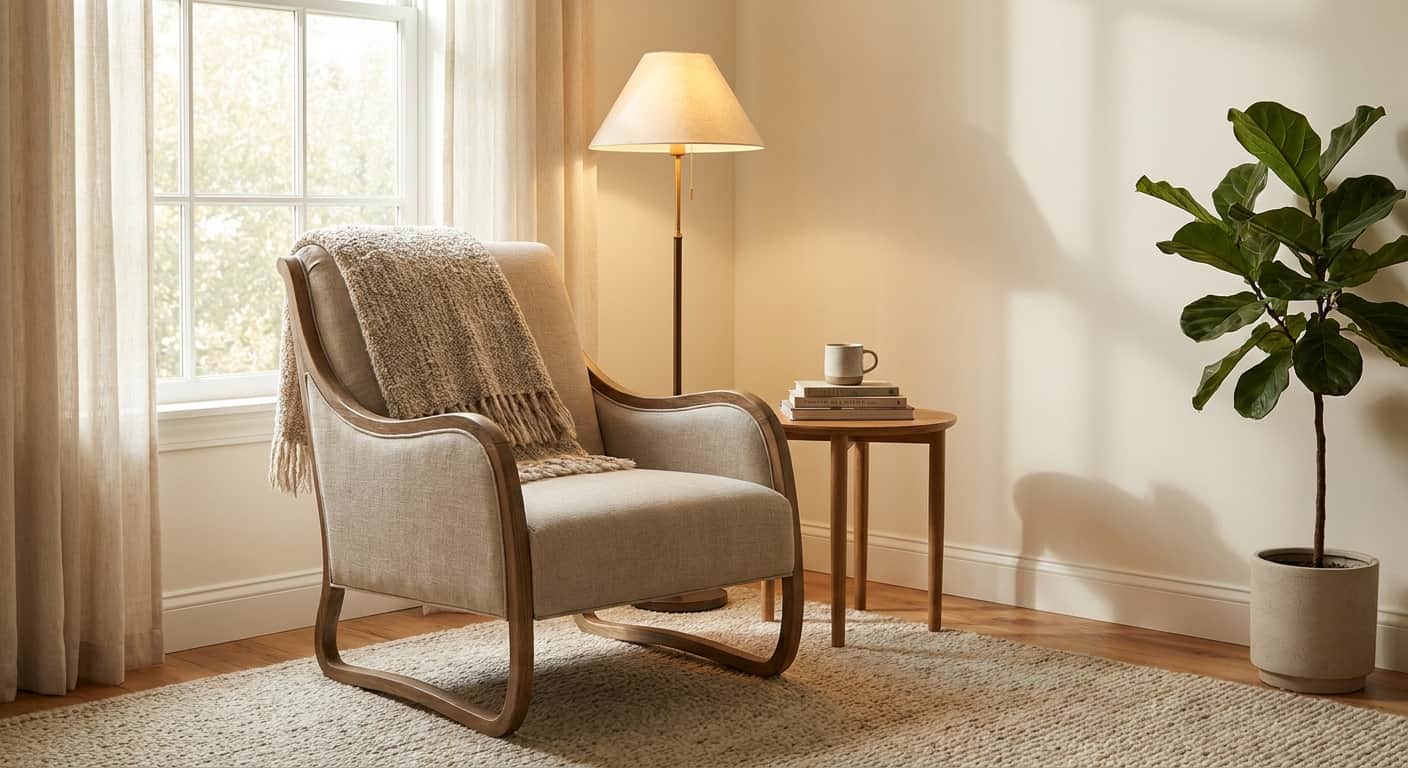
Choosing the best lounge chair for reading comes down to three numbers most shoppers never check: seat depth, recline angle, and headrest height relative to your own frame. This guide ranks six lounge chairs against those numbers so you can stop guessing and start reading.
TL;DR
The Arne Swivel Base Chair & Footstool is the strongest all-around pick for a home reading corner in 2026: its 42.2-inch shell supports your head, it tilts back up to 45 degrees with adjustable tension, and the footstool lets you shift leg position during long sessions: Buy. If floor space is tight, the PK22 Lounge Chair takes a 24.8-inch square of floor, and its 17-inch seat depth suits upright readers and smaller frames: Buy for small corners. Check seat depth on anything you shortlist: 20 to 23 inches suits most adults for long sessions, shallower seats suit upright sitting. This roundup covers recline, upholstery, and where each chair actually earns its price in 2026.
Why this matters
A reading chair does a different job than a sofa or an accent chair. You're stationary in it for 40 minutes to two hours at a stretch, often in one twisted-neck position with a book or tablet held below eye level. Get the seat depth wrong and your knees stay bent at a hard angle the whole time. Get the recline wrong and you're fighting gravity to keep the book up.
Most furniture guides rank lounge chairs on style alone. That's the wrong axis for a reading nook. The chairs below are ranked on ergonomics first, aesthetics second, because a chair you can't sit in for an hour isn't a reading chair, it's a photo prop.
How we ranked
Each chair below is scored against four criteria taken from the dimensions and features on each product page and general ergonomic guidance: seat depth (20-23 inches suits most adults for long reading sessions), recline (enough to hold a book without neck strain), upholstery type (leather and boucle age differently under daily contact), and footprint (does it fit a corner or does it need a full room).
Verdicts follow a simple scale: Buy means it earns its price for this specific use case, Consider means it works for a narrower profile of reader, Skip means the styling outpaces the function. None of these are lab-tested claims: they're built from spec sheets and known material behavior, not first-person trials.
The ranked list
1. Arne Swivel Base Chair & Footstool: the benchmark
The egg-shaped swivel chair, first introduced in 1958, wraps a molded fiberglass shell around the sitter, and at 42.2 inches tall it supports the head as well as the back. The Arne Swivel Base Chair & Footstool tilts back up to 45 degrees with tension you set from a lever under the seat, swivels 360 degrees and returns to center on its own. The 22 x 16 inch footstool is the detail that matters most for reading: it lets you shift leg position every 20 minutes instead of locking into one angle for two hours.
What it does: the enclosed shell blocks peripheral distraction, which helps in an open-plan living room where a reading corner needs visual separation without a wall. The tradeoff is footprint: the chair alone is 34 inches wide and 37.5 inches deep, and the aniline leather seat sits low at 14.5 inches. The chair is also sold without the footstool. Buy.
2. PK22 Lounge Chair: the small-space pick
Low, wide, and open on all sides, the PK22 was built in 1955 as a minimalist counterpoint to bulkier lounge seating, and that restraint is exactly why it works in a reading nook that can't spare 30+ inches of depth. The leather seat sits close to the floor (13.8-inch seat height), which lowers the center of gravity and makes it easier to curl a leg underneath.
What it does: trades deep recline for a wide, stable base, so it suits readers who sit upright with a book rather than fully reclined with a tablet. Full specs are in the PK22 Lounge Chair materials and sizing guide. Buy for corners under 30 inches deep, if you read sitting upright: the seat is 17 inches deep, under the 20 to 23 inch range for long, reclined sessions.
3. Swan Chair: the compact classic
Designed in 1958 for a Copenhagen hotel lobby, the Jacobsen Swan Chair wraps its winged shell around the shoulders and arms in a 29.1 x 26.8 inch footprint. At 30.3 inches tall it stops below the head, so it supports the back and arms but not a head that leans sideways.
What it does: the shell swivels and returns to center but does not recline, so it's a Consider rather than a Buy for readers who want to shift posture over a long session, better suited to shorter, focused reading blocks than marathon sessions.
4. Corbusier LC4 Chaise Lounge: the horizontal reader
Built in 1928 as a chaise longue rather than a chair, the LC4 puts the body nearly flat, which suits readers who prop a book on their chest rather than hold it up. It's a different reading posture entirely, closer to a daybed than a chair.
What it does: the polished chrome tubular steel frame rests on a separate base and can be moved to change the angle, but the Corbusier LC4 Chaise Lounge takes up chaise-length floor space, 63 inches, which rules it out for a corner nook. Skip for tight spaces, Consider for a dedicated reading room.
5. Kangaroo Chair: the tucked-in option
The Kangaroo Chair is low and compact, 23 inches wide and 30.1 inches deep with a 13.6-inch seat height, and its hand-woven cane seat and back sit at a 27-degree incline in a solid walnut frame. It reads as a scaled-down alternative when a full lounge chair overwhelms a small room.
What it does: the small footprint fits tighter corners, but taller readers will find their knees pushed up rather than resting flat on the low seat. Consider for smaller rooms and smaller frames only.
6. Chieftain Chair: the sit-back statement
A 1949 Danish design with a solid walnut frame, wide wooden arms and aniline leather upholstery, the Chieftain Chair sets its backrest at 115 degrees over a low 13.5-inch seat, in a 35.8 x 29.1 inch footprint. It suits readers who like to sit back with somewhere broad to rest their arms.
What it does: the low seat and reclined back are comfortable for a chapter or two, less forgiving over long stretches without a footrest. Consider for a home office reading corner rather than a leisure nook.
Comparison table
| Chair | Seat height | Recline / motion | Best for | Verdict |
|---|---|---|---|---|
| Arne Swivel Base Chair & Footstool | 14.5 in | Tilts up to 45 degrees, swivels | All-day reading, open-plan rooms | Buy |
| PK22 Lounge Chair | 13.8 in (seat depth 17 in) | Fixed, low | Tight corners under 30 in | Buy |
| Jacobsen Swan Chair | 15.8 in | Swivels, no recline | Short focused sessions | Consider |
| Corbusier LC4 Chaise Lounge | Chaise, 63 in long | Adjustable, near-flat | Dedicated reading rooms | Consider |
| Kangaroo Chair | 13.6 in | Fixed, 27-degree incline | Smaller frames, smaller rooms | Consider |
| Chieftain Chair | 13.5 in | Fixed, 115-degree backrest | Home office reading corners | Consider |
Where to buy
- Check dimensions against your actual corner before ordering. A chair plus ottoman needs floor clearance, not just wall-to-wall width. Measure the full footprint, not just the chair itself.
- Confirm return and warranty terms before committing to leather or boucle. Sohnne accepts returns within 60 days of delivery with a 20% restocking fee and return shipping paid by you, and custom orders are final sale. Its 5-year structural warranty covers the frame, joints and internal supports, not upholstery wear, so choose a leather or fabric you can live with.
- Ask about financing if the chair-and-ottoman pair pushes past your budget in one purchase. Affirm financing splits the cost without waiting for a sale.
FAQ
What's the best lounge chair for reading in 2026?
The Arne Swivel Base Chair & Footstool ranks highest for all-around reading comfort in 2026: its tall shell supports the head, it tilts back up to 45 degrees, and the footstool lets you reposition your legs during long sessions. For tighter spaces, the PK22 Lounge Chair is the stronger pick.
Is a recliner better than a lounge chair for reading?
A recliner reclines further but usually lacks the seat depth and back support tuned for upright reading posture. Lounge chairs built for reading balance recline with a seat depth around 20-23 inches that keeps your spine supported while holding a book.
How much does a good lounge chair for reading cost?
Pricing varies by material, shell type, and whether an ottoman is included. Check current pricing directly on the product page before budgeting, since leather grade shifts cost more than the base design does.
Does seat depth actually matter for reading chairs?
Yes. A seat that is too shallow leaves a taller reader's thighs unsupported, and one that is too deep pushes a shorter reader into a slouch. 20 to 23 inches fits most adult frames for long sessions; shallower seats, like the PK22's 17 inches, suit upright sitting and smaller frames.
Should a reading chair have an ottoman?
An ottoman matters most for sessions over 45 minutes, since it lets you shift leg position instead of holding one angle the whole time. Chairs without one, like the Swan or Chieftain, suit shorter reading blocks better.
What upholstery holds up best for daily reading chair use?
Leather resists the oil transfer and pilling that boucle or wool blends show after months of daily contact in the same spot. If boucle is the look you want, the boucle fabric care guide covers maintenance that extends its life.
Is a chair with a footstool worth it for a small reading corner?
Only if the corner has room for both: the Arne Swivel Base Chair is 37.5 inches deep and its footstool adds 16 inches more. The PK22 (24.8 inches deep) or Kangaroo Chair (30.1 inches) fit tighter spaces better.
Can a lounge chair replica match the original's comfort?
It can, if it matches the measurements that define the comfort: seat height, seat depth, shell curve and recline. Compare those numbers on the product page with the original's published specs, since those measurements, not the badge, are what your body responds to.
One last thing
The detail buyers skip most often: recline angle interacts with headrest height, not seat depth alone. A chair with the right seat depth but a headrest angled for a taller or shorter frame than yours will still strain your neck by page 50, regardless of how the cushion feels. Sit in it (or check the manufacturer's recline spec against your own height) before the seat depth number becomes the only thing you checked.
Related guides
Stay connected with us!
Keep in touch with what’s new and next. Subscribe for weekly insights, product launches, and community news!