Best Accent Chair for a Walk-In Closet (2026 Guide)

Sohnne Design Studio
August 10, 2026
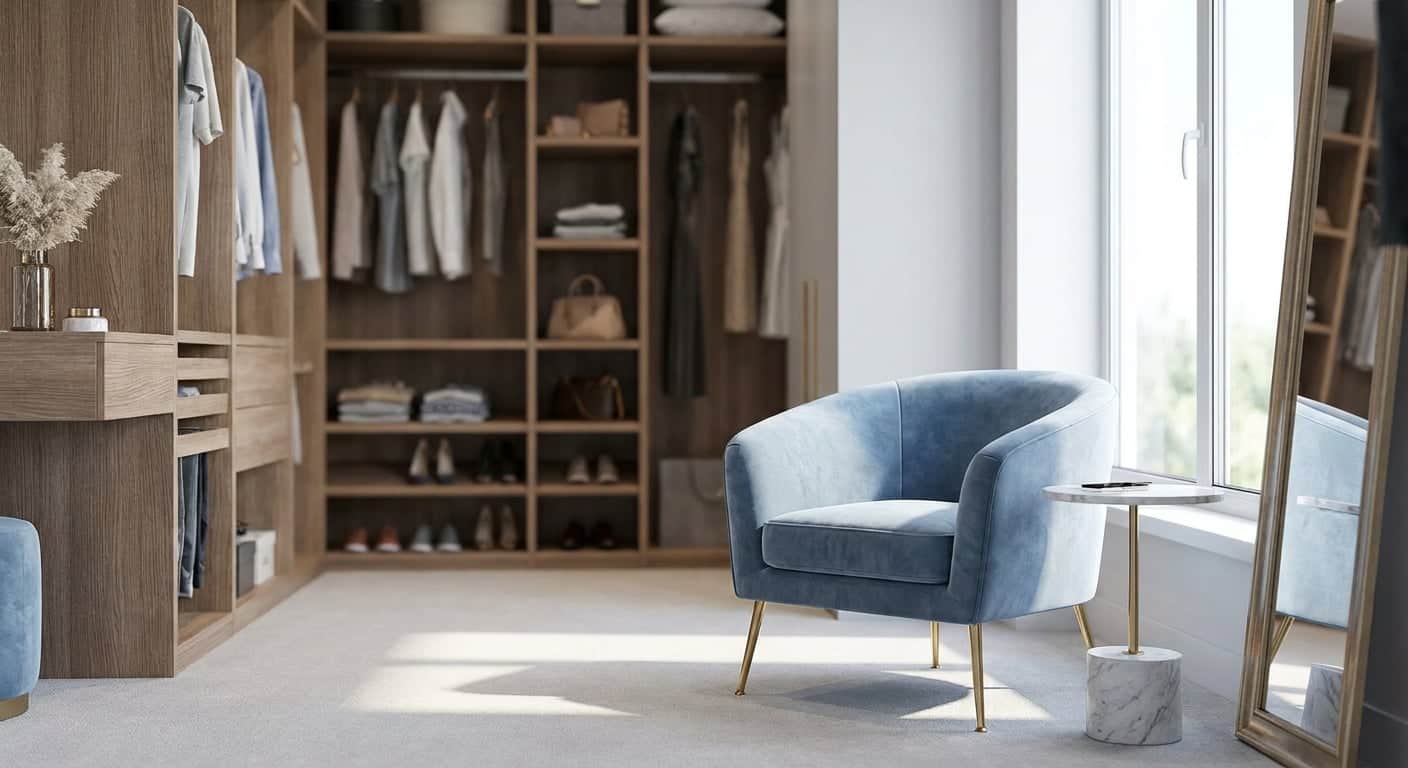
A walk-in closet dressing area needs a chair that earns its square footage: room to sit, room to bend for shoes, and a finish that won't show lint. This guide breaks down what to look for in an accent chair for walk-in closet spaces and names specific picks worth the floor space in 2026.
TL;DR- An accent chair for walk-in closet dressing areas needs a footprint under 26 inches wide and 18-inch seat height for shoe-tying ease.
- Sohnne’s entryway-style accent chairs work best in closets under 60 square feet — Buy for tight dressing nooks.
- Skip oversized swivel shapes like an Egg Chair replica unless the closet suite runs 100+ square feet.
- Budget-friendly accent chairs under $500 hold up fine in closets since they see lighter daily use than a living room chair.
Why this matters
A dressing area is a transition zone, not a lounge. You're in the chair for two to five minutes at a time — tying shoes, adjusting hemlines, deciding on the third outfit. That changes the math on comfort versus footprint compared to a living room accent chair guide.
Most walk-in closets built into 2010s-and-later homes run 40 to 90 square feet. A chair that eats 12 square feet of that for a deep lounge profile is the wrong call. The entryway accent chairs category solves a nearly identical problem — small footprint, frequent short-duration use — and it's the closest analog for closet seating.
Who this is for
This guide is for homeowners with a walk-in closet built out with an island, bench nook, or vanity corner who need one chair to sit in while dressing. It's not for anyone furnishing a full walk-in dressing room with a sofa or daybed — that's a different brief with different clearance rules.
What to look for in an accent chair for a walk-in closet
Footprint under 26 inches wide
Most closet dressing nooks give you a 30 to 36-inch alcove. A chair wider than 26 inches at the arms leaves no room to swing a leg for shoes without knocking a drawer. Measure the alcove before you shop — width matters more than depth here.
Seat height around 18 inches
An 18-inch seat height puts your knee at roughly a right angle, which is the height that makes tying shoes or adjusting socks fast rather than awkward. Chairs under 16 inches force a deeper crouch; chairs over 20 inches leave feet dangling.
Low or no arms
Arms above 24 inches block the reach-and-bend motion of getting dressed. A closet chair with open or low arms lets you twist, reach for a bag on a shelf, or pull on a boot without hitting a wooden rail.
Wipeable or tightly woven upholstery
Closets collect lint, shoe polish residue, and the occasional dropped makeup brush. Leather, vinyl, or a tight-weave fabric wipes clean in seconds. Deep bouclé or loose linen weaves trap debris and show wear faster in a dressing zone than they would in a living room.
No swivel base if the closet is under 50 square feet
Swivel bases need 360 degrees of clearance to spin without hitting a rack or drawer face. In anything under 50 square feet, a stationary four-leg base is the safer call.
Finish that matches the closet millwork, not the living room
A closet dressing chair sits next to wood shelving, mirrors, and drawer hardware — not a sofa and coffee table. Pick a frame finish (walnut, black metal, brushed brass) that reads against millwork tones rather than trying to match a separate room's palette.
Closet chair dimensions that matter 18 in Ideal seat height for dressing 26 in Max width for a 36-inch alcove 5 years Sohnne frame warranty 60 days Sohnne return windowTop picks for a walk-in closet dressing area
The safe pick. The chairs covered in Sohnne's entryway accent chairs guide are built for the same brief as a closet chair: short-duration seating, tight footprint, high visual impact in a small zone. Most run under 25 inches wide with a stationary base. Buy if your dressing nook is under 40 square feet.
The budget pick. The accent chairs under $500 roundup covers frames that see lighter wear in a closet than they would in a main living space, since dressing-area use is measured in minutes, not hours. Buy if this is a secondary chair and you don't want to spend living-room money on it.
The small-space specialist. The reasoning in how to pick an armchair for a small bedroom applies almost directly to a closet nook — same clearance math, same low-arm preference, same case for a slim frame over a deep lounge chair. Consider this category if your closet alcove runs narrower than 30 inches.
The wildcard. A round swivel shape like an Egg Chair replica looks striking against closet millwork and photographs well, but it needs full rotation clearance and a wider stance than most alcoves allow. Skip it for closets under 80 square feet; Consider it only if you have a dedicated dressing suite with open floor space.
If the chair needs elbow room to open its arms, it doesn't belong in a closet.
Browse accent chairs for tight spaces
Compare frame finishes and upholstery built for small footprints.
Shop accent chairsWhat to avoid
- Deep lounge chairs with a reclined back — they look inviting in a showroom but eat 8 to 10 extra inches of depth a closet alcove doesn't have.
- High-pile fabric or loose bouclé — it looks premium in a living room and collects lint and shoe dust fast in a closet.
- Anything with arms over 25 inches — they'll clip a hanging rod or a drawer pull every time you reach for a jacket.
Verdict comparison
| Chair type | Width | Seat height | Best for | Verdict |
|---|---|---|---|---|
| Entryway-style accent chair | Under 25 in | 18 in | Nooks under 40 sq ft | Buy |
| Under-$500 accent chair | 24-27 in | 17-18 in | Budget-conscious closets | Buy |
| Small-bedroom armchair | Under 26 in | 18 in | Narrow alcoves (under 30 in) | Consider |
| Round swivel chair (Egg-style) | 30+ in | 16-17 in | Large dressing suites only | Skip / Consider |
FAQ
What’s the best accent chair for a walk-in closet?
A stationary chair under 26 inches wide with an 18-inch seat height works best for a walk-in closet dressing area in 2026. Entryway-style accent chairs are built for the same short-duration, small-footprint use case.
Is a swivel chair good for a dressing area?
Only if the closet gives 360 degrees of clearance, which means roughly 50 square feet or more of open floor. In a tighter alcove, a swivel base is more likely to hit a rack or drawer than help you dress.
How much does an accent chair for a closet cost?
Accent chairs suited to a closet dressing area run from under $500 for a compact fabric frame to well over $1,500 for a designer leather replica. Since closet chairs see light daily use, a budget frame in the sub-$500 range holds up fine for most homes.
What seat height is best for tying shoes in a closet?
An 18-inch seat height is the sweet spot for tying shoes or adjusting hems without a deep crouch. Anything under 16 inches forces an awkward bend; anything over 20 inches leaves your feet dangling.
Should a closet chair match the bedroom furniture?
No — match the frame finish to the closet millwork, not the bedroom. A closet chair sits next to shelving, mirrors, and hardware, so a walnut or black-metal finish that reads against wood grain usually works better than a bedroom-matched fabric.
Do I need arms on a closet dressing chair?
Low or no arms work best since a dressing routine involves reaching, bending, and twisting toward shelves and drawers. Arms above 24 inches tend to block that motion in a tight alcove.
What fabric holds up best in a closet?
Leather, vinyl, or a tight weave fabric wipes clean of lint and shoe polish residue in seconds. Loose bouclé or high-pile fabric traps debris faster in a dressing zone than in a living room.
One last thing
Measure the alcove before the chair, not after. A 2-inch miscalculation on width is the single most common reason a closet chair ends up back in a bedroom corner within a month of delivery — and Sohnne's 60-day return window exists precisely for that mismatch, so use it if the fit is off.
Related guides
- Best replica accent chairs for a Bauhaus-inspired room
- Best chairs for a corner reading spot in 2026
Stay connected with us!
Keep in touch with what’s new and next. Subscribe for weekly insights, product launches, and community news!