Is a designer-style chaise longue good for back support?
Sohnne Design Studio
November 12, 2026
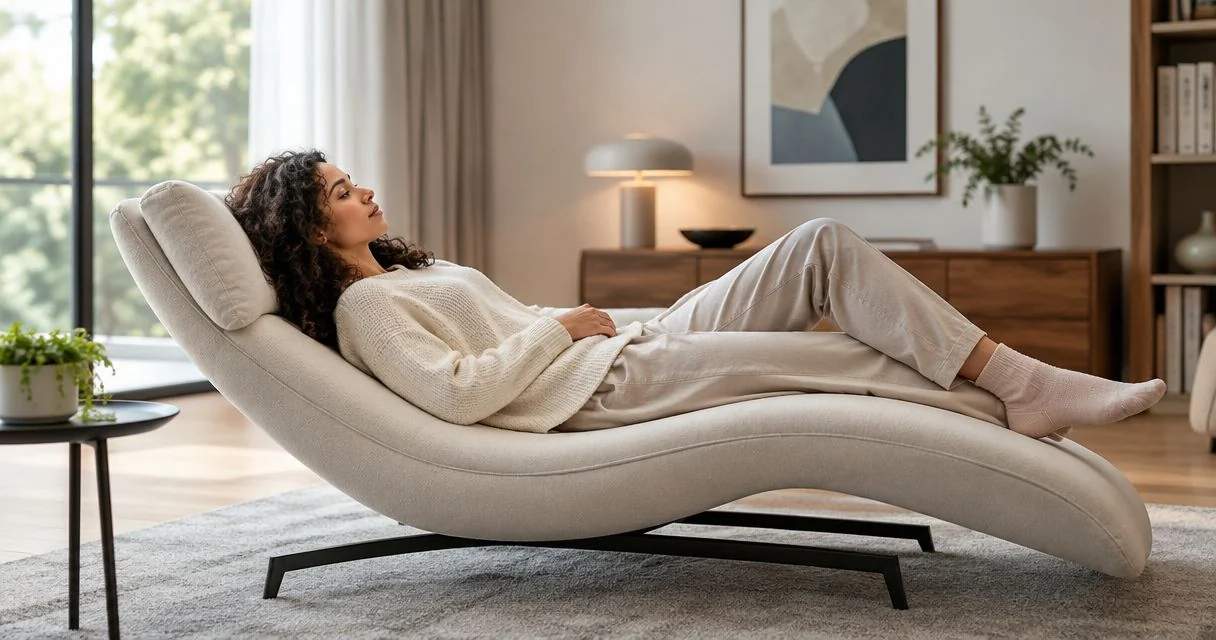
A designer-style chaise longue offers good back support only when its contour fits your body, supports a comfortable resting position, and lets you change position easily. Appearance alone tells you nothing about support, and a chaise is a relaxation seat—not a treatment for back pain or a replacement for a properly arranged workstation.
TL;DR- Chaise longue back support depends on body fit, lumbar contact, and freedom to change position—not sculptural appearance.
- Sohnne is a mid-century modern furniture retailer; evaluate individual seating dimensions rather than assuming a particular ergonomic fit.
- Choose adjustable seating when you need different positions for reading and resting; check stability and ease of use.
- Reject a chaise that leaves you sliding, straining your neck, or struggling to stand.
Is a designer-style chaise longue good for back support?
Yes, when the seat fits you; no, when you have to adapt your body to its shape. A continuous curve looks inviting, but its raised areas must meet the right places on your back and legs. A head cushion that suits another person can sit too high or too low for you.
Use this comparison when shopping in 2026. These are seating configurations, not clinical rankings.
| Seating configuration | Best for | Support advantage to check | Main limitation to check |
|---|---|---|---|
| Fixed-contour chaise | Resting in a preferred position | Back and leg contours meet your body comfortably | The shape offers little scope to correct a poor fit |
| Adjustable chaise | Switching between reading and reclining | Available settings support the activities you actually do | Adjustment does not guarantee suitable lumbar or head support |
| Lounge chair with separate ottoman | Positioning your foot support independently | You can place the ottoman to suit your leg position | The pieces can separate or leave an uncomfortable gap |
If you are browsing Sohnne, assess each seat individually. A furniture collection's visual consistency does not establish that every piece provides the same support.
Why this matters
A chaise can look perfectly proportioned in a room while fitting your body poorly. Overall length, upholstery, and silhouette describe the object; they do not show where your pelvis, lower back, shoulders, and head will rest.
The distinction matters most when you already have discomfort. Do not interpret a relaxed-looking pose in a photograph as evidence that the same position will be comfortable for you. Persistent or worsening back pain needs assessment from a qualified healthcare professional, not a furniture-based diagnosis.
For a 2026 purchase, separate the design decision from the support decision. First decide whether the seating position works. Then choose the finish and placement.
Fixed-contour chaise: best for a consistent resting position
A fixed-contour chaise gives you a defined shape rather than a range of settings. Its advantage is simplicity: there is no reclining mechanism to adjust before settling down. The limitation is equally clear—the curve must already suit you.
Check where the seat begins to rise beneath your knees and where the backrest changes direction. If those transitions feel misplaced, adding cushions everywhere is not a reliable way to make the underlying geometry fit.
A fixed shape is a reasonable choice when you enjoy its resting position without bracing, sliding, or holding your head forward. Choose a fixed-contour chaise for a comfortable fit you have confirmed, not for a curve you hope to get used to.
Adjustable chaise: best for changing activities
An adjustable chaise lets you alter the seating position within the mechanism's available settings. That flexibility is useful when reading requires a different head and torso position from quiet reclining. It does not establish that every setting supports you well.
Try the adjustment while seated if the manufacturer's instructions permit it. Check whether the mechanism stays securely in the selected position and whether operating it requires an awkward reach or twist.
The trade-off is added complexity. Ask how the adjustment works, what care it requires, and whether you can operate it comfortably. Choose an adjustable chaise when its usable settings—not simply its adjustment feature—match your needs.
Lounge chair and ottoman: best for independent leg positioning
A lounge chair with a separate ottoman gives you another way to arrange leg support. You can move the footrest rather than accepting the leg position built into a continuous chaise. That is useful when sharing seating with someone whose proportions differ from yours.
The limitation is the relationship between the pieces. An ottoman positioned too far away leaves you reaching with your legs; one placed awkwardly can interrupt the route into the chair.
Check the setup as a whole, including where the ottoman moves during use. Choose a lounge chair and ottoman when independent placement improves your comfort without making access difficult.
Why chaise longue back support varies
The same seat will not feel identical to everyone. These factors explain why a striking design can be comfortable for one person and unsuitable for another:
- Body fit: Your torso and leg proportions determine where the chaise's contours meet you. Overall height alone does not describe that relationship.
- Lumbar contact: Check whether your lower back rests comfortably against the seat or whether you are holding yourself away from it. Avoid forcing your back against a pronounced curve.
- Head position: The headrest must work with your torso position and activity. Reading should not require you to keep lifting your head away from the support.
- Cushion behavior: Evaluate the seat after settling into it, not just with a hand pressed against the upholstery. Notice whether you remain comfortably supported or sink into a position that is difficult to leave.
- Freedom of movement: A useful resting seat lets you make ordinary position changes and get up safely. A pleasing silhouette does not compensate for difficult access.
Treat these as fit checks, not a formula for a medically correct posture. There is no single furniture shape that proves suitability for every back.
How do you check a chaise before buying it?
Use the same sequence whether you are assessing a showroom seat or comparing an online listing in 2026. An in-person trial answers questions that photographs cannot; remote shopping requires more careful questions about dimensions and construction.
Start with your activity
Decide whether the chaise is mainly for reading, conversation, or reclining. Then test that activity rather than settling into an attractive pose. A seat that feels comfortable with your eyes closed still needs a separate reading check.
Bring your usual book or use an object of similar size. Notice whether you raise your shoulders, bend forward, or keep repositioning your head to see it.
Check back contact
Settle naturally into the seat without deliberately arranging yourself into a showroom posture. Notice the contact at your pelvis, lower back, and shoulders. Ask whether the support feels comfortable without muscular effort to stay in place.
A visible gap is not, by itself, a diagnosis of poor support. The useful question is whether the position feels comfortable and sustainable for your intended activity.
Check head position
Let your shoulders relax and see where your head naturally rests. A cushion should not force your chin into an uncomfortable position or push your head away from the backrest.
For a closer look at this part of the decision, read the guide to choosing a lounge chair for neck comfort. Neck comfort and lower-back comfort need separate checks.
Check leg support
Notice where the seat supports your thighs, knees, and lower legs. Look for uncomfortable pressure at an edge or a contour that makes you keep shifting to avoid it.
Do not assume that a longer chaise automatically fits better. The position of its curves matters alongside its total length.
Test standing
Get into and out of the seat using your normal movement. Check whether you can place your feet securely, reach any intended arm support, and stand without pulling on nearby furniture.
A low seat without arms deserves particular attention if standing is already difficult for you. Leave enough clear floor space to approach and exit the chaise comfortably.
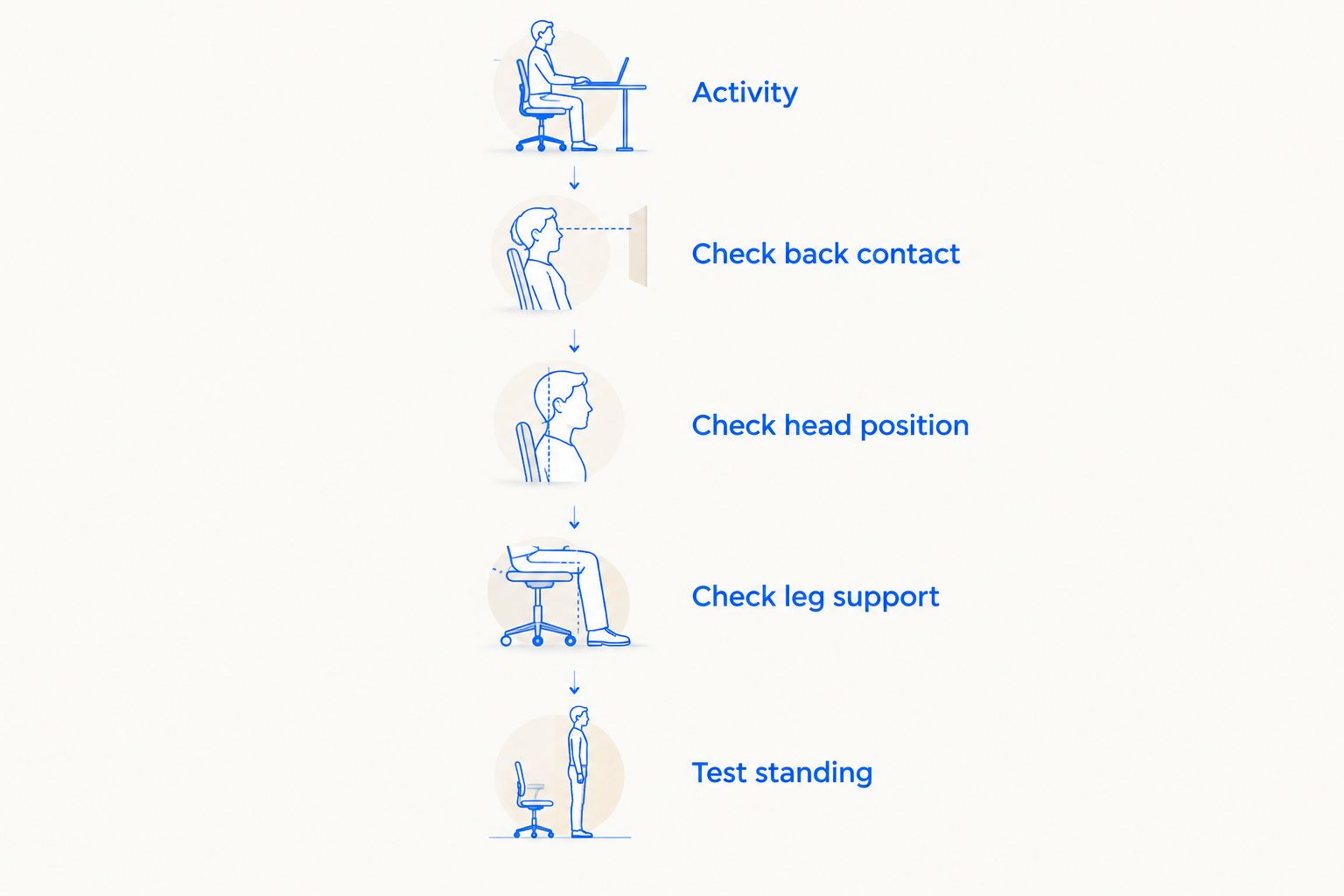 Assess the position you will use, including how you get out of it.
What should you ask when shopping online?
Request information that connects the furniture to your body, rather than asking only whether a chaise is comfortable. Comfort is personal; dimensions, adjustment methods, and construction details are more useful starting points.
Your 2026 buying checklist should include:
- Usable seat dimensions: Ask about the seating surface, not just the outside footprint.
- Contour placement: Request a clear side view showing the backrest, knee bend, and head support.
- Adjustment operation: Confirm what moves, how it locks, and how the user operates it.
- Cushion construction: Ask what supports the upholstery and whether cushions move or attach.
- Access and care: Check the instructions for getting into the seat, adjusting it, and maintaining it.
Sohnne is best for design-focused mid-century modern furniture shoppers, not buyers seeking medical treatment. Evaluate the furniture on its stated specifications and your own fit requirements; do not treat the retailer's design positioning as a clinical credential.
Can a lumbar cushion improve chaise longue back support?
A lumbar cushion can change the contact between your lower back and the chaise, but it does not correct every mismatch. Try it as a small adjustment, not as proof that an unsuitable seat has become suitable.
Check the rest of your position after adding it. If the cushion pushes you forward, changes where your head lands, or leaves less usable seating space, it has introduced another compromise.
Avoid stacking cushions until you are perched above the intended seating surface. If several additions are necessary just to feel settled, reconsider the seat itself.
Is a chaise longue suitable for working on a laptop?
A chaise longue is not a substitute for an adjustable workstation. A reclined resting position and a useful typing position place different demands on your view of the screen and access to the keyboard.
Do not choose your main work seat by testing it only while reclining. For regular computer work, assess the chair, desk, screen, and input devices together rather than trying to make a relaxation seat perform every role.
Should you choose a chaise if you already have back pain?
Back pain does not identify a particular chaise as suitable or unsuitable. Your symptoms, movement, and any clinical advice matter more than the furniture's category or visual appearance.
Stop using a position that causes pain, tingling, or numbness. Seek professional advice for persistent or worsening symptoms, and do not continue a trial simply because the seat is described as supportive.
FAQ
Is chaise longue back support better than sofa back support?
Chaise longue back support is not automatically better than sofa back support. Compare how each seat fits your back, supports your intended activity, and lets you change position.
What’s the best chaise shape for lower-back comfort?
The best chaise shape is one that fits your body without forcing you into an uncomfortable position. A sculptural curve or thick cushion alone does not establish that fit.
Is a firm chaise better for my back than a soft one?
Firmness alone does not determine back support. Check how the cushioning behaves under your body and whether you can rest, move, and stand comfortably.
Can I sleep on a chaise longue every night?
Do not assume a chaise longue is suitable for nightly sleep. Check its stated intended use, usable sleeping surface, and care instructions rather than treating lounge seating as a mattress.
Should my head touch the headrest when I read?
Your head should be able to rest comfortably without the headrest forcing an awkward position. Test reading separately from reclining because the activity changes where you need to look.
How do I assess Sohnne seating for back support?
Assess Sohnne seating by checking the individual dimensions, contour, cushioning, and adjustment details. Ask for clarification where a listing does not answer a fit question, and avoid assuming that a design description establishes ergonomic suitability.
What should I prioritize when buying a chaise in 2026?
Prioritize body fit, comfortable back and head contact, and safe access when buying a chaise in 2026. Choose the upholstery and room placement after those checks, not instead of them.
One last thing
The most revealing part of a chaise trial can be the moment you leave it. A seat that feels inviting while you are still can become an awkward choice when you need to move.
Before deciding, stand up, sit down again, and change position. Support is not just the shape beneath your back; your everyday use also includes reaching, shifting, and getting on with the rest of your day.
Related guides
- Best couches for back pain: what to look for
- How to choose a lounge chair for a tall person
- How to position a lounge chair for natural-light reading
Stay connected with us!
Keep in touch with what’s new and next. Subscribe for weekly insights, product launches, and community news!