Best Accent Chairs for a Maximalist Interior in 2026

Sohnne Design Studio
July 28, 2026
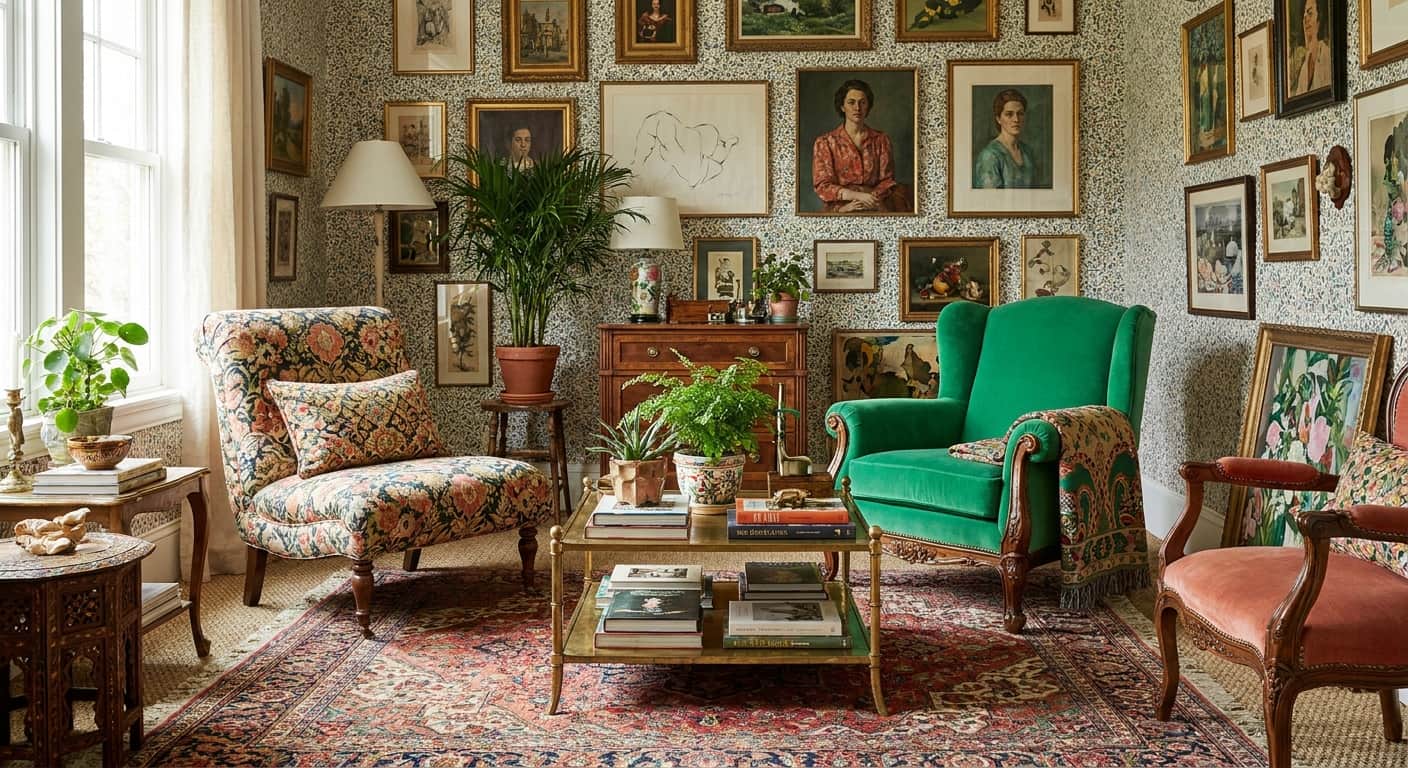
A maximalist room needs a chair that can hold its own against bold wallpaper, layered rugs, and a wall of art — these eight replica accent chairs for a maximalist interior are ranked on silhouette, color range, and how hard each one competes for attention in 2026.
TL;DR- Egg Chair replica wins for maximalist rooms that need a curved anchor piece — Buy.
- Ball Chair replica is the boldest of the accent chairs for a maximalist interior — Consider.
- Pelican Chair replica softens a loud room with organic curves dating to 1940 — Buy.
- Skip oversized wing chairs in tight maximalist rooms; the silhouette competes with pattern instead of framing it.
- Swan Chair and Chieftain Chair replicas work best as a matched pair, not solo statements.
Why this matters
Maximalist design lives or dies on contrast, not clutter. Throw a plain accent chair into a room already carrying bold color and pattern and it disappears; throw in the wrong loud chair and the room turns into visual noise instead of a composed layer of it.
The fix is picking a chair with enough sculptural weight to hold its own corner of the room without fighting the print on your sofa. The accent chair options in Sohnne's collection lean on exactly that kind of pedigree — pieces designed to be looked at, not just sat in.
Getting this wrong is expensive. A chair that reads as busy in a showroom photo can read as chaotic once it's sitting three feet from a patterned rug and a gallery wall.
How we ranked
Each pick here is scored on four criteria that matter specifically in a maximalist room: sculptural silhouette (does it read as a statement or a placeholder), upholstery and color range (can it pull a room's palette together or does it lock you into one scheme), footprint relative to competing pattern (does it need breathing room or can it sit inside visual chaos), and design pedigree (does the piece have enough history to earn its spot next to bold prints and layered textiles).
Every chair below is a documented mid-century or postwar design with a known year and designer, which matters in a maximalist room precisely because provenance is what lets a bold shape feel intentional instead of random. The ranking favors curves and unconventional forms over anything that reads as a standard club chair.
The ranked list
The organic anchor — Pelican Chair
Finn Juhl designed the Pelican Chair in 1940, and its rounded wing-like arms still read as sculpture 86 years later. In a maximalist room, its curved shell absorbs visual noise instead of adding to it, which makes it a rare accent chair that calms a busy palette rather than competing with it.
It pairs well with saturated velvet or bouclé upholstery, since the shape alone already carries the drama. Verdict: Buy — it's the one chair on this list built to anchor a loud room rather than shout inside it.
The safe pick that isn't safe at all — Egg Chair
Arne Jacobsen designed the Egg Chair in 1958 for the SAS Royal Hotel in Copenhagen, and its cocoon shape is instantly recognizable even to people who've never heard the designer's name. That recognizability is an asset in a maximalist room: guests read it as a deliberate design choice, not a random accent piece.
The swiveling base and wraparound shell also give it presence from every angle, which matters in a room meant to be looked at from multiple sightlines. Verdict: Buy — it's the highest-recognition pick on this list and the one most likely to become the room's focal point.
The wildcard — Ball Chair
Eero Aarnio's Ball Chair debuted in 1963 as a literal sphere with a cutout seat, and it remains the most polarizing shape on this list. It works in a maximalist room specifically because it doesn't try to blend — it's a sculptural object first and a seat second.
It needs more floor clearance than the others here to read correctly, since its round footprint gets visually crowded if placed too close to other statement pieces. Verdict: Consider — it wins for rooms already committed to bold, unconventional shapes but overwhelms a space that's still finding its maximalist footing.
The quiet contrast — Swan Chair
Jacobsen designed the Swan Chair the same year as the Egg Chair, 1958, for the same hotel commission, and its lower, more open shell makes it the more restrained of the two. In a maximalist room it works as a secondary seat next to a bolder anchor piece, adding curvature without pulling focus.
Its smaller footprint also makes it the easier of the two to slot into a reading corner or a gallery-wall vignette. Verdict: Buy — pair it with a bolder piece rather than using it alone as the room's statement.
The sculptural oddball — Kangaroo Chair
The Kangaroo Chair carries Pierre Paulin's signature approach to upholstered sculpture, with a wrapped, tensioned form that reads more like a soft-edged object than furniture. That ambiguity is an asset in a maximalist room, where pieces that resist easy categorization tend to hold attention longer.
Its low profile also keeps sightlines open in a room already busy with tall bookshelves or layered art. Verdict: Consider — a strong pick for rooms leaning eclectic rather than strictly mid-century.
The heavyweight — Chieftain Chair
Finn Juhl designed the Chieftain Chair in 1949, and its exposed wood frame and broad proportions give it more physical mass than anything else on this list. In a maximalist room, that mass reads as gravity — it's the piece that keeps a busy composition from feeling weightless.
Its visible wood joinery also gives it a warmth that softer upholstered pieces can't match, which matters when a room's palette is already saturated with pattern. Verdict: Buy — best used as the one grounding piece in a room full of curves and color.
The traditionalist twist — Wing Chair CH445
Hans Wegner's take on the wing chair keeps the classic silhouette but strips the ornamentation, leaving a shape that's familiar enough to feel grounded and modern enough to hold its own in a maximalist room. It reads less experimental than the Ball Chair or Kangaroo Chair, which makes it a safer entry point.
Its tall back also makes a strong frame for a bold print or a striped bouclé. Verdict: Consider — a solid choice for rooms mixing maximalism with a more traditional base layer.
The cocoon — Papa Bear Chair
Wegner designed the Papa Bear Chair in 1951, and its wide, enveloping arms give it one of the most generous seats on this list. In a maximalist room it works best as a reading-corner statement rather than a formal seating piece, since its scale demands its own visual space.
Its rounded arm detail echoes the curves of the Pelican and Egg chairs, so it layers well if you're mixing more than one sculptural piece in the same room. Verdict: Buy — oversized enough to anchor a corner, curved enough to fit a room full of pattern.
“A maximalist room doesn’t need more color — it needs one chair confident enough to anchor all of it.”
Comparison table
| Chair | Designer & year | Silhouette | Best maximalist move | Verdict |
|---|---|---|---|---|
| Pelican Chair | Finn Juhl, 1940 | Rounded wing shell | Use as the calming anchor | Buy |
| Egg Chair | Arne Jacobsen, 1958 | Cocoon shell, swivel base | Use as the room's focal point | Buy |
| Ball Chair | Eero Aarnio, 1963 | Full sphere | Reserve for already-bold rooms | Consider |
| Swan Chair | Arne Jacobsen, 1958 | Open low shell | Pair with a bolder piece | Buy |
| Kangaroo Chair | Pierre Paulin design | Wrapped soft form | Use in eclectic, low-profile layouts | Consider |
| Chieftain Chair | Finn Juhl, 1949 | Broad wood frame | Use as the grounding piece | Buy |
| Wing Chair CH445 | Hans Wegner design | Tall, stripped-back wing | Use as a safer entry point | Consider |
| Papa Bear Chair | Hans Wegner, 1951 | Wide enveloping arms | Use as a reading-corner statement | Buy |
Where to buy
Check three things before buying any replica accent chair for a maximalist room, regardless of retailer:
- Verify 1:1 dimensions against the original design. A shrunken or oversized reproduction throws off the silhouette that made the piece worth choosing in the first place.
- Confirm the warranty length before checkout. Sohnne backs its accent chairs with a 5-year warranty, which matters more on sculptural pieces that see heavy daily use as a room's focal point.
- Check the return window. Sohnne offers 60-day returns, which gives enough time to see how a bold silhouette actually reads once it's sitting inside your finished room rather than a showroom photo.
Browse Sohnne’s accent chairs
See the full range of 1:1 replica accent chairs shipped insured, backed by a 5-year warranty.
Shop accent chairsFAQ
What’s the best accent chair for a maximalist interior?
The Egg Chair replica is the best all-around pick for a maximalist interior in 2026 because its recognizable cocoon shape reads as a deliberate focal point rather than filler seating. The Pelican Chair replica is the better choice if you want a curved piece that calms a busy palette instead of adding to it.
Is the Ball Chair too much for a small maximalist room?
Yes, the Ball Chair’s spherical footprint needs more floor clearance than most accent chairs, so it tends to overwhelm a small room. It works best in larger maximalist spaces already committed to bold, unconventional shapes.
Can you mix more than one sculptural accent chair in the same room?
Yes, pairing two sculptural chairs works as long as one carries more visual weight than the other, like combining a Chieftain Chair with a Swan Chair. Using two chairs of equal boldness in the same sightline tends to compete rather than complement.
Do replica accent chairs hold up as well as the originals?
Quality replicas built to 1:1 original dimensions with solid frame construction perform close to the original design in daily use. The frame material and upholstery grade matter more than the replica label itself, so check those specs before buying.
What upholstery works best for maximalist accent chairs?
Bouclé and velvet in saturated colors work best because they add texture without competing with a room’s existing pattern. Solid, deep tones on a sculptural chair let the shape do the visual work instead of the fabric.
How much floor space does a statement accent chair need?
Sculptural pieces like the Ball Chair or Papa Bear Chair need more clearance than a standard armchair since their rounded forms lose impact when crowded by other furniture. Leave at least enough space around the chair for its full silhouette to read from the room’s main sightline.
Is a wing chair too traditional for a maximalist room?
A stripped-back version like the Wing Chair CH445 works well because it keeps a familiar silhouette without heavy ornamentation, which grounds a room that’s otherwise leaning experimental. A heavily tufted or classic wing chair reads more traditional and fights harder against bold, modern pattern.
What’s the difference between the Swan Chair and Egg Chair?
Both were designed by Arne Jacobsen in 1958 for the same hotel commission, but the Swan Chair has a lower, more open shell while the Egg Chair fully wraps the sitter. The Egg Chair reads as the bolder focal point; the Swan Chair works better as a secondary seat.
One last thing
The two Jacobsen pieces on this list, the Egg Chair and the Swan Chair, were designed in the same year for the same hotel commission — which is exactly why they work as a pair instead of forcing you to pick one over the other. If your maximalist room can fit two accent chairs, put them in the same sightline and let the shared design lineage do the coordinating work that color-matching usually has to do.
Related guides